Home battery belgium
HomeWizard home battery: price and review
Using a HomeWizard battery allows you to store excess solar energy for later use, significantly reducing your electricity bills and your dependency on the grid. This plug-in home battery can be installed easily via a standard socket, and you can expand its capacity modularly up to 10.8 kWh.
How exactly does a HomeWizard battery work?
The HomeWizard battery stores extra electricity generated by your solar panels and releases it when needed, using a built-in micro-inverter with a power output of up to 800 W per unit. It connects directly to your home through a standard socket and interacts with a P1 meter to monitor electricity consumption and injection in real time.
How does the Plug-In Battery store and deliver energy?
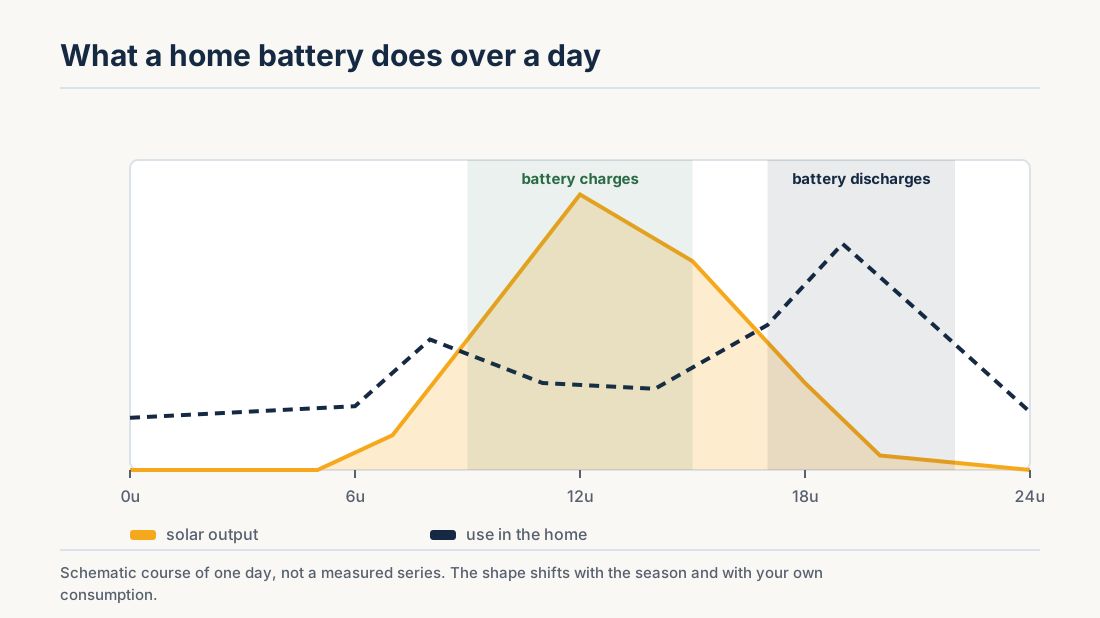
The battery system utilizes lithium iron phosphate (LiFePO4) cells, which are known for their stability and safety in energy storage. It charges whenever your solar panels produce more electricity than your household consumes. Conversely, it discharges when your home’s energy demand exceeds what your solar panels provide.
The charging and discharging cycle works as follows:
- The P1 meter detects solar surplus energy;
- The battery charges up to 2.7 kWh per unit;
- Energy is stored with an efficiency between 70% and 80%;
- The battery provides power later at up to 800 W;
You can learn more about the general principles of home batteries on how a home battery works.
What role do the P1 meter and WiFi connection play?
The P1 meter tracks your electricity grid usage and communicates with the battery over WiFi. This setup enables automatic balancing of your household’s energy consumption, aiming to minimize grid usage, especially during nighttime.
What are the HomeWizard Plug-In Battery specifications?
The specifications below define its capabilities and limitations:
- Capacity: 2.7 kWh gross per unit, approximately 2.48 kWh usable;
- Power output: 800 W for charging and discharging;
- Efficiency: around 75% under typical conditions;
- Lifespan: up to 6000 cycles or 15 years;
- Noise level: approximately 32 decibels;
Which configurations and technologies are available for the HomeWizard battery?
The HomeWizard battery features a single battery technology but offers multiple configuration options through stacking. This modular design enables you to increase storage capacity without replacing the entire system.
What does HomeWizard Plug-In Battery “stapelen” mean?
The term “stapelen” refers to stacking multiple HomeWizard battery units to increase both storage capacity and power output. You can combine up to four units to meet your household’s energy needs.
Common configurations include:
- 1 battery: 2.7 kWh capacity and 800 W power output;
- 2 batteries: 5.4 kWh capacity and 1600 W power output;
- 3 batteries: 8.1 kWh capacity with enhanced output on a dedicated circuit;
- 4 batteries: 10.8 kWh capacity with up to 3200 W on a separate group;
For additional modular options, visit modular home battery systems.
How does the built-in micro-inverter improve energy efficiency?
The integrated micro-inverter operates efficiently even at low loads, unlike traditional large inverters that often lose energy when demand is low. This design improves efficiency by up to 30% during typical household consumption patterns.
Is HomeWizard Plug-In Battery compatible with Home Assistant?
Yes, the HomeWizard Plug-In Battery supports integration with Home Assistant via a local API. This allows you to monitor battery data and automate charging based on factors such as energy prices or solar generation.
What is the price of a HomeWizard battery?
The cost of a HomeWizard battery starts at approximately €1195 to €1345 including VAT per unit, depending on current offers and bundled packages. This price covers software, updates, and delivery but does not include the P1 meter.
Price overview for different configurations
Typical pricing per setup is as follows:
- 1 battery (2.7 kWh): €1195 - €1345;
- 2 batteries (5.4 kWh): €2390 - €2690;
- 3 batteries (8.1 kWh): €3585 - €4035;
- 4 batteries (10.8 kWh): €4780 - €5380;
Calculation example for an average household
A typical system with two batteries includes these approximate costs:
- 2 batteries: 2 × €1195 = €2390;
- P1 meter: €25;
- Optional display: €60;
- Installation: €0 due to the plug-in design;
The total investment is about €2475 including VAT.
You can compare this with other systems on the home battery price overview page.
How does HomeWizard battery replacement work?
Replacement is managed via a swap service. Defective units are replaced within the first 7 years or 4000 cycles. After the warranty period, a service fee applies, keeping replacement costs predictable compared to traditional repairs.
When does choosing a HomeWizard battery make the most sense?
This battery is ideal for households that generate solar surplus and have moderate nighttime electricity consumption.
Which households benefit most from a HomeWizard battery?
- Homes with an annual solar surplus between 500 and 3000 kWh;
- Nighttime consumption generally below 800 W;
- Residences equipped with digital meters and capacity-based tariffs;
Learn how capacity tariffs influence savings at capacity tariff impact.
How does the battery perform with electric vehicles and heat pumps?
The HomeWizard battery is suited for base loads but may struggle with high-demand appliances. Devices like EV chargers and heat pumps usually exceed the 800 W limit, meaning your grid will provide additional power support.
What are the test results of the HomeWizard Plug-In Battery?
Tests show the battery achieves a real efficiency of about 75%, with savings varying based on usage patterns. Your daily savings depend on how often the battery cycles and the amount of solar surplus generated.
Which advantages and disadvantages should you consider?
Understanding the strengths and limitations helps determine if the HomeWizard battery fits your energy needs.
What are the key advantages of the HomeWizard battery?
- Easy installation with no electrician required;
- Compatible with all solar panel systems;
- Expandable up to 10.8 kWh capacity;
- No subscription costs;
Which limitations should you keep in mind?
- Limited to 800 W power output per unit;
- Energy losses around 25% during charging and discharging;
- Lacks backup power capability during outages;
For broader battery comparisons, visit best home battery systems.
How does the HomeWizard battery compare to traditional home batteries?
The HomeWizard battery primarily differs in installation methods, capacity, and power output compared to conventional systems.
Highlights of the comparison include:
- Installation: plug-in via socket versus professional hardwiring;
- Capacity: modular small units versus larger integrated systems;
- Power: 800 W per unit versus several kilowatts for traditional batteries;
- Pricing: lower initial costs with the HomeWizard battery;
For a detailed comparison, visit compare home battery options.
The simplicity and modularity stand out, while the limited power output may challenge households with high peak demands.
In which cases should you avoid choosing a HomeWizard battery?
The HomeWizard battery is not suitable if your household requires high power output or backup power during outages.
Which situations are less appropriate for the HomeWizard battery?
- High ongoing consumption above 800 W;
- The need for an uninterruptible power supply;
- Large solar installations with very high excess energy production;
In such cases, consider larger home battery solutions available on home battery solutions.
The HomeWizard battery provides an accessible and user-friendly solution for home energy storage, focusing on straightforward installation and modular upgrades. It suits households with moderate energy use and solar surplus, although its 800 W power limit restricts performance for heavy consumption or backup needs. If you seek a simple, low-entry battery system without complex installation, it offers many advantages. Be sure to evaluate your energy profile carefully and request personalized advice through Soleva before making your final decision.
Frequently Asked Questions
What is the HomeWizard battery price for a full setup?
The total price depends on the number of batteries you choose. A typical two-unit configuration usually costs between €2400 and €2700 including VAT. Additional accessories like a P1 meter or a display add minor costs. Installation costs are avoided because of the plug-and-play design.
Is investing in a HomeWizard battery financially worthwhile?
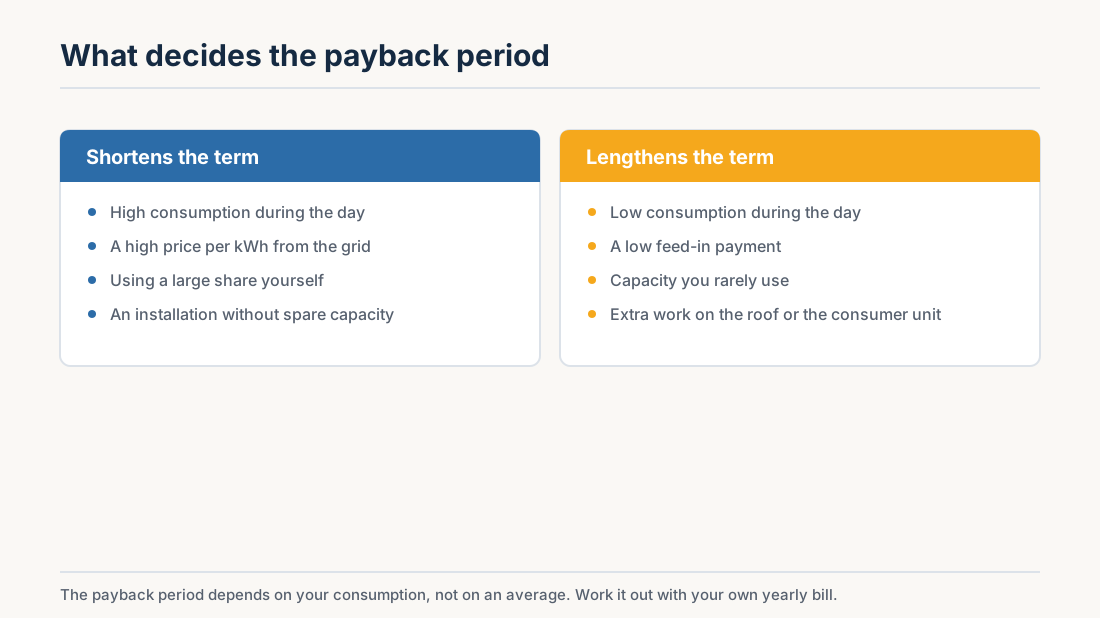
The battery becomes cost-effective if your household generates significant solar surplus and electricity prices are high. Many users see a return on investment within 4 to 7 years, depending on consumption patterns, tariffs, and how much stored energy replaces grid electricity.
What is the lifespan of a HomeWizard battery?
The battery can last up to 15 years or about 6000 charge cycles. Over time, capacity decreases gradually to roughly 70%. Real-world factors like daily cycling and environmental conditions affect degradation, but the LiFePO4 cells maintain stable performance for long periods.
Can the HomeWizard battery provide power during electricity outages?
No. For safety reasons, the system shuts down automatically during grid outages to prevent back-feeding electricity to the grid and protect maintenance crews. Therefore, it does not serve as a backup power source.
How many HomeWizard batteries should I install?
The number depends on your annual energy consumption and solar production levels. A single battery suits smaller households, while two to four units are recommended for larger households or installations with high solar surplus to maximize self-consumption.
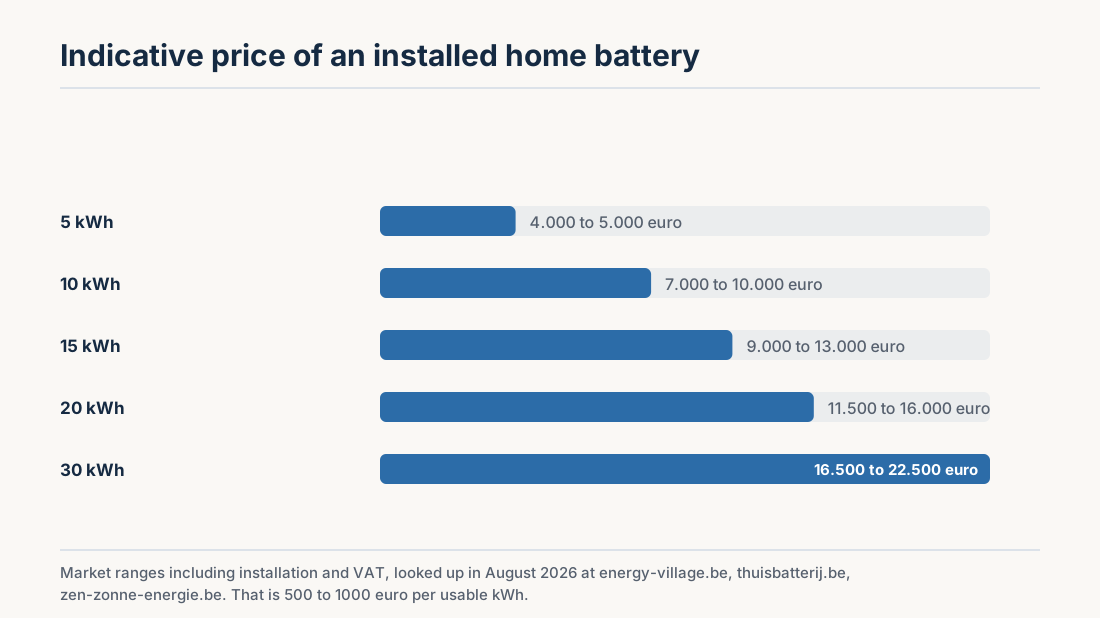
Indicative prices for the Belgian market, checked in August 2026 against energy-village.be, thuisbatterij.be and zen-zonne-energie.be. These are market ranges for an installed system including VAT, not a quotation: your price depends on capacity, brand and the state of your existing installation.
Read also
Ready to cut your energy bill?
Compare quotes for solar panels, home batteries and charging points.