Home battery belgium
Marstek Venus home battery: price and review
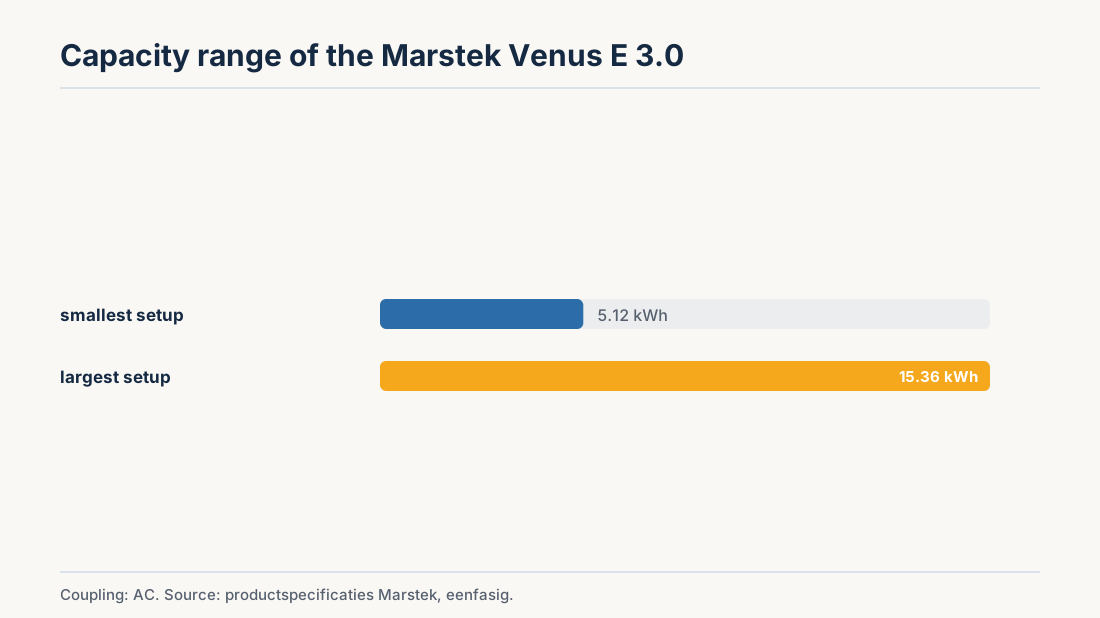
The Marstek Venus battery stores electricity for later use and acts as a plug-in home battery that connects directly to your home network. Most models, such as the Marstek Venus E, offer about 5.12 kWh capacity and support storage from solar panels as well as grid charging. This battery range includes versions like the Marstek Venus C, Venus V2, and Venus V3, each featuring different capacities and functionalities.
How does a Marstek Venus battery work exactly?
The Marstek Venus battery stores electricity using lithium iron phosphate (LiFePO4) cells and releases it when your home requires power. It connects through a standard socket or AC coupling, which allows it to integrate with existing solar installations without needing to modify your inverter.
How does energy storage and release operate?
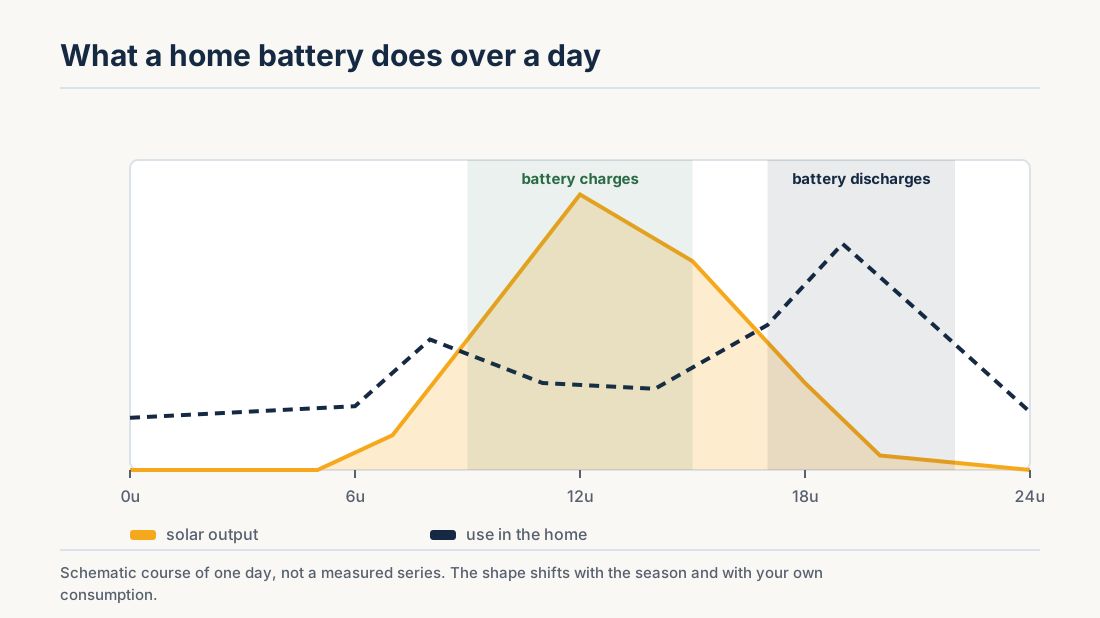
The battery stores surplus solar energy generated during the day and supplies it during the evening. It also charges from the grid during periods of low electricity tariffs and discharges during peak hours, increasing your self-consumption and reducing dependence on the grid.
What role does the Energy Management System (EMS) play?
The integrated Energy Management System monitors your home’s electricity consumption and optimizes charging cycles for improved efficiency. Systems like JULLIX adjust charging based on dynamic energy prices, helping you save money. You can combine this with a self-consumption strategy to maximize your energy use effectively.
How does Marstek Venus Home Assistant integration function?
The Marstek Venus Home Assistant integration enables advanced users to connect the battery to smart home platforms. This allows for automation, such as scheduling charging during cheaper tariff periods or limiting energy export to the grid. Some setups may require additional configuration due to API limitations.
Which technologies or models exist within the Marstek Venus range?
The Marstek Venus range offers several models that vary in capacity, output, and scalability. Each version is designed to meet different user requirements.
What distinguishes the main models?
- Marstek Venus C - A 2.5 kWh compact solution suitable for low energy consumption households.
- Marstek Venus E - A standard home battery with 5.12 kWh capacity.
- Marstek Venus V2 - Improved efficiency and enhanced software control.
- Marstek Venus V3 - The latest version offering advanced EMS features and improved connectivity.
- Marstek Venus D - Offers higher output with modular expansion capabilities.
What specifications does the Marstek Venus E datasheet highlight?
- Capacity: 5.12 kWh
- Power: Up to 2500 W charging and discharging
- Battery type: LiFePO4 (lithium iron phosphate)
- Lifespan: More than 6000 cycles
- Warranty: 10 years
The battery delivers optimal performance when paired with a solar panel system that produces surplus energy during daylight hours.
What is the price of a Marstek Venus battery?
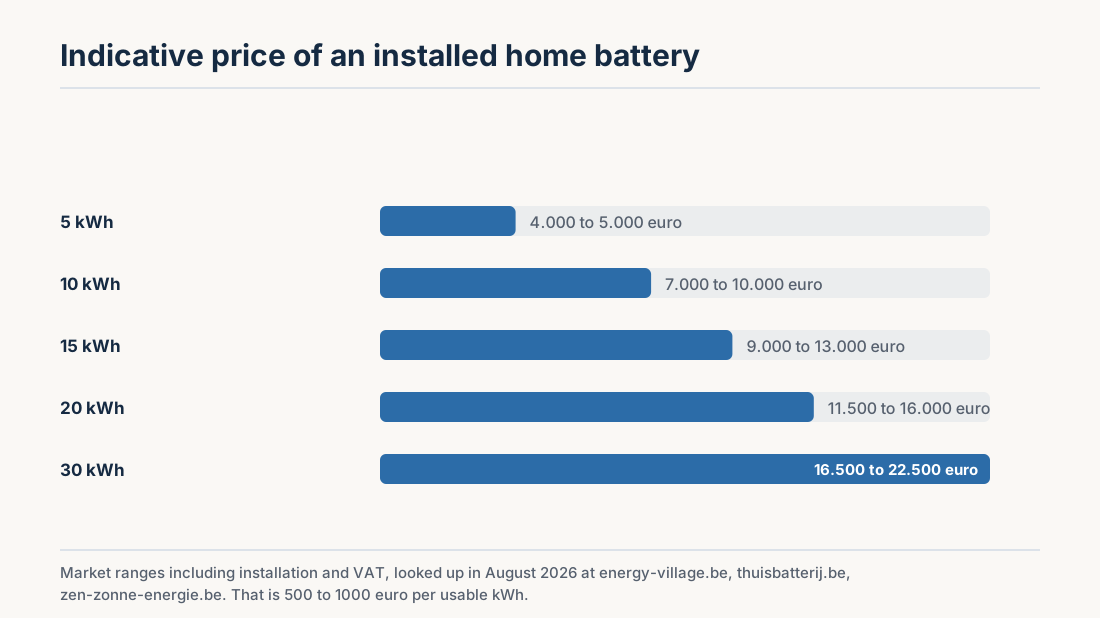
The price of a Marstek Venus battery typically ranges from €1,300 to €2,600 including VAT, depending on the capacity and model. Entry-level models like the Venus C are on the lower end, while expanded systems require a higher investment.
What are the price ranges per model?
- Venus C 2.5 kWh: Around €1,300 including VAT
- Venus E 5.12 kWh: Between €1,300 and €1,900 including VAT
- Venus D systems: Between €1,999 and €2,759 including VAT
Can you provide a calculation example for a typical setup?
A typical setup involves several cost components.
- Battery unit 5.12 kWh: €1,400
- P1 smart meter: €49
- Optional expansion module: €499
- Installation materials and labor: €150
The total investment amounts to approximately €2,098 including VAT. For a broader comparison, you can refer to our complete home battery price overview.
In which situations does a Marstek Venus battery make the most sense?
A Marstek Venus battery is especially suitable for households or small businesses that have variable energy consumption and solar production.
When is it ideal for households?
Households equipped with solar panels benefit significantly. The battery stores excess energy, reducing feed-in losses to the grid, and offers backup power during outages.
Can the battery work effectively without solar panels?
Yes, the battery can be charged from the grid during low-tariff hours and discharge during peak pricing periods. This approach works well with dynamic electricity contracts and smart meters.
How does it fit the needs of small businesses?
Small businesses can reduce energy expenses by shifting consumption to off-peak times. The modular design allows scaling storage capacity up to 20 - 30 kWh to meet higher power demands.
Factors such as solar output levels influence the battery’s effectiveness significantly.
What are the advantages and limitations of the Marstek Venus battery?
Evaluating the benefits and drawbacks helps determine if this battery suits your energy requirements.
What advantages does the system offer?
The system features straightforward installation, modular scalability, and broad compatibility.
- Plug and play installation process
- Compatibility with most inverter types
- Expandable capacity up to 30 kWh
- 10-year warranty for peace of mind
What limitations should you consider?
Some factors require careful consideration, including efficiency and integration challenges.
- Plug-in efficiency ranges between 50% and 70% in some cases
- Potential compatibility issues with certain smart meters and P1 meters
- Limited smart home integration unless additional configuration is performed
Notably, there is a trade-off between ease of installation and efficiency. Fixed battery systems typically offer better efficiency, especially compared to a hybrid solar setup.
How does the Marstek Venus battery compare with traditional home batteries?
The primary differences involve installation type and overall performance efficiency.
What distinguishes plug-in from fixed installation?
A plug-in battery can be installed in minutes without the need for an electrician, while a fixed system requires professional installation but often achieves higher efficiency.
How does their performance compare?
- Efficiency: 50% - 70% for plug-in versus roughly 90% or higher for fixed systems
- Installation: simple plug-in against professional fixed installation
- Flexibility: portable plug-in against permanent fixed system
- Scalability options: modular expansion versus system-dependent limits
Households focused on maximizing efficiency should consider combining storage with professional solar panel installation to achieve the best long-term results.
Choosing the right home battery depends on your energy usage patterns and desired flexibility. The Marstek Venus battery stands out by offering easy installation and a modular design, although its efficiency can be lower compared to fixed battery systems. If you prioritize quick setup and basic energy storage, this solution fits well. However, if performance is your top priority, comparing alternative options is advisable. Use Soleva to request tailored quotes and find the battery system that best matches your energy profile.
Frequently Asked Questions
What is the price of a Marstek Venus battery?
The price ranges from €1,300 to €2,600 including VAT, varying by model and capacity. Smaller units like the Venus C cost less, while those with expandable features increase the total cost. Additional accessories such as P1 meters and expansion modules also affect the overall price.
How efficient is a Marstek Venus battery during everyday use?
Under ideal conditions, the Marstek Venus battery can achieve about 90% efficiency. However, plug-in configurations may perform at a lower efficiency depending on system setup and usage patterns. Real-world efficiency depends on charging habits, grid interaction, and configuration choices. Users focused on high efficiency often consider fixed installations as alternatives for more consistent performance.
Can the Marstek Venus battery operate without solar panels?
Yes, the battery can charge from the electricity grid during periods of low tariffs and discharge during peak hours. This setup benefits apartments or homes without roof space for solar panels. The energy management system automates this charging and discharging process, helping you reduce electricity costs even without solar energy production.
What are the differences between Marstek Venus V2 and V3?
The Venus V2 model offers stable performance and basic smart control features. In contrast, the Venus V3 introduces improved software, enhanced connectivity, and more advanced energy management capabilities. The newer version also integrates more seamlessly with smart meters and mobile applications, making it better suited for users with dynamic electricity tariffs.
Is Marstek Venus Home Assistant integration reliable?
Integration with Marstek Venus Home Assistant works well for advanced users who can manage API configurations or use external tools. While the system provides automation and monitoring features, the complexity of setup depends on firmware versions and device compatibility. Some users report stable operation, whereas others may need additional configuration to ensure consistent data communication.
Indicative prices for the Belgian market, checked in August 2026 against energy-village.be, thuisbatterij.be and zen-zonne-energie.be. These are market ranges for an installed system including VAT, not a quotation: your price depends on capacity, brand and the state of your existing installation.
Read also
Ready to cut your energy bill?
Compare quotes for solar panels, home batteries and charging points.