Solar panels Belgium
Solar panel subsidies Belgium explained
Solar panel subsidies in Belgium now mainly offer indirect financial support such as reduced VAT, loans, and injection tariffs, replacing most direct cash grants. Since 2024, programs like the Fluvius grant ended, changing the subsidy landscape significantly.
What are solar panel subsidies in Belgium and how much financial support can you expect?
Solar panel subsidies in Belgium currently focus on indirect financial incentives rather than fixed installation grants. Key examples include a reduced VAT rate, regional loans, and compensation for surplus electricity injected into the grid.
The main financial supports available now include:
- Reduced VAT of 6% for homes older than 10 years
- Municipal subsidies that vary by city
- A retroactive digital meter subsidy of up to €4,000 for older installations
- Injection tariffs that pay for surplus electricity fed into the grid
- Loans such as MijnVerbouwLening for renovating your home
Earlier programs, including the Fluvius premium, ended on 1 January 2024. Only installations registered before that date remain eligible under specific conditions.
What was the maximum subsidy amount for solar panels?
The highest historical subsidy in Flanders reached €750, representing up to 40% of the total investment. This support gradually decreased before being phased out entirely. Presently, support emphasizes tax benefits and financing options over direct payments.
Are there any free solar panel subsidies currently available in Belgium?
Direct free subsidies no longer exist for solar panels in Belgium. Instead, financial assistance reduces your investment costs through a lower VAT rate or by facilitating financing options. This transition mirrors the decrease in solar panel prices over recent years.
Who qualifies for solar panel subsidies in Belgium?
Eligibility depends on your region, property type, and installation specifics. Most programs target homeowners who improve their property’s energy efficiency.
Key eligibility criteria include:
- Your property’s age must meet requirements for VAT reductions
- The installation must comply with AREI electrical safety standards
- A certified installer must complete the work
- You must apply within specified deadlines matching invoice dates
Which properties can obtain energy grants?
Grants like the Energy Performance Certificate (EPC) grant target homes with poor energy labels. Specifically, houses with an E or F label and apartments with a D label or lower qualify for renovation grants, which can include solar panels.
Are businesses eligible for solar panel subsidies?
Businesses can access financing options like investment deductions and loans rather than direct grants. However, photovoltaic installations are generally excluded from specific green investment premiums.
What is the typical price after applying solar panel subsidies in Belgium?
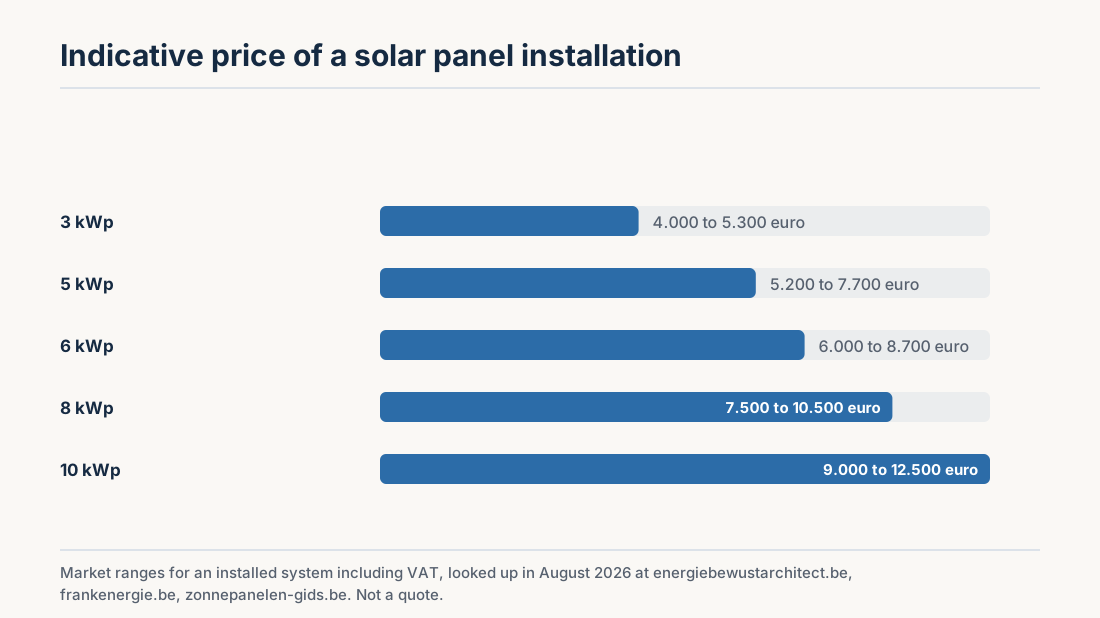
On average, solar panels in Belgium cost approximately €1.26 per watt peak, including installation. Subsidies primarily reduce this price indirectly via VAT reductions or accessible financing options.
Typical system price ranges are:
- Small system (3 kWp): €4,000 - €5,300 including VAT
- Medium system (5 kWp): €5,200 - €7,700 including VAT
- Large system (10 kWp): €9,000 - €12,500 including VAT
For more details about different system types, visit solar panels in Belgium.
Example calculation for a typical solar panel installation
Here is a cost breakdown for a 5 kWp system:
- Solar panels: €4,000
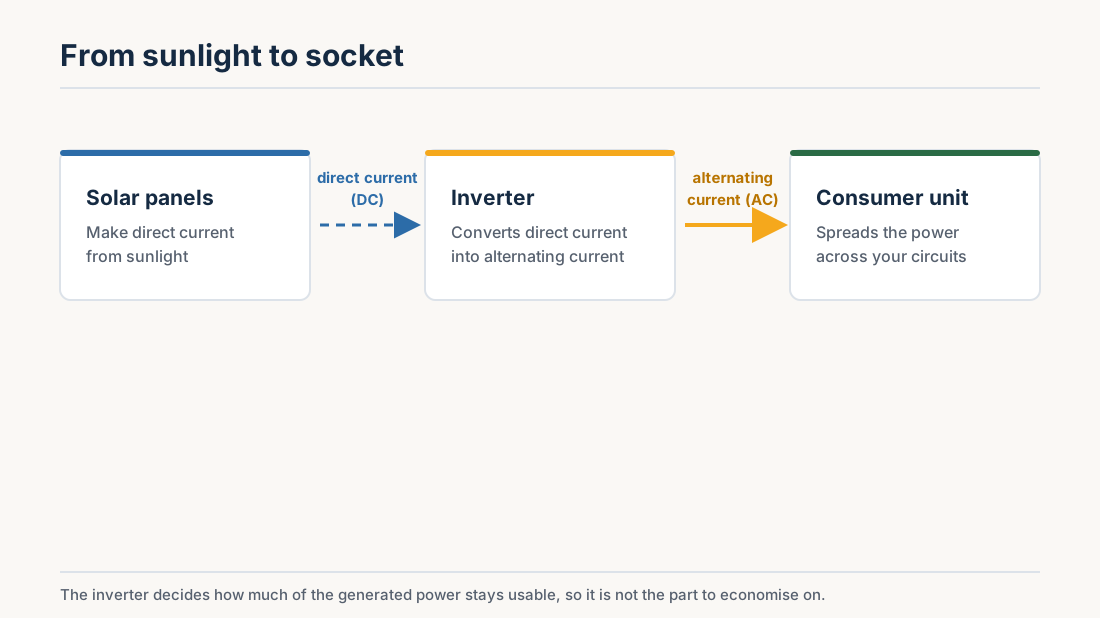
- Inverter: €1,200
- Installation labor: €2,000
- Inspection and system setup: €300
- Total cost: €7,500 including VAT
Applying a 6% VAT rate instead of the standard rate reduces the total price and improves the investment’s payback period.
How much does a single solar panel cost in Belgium?
A single solar panel costs between €250 and €400 including VAT, depending on its efficiency and brand. The total system price varies further based on the roof type and inverter selection.
How do solar panel subsidies in Belgium compare with other financial incentives?
The most effective solar panel subsidies in Belgium now focus on indirect financial incentives rather than upfront grants. Comparing the subsidy systems shows:
- Earlier system: direct cash subsidies up to €750
- Current system: VAT reductions and revenue from energy sales
- Alternative options: loans covering up to €60,000 for renovations
What replaced the prosumer tariff system?
The previous reversed meter system ended, replaced by the injection tariff. This tariff compensates you for the electricity you feed into the grid by measuring it with a digital meter and paying per kWh.
What is the ‘20% rule’ for solar panels?
The so-called 20% rule requires the inverter capacity to be between 90% and 110% of the total solar panel capacity. This range ensures efficient energy conversion while preventing system overload.
How do you apply for solar panel subsidies in Belgium step-by-step?
Application processes depend on the subsidy type. VAT reductions apply automatically, but grants and loans require you to submit formal applications.
- Verify your eligibility based on property age and region
- Request and compare quotes through Soleva
- Complete installation with a certified installer
- Gather invoices and compliance certificates
- Submit applications within the required deadlines
Which documents are necessary for application?
You need to submit invoices, installation certificates, inspection reports, and energy performance certificates when applicable.
How long does the approval process usually take?
Approval times vary by region and program. Municipal subsidies tend to process faster, whereas regional loans may require more extensive verification and thus a longer timeframe.
How can you maintain subsidy eligibility and maximize financial returns?
Maintaining your eligibility requires compliance with technical and administrative rules while optimizing your system’s performance.
Important measures include:
- Installing a digital meter to benefit from injection tariffs
- Regularly monitoring and maintaining system performance
- Meeting inspection standards set by AREI regulations
Combining solar panels with a comprehensive solar energy system increases your self-consumption and improves overall profitability.
How does the injection tariff improve your savings?
The injection tariff pays for surplus electricity you supply to the grid, thus increasing your return on investment and replacing older compensation schemes.
What common mistakes reduce your financial returns?
Poor sizing of the solar system, insufficient performance monitoring, and choosing an uncertified installer can lower efficiency and delay the payback period.
Financial incentives for solar energy in Belgium now primarily consist of indirect benefits such as reduced VAT, income from injection tariffs, and accessible loans. These measures collectively replace previous grant systems while continuing to make solar panel installations financially appealing. To maximize your benefits, compare offers from multiple certified installers and assess your property’s solar potential. Through Soleva, you can efficiently connect with certified professionals and secure the best available subsidies tailored to your situation.
Frequently Asked Questions
Are solar panel subsidies Belgium still worth it today?
Yes, solar panel subsidies in Belgium remain valuable due to indirect financial benefits like reduced VAT, injection tariffs, and the overall decline in installation costs. Most homeowners can recover their investment within 6 to 10 years, particularly by optimizing self-consumption with smart energy management.
What is the price difference with and without solar panel subsidies in Belgium?
The price difference mainly arises from the reduced VAT rate and energy savings rather than upfront discounts. For example, a system benefiting from 6% VAT instead of the standard rate lowers your initial investment considerably. Over time, injection tariffs and reduced electricity bills further enhance your financial savings compared to unsupported installations.
Do solar panel subsidies in Belgium differ by region?
Indeed, subsidies vary across Flanders, Wallonia, and Brussels. Flanders emphasizes loans and digital meter incentives, Brussels offers renovation grants under the RENOLUTION program, and Wallonia provides financing options. Additionally, some municipalities may offer supplementary local support depending on your location.
Can I combine multiple solar panel subsidies in Belgium?
You can combine several financial incentives such as VAT reductions, local grants, and loans, but expenses cannot be reimbursed twice. Combining subsidies works best when eligibility requirements align and you apply within the deadlines specified for each program.
Is solar panel installation in Belgium still profitable without subsidies?
Yes, solar panel installation remains profitable due to decreasing equipment costs and rising energy prices. Even without direct subsidies, the combination of self-consumption and injection tariffs provides long-term savings, with most systems delivering a positive return over their lifespan.
Indicative prices for the Belgian market, checked in August 2026 against energy-village.be, thuisbatterij.be and zen-zonne-energie.be. These are market ranges for an installed system including VAT, not a quotation: your price depends on capacity, brand and the state of your existing installation.
Read also
Ready to cut your energy bill?
Compare quotes for solar panels, home batteries and charging points.