Solar panel subsidies...
Solar panel subsidies Flanders explained
Solar panel subsidies in Flanders currently provide financial support through retroactive premiums, renovation incentives, and tax reductions instead of direct installation grants. Since the Fluvius subsidy ended in 2024, you now rely on alternatives like the digital meter premium and Mijn VerbouwPremie to reduce your investment costs. Additionally, you benefit from a reduced 6% VAT rate and compensation schemes connected to recent energy reforms.
What solar panel subsidies does Flanders currently offer?
Flanders offers indirect financial support for solar panel installations rather than upfront grants. The government has shifted its approach from direct subsidies to methods such as compensation payments, tax benefits, and renovation incentives that encourage energy efficiency.
Here are the main schemes available:
- Digital meter retroactive premium: Up to €4,000 for installations between 2006 and 2020.
- Mijn VerbouwPremie: Up to €850 for home batteries linked to solar systems.
- Reduced VAT rate of 6%: Applies to homes older than 10 years.
- Local municipal subsidies: Vary by city and grid operator.
For a comprehensive understanding, consider reviewing solar panel system basics before calculating your eligibility.
What happened to the Fluvius subsidy?
The Fluvius subsidy ended on 1 January 2024 because installation prices decreased and solar panels became financially viable without direct grants. Only installations registered before April 2024 remain eligible for this support.
Why did solar subsidies change after 2021?
The Flemish government eliminated green certificates for residential solar systems after 2021 and introduced market-based incentives such as injection tariffs and capacity tariffs. This change encourages self-consumption instead of subsidizing surplus energy production.
Who qualifies for solar panel subsidies in Flanders?
Eligibility depends on factors like installation date, property type, and energy performance certificate (EPC). Each subsidy has specific criteria, so matching your situation to the appropriate scheme is essential.
Key eligibility points include:
- Homes with solar panels installed between 2006 and 2020 qualify for retroactive compensation.
- Homes older than 10 years qualify for the reduced 6% VAT rate.
- Low-income households may receive €700 support through Energiehuis.
- Battery subsidies require a digital meter and registration.
Are new installations eligible for subsidies?
New solar panel installations no longer receive direct subsidies. Instead, you benefit from tax reductions, energy savings, and injection tariffs that help recover your investment.
How does the EPC affect eligibility?
The EPC grant is aimed at homes with lower energy ratings such as E or F. Combining solar panels with broader house renovations in Belgium increases your chances of receiving financial support.
What price can you expect after applying solar panel subsidies in Flanders?
The final price after solar panel subsidies in Flanders depends on VAT reductions, retrospective premiums, and system specifications. While direct installation grants no longer reduce upfront costs, the available indirect incentives still offer significant savings.
Here’s how these factors can affect pricing:
- A standard system without any support involves paying the full installation price.
- Applying the 6% VAT reduces the total invoice immediately.
- Retroactive premiums provide compensation after installation.
- Battery subsidies lower costs for energy storage systems.
Example calculation for a typical solar panel system
Consider a 10-panel system with the following costs:
- Solar panels: €4,000
- Inverter: €1,200
- Installation: €2,000
- Electrical upgrades: €800
The total price sums up to €8,000 including VAT. Applying the 6% VAT rate and the later €850 battery premium reduces your effective investment notably. You can use a Renovation cost calculator Belgium to estimate comprehensive project costs, including insulation and other energy improvements.
How do solar panel subsidies in Flanders compare to other incentive programs?
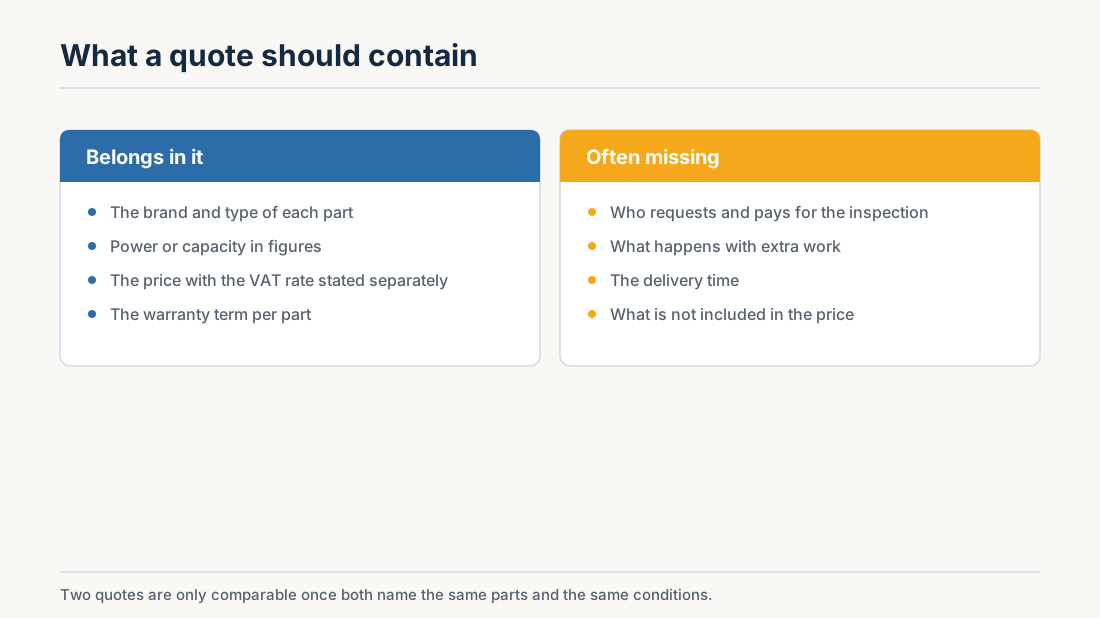
Flanders’ solar subsidies emphasize supporting self-consumption and grid stability rather than rewarding surplus energy production, differing from previous systems and other regional approaches.
Key differences include:
- Previous systems used green certificates with guaranteed returns.
- The current model uses injection tariffs to reward surplus electricity fed into the grid.
- Retroactive premiums have replaced net metering.
- There is increased focus on battery storage and broader renovation support.
What is the injection tariff?
The injection tariff compensates you for surplus electricity you supply to the grid. A digital meter measures energy consumption and injection separately, replacing the old reversing meter system.
Why are batteries encouraged through subsidies?
Battery subsidies promote self-consumption by addressing the capacity tariff. Combining a solar panel system with storage reduces reliance on the grid and increases long-term savings.
How do you apply for solar panel subsidies in Flanders?
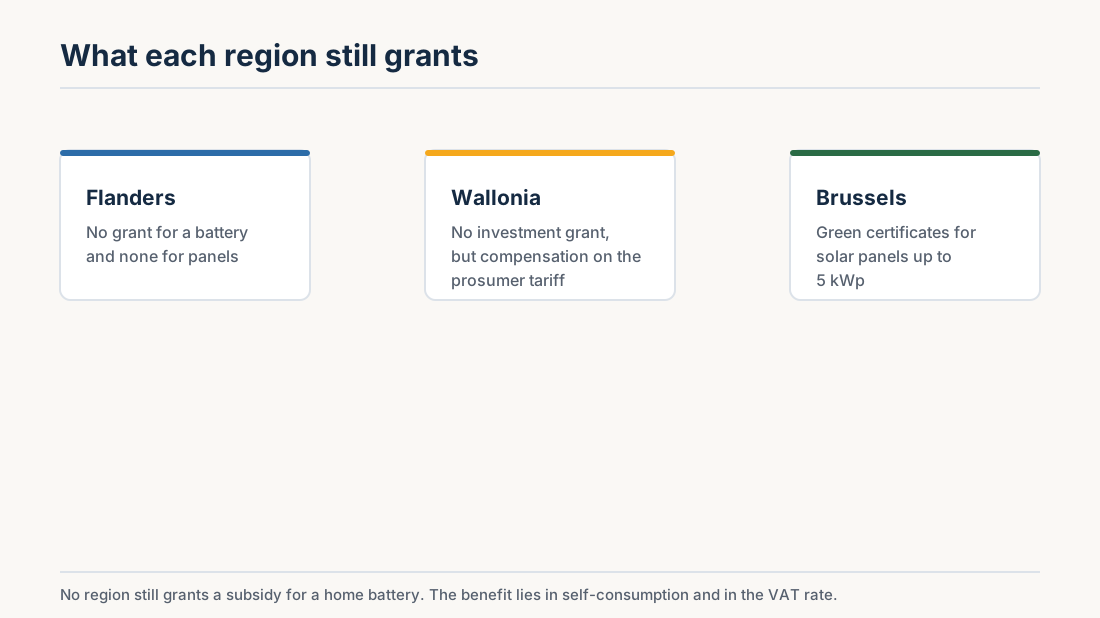
Applications for solar panel subsidies in Flanders are submitted through digital platforms and local energy services. Each subsidy has a defined procedure and deadlines to follow.
The general application process is as follows:
- Install your system via a certified contractor.
- Register the installation with Fluvius within two months.
- Gather invoices and technical documentation.
- Submit your application through Energiehuis or official portals.
- After verification, receive approval and payment.
Where can you get application assistance?
The Energiehuis offers guidance and financial advice. Low-income households may receive an additional €700 support per case.
What application deadlines are important?
Deadlines for retroactive premium applications are strict. Extensions until early 2026 may apply in special cases such as supply problems.
Financial support for solar energy in Flanders has shifted from direct subsidies to incentives that encourage energy efficiency and self-consumption. The key benefits now come from VAT reductions, retroactive compensation, and battery subsidies. To maximize your savings when installing or upgrading a system, start by obtaining a full cost estimate and request multiple quotes through Soleva. This approach helps you find the best combination of financial support and long-term value.
Frequently Asked Questions
What is the price impact of solar panel subsidies in Flanders on a complete installation?
The financial impact primarily involves indirect savings. The 6% VAT rate immediately reduces your invoice, and premiums like battery support lower your costs afterwards. Together, these incentives reduce your total investment and improve the payback period compared to installing without any subsidies.
How have solar panel subsidies in Flanders changed since 2021?
Since 2021, subsidies have shifted from green certificates and direct installation grants to compensation payments, tax benefits, and energy efficiency incentives. This reflects the reduced cost of panels and a focus on maintaining grid stability.
Does applying for subsidies in Flanders involve any costs?
Applying usually has no direct fees, but you must provide proper documentation such as invoices, certificates, and registration. Some homeowners pay for advisory services, particularly when combining multiple subsidies.
What is the typical processing time to receive solar subsidies?
Processing times vary by scheme and completeness of your application, generally ranging from several weeks to a few months. Delays can occur if documentation is incomplete or requires verification.
Can tenants benefit from solar panel subsidies in Flanders?
Tenants benefit mainly through reduced energy bills or participating in shared solar systems in multi-unit buildings. Direct subsidies target property owners, but collective energy projects provide solar access without ownership.
Indicative prices for the Belgian market, checked in August 2026 against energy-village.be, thuisbatterij.be and zen-zonne-energie.be. These are market ranges for an installed system including VAT, not a quotation: your price depends on capacity, brand and the state of your existing installation.
Read also
Ready to cut your energy bill?
Compare quotes for solar panels, home batteries and charging points.