Home battery belgium
capacity tariff home battery Belgium explained
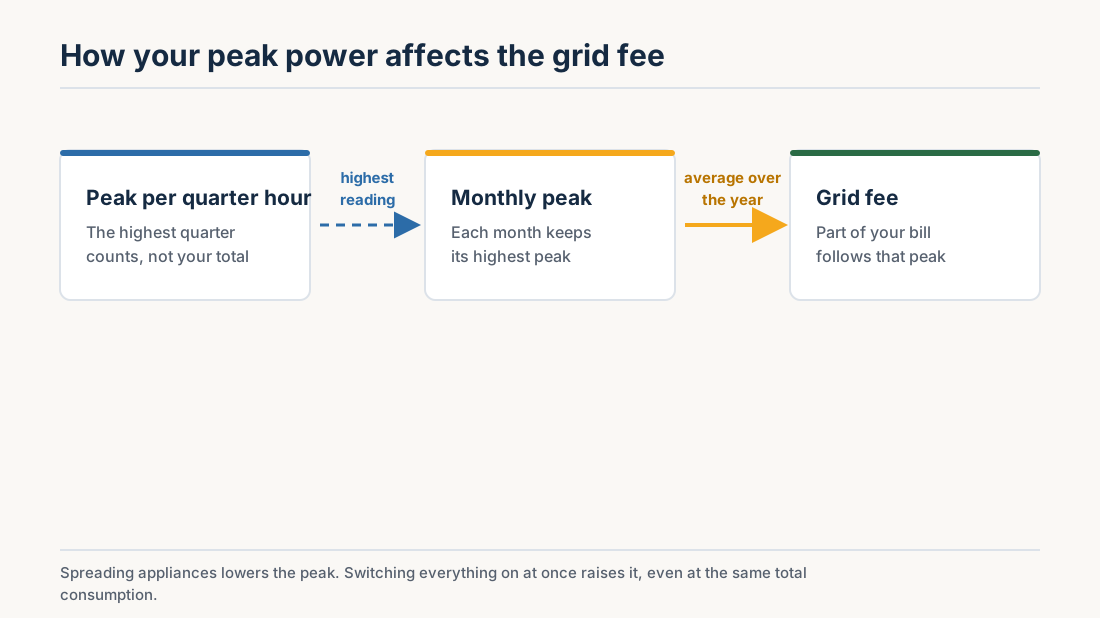
The capacity tariff home battery Belgium system charges your electricity bill based on your highest power peak measured in kilowatts rather than total consumption, which significantly affects the benefits of owning a home battery. In Flanders, this tariff records your peak every 15 minutes using a digital meter and applies a rate of approximately €48.8 per kW annually, encouraging households to reduce their peak usage.
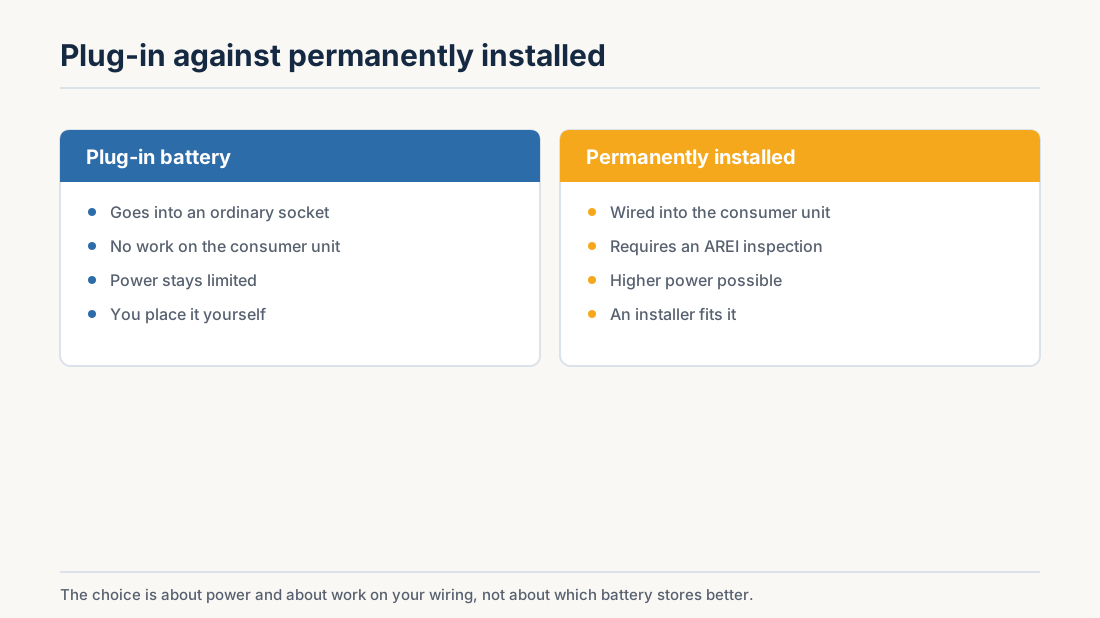
A home battery system stores energy and releases it during peak times, increasing self-consumption from roughly 30 - 40% to 70 - 85%. This guide explains how the capacity tariff works, the impact of a home battery on your electricity costs, expected savings, and how to size your battery system effectively.
What is the capacity tariff in Belgium?
The capacity tariff is a grid fee calculated from your highest electricity usage peak in kilowatts, recorded monthly by your digital meter. This tariff replaces part of the previous system that charged only for total kilowatt-hour consumption.
By basing fees on your peak usage, the tariff reflects the actual strain on the electricity network. Higher simultaneous electricity use increases your bill even if your total consumption remains the same. The Flemish regulator VREG introduced this tariff in 2023 for all customers using digital meters.
How is the peak measured?
Your electricity consumption is recorded every 15 minutes, and the highest reading in the month determines your monthly capacity cost.
What practical impact does this have?
Examples help illustrate the effect.
- A low-usage home with gas heating and peak below 3 kW faces approximately €146 per year.
- An all-electric home with electric vehicle charging and a heat pump, with peaks between 15 and 25 kW, can face up to €1,225 annually.
Thus, managing peak power use becomes more important than solely reducing total energy consumption.
How can a home battery reduce the capacity tariff?
A solar panel battery storage system for home use reduces the capacity tariff by lowering your grid peak through discharging stored energy during times of high demand.
During the day, the battery stores excess solar energy and releases it in the evening when your electricity demand peaks. This storage limits simultaneous grid usage and reduces your peak power draw.
What savings can a battery provide?
Savings vary based on peak reduction and consumption patterns.
- Typical savings on the capacity tariff range from €150 to €300 annually.
- Self-consumption rates can increase from 30 - 40% to 70 - 85%.
- For example, reducing a 15 kW peak to 10 kW can save about €180 per year.
How do smart battery systems maximize performance?
Modern battery systems operate automatically by detecting peak demand moments and discharging instantly to lower grid load. Energy management systems can also coordinate charging of electric vehicles and operation of household appliances to optimize consumption.
To learn how solar panels produce electricity and support battery storage, see how solar panels generate electricity.
What is the price of a home battery under the capacity tariff?
The price per kilowatt-hour of installed home battery capacity typically ranges from €500 to €900, depending on brand, inverter choice, and installation complexity.
Commonly, systems range between 5 kWh and 10 kWh in capacity.
Price overview by system capacity
- 5 kWh system: €4,000 - €5,000 including VAT
- 10 kWh system: €7,000 - €10,000 including VAT
- 15 kWh system: €9,000 - €13,000 including VAT
Calculation example with full cost breakdown
A typical installation might include:
- Battery unit (10 kWh): €5,500
- Hybrid inverter: €1,200
- Installation and electrical wiring: €1,500
- Electrical panel upgrade: €400
- Monitoring system: €200
This results in a total investment of approximately €8,800 including VAT.
Prices for popular options such as the Tesla Powerwall 3 or Huawei home battery fall within similar ranges depending on features and configurations.
Which factors determine your capacity tariff and home battery performance?
Your capacity tariff is influenced mostly by your peak electricity usage behavior rather than total consumption. A home battery’s effectiveness improves when it targets these peak times directly.
Key influencing factors
- Simultaneous use of high-power appliances such as cooking equipment, electric vehicle chargers, and heat pumps
- Battery capacity in kilowatt-hours compared to your solar panel system size
- Having a digital electricity meter
- Type of energy contract, especially if it uses dynamic pricing
Recommended battery sizing
An advised sizing guideline is about 1 kWh of battery capacity per 1 kWp of solar panels installed.
For example:
- A 4 kWp solar system typically pairs with a 4 to 6 kWh battery
- A 10 kWp system benefits from an 8 to 10 kWh battery
To calculate your solar output requirements, visit solar panel system basics.
When is investing in a home battery worthwhile under the capacity tariff?
A home battery becomes financially worthwhile if your peak electricity usage exceeds 5 kW and you have solar panels installed.
The payback period generally falls between 8 and 14 years depending on individual usage and tariff structures.
Situations where a battery is beneficial
- Homes with electric vehicle charging stations
- Properties using heat pumps for heating and cooling
- Households with high electricity usage during evening hours
- Users on dynamic tariff contracts
When a home battery may be less effective
Homes with low electricity consumption and steady usage below 3 kW see limited financial benefit, as their peak is naturally low. In such cases, adding a battery for peak reduction is less cost-effective.
To explore matching solar system configurations, see solar panel configurations.
How do electricity tariffs differ across Belgium and what is the social tariff?
Belgium applies different electricity tariff structures depending on the region and the type of meter installed.
In Flanders, the capacity tariff regulates grid fees. Brussels and Wallonia apply different schemes such as injection tariffs and emerging peak-based pricing models.
Regional tariff differences
- Flanders: utilizes capacity tariffs based on peak power consumption (regulated by VREG)
- Wallonia: offers prosumer tariffs and evolving incentive-based pricing
- Brussels: applies an injection tariff alongside separate billing for consumption
Social tariff electricity Belgium
The social tariff offers reduced energy prices to eligible households. However, it primarily affects the energy price and does not fully remove peak-based grid fees. Therefore, managing peak usage remains important even with this discount.
The shift to peak-based electricity billing changes how you should manage your home’s electricity use. By reducing your highest power peaks with a home battery, you increase your self-consumption of solar energy and lower your grid costs effectively. If your household operates multiple high-power devices or charges an electric vehicle, investing in a battery system becomes even more advantageous. Begin by reviewing your peak consumption data and requesting multiple quotes from providers like Soleva to find the right battery size and savings potential for your situation.
Frequently Asked Questions
Does a home battery fully eliminate the capacity tariff in Belgium?
A home battery does not completely eliminate the capacity tariff because you still rely on the electricity grid at times. It significantly reduces your peak consumption, which lowers the tariff cost. The residual tariff depends on how effectively your battery and your usage patterns prevent simultaneous high electricity loads during peak periods.
What is the ideal size for a capacity tariff home battery in Belgium?
The ideal battery size is generally about 1 kWh per kWp of installed solar panels. Most households with a 4 kWp solar system install batteries between 4 and 6 kWh capacity. Larger homes with electric vehicles or heat pumps often benefit from 8 to 10 kWh systems to reduce peaks more effectively.
How does having a home battery affect electricity costs compared to not having one?
Without a battery, you typically pay higher capacity tariffs yearly due to peak electricity usage. Installing a battery costing between €6,000 and €9,000 helps reduce these peak-related grid costs and improves the use of your solar energy. Over years, the savings partially offset the initial investment.
Can a home battery system in Belgium work without solar panels?
Yes, a home battery can operate without solar panels by charging from the grid during times when electricity prices are low and discharging during peak demand periods to reduce costs. This setup is beneficial if you are on a dynamic tariff but usually offers less savings than integrating solar energy production.
How reliable are capacity tariff home battery calculators in Belgium?
Calculators estimate savings and sizing based on your consumption and peak power data. Their accuracy depends on how well they incorporate actual usage patterns. Calculators using digital meter data tend to provide more reliable projections than generic simulations, helping you make better-informed decisions.
Indicative prices for the Belgian market, checked in August 2026 against energy-village.be, thuisbatterij.be and zen-zonne-energie.be. These are market ranges for an installed system including VAT, not a quotation: your price depends on capacity, brand and the state of your existing installation.
Read also
Ready to cut your energy bill?
Compare quotes for solar panels, home batteries and charging points.