Home battery belgium
home battery Home Assistant Guide & Price
Integrating a home battery with Home Assistant gives you direct control over how energy is stored, monitored, and used in your home, especially when combined with solar panels. This integration optimizes your energy consumption by tracking battery levels, automating charging based on electricity prices, and increasing self-consumption from roughly 30 - 40% to 70 - 85%.
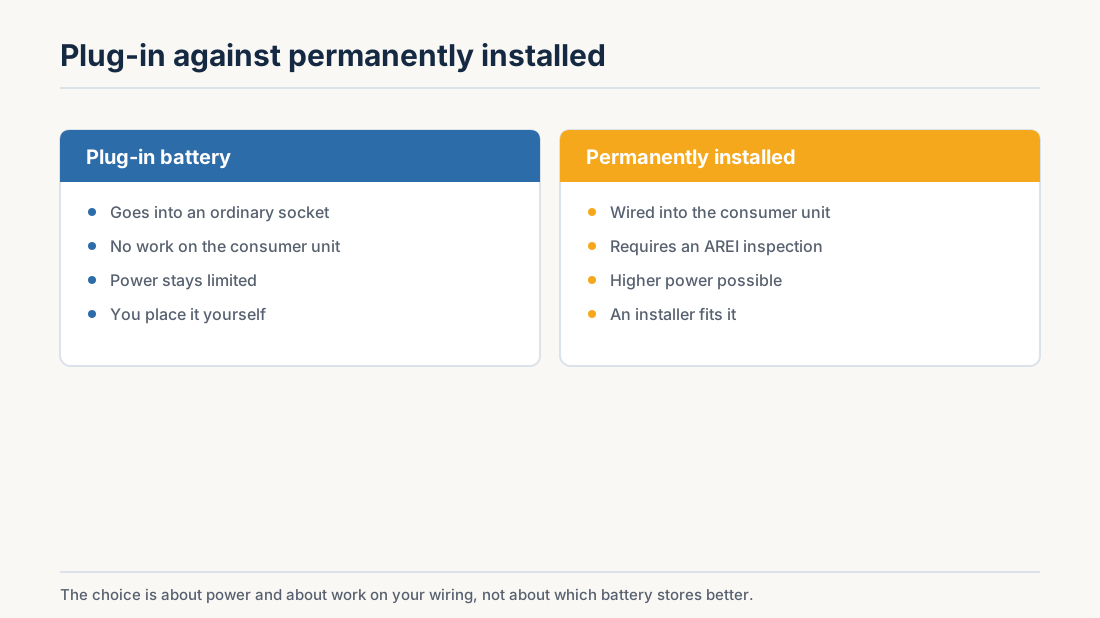
How does a home battery Home Assistant system work exactly?
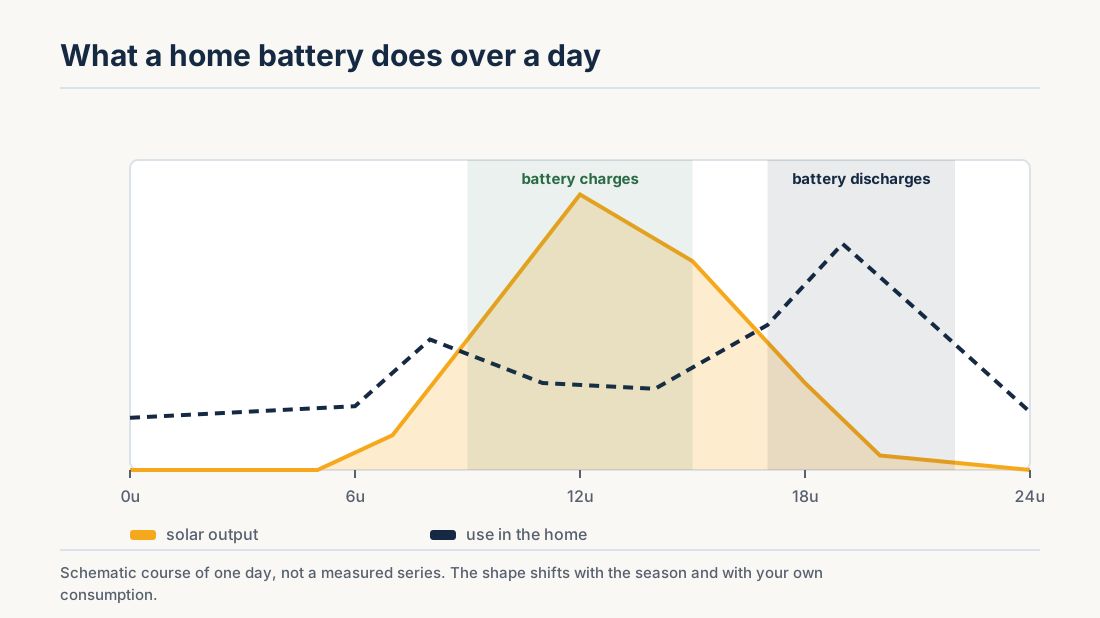
A home battery Home Assistant setup stores surplus solar energy and uses local software to monitor and automate energy flows in real time. It links your battery, inverter, and sensors to a central dashboard that monitors production, consumption, and storage levels.
Home Assistant processes three critical data streams to make automation decisions:
- Battery data, such as state of charge and power flow
- Solar production from your panels
- Grid import and export measurements
By combining these data sources, the system automatically shifts energy use. For example, it stores excess solar energy during the day and supplies it during peak tariff periods.
What does Home Assistant battery monitoring track?
The Home Assistant battery monitor measures energy in kilowatt-hours and instantaneous power in watts. It records charge and discharge cycles and displays this information in the energy dashboard.
This monitoring enables precise tracking of battery efficiency, which typically exceeds 90% for LiFePO4 battery systems.
How does Home Assistant battery automation optimize energy usage?
Home Assistant battery automation uses rules based on electricity prices, solar yield, and household demand. Commonly, the system charges the battery when electricity prices are low and discharges during peak hours.
This approach reduces peak consumption, which is beneficial under capacity tariffs that charge based on the highest grid usage.
Which hardware supports Home Assistant solar battery automation?
Home Assistant solar battery automation relies on accurate data input from devices measuring or exposing energy flows. Three main integration methods exist:
- Battery API integration for direct data communication
- Current transformer (CT) clamp sensors for measuring current flow
- Custom DIY sensors using ESPHome or Raspberry Pi platforms
How do battery APIs integrate with Home Assistant?
Certain batteries offer a local API that sends data directly to Home Assistant, including battery level, voltage, and temperature.
This method provides the most precise and stable integration because data comes directly from the battery system.
What is a CT clamp sensor and how does it function?
A CT clamp sensor measures the electric current flowing through a cable and converts it into energy usage data. Home Assistant then uses this data to calculate power import and export values.
This solution is suitable for both single-phase and three-phase systems and provides measurements for active and reactive power.
Is DIY monitoring using ESPHome reliable?
DIY monitoring solutions incorporating ESPHome and energy meter chips offer flexible energy tracking. They integrate through MQTT protocols and allow full customization.
However, this setup requires electrical knowledge since installation involves working within your electrical cabinet.
What is the cost of a home battery Home Assistant setup?
Prices for a home battery Home Assistant system start around €2,500 including VAT and increase based on battery capacity, inverter type, and installation complexity.
Typical price ranges include:
- 5 kWh system: €4,000 - €5,000
- 10 kWh system: €7,000 - €10,000
- 15 kWh system: €9,000 - €13,000
Detailed cost example for a complete installation
A full setup includes several components as shown below:
- 10 kWh battery unit: €4,800
- Hybrid inverter: €1,200
- Installation and wiring: €1,500
- Energy monitoring hardware: €300
The total investment sums to approximately €7,800 including VAT.
Integrating this system with solar panel installation enhances your savings by replacing grid electricity with stored solar power.
In what households does Home Assistant battery automation offer the greatest benefit?
Home Assistant battery automation delivers the most value in homes with dynamic electricity pricing and solar energy generation.
It is particularly effective for:
- Homes with 3 - 10 kWp solar systems
- Households subject to capacity tariffs
- Users operating electric vehicles or heat pumps
How does automation enhance self-consumption?
Automation increases self-consumption from about 30 - 40% without storage up to 70 - 85%. It achieves this by storing surplus solar energy and using it during periods of high demand.
This reduces dependence on the grid and stabilizes your energy bills.
How is electric vehicle charging managed in battery control?
Home Assistant manages electric vehicle charging and battery discharge to prevent simultaneous high energy draw. It prioritizes either charging the EV or preserving battery capacity based on current conditions.
This strategy reduces energy losses and minimizes peak load charges.
What are the benefits and limitations of a Home Assistant battery system?
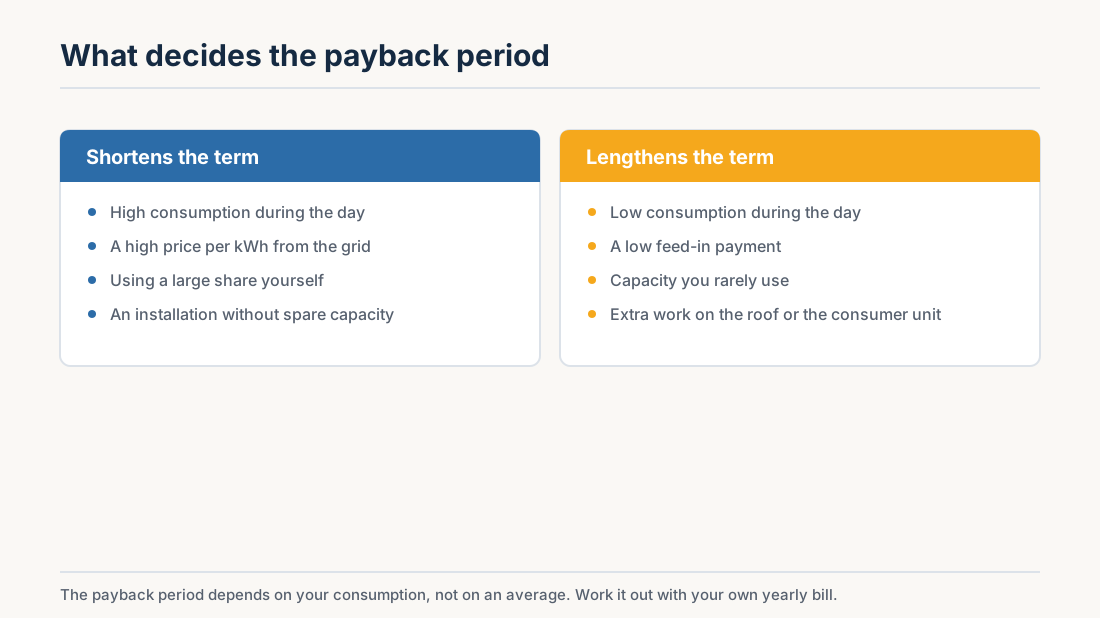
The benefits of a home battery Home Assistant system include enhanced control, cost savings, and energy independence. The drawbacks relate to installation complexity and upfront costs.
Key advantages include improved insight into energy usage and local control without relying on cloud services. The system responds in real time, often polling data within milliseconds.
Limitations involve a steeper setup process and the need for compatible hardware. Professional support may be necessary for sensor installation.
How does a home battery compare to grid-only energy use?
A home battery system with automation significantly outperforms grid-only setups regarding efficiency and cost management.
Here is a comparison:
- Self-consumption rate: 30 - 40% without battery versus 70 - 85% with battery
- Return on investment period: 8 - 10 years versus 6 - 8 years
- Exposure to peak tariffs: High compared to reduced with battery
- Monitoring capabilities: Basic versus advanced dashboard
Automated energy management strongly influences peak usage reduction, which is increasingly relevant with modern tariff structures.
When is a Home Assistant battery setup less advisable?
Choosing a home battery Home Assistant system may not make sense if your energy consumption is low or if your solar generation is minimal.
The system provides limited benefits with fixed electricity tariffs since automation cannot capitalize on price fluctuations.
If simplicity is your priority over advanced control, a standard battery system without complex automation might better suit your needs.
Combining a home battery with smart automation transforms your household energy use by increasing self-consumption of solar power, reducing peak electricity demand, and providing complete transparency over your energy flows. Automation plays a crucial role in achieving these benefits, beyond mere storage capacity. If you are considering installing such a system, evaluate different configurations carefully and obtain multiple quotes through Soleva to tailor the system to your needs and budget.
Frequently Asked Questions
Is a 10kW battery enough to run a house?
A 10 kWh battery covers essential household electricity use during evening and nighttime but does not provide full-day power without solar input. Factors such as heating systems, appliance usage, and overall energy demand influence its performance. Pairing this capacity with Home Assistant automation enhances efficiency and extends usable energy throughout the day and night.
Is a home battery worth it with Home Assistant?
Integrating a home battery with Home Assistant adds value by enabling automation and detailed energy monitoring. This system reacts dynamically to electricity prices and solar production, reducing energy waste and increasing savings compared to systems without smart control.
What are the downsides of battery energy storage systems?
Battery systems require significant upfront investment and rely on proper component integration. Configuring advanced automation platforms can be complex. Additionally, hardware and software compatibility issues may restrict your component choices, requiring careful planning.
Can I install my own house battery?
While you can install monitoring hardware and configure Home Assistant yourself, battery installation demands a certified electrician due to safety regulations. High-voltage connections and grid integration must comply with legal standards, limiting DIY options to non-electrical components.
What is the price of a home battery Home Assistant system?
Prices for a home battery Home Assistant setup start at around €2,500 and rise depending on battery capacity and installation complexity. A typical 10 kWh configuration, including inverter, monitoring equipment, and installation, generally costs between €7,000 and €8,000 including VAT.
Indicative prices for the Belgian market, checked in August 2026 against energy-village.be, thuisbatterij.be and zen-zonne-energie.be. These are market ranges for an installed system including VAT, not a quotation: your price depends on capacity, brand and the state of your existing installation.
Read also
Ready to cut your energy bill?
Compare quotes for solar panels, home batteries and charging points.