Home battery belgium
types of home batteries explained
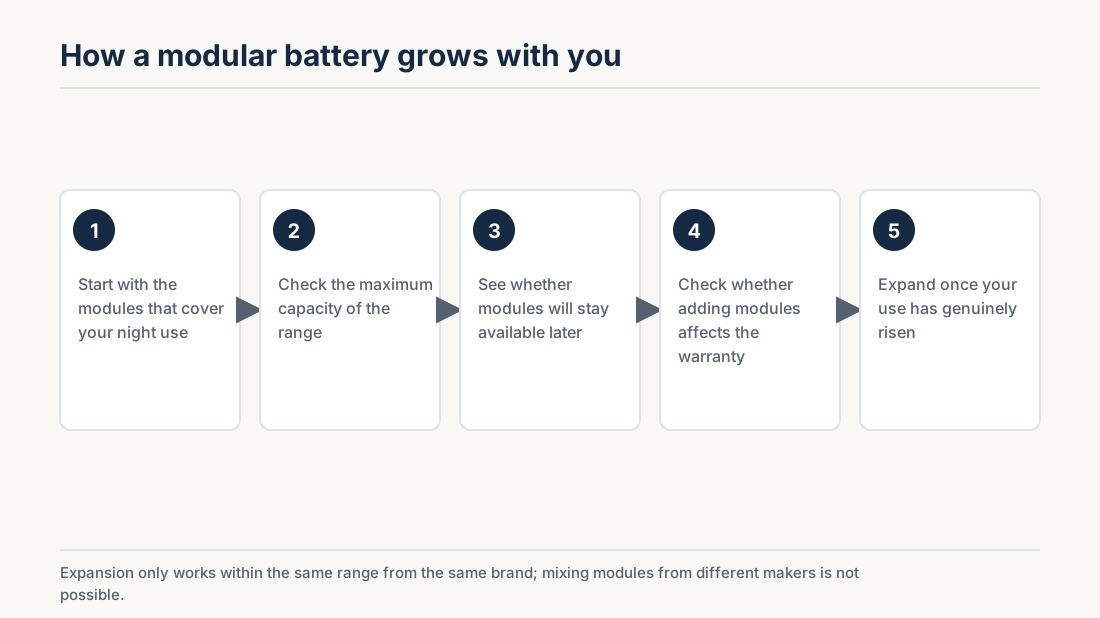
The types of home batteries you choose directly affect how efficiently you store solar energy, the safety of your system, and the longevity of your investment. Most homes rely on lithium-based batteries, including lithium-ion and lithium iron phosphate (LiFePO4), while alternatives like lead-acid and emerging sodium-ion batteries serve specific needs. A typical home battery capacity ranges between 5 kWh and 15 kWh, matching daily energy consumption and pricing strategies.
This guide explains how each battery type works, their lifespan and safety differences, and which systems suit your solar setup and budget best.
What are the most common types of home batteries for solar panels?
The most common types of home batteries for solar panels include lithium-ion, lithium iron phosphate, lead-acid, flow batteries, saltwater batteries, and emerging sodium-ion systems. Each type varies in energy density, lifespan, safety, and maintenance requirements.
Here is an overview of the main categories of solar batteries.
- Lithium-ion batteries offer high energy density and compact size.
- Lithium iron phosphate (LiFePO4) batteries provide improved safety and longer lifespan.
- Lead-acid batteries are affordable upfront but have a shorter lifespan.
- Flow batteries use liquid electrolytes and offer long cycle life.
- Saltwater batteries are environmentally friendly and non-toxic.
- Sodium-ion batteries are an emerging, low-cost alternative.
If you intend to combine battery storage with a solar panel system for your home, lithium-based solutions dominate due to their efficiency and suitability for daily cycling.
What key factors define battery performance?
Battery performance depends on several measurable attributes.
- Capacity (kWh): The total amount of energy stored.
- Depth of discharge: The percentage of capacity usable without damaging the battery.
- Cycle life: The number of complete charge and discharge cycles before capacity degrades.
- Round-trip efficiency: The amount of energy retained after charging and discharging.
Which types of batteries are commonly installed in homes?
Most modern homes use lithium-ion and LiFePO4 batteries, accounting for over 80% of installations. Lead-acid batteries are mainly used in off-grid or backup-only systems. Flow and sodium-ion batteries are less common due to their size and limited residential availability.
How does a home battery store and supply energy?
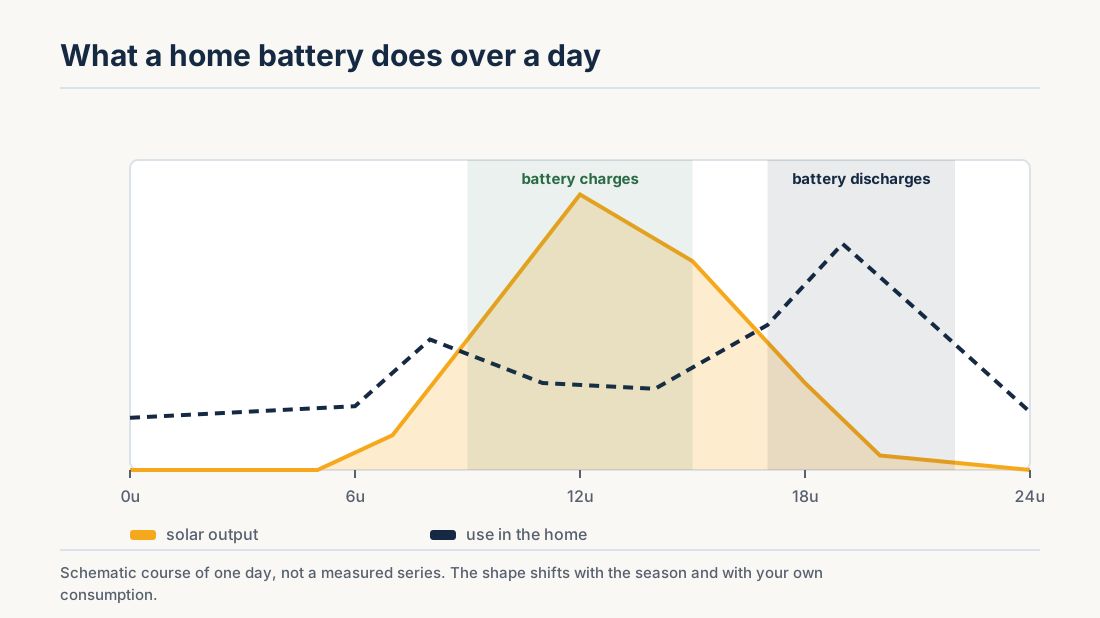
A home battery stores excess electricity generated by solar panels or drawn from the grid and supplies it when your electricity demand exceeds production. The system typically consists of battery cells, an inverter, and a battery management system (BMS) that controls safety and optimizes performance.
Most battery systems integrate with a residential solar installation to maximize your self-consumption and reduce grid dependence.
What is the difference between AC-coupled and DC-coupled storage?
AC-coupled battery systems connect to your home’s electrical grid and work alongside existing solar installations. In contrast, DC-coupled systems connect directly to solar panels, reducing energy conversion losses and improving efficiency.
What role does the Battery Management System play?
The BMS continuously monitors temperature, voltage, and charge cycles to prevent overheating, balance the battery cells, and extend the system’s lifespan.
Which lithium-ion battery types dominate the residential market?
Lithium-ion batteries dominate because of their high efficiency, compact design, and long lifespan, comprising the majority of residential battery systems.
The primary lithium variants include:
- NMC (Nickel Manganese Cobalt) batteries, known for high energy density.
- LFP (Lithium Iron Phosphate) batteries, which provide enhanced safety and a long cycle life.
Between LiFePO4 and LiPo, which is better for home use?
LiFePO4 batteries are preferable for home energy storage due to their higher thermal stability, longer lifespan exceeding 6,000 cycles, and lower fire risk. While LiPo batteries have a higher energy density, they come with shorter lifespans and increased safety concerns.
What factors contribute to the efficiency of lithium batteries?
Lithium batteries typically achieve efficiency rates between 90% and 95% and support daily cycling with minimal maintenance, reducing the effort required for long-term ownership.
What benefits and drawbacks do lead-acid batteries have?
Lead-acid batteries offer a low initial cost but provide lower performance, shorter lifespan, and require more maintenance than modern alternatives.
Key characteristics of lead-acid batteries:
- Cycle life: Approximately 500 to 1,000 cycles.
- Depth of discharge: Around 50% usable capacity.
- Maintenance: Regular inspections and water level checks are necessary.
- Size and weight: Bulkier and heavier compared to lithium batteries.
When is using lead-acid batteries appropriate?
Lead-acid batteries are suitable for off-grid cabins or backup systems with infrequent use. However, frequent daily cycling accelerates their degradation significantly.
Why are lead-acid batteries becoming less popular?
Due to their lower efficiency and higher long-term costs, lead-acid batteries are less competitive compared to lithium-based solutions.
How do flow batteries and saltwater batteries compare for home use?
Flow and saltwater batteries offer high safety and extended lifespans, but they require larger installation spaces and have lower energy densities.
Here is a comparison of these battery types:
- Flow batteries utilize liquid electrolytes, offer scalable capacity, and have very long lifespans.
- Saltwater batteries are non-toxic, safe, and allow nearly 100% depth of discharge.
Why are flow batteries uncommon in residential settings?
Flow batteries require large tanks and complex systems, which make them costly and space-intensive for typical homes.
What unique benefits do saltwater batteries provide?
Saltwater batteries use abundant, environmentally friendly materials and carry no fire risk. Their lower energy density means they need more space for installation.
What is the typical cost of various home battery types?
Prices for home batteries vary based on chemistry, capacity, and installation complexity.
Estimated price ranges per kilowatt-hour (kWh) installed are:
- Lithium-ion: €1,000 - €1,300.
- LiFePO4: €1,100 - €1,500.
- Lead-acid: €200 - €400.
- Flow batteries: €1,500 - €2,500.
Example cost breakdown for a 10 kWh lithium battery system
- Battery unit: €9,000
- Inverter: €1,200
- Installation: €1,500
- Electrical upgrades: €400
The total cost adds up to approximately €12,100 including VAT.
Which battery capacity is better: 100Ah or 200Ah?
With 200Ah storing twice the energy of 100Ah, it extends backup time. The optimal choice depends on your daily energy usage and desired autonomy duration.
In what scenarios do each battery type fit best?
The suitability of different home battery types depends on your energy usage patterns, budget, and available space.
- For daily solar energy use: Lithium-ion or LiFePO4 batteries are ideal.
- For low-budget backup needs: Lead-acid batteries remain an option.
- For large-scale storage: Flow batteries are preferable.
- For environmentally conscious homes: Saltwater or sodium-ion batteries are suitable.
Homes with a full solar energy installation benefit most from lithium-based systems due to their ability to handle frequent cycling efficiently.
What are the advantages and disadvantages of each home battery type?
Each battery type has trade-offs in cost, safety, and performance.
Lithium-ion batteries offer high efficiency and compact design but come with a higher initial price. LiFePO4 batteries improve safety and longevity, presenting a balanced option for many households. Lead-acid batteries reduce upfront costs but lead to more frequent replacements. Flow batteries provide long lifespans but require significant space for installation.
When might certain batteries not be suitable?
You should avoid specific battery types in these situations:
- Do not use lead-acid batteries for systems with daily cycling.
- Avoid flow batteries in small homes due to size and cost.
- Do not install lithium batteries without professional setup to ensure safety.
Overall, LiFePO4 batteries represent the best long-term value unless your situation calls for a specialized solution.
How do home batteries compare with alternative energy storage options?
Adding home batteries to your solar setup increases self-consumption from around 30% - 40% up to 70% - 85%. Compared to generators, batteries operate silently and produce no emissions. Relative to relying solely on the grid, batteries help stabilize electricity costs and reduce exposure to peak pricing.
Selecting the right home battery depends on how you use electricity and your expected time in the property. Lithium-based batteries, particularly LiFePO4, offer the best combination of safety, lifespan, and everyday performance. Other types may suit specialized needs. To optimize your solar savings, match battery capacity to your consumption and obtain multiple quotes from providers to compare installation options.
Frequently Asked Questions
What kind of maintenance do different types of home batteries require?
Lithium-based batteries need almost no maintenance because their integrated software monitors performance and safety automatically. Lead-acid batteries require regular inspections, water-level checks, and proper ventilation. Flow batteries need periodic monitoring of pumps and electrolytes. Maintenance influences the reliability and ownership effort of your system over time.
How do temperature conditions affect battery performance?
Temperature impacts both efficiency and lifespan. LiFePO4 batteries perform reliably in cold and hot climates thanks to their stable chemistry. Standard lithium-ion batteries lose efficiency in extreme cold, while lead-acid batteries degrade faster when temperatures fluctuate. Installing batteries in controlled environments like garages helps maintain performance and safety.
What is the price range for installing a home battery system?
Installing a complete home battery system typically costs between €8,000 and €16,000 including VAT. The price depends on capacity, technology type, system features such as backup functionality, and installation complexity, including any necessary electrical upgrades.
Can home batteries operate without solar panels?
Yes, home batteries can store electricity from the grid during off-peak hours to use later, optimizing energy costs. However, pairing batteries with solar panels increases savings and energy independence significantly.
How long does it take to recover the cost of a home battery?
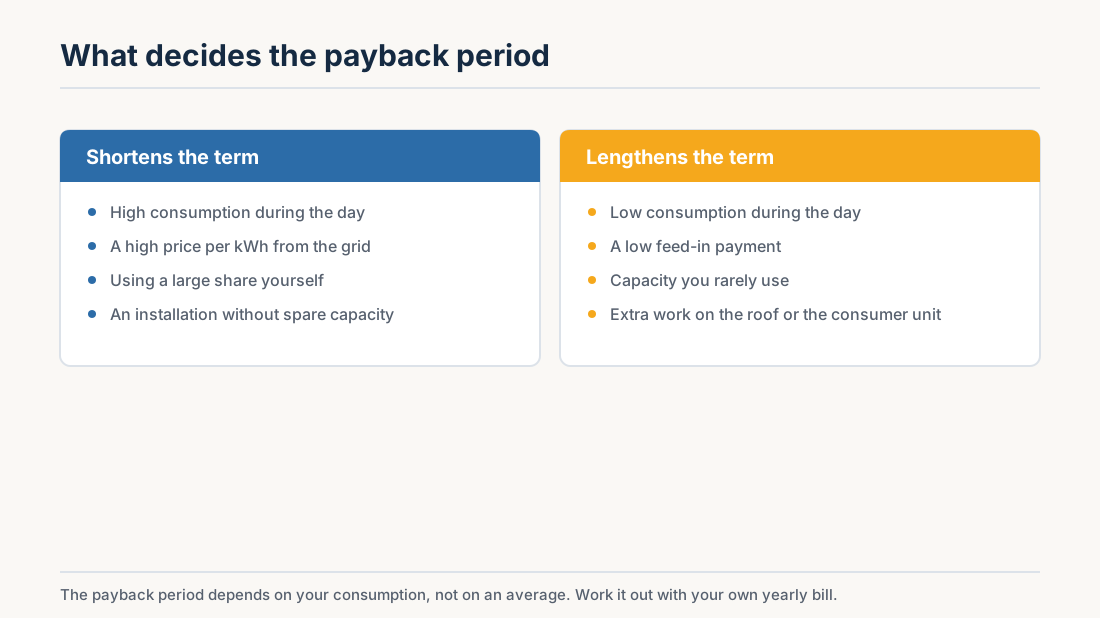
The payback period generally ranges from six to ten years and depends on electricity costs, usage patterns, and system size. Homes with high self-consumption and dynamic electricity tariffs experience faster returns, especially when using solar energy.
Indicative prices for the Belgian market, checked in August 2026 against energy-village.be, thuisbatterij.be and zen-zonne-energie.be. These are market ranges for an installed system including VAT, not a quotation: your price depends on capacity, brand and the state of your existing installation.
Read also
Ready to cut your energy bill?
Compare quotes for solar panels, home batteries and charging points.