Home battery belgium
best plug and play battery | Prices & Comparison
The best plug and play battery efficiently stores electricity through a standard socket and reduces your reliance on the grid without requiring any installation work. Most of these batteries use LiFePO4 battery technology and provide modular capacities between 2.7 kWh and 10 kWh, with prices usually starting from €1,200 incl. VAT. By reading on, you will gain clear insights to make the right choice for your energy needs.
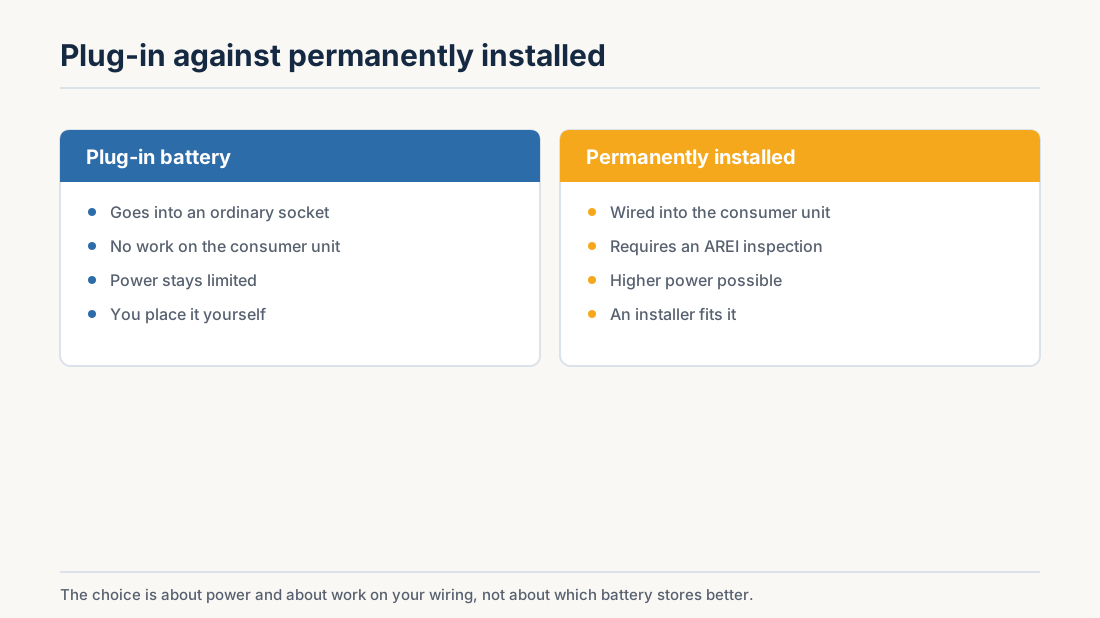
This guide explains how plug-in batteries operate, how to compare different models, the expected price range, and how to select the appropriate capacity for your household.
How Does a Plug-In Battery Work?
A plug-in battery stores electricity from your home grid and supplies it back through the same socket, increasing your self-consumption without altering your electrical system. The system operates in three defined stages and synchronizes with your energy usage pattern.
What Occurs During Charging, Storage, and Discharge?
The battery’s operation involves three main cycles.
- Charging: The battery collects electricity from solar panels or during low-tariff periods on the grid.
- Storage: The collected energy is stored in lithium cells managed by a Battery Management System (BMS).
- Discharge: The stored energy is supplied back to your home when consumption increases.
Thanks to LiFePO4 chemistry, modern plug-in batteries reach efficiencies of approximately 90 to 95 percent.
How Is the Battery Connected to Solar Panels?
The connection uses AC coupling. Your solar inverter sends electricity into your home grid, while the battery stores any surplus. This setup is compatible with nearly all solar panel systems and avoids direct wiring between solar panels and the battery.
Which Technologies Define the Best Plug and Play Battery?
The best plug and play batteries feature LiFePO4 cells, modular designs, and integrated smart control systems, which collectively enhance lifespan, safety, and flexibility.
Why Is LiFePO4 Chemistry Commonly Used?
Lithium iron phosphate delivers excellent thermal stability and a long usable life, commonly achieving 6,000 to 8,000 cycles or 10 to 15 years of daily use. This chemistry minimizes overheating risks and eliminates the use of cobalt.
What Benefits Does Modular Capacity Offer?
Modular battery designs allow you to expand capacity without replacing the entire system, increasing long-term value.
- Starter systems range from 2.7 to 5 kWh, suitable for small households.
- Mid-range systems offer 5 to 10 kWh, fitting families’ needs.
- Expandable systems reach up to 20 kWh for higher consumption households.
How Do Smart Meters and Apps Enhance Battery Performance?
Smart meters with P1 interfaces allow real-time energy monitoring. They ensure the battery charges during times of excess solar production and discharges during peak demand periods. This function increases savings, especially when paired with dynamic energy tariffs.
What Is the Price Range of a Plug-In Battery?
The cost of a plug-in battery varies from €1,200 to €4,000 incl. VAT, influenced by capacity, power output, and scalability. Smaller units offer a lower entry price, whereas modular systems require a higher investment.
How Do Prices Correspond to Battery Capacity?
Typical price ranges by capacity are outlined below.
- 2 to 3 kWh: €1,200 - €2,000
- 4 to 6 kWh: €1,800 - €3,000
- 7 to 10 kWh: €7,000 - €10,000
Can You See a Cost Breakdown for an Average System?
A modular 5 kWh system typically costs as follows:
- Battery unit (5 kWh): €2,200
- Smart meter module: €150
- Monitoring app setup: €50
- Additional wiring and safety accessories: €100
The total investment sums up to approximately €2,500 incl. VAT. This remains more affordable than a fixed solar battery system because installation expenses are not required.
In What Situations Does a Plug-In Battery Provide the Most Value?
A plug-in battery is most suitable for homes that already generate or consume electricity variably.
Which Households Gain the Greatest Benefits?
The following examples illustrate households that benefit from plug-in batteries.
- Homes equipped with solar panels producing excess daytime energy
- Users on dynamic electricity tariffs seeking cost savings
- Apartments or dwellings with limited space for fixed installations
- Renters who need portable energy storage solutions
For instance, matching a battery with a correctly sized solar panel array significantly improves your home’s self-consumption.
How Does a Capacity Tariff Affect Savings?
In regions such as Belgium, the capacity tariff rewards customers with reduced peak consumption. By supplying stored energy during peak periods, a plug-in battery lowers your grid demand and subsequently decreases electricity costs.
What Are the Advantages and Limitations of Plug-In Batteries?
Plug-in battery systems offer practical benefits but also have some technical limitations.
What Key Advantages Should You Expect?
These systems provide immediate and convenient advantages.
- No installation required: Simply plug the system into a standard socket.
- Lower upfront cost: Avoid electrician fees and grid modifications.
- Flexibility: Easily move or expand the battery as needed.
- Compatibility: Compatible with existing solar energy systems.
What Limitations Are Commonly Seen?
Be aware of some performance constraints.
- Power limits: Typically around 800 W per socket.
- No full backup during outages: Most systems stop operating if the grid fails.
- Indoor environment needed: Batteries require stable temperature conditions.
If your household frequently uses high-power appliances simultaneously, a plug-in battery may quickly reach its limits.
How Does a Plug-In Battery Compare to a Fixed Home Battery?
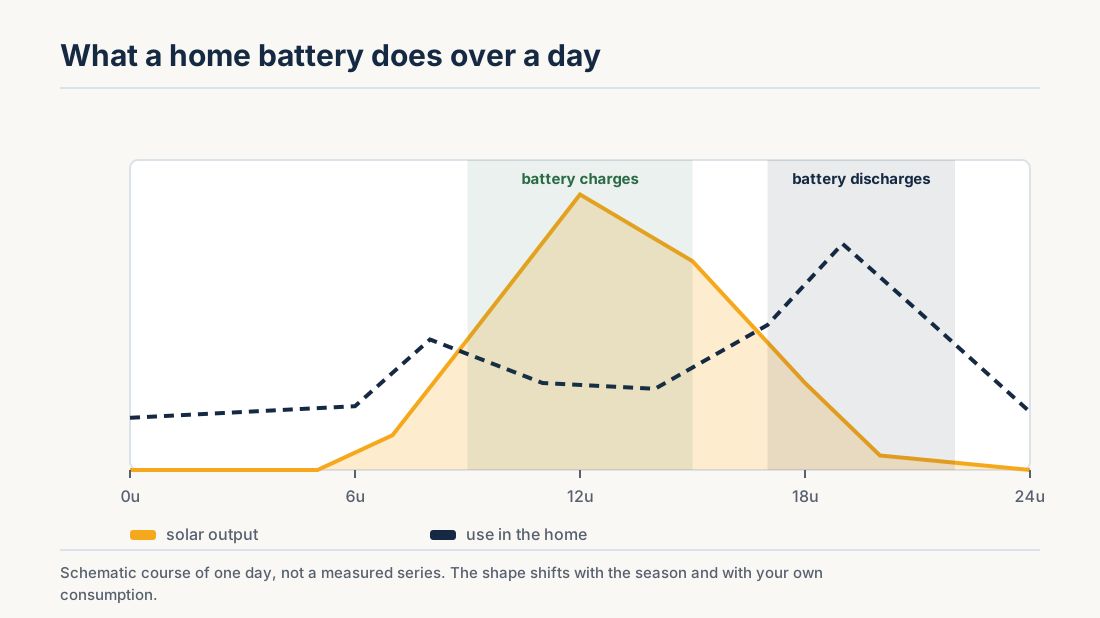
Plug-in batteries differ from fixed systems mainly in installation effort, power capacity, and scalability.
What Are the Main Differences?
The following points explain the contrasts between the two options.
- Installation: Plug-in batteries require no electrician, while fixed systems need professional installation.
- Power output: Plug-in systems are limited to approximately 800 W, fixed systems provide multiple kilowatts.
- Price: Plug-in batteries have a lower entry price, but fixed systems can scale to higher capacities.
- Backup capabilities: Fixed batteries can supply power during outages; plug-in models typically cannot.
If you intend to install a larger system, choosing a fixed battery combined with a complete solar solution will deliver better long-term performance.
When Is a Plug-In Battery Not Recommended?
You should avoid plug-in batteries if you operate many high-power devices simultaneously or require continuous backup power during outages. In these cases, fixed battery systems perform better and provide more reliability.
Selecting the right battery depends on your electricity consumption patterns rather than searching for a universally “best” option. Plug-in batteries suit households seeking quick installation, cost savings, and expansion flexibility. If your power demands are higher or you need backup during power failures, a fixed home battery is more appropriate. To make an informed decision, assess your daily energy use and compare at least three different solutions through providers like Soleva to find the optimal system for your home.
Frequently Asked Questions
What defines the best plug and play battery for solar energy?
The best plug and play battery for solar energy matches your household’s consumption needs and supports modular expansion. Batteries with LiFePO4 chemistry and smart meter compatibility deliver efficient performance. Outdoor-rated models provide installation flexibility, whereas indoor variants suit apartment settings. Your choice depends on preferences for simplicity, expandability, and advanced energy management.
What range of prices should I expect for the best plug and play battery?
Prices typically range from €1,200 to €4,000 incl. VAT depending on battery capacity and features. Smaller 2.7 kWh units are more affordable, while expandable systems cost more. Including accessories like monitoring modules slightly increases the total cost but enhances system performance and convenience.
What is the typical lifespan of a plug-in battery?
Plug-in batteries usually last between 10 and 15 years, with 6,000 to 8,000 charge cycles, thanks to LiFePO4 technology. Lifespan depends on usage and environmental conditions. Installing the battery indoors and avoiding temperature extremes help maintain capacity, which generally retains around 80 percent after ten years.
Is it possible to use a plug-in battery without solar panels?
Yes, a plug-in battery can operate without solar panels by charging during periods of low electricity rates and discharging when prices are higher. This suits homes with dynamic tariff contracts. Although savings may be lower than solar-integrated setups, the system still optimizes electricity costs by exploiting price differences.
Are plug-in batteries safe for everyday use?
Plug-in batteries are safe when they meet CE, IEC, and UN38.3 certifications and include a built-in Battery Management System. LiFePO4 cells reduce overheating risks and enhance stability. For safe operation, connect to grounded sockets, avoid extension cords, and place the battery in a dry area with stable temperatures.
Indicative prices for the Belgian market, checked in August 2026 against energy-village.be, thuisbatterij.be and zen-zonne-energie.be. These are market ranges for an installed system including VAT, not a quotation: your price depends on capacity, brand and the state of your existing installation.
Read also
Ready to cut your energy bill?
Compare quotes for solar panels, home batteries and charging points.