Home battery belgium
sodium ion home battery price & comparison
A sodium ion home battery stores electricity using abundant sodium instead of lithium, providing safe and stable energy storage for your solar system. This technology operates reliably between -40°C and 70°C, reaching energy densities up to 175 Wh/kg, close to lithium-based systems. Interest in sodium-ion batteries for home solar systems grows due to their lower material costs and enhanced safety features.
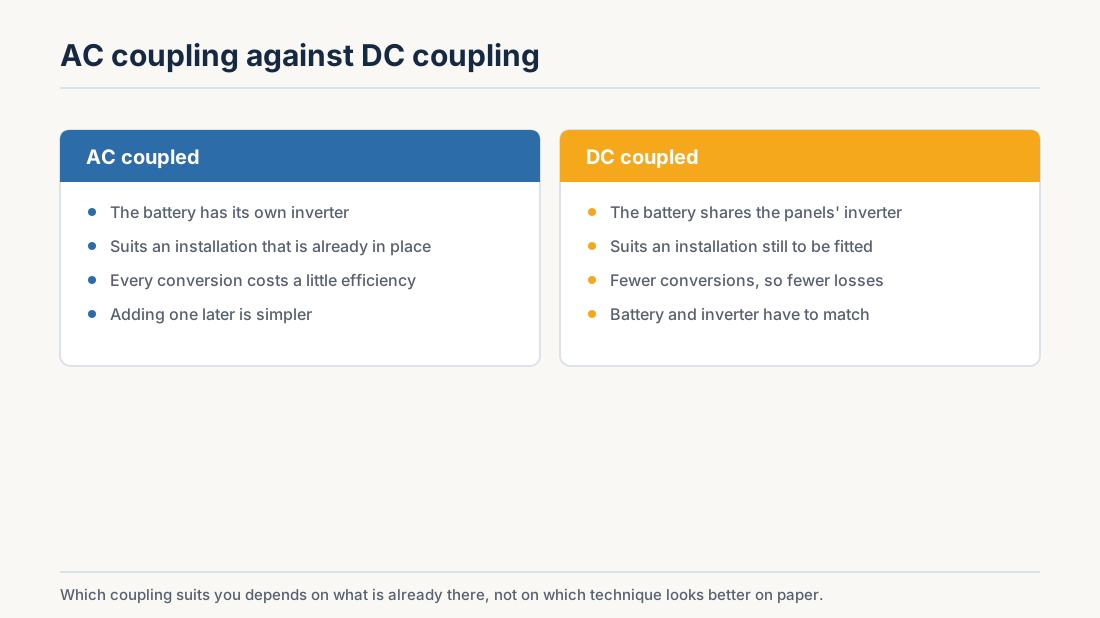
What makes a sodium ion home battery suitable for solar energy?
A sodium ion home battery effectively stores surplus electricity, releasing it when demand increases while maintaining safety. Using sodium ions as charge carriers enhances thermal stability and lowers the fire risk compared to lithium systems.
Sodium’s abundance is a key advantage. It is over 1000 times more abundant than lithium, which helps stabilize supply chains and reduces long-term price fluctuations. This aspect is important when pairing storage with solar panels for your home, where system costs influence payback periods.
How does temperature performance affect real usage?
Reliable operation depends on temperature tolerance. Sodium batteries function efficiently between -40°C and 70°C without needing heating systems. In contrast, lithium batteries often require heating in cold climates, which reduces efficiency and increases costs.
What capacity options are available for sodium ion home batteries?
Manufacturers provide modular sodium ion battery systems with configurations such as:
- 4.5 kWh battery modules suitable for small households
- 10 kWh systems for average energy use
- Expandable arrays up to 30 kWh for higher energy demands
This modular approach allows you to scale storage capacity without replacing the entire system.
How does a sodium ion home battery compare with lithium-ion alternatives?
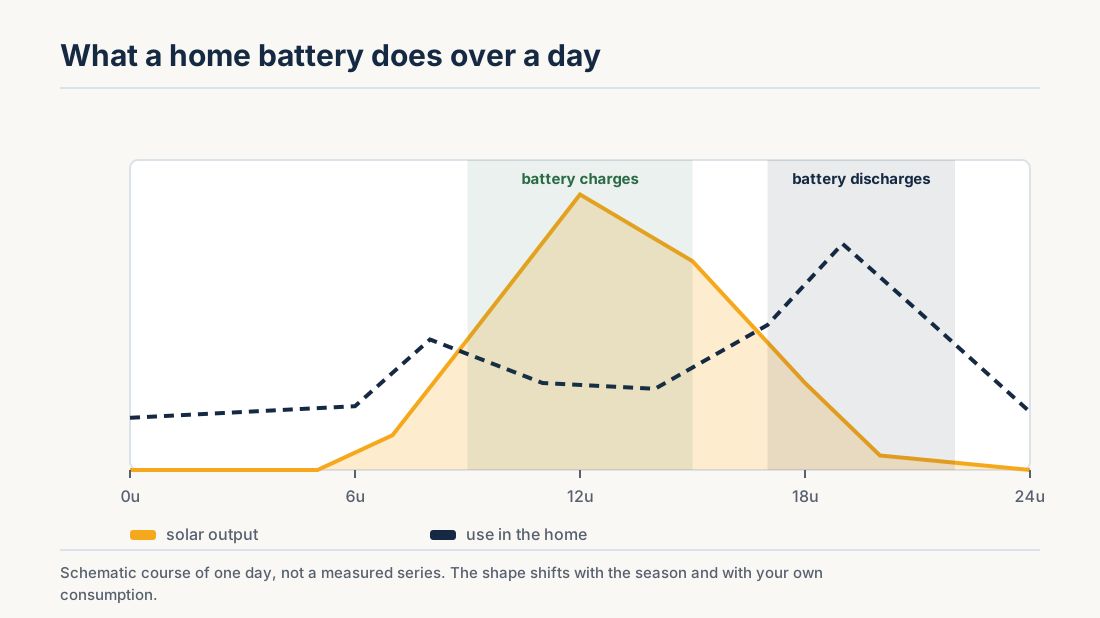
Comparing sodium ion and lithium-ion batteries reveals clear differences in energy density, safety, and cost.
Key performance factors include:
- Energy density: Sodium reaches about 175 Wh/kg, while lithium achieves approximately 200 Wh/kg.
- Operating temperature: Sodium batteries perform in extreme cold without heating requirements.
- Safety: Sodium chemistry lowers thermal runaway risks significantly.
- Pricing: Sodium uses abundant materials, which lowers long-term costs.
- Lifespan: Sodium systems often exceed 6000 to 8000 charge cycles.
Why is sodium safer than lithium?
Sodium batteries use less reactive materials and exclude cobalt, reducing fire hazards and allowing installation flexibility both indoors and outdoors.
In what cases is lithium still the preferred option?
Lithium batteries offer higher energy density, resulting in more compact units suitable for limited installation spaces. If your available space is restricted, lithium remains advantageous.
What is the price of a sodium ion home battery?
The price of a sodium ion home battery typically aligns with mid-range lithium-ion systems, with early models priced around €3,990 incl. VAT for approximately 7.7 kWh capacity. Prices vary depending on inverter quality, installation complexity, and system size.
Typical price ranges include:
- 4.5 kWh systems: €4,000 - €5,000 incl. VAT
- 7 - 10 kWh systems: €7,000 - €10,000 incl. VAT
- Expandable systems up to 30 kWh: €16,500 - €22,500 incl. VAT
How much does a full sodium ion battery system cost?
A complete 10 kWh setup usually consists of several components. The estimated cost breakdown is:
- Battery modules: €4,800
- Hybrid inverter: €1,500
- Installation services: €1,200
- Electrical system upgrades: €500
The total investment sums up to approximately €8,000 incl. VAT.
Compared to a standard solar panel installation, adding storage increases flexibility rather than direct power generation.
What maintenance does a sodium ion home battery require?
Sodium ion battery systems require minimal maintenance due to their stable chemistry and lower sensitivity to temperature changes. Most units include an integrated Battery Management System (BMS) to ensure optimal performance and safety.
Which monitoring features does the BMS provide?
The BMS continuously monitors and protects the system by offering:
- State of charge tracking
- Overcharge protection
- Temperature regulation
- Remote energy management capabilities
How often should you maintain a sodium ion battery?
You should review system performance annually through software diagnostics. Physical inspections every three to five years help verify electrical connections and ventilation status. Compared to lithium systems, sodium batteries generally require less frequent maintenance due to fewer thermal concerns.
Which home situations are best suited for sodium ion batteries?
A sodium ion home battery fits households that value safety, cost stability, and installation versatility.
When does this technology perform at its best?
Homes experiencing moderate to extreme temperature variations benefit most from sodium batteries. Outdoor installations perform consistently without the need for heating systems.
What types of households benefit most?
This solution suits:
- Families with 4,000 - 6,000 kWh annual electricity consumption
- Homes producing solar surplus during daylight hours
- Users who prefer a long-lasting battery over a compact design
Integrating a sodium ion battery with modern solar panels can increase self-consumption rates and reduce dependence on the grid.
What factors should you consider when choosing the best sodium ion home battery?
The best sodium ion home battery balances safety, scalability, and smart controls, not just capacity.
Which specifications are essential?
You should prioritize the following technical features:
- Cycle life exceeding 6,000 charge cycles
- Efficiency close to 95%
- Expandable modular design for future capacity upgrades
- At least a 10-year warranty
What makes products like the Eleven Energy sodium battery stand out?
Systems such as the Eleven Energy sodium battery offer advanced energy management, integration with EV chargers and heat pumps, and real-time monitoring. A notable advantage is their ability to optimize energy use based on tariffs, which helps in reducing electricity bills effectively.
When evaluating options, consulting with professional solar providers helps you assess compatibility and installation requirements accurately.
Choosing a home battery involves deciding between prioritizing safety, cost stability, or compactness. Sodium ion technology excels in thermal stability and longevity, whereas lithium batteries offer superior energy density. For a future-proof solar setup, it is advisable to request multiple quotes and compare system configurations according to your energy consumption rather than focusing solely on capacity. This approach will help you select the ideal solution that fits your household needs while maximizing cost-effectiveness.
Frequently Asked Questions
What is a sodium ion home battery and how does it differ from lithium batteries?
A sodium ion home battery stores electrical energy using sodium ions instead of lithium ions. The important differences include enhanced safety due to lower reactivity and the use of abundant materials. While lithium batteries offer higher energy density and compactness, sodium ion batteries perform better for stationary storage with improved safety and cost benefits.
How does the sodium ion home battery price compare to lithium-ion systems?
The price of sodium ion home batteries generally matches mid-range lithium systems initially. However, long-term costs are expected to decrease because of the abundant and widely available materials used in sodium batteries. As production scales and logistics improve, sodium batteries will likely become more affordable.
Can a sodium-ion battery for a home solar system operate reliably during winter?
Yes, sodium-ion batteries function effectively in cold temperatures down to -40°C without needing heating elements. This ensures stable energy storage throughout winter months, unlike lithium batteries that can lose efficiency or require additional heating to maintain performance.
Is a 10 kWh sodium ion battery sufficient for backup power?
A 10 kWh system can supply essential household functions during power outages, such as lighting, appliances, and communication devices. The backup duration depends on your energy consumption habits. For efficient households, this capacity may provide several hours up to a full day of independent power supply.
Are sodium ion home batteries available as alternatives to Tesla products?
Tesla currently focuses exclusively on lithium-based battery technology. While no direct sodium ion home battery from Tesla exists, sodium-based systems offer alternative advantages such as better safety and reduced material costs. These batteries appeal to homeowners who prioritize sustainability and long-term affordability over compact size.
Indicative prices for the Belgian market, checked in August 2026 against energy-village.be, thuisbatterij.be and zen-zonne-energie.be. These are market ranges for an installed system including VAT, not a quotation: your price depends on capacity, brand and the state of your existing installation.
Read also
Ready to cut your energy bill?
Compare quotes for solar panels, home batteries and charging points.