Home battery belgium
solid state home battery price and guide
A solid state home battery stores solar energy using a solid electrolyte instead of liquid components, enhancing safety and efficiency in residential energy systems. This technology achieves approximately 95% round-trip efficiency and offers a significantly higher energy density compared to traditional lithium-ion batteries. These advantages result in a more compact design, longer lifespan, and superior performance under extreme temperatures.
What makes a solid-state battery suitable for home energy storage?
A solid-state battery uses a solid electrolyte instead of a liquid one, which enhances safety, increases efficiency, and extends the lifespan of home energy storage systems. This design eliminates flammable liquids and reduces internal resistance, leading to more consistent and stable performance.
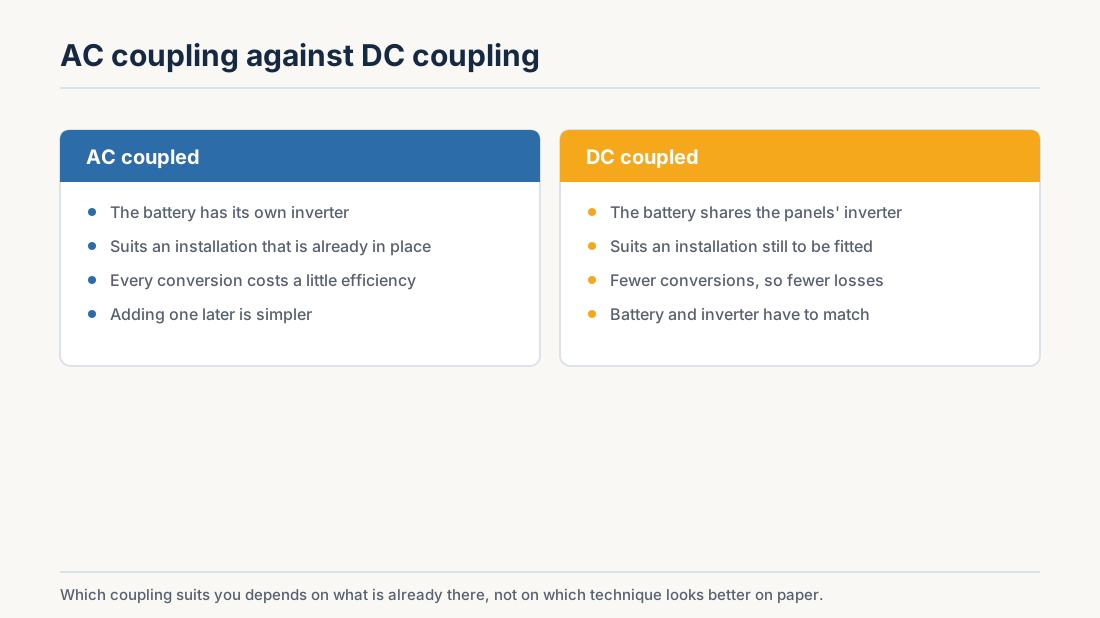
For homeowners using solar panels, this means that the stored energy is more usable and that energy losses during charging and discharging are minimized. Furthermore, these systems integrate well with hybrid inverters and support higher self-consumption of solar energy.
How does the solid electrolyte improve performance?
The solid electrolyte allows ions to move with lower resistance compared to liquid electrolytes. This results in an energy loss of approximately 0.05 kWh per stored kWh, corresponding to roughly 95% efficiency.
Why is safety higher than in lithium-ion systems?
Since the battery contains no liquid chemicals, it eliminates leakage risks and greatly reduces the chance of fire. This improvement makes installation safer in places like garages, utility rooms, or even outdoor locations.
Which materials are used in solid-state cells?
Manufacturers typically use ceramics and polymers for the electrolyte. The anode often includes lithium metal or silicon composites, while the cathode uses materials such as nickel or manganese compounds.
How does a solid-state battery compare to lithium-ion batteries?
When comparing solid-state batteries with lithium-ion batteries, solid-state technology offers clear advantages in energy density, lifespan, and safety but comes with higher prices and limited availability.
Key differences include:
- Energy density: solid-state batteries reach 1.5 to 2 times higher density.
- Efficiency: approximately 95% compared to about 90% or less for lithium-ion.
- Lifespan: up to 15,000 cycles versus 5,000 to 8,000 cycles for lithium-ion.
- Safety: no flammable electrolyte in solid-state batteries.
- Availability: lithium-ion batteries are widely available; solid-state batteries remain limited.
A particularly impressive feature is the compact size: a 10 kWh solid-state unit can be up to half the size of an equivalent lithium-ion system, which is advantageous for households with limited space.
Which technology best suits current solar installations?
Currently, lithium-ion battery systems dominate the market because they are widely available, tested, and more affordable. Solid-state batteries are viewed as a future upgrade rather than a standard choice at this time.
What limits solid-state battery adoption today?
The primary limitation is manufacturing scale; producing solid electrolytes at high volumes remains complex and expensive.
What is the price range for a solid state home battery?
The price of solid state home batteries typically ranges between €1,200 and €1,700 per kWh, placing a 10 kWh system between €7,000 and €10,000 before installation costs.
Typical pricing examples include:
- 5 kWh system: €4,000 to €5,000
- 10 kWh system: €7,000 to €10,000
- 15 kWh system: €9,000 to €13,000
In comparison, lithium-ion battery systems start around €6,500 for a 10 kWh capacity, making solid-state batteries considerably more expensive.
What is a typical total cost calculation for a full system?
A full 10 kWh solid-state battery system includes several cost components. A typical total investment would be:
- Battery unit: €14,000
- Hybrid inverter: €1,500
- Installation: €1,800
- Electrical upgrades: €700
The overall cost sums to approximately €18,000 including VAT.
Why does the cost remain high?
The high cost of solid-state home batteries is due to the use of complex materials, limited production scale, and ongoing challenges in research and development.
In which situations does a solid state home battery make the most sense?
A solid state home battery for solar energy storage offers the greatest benefits to households with high electricity consumption that seek maximum energy independence and a long-lasting system.
Homes equipped with larger solar setups gain the most advantage, as the battery can store more excess solar energy and reduce reliance on the electrical grid.
What household scenarios are ideal for solid-state batteries?
- Annual electricity consumption exceeding 4,000 kWh
- Solar systems rated above 5 kWp
- Use of electric vehicles or heat pumps
- Limited space for battery installation
When might a solid-state battery not be the right choice?
If your budget is constrained or you require an immediate energy storage solution, lithium-ion batteries remain a practical choice due to their lower upfront cost and availability.
What are the pros and cons of a solid state home battery?
Understanding the advantages and disadvantages of solid-state batteries clarifies their value for residential applications.
What benefits do solid-state batteries offer?
They provide higher energy efficiency, a much longer lifespan, and a compact form factor. Solid-state batteries can last up to 40 years with daily cycling, significantly lowering the need for replacements.
What challenges or drawbacks exist?
The drawbacks include a high initial cost, limited availability, and technical difficulties such as dendrite formation and maintaining material stability. These challenges slow mass production efforts.
When should you avoid choosing a solid state home battery?
You should avoid choosing a solid state home battery if quick availability, lower price, or immediate installation are top priorities.
Currently, most energy storage systems available on the market use lithium-ion technology. If you want to install a system now, using Soleva can help you compare the best available options.
What realistic timeline is expected for wider adoption?
Widespread residential adoption of solid-state batteries is expected after 2026, with full market maturity likely between 2032 and 2035, primarily due to manufacturing challenges.
Are solid-state batteries expected for homes soon?
Yes, solid-state batteries are actively being developed, driven by innovations in electric vehicle technology. However, significant cost reductions and scaling of production remain necessary before they are widely available for residential energy storage.
Deciding on a future-proof battery depends on your individual priorities. Solid-state batteries offer higher efficiency, improved safety, and an extended lifespan, but their current high price and limited availability delay widespread use. If you can wait and plan for the long term, this technology is promising. For those needing an immediate solution, comparing existing lithium-ion systems through Soleva provides practical and cost-effective options.
Frequently Asked Questions
Are solid-state batteries worth investing in for home use?
Solid-state batteries are a great choice for homeowners who value safety, longevity, and compact design over initial cost. Although the technology offers superior efficiency and minimal performance degradation, limited availability means most households benefit more from lithium-ion systems until production and prices improve.
What is the typical price of a solid state home battery?
Solid state home batteries generally cost between €1,200 and €1,700 per kWh. For example, a 10 kWh battery system typically costs between €7,000 and €10,000 before installation, making it more expensive than comparable lithium-ion systems. However, the longer lifespan and efficiency gains may justify the cost over time.
What challenges affect solid-state batteries?
Manufacturing solid-state batteries involves complexities such as dendrite growth, material expansion, and interface resistance issues. These factors impact performance and stability, increase production costs, and limit large-scale availability for homes.
When will solid-state batteries be available for residential use?
Solid-state batteries are currently under development and are expected to enter the home energy market gradually after 2026. Full adoption will depend on successful scaling of production and cost reduction, with automotive uses leading the way initially.
What is meant by a 2050 battery for home energy storage?
The term ‘2050 battery’ refers to future advanced battery technologies targeting higher energy density, negligible degradation, and enhanced sustainability. Solid-state batteries represent an early stage toward these goals, but further breakthroughs are needed before such batteries become standard for homes.
Indicative prices for the Belgian market, checked in August 2026 against energy-village.be, thuisbatterij.be and zen-zonne-energie.be. These are market ranges for an installed system including VAT, not a quotation: your price depends on capacity, brand and the state of your existing installation.
Read also
Ready to cut your energy bill?
Compare quotes for solar panels, home batteries and charging points.