Home battery belgium
plug and play home battery price and guide
A plug and play home battery stores solar energy and connects directly to a standard wall socket, allowing for easy installation in any household. These batteries usually offer storage capacities ranging from 1.4 kWh to over 10 kWh and use lithium iron phosphate cells to ensure safety and a long lifespan. This guide explains how these batteries operate, outlines their costs, compares them to traditional systems, and shows when they provide the greatest savings to homeowners.
Read on to discover the benefits, specifications, and price details of plug and play home batteries.
How exactly does a plug and play home battery work?
A plug and play home battery stores excess electricity generated by your solar panels and feeds it back into your home through a standard electrical socket when needed. It connects to your home’s electrical circuit and manages energy supply and demand using smart software.
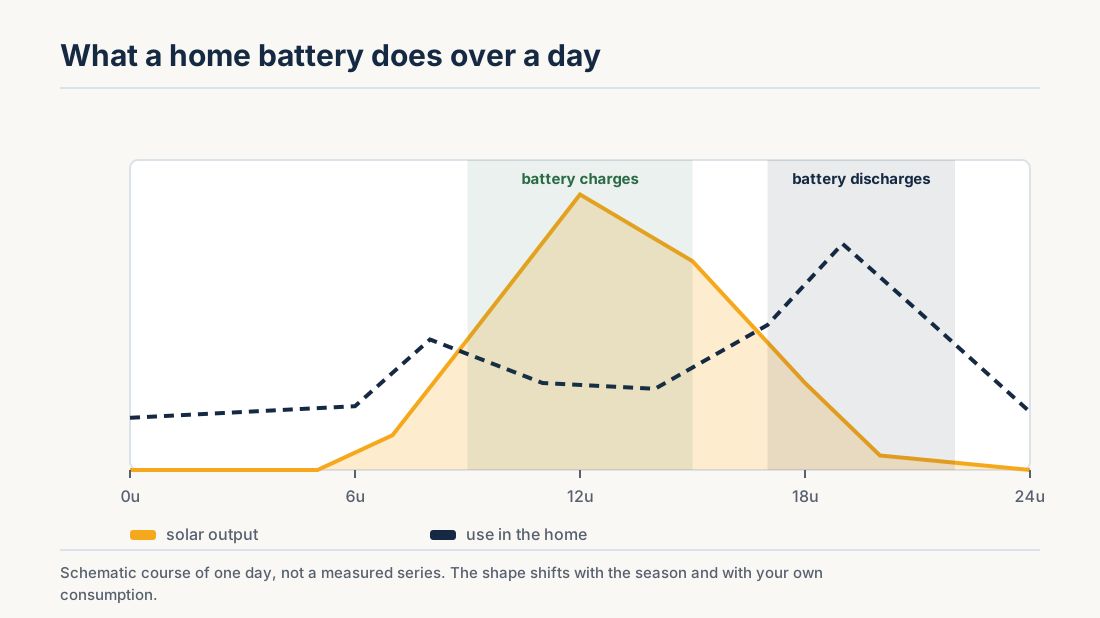
The battery charges during periods when your solar panels produce electricity and discharges when your energy consumption increases, such as in the evening. This process raises your self-consumption rate and lowers your dependence on the electrical grid.
What is the function of the micro inverter?
The integrated micro inverter converts the stored direct current (DC) energy into alternating current (AC) electricity at approximately 800W per unit. This allows efficient energy use even at low consumption levels. Unlike large central inverters that lose efficiency under partial load, micro inverters maintain steady performance.
How does smart energy control optimize usage?
The battery system connects to a smart meter via a P1 interface, enabling it to measure real-time energy consumption and production. The battery’s control software then decides the optimal times to charge or discharge, maximizing energy efficiency and minimizing imports from the grid.
What specifications are typical for these batteries?
Common configurations have the following features:
- Storage capacity: 2.7 kWh per unit, expandable up to 10.8 kWh
- Power output: 800W per battery
- Cycle life: up to 6,000 cycles
- Lifespan: up to 15 years
Which technologies define the best plug and play home battery?
The most effective plug and play home batteries use lithium iron phosphate (LiFePO4) technology combined with modular expansion options and intelligent control systems. These features contribute significantly to safety, lifespan, and ease of use.
Why are LiFePO4 cells preferred?
LiFePO4 cells offer thermal stability and a long lifespan, and they do not contain cobalt or manganese. This composition reduces fire risks and enhances sustainability compared to traditional lithium-ion batteries.
How does modular expansion enhance flexibility?
You can connect multiple battery units to increase overall storage capacity. This approach allows you to invest gradually instead of purchasing a larger battery system upfront. Typically, households with moderate energy use start with a 2.7 kWh unit and add more capacity later if needed.
What specifications characterize the HomeWizard Plug-In Battery?
The HomeWizard Plug-In Battery features a 2.7 kWh capacity per unit, 800W charging and discharging power, WiFi connectivity, and compatibility with all inverter types. It integrates with smart meters for automated energy balancing.
What do plug and play home battery reviews emphasize?
User reviews commonly praise the ease of installation, lower upfront costs, and increased self-consumption that these batteries provide. Many users report minimal night-time grid usage during sunny periods when the system is sized correctly.
What is the price of a plug and play home battery system?
Prices for plug and play home batteries start at approximately €1195 incl. VAT per unit, depending on capacity and features. The absence of professional installation fees contributes to this lower initial price.
Typical pricing for popular configurations is as follows:
- 2.7 kWh system: from €1195 incl. VAT
- 5.4 kWh system: from €2390 incl. VAT
- 8.1 kWh system: from €3585 incl. VAT
- 10.8 kWh system: from €4780 incl. VAT
Example calculation for a typical household
Consider a household with 12 solar panels opting for a 5.4 kWh battery system.
- 2 battery units: 2 × €1195 = €2390
- P1 smart meter: €50
- Energy monitoring display: €150
- Installation cost: €0
The total investment is approximately €2590 incl. VAT.
Which factors influence the final price?
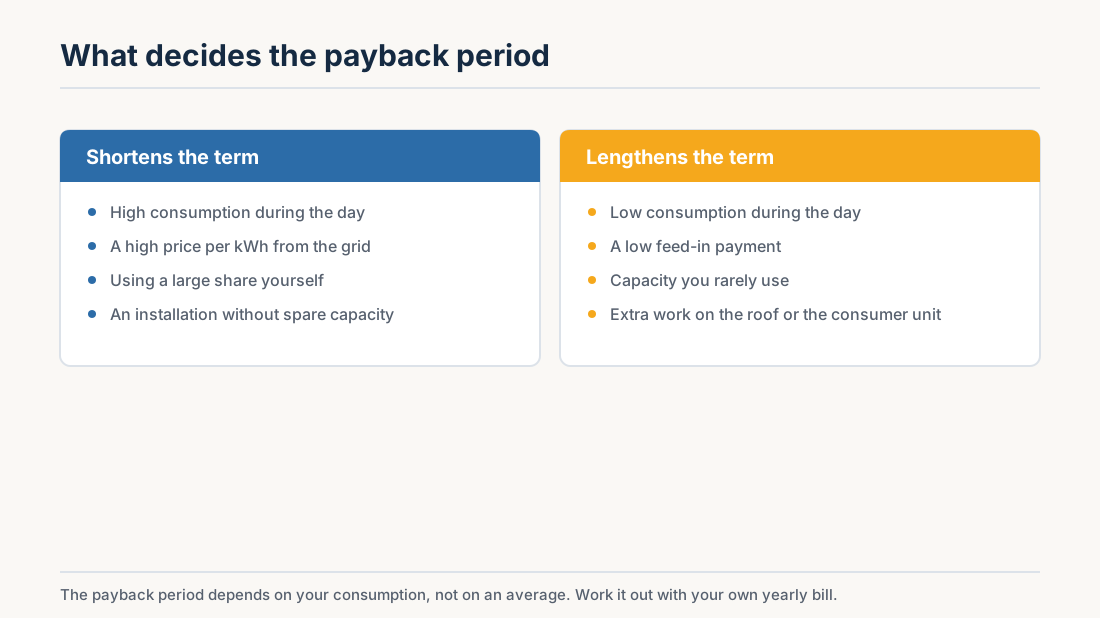
The overall cost depends on the system’s capacity, the number of battery units, and optional accessories such as monitoring displays. While larger systems increase the investment, they typically provide higher self-consumption rates.
In what situations does a plug and play home battery offer the most benefits?
A plug and play home battery is most valuable for homes equipped with solar panels that produce moderate surplus energy. It effectively shifts energy usage from daytime periods to evening hours.
Households generating between 500 kWh and 2000 kWh of annual surplus typically benefit from a single battery unit. Larger households using electric vehicles or heat pumps may need multiple units to meet their energy needs.
How does the battery interact with solar panels?
The battery stores surplus electricity rather than exporting it to the grid. This behavior lowers reliance on grid compensation payments and enhances the return on investment of your solar panel system.
How do dynamic energy tariffs affect battery use?
With variable electricity pricing, the battery charges when electricity prices are low and discharges during peak price periods. This capability offers additional savings beyond optimizing solar energy use.
Is this battery suitable for apartments or rental properties?
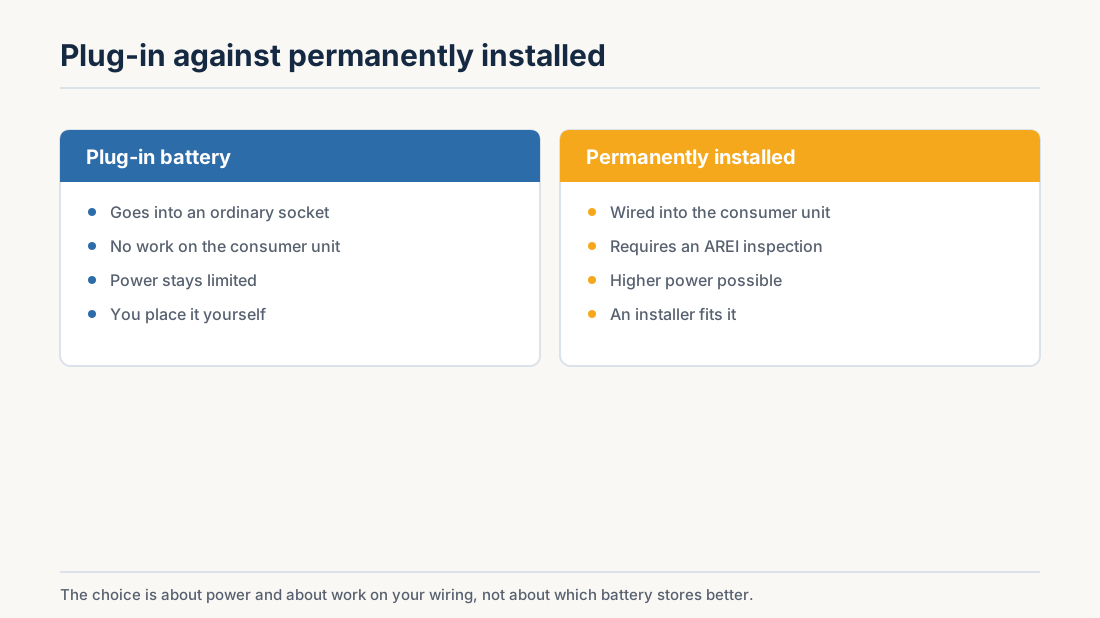
Yes, the plug-in design allows usage in apartments and rental homes because it requires no permanent electrical installation. This flexibility sets it apart from traditional fixed systems.
What are the benefits and drawbacks of a plug and play home battery?
The key benefits of a plug and play home battery include straightforward installation, lower initial costs, and flexible scalability. The main drawbacks relate to limited power output and system size.
Benefits include easy setup using a standard socket connection and compatibility with any inverter type. The system helps reduce energy bills and enhances energy independence.
Drawbacks include a typical output of approximately 800W per unit, which may be insufficient for high-demand appliances. Additionally, these batteries do not provide backup power during grid outages due to safety standards.
When might a plug and play battery not be suitable?
If your household has very high energy consumption or requires full backup power during outages, a fixed installation with higher capacity may be more suitable. Such systems offer greater power output and reliability.
How does a plug and play home battery compare with traditional home battery systems?
Plug and play home batteries differ from traditional systems in installation, cost, and scalability, although both types store energy for household use.
The primary differences include:
- Installation: plug-in via socket versus professional wiring
- Cost: lower upfront investment versus higher total expense
- Scalability: modular units versus pre-sized systems
- Power output: limited per unit versus higher capacity
Traditional batteries integrate more deeply into your home’s electrical system and support higher energy loads. Plug and play systems focus on accessibility and flexibility.
For many homeowners, starting with a modular plug and play system and expanding later provides a balanced solution. You can find more energy insights at Soleva energy insights.
Selecting a plug and play home battery depends largely on your solar energy production and your goal to increase self-consumption. The main advantages include easy installation and a lower initial cost, while limited power output per unit represents the primary constraint. If you aim to boost energy use efficiency without complex installation, this solution fits well. Begin by estimating your daily energy surplus and request multiple quotes through Soleva to identify the system capacity that suits your home best.
Frequently Asked Questions
What is the cost of a plug and play home battery including necessary accessories?
The cost of a plug and play home battery including accessories typically ranges from €1200 to €3000 incl. VAT, depending on the system’s capacity and optional add-ons such as monitoring displays. Accessories like a P1 meter and smart display improve performance tracking and energy optimization, slightly increasing the overall investment.
Can a plug and play home battery operate without solar panels?
Yes, the battery can function without solar panels by storing electricity from the grid. This setup is particularly useful with dynamic electricity tariffs, where it charges during low-price periods and discharges during peak hours to reduce your energy bills even without solar generation.
How safe is daily use of a plug and play home battery?
These batteries use LiFePO4 cells and include safety features such as sensors for temperature, tilt, and overload detection, which prevent overheating and electrical faults. Complying with EU and CE standards ensures safe operation when the system is installed following manufacturer instructions and operated within recommended indoor conditions.
What price difference exists between plug and play and traditional home battery systems?
The main price difference arises from installation costs. Plug and play systems start at about €1195 incl. VAT without installation fees, whereas traditional systems require professional installation that increases total expenses. Still, traditional batteries provide higher capacity and power output, making them suitable for larger households.
How many plug and play home batteries are typically needed for a household?
The required number of batteries depends on your daily energy use and the surplus generated by your solar panels. Typically, one 2.7 kWh battery suffices for households with limited surplus, while larger homes with electric vehicles or higher consumption may need two to four units to cover evening demand and reduce reliance on the grid effectively.
Indicative prices for the Belgian market, checked in August 2026 against energy-village.be, thuisbatterij.be and zen-zonne-energie.be. These are market ranges for an installed system including VAT, not a quotation: your price depends on capacity, brand and the state of your existing installation.
Read also
Ready to cut your energy bill?
Compare quotes for solar panels, home batteries and charging points.