Home battery belgium
modular home battery price and options
A modular home battery stores solar energy in stackable units that you can expand over time, which directly lowers your electricity bill and increases your self-consumption. This type of system provides flexible capacity options, supports integration with hybrid inverters, and offers backup power during outages. In many European households, adding storage increases self-consumption from 30 to 40% up to 70 to 85%.
This guide from Soleva explains how modular batteries operate, what their costs are, how they compare to fixed systems, and how you can choose the right setup for your home.
How does a modular home battery work exactly?
A modular home battery stores electricity in separate, stackable units that work together as a single system. Each module contains battery cells, a battery management system (BMS), and communication electronics that regulate charging, temperature, and safety.
This battery system connects to your solar panels through a hybrid inverter, which converts sunlight into electricity and channels any surplus energy into storage. When your household requires power, the battery discharges stored electricity back into your home to meet this demand.
What makes modular systems different from fixed battery setups?
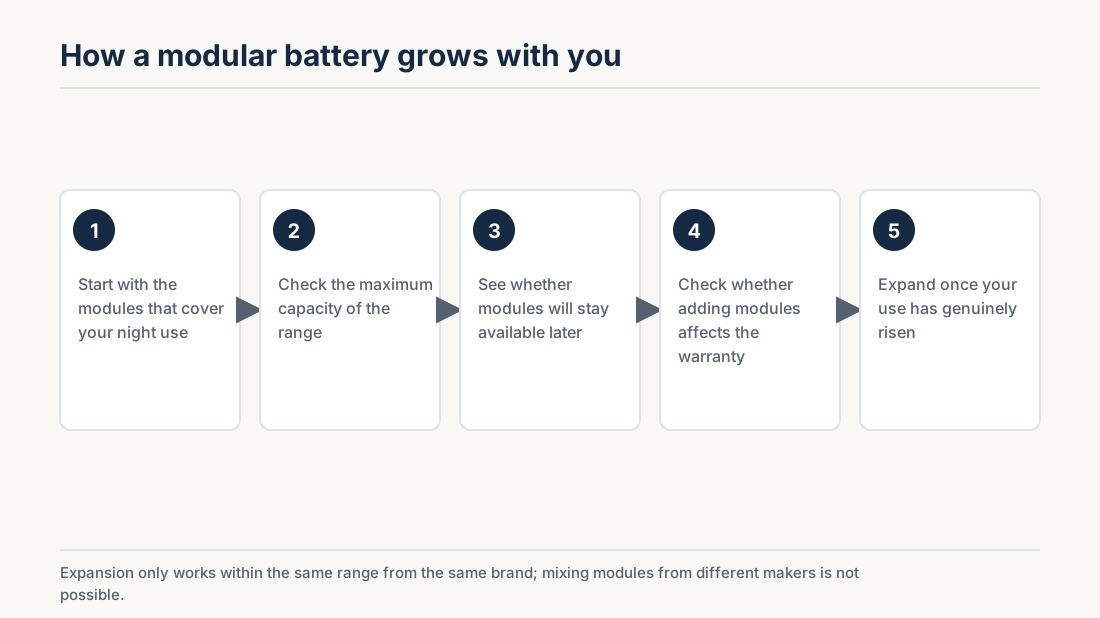
The primary difference is scalability. With a modular system, you can begin with a smaller capacity and later expand by adding more modules. In contrast, fixed systems require you to invest in full capacity right from the start, resulting in higher initial costs.
- Modular systems expand incrementally with each added module.
- Fixed systems increase capacity in larger steps.
- Modular systems adjust to your changing energy needs more easily.
How does battery management improve performance?
The BMS continuously monitors voltage, temperature, and charge cycles within each module. It performs cell balancing to ensure that all battery cells charge evenly, which enhances the battery’s lifespan, efficiency, and safety. The BMS also slows charging as the battery approaches full capacity to protect the cells and maintain long-term performance.
Which technologies are used in modular home batteries?
Most modular battery systems use LiFePO4 battery chemistry, known for its high thermal stability, extended cycle life, and enhanced safety compared to other lithium-ion types. Additionally, some systems support AC-coupled or DC-coupled configurations depending on the installation requirements.
To see how modular batteries integrate with a complete energy system, visit our page on solar energy systems for homes.
Choosing a flexible storage system benefits households with evolving energy needs or those wanting to avoid large upfront costs. The possibility to increase capacity later helps improve self-consumption and prepares your home for dynamic electricity tariffs. Start by selecting a realistic capacity to match your current usage and expand if necessary. To find the best system for your energy profile and future plans, consider comparing at least three quotes through Soleva.
Frequently Asked Questions
What is the cost of a modular home battery?
The cost of a modular home battery generally ranges from €2,500 to €10,000, based on capacity and configuration. Smaller systems consist of just a few modules, whereas larger setups include more storage and sophisticated energy management. Factors such as installation, inverter compatibility, and electrical upgrades also affect the final price.
Does a modular home battery offer advantages over fixed systems?
Yes, modular home batteries provide increased flexibility since you can add capacity over time. Fixed systems require the entire investment upfront. Modular designs reduce financial risk by allowing you to size the battery gradually according to your actual energy consumption and future needs.
How long is the lifespan of a modular home battery?
Typically, modular home batteries last for around 8,000 charge cycles, equating to 10 or more years with daily use. Lifespan depends on factors such as temperature, how often you use the battery, and battery chemistry. Systems with active cell balancing tend to retain capacity and efficiency longer throughout their lifecycle.
Is it possible to expand a modular home battery after installation?
Yes, most modular battery systems permit expansion within a certain timeframe following installation. Additional modules must be compatible with the existing system’s configuration and charge state. This flexibility allows you to increase your storage capacity without replacing the entire system, making it a future-proof investment.
How does the price of modular home batteries compare with Tesla-style alternatives?
The price difference depends largely on scalability options. Modular systems generally have lower entry-level prices with incremental upgrades available. Tesla-style and other monolithic alternatives require a larger upfront investment since they come as a fixed capacity. Over time, modular expansion can spread costs more evenly.
Indicative prices for the Belgian market, checked in August 2026 against energy-village.be, thuisbatterij.be and zen-zonne-energie.be. These are market ranges for an installed system including VAT, not a quotation: your price depends on capacity, brand and the state of your existing installation.
Read also
Ready to cut your energy bill?
Compare quotes for solar panels, home batteries and charging points.