Home battery belgium
Smart Home Battery Price & Guide
A smart home battery stores electricity generated by your solar panels to use later, reducing your dependence on the grid and lowering your energy bills. These systems usually combine lithium battery cells with an intelligent energy management system that controls charging based on your household’s energy use. Prices vary between €3,500 and €15,000 depending on capacity and included features.
This guide explains how smart home batteries operate, their cost factors, available technologies, and how to determine if one suits your home.
What is a smart home battery?
A smart home battery is an energy storage system that stores surplus electricity and releases it when your home requires power. It typically uses lithium-ion or lithium iron phosphate (LFP) cells combined with software that actively manages charging and discharging.
The key components include a battery pack, an inverter, and an energy management system (EMS). The EMS connects with your solar panels and electricity meter to optimize your self-consumption and reduce grid dependency.
- Stores solar energy generated during the day
- Provides electricity during the evening and night
- Decreases reliance on the electricity grid
- Balances energy usage automatically based on demand
How does a smart home battery work?
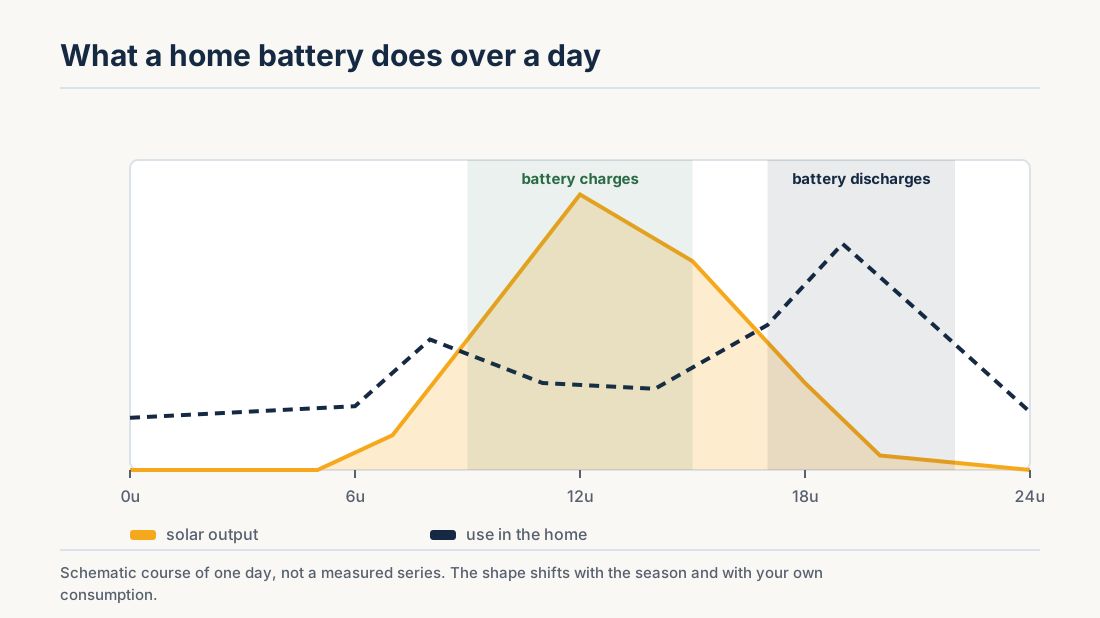
The battery charges when your solar panels produce more electricity than your home consumes. It then discharges stored energy when your consumption exceeds production. The smart EMS prioritizes using stored energy over feeding excess electricity back into the grid.
What makes a battery “smart”?
A battery is considered smart because of its Energy Management System (EMS), which analyzes usage patterns, electricity prices, and solar panel output. This system adjusts charging and discharging cycles to reduce peak demand and maximize savings for your household.
How does a smart home battery operate in detail?
A smart home battery continuously monitors your electricity production and consumption in real time to manage energy flows efficiently.
The process follows these steps:
- Your solar panels generate electricity during daylight hours.
- Excess energy charges the battery for later use.
- The EMS decides when to store or release energy based on demand and supply.
- The battery releases stored energy to power your home when solar generation is insufficient.
How does it connect with solar panels?
The battery system integrates with your solar panel installation via an inverter. A hybrid inverter combines the functions of solar conversion and battery management, which can reduce installation costs. For details on system sizing and solar panels, explore solar panel systems.
Can a smart home battery operate without solar panels?
Yes. In such cases, the system can store electricity from the grid during low-cost periods and supply it during higher tariff times. This method works best when your electricity tariff varies throughout the day.
Which technologies or types are available for smart home battery systems?
The main distinctions among smart home battery systems lie in battery chemistry and system design.
- Lithium iron phosphate (LFP) batteries - offer high safety and long service life.
- Lithium-ion batteries - provide high energy density for compact storage.
- Modular battery systems - allow expandable capacity to meet changing needs.
What are some notable smart home battery products?
The SMA Home Storage battery is a modular system compatible with hybrid inverters, supporting up to 8,000 cycles and capacities from about 3 kWh to 16 kWh. It features high efficiency and integrates well with smart energy systems.
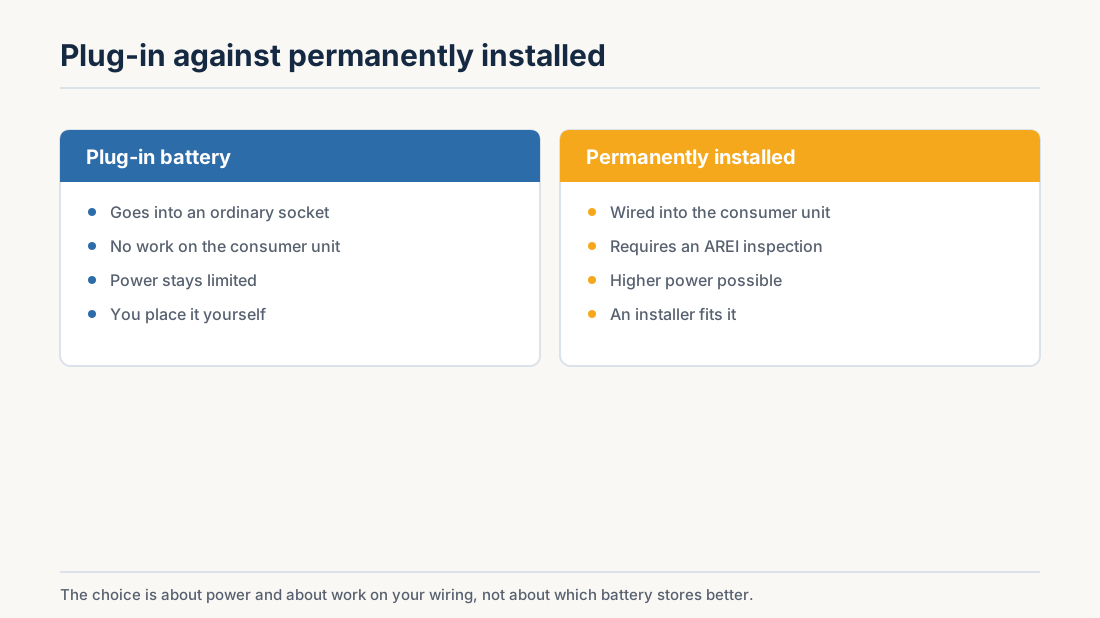
The HomeWizard Plug-In Battery is a compact plug-and-play solution with 2.7 kWh capacity per unit. It uses LFP cells and supports 800 watt charge and discharge power. Its micro-inverter design contributes to improved efficiency.
What is the cost of a smart home battery?
The cost of a smart home battery system ranges from approximately €3,500 to €15,000, depending on battery capacity, inverter type, and installation requirements. On average, you can expect to pay between €700 and €1,000 per kWh of capacity.
Typical price ranges for common capacities include:
- 5 kWh systems: €4,000 - €5,000
- 10 kWh systems: €7,000 - €10,000
- 15 kWh systems: €9,000 - €13,000
Example of a full cost breakdown for a 10 kWh system
- Battery unit: €6,000
- Hybrid inverter: €1,200
- Installation services: €1,500
- Electrical upgrades: €400
The total estimated price is approximately €9,100 incl. VAT.
Which factors influence the cost of a smart home battery?
The total cost depends on several factors such as battery capacity, inverter quality, installation complexity, and additional smart features like dynamic tariff optimization that can adapt charging times to electricity prices.
When does it make sense to install a smart home battery?
A smart home battery provides the most value if your solar panels generate surplus electricity and your household consumes power during evening or nighttime hours.
Common scenarios where smart home batteries are beneficial
- Homes equipped with 3 to 8 kWp solar panel systems
- Annual electricity consumption between 2,000 and 7,000 kWh
- Households using electric vehicles or heat pumps that increase electricity demand
How long does a 10 kWh home battery provide power?
A fully charged 10 kWh battery can supply an average household’s electricity requirements for one evening. Typical daily consumption ranges from 8 to 10 kWh. These batteries usually last around 10 to 15 years, capable of enduring between 6,000 and 8,000 full charge cycles.
What are the advantages and disadvantages of smart home batteries?
The benefits and drawbacks vary depending on your energy consumption profile and system setup.
Advantages of smart home battery systems
Installing a smart battery can increase your self-consumption rate from about 30% to 60% or more. It reduces your reliance on the electrical grid and helps lower charges associated with peak electricity use.
Disadvantages of battery energy storage systems (BESS)
The main drawbacks include the high upfront investment, limited energy capacity for winter periods, and efficiency losses ranging between 70% and 90%. These systems do not completely replace the need for grid electricity.
How does a smart home battery compare to alternative energy storage options?
Smart home batteries serve as a balance between simple grid reliance and basic battery storage solutions.
Here are key differences:
- Grid only: lowest initial cost but no energy control or storage capability
- Basic battery systems: store energy but lack intelligent management features
- Smart batteries: optimize when to store and use energy, reducing peak load costs
What is Tesla’s smart home battery offering?
Tesla’s home battery concept provides high capacity storage with full-home backup options. These systems support high power output but come with a higher price tag compared to modular smart battery solutions.
When might a battery not be advisable?
You might avoid installing a battery if your solar production is consistently low or if your energy consumption mostly occurs during daylight hours. In such cases, the financial return on investment tends to be limited.
Selecting the right battery system depends on your household’s energy consumption, solar panel output, and budget constraints. A smart battery system offers greater control over energy use and enhances self-consumption, though it involves a significant upfront cost. Starting with a battery capacity aligned to your daily energy requirements is advisable. By using services like Soleva, you can compare different smart home battery options and request multiple quotes to find a solution that balances price with performance.
Frequently Asked Questions
What is a smart home battery and how does it differ from a standard battery?
A smart home battery includes software that actively controls energy flows in your home rather than merely storing electricity. It analyzes your consumption habits and dynamically adjusts charging and discharging to improve efficiency. This leads to increased self-consumption and reduced peak electricity usage compared to standard batteries without intelligent controls.
What is the cost of a smart home battery for a smaller household?
For smaller households, a 5 kWh smart home battery typically costs between €4,000 and €5,000. Actual prices depend on whether you already have a compatible hybrid inverter and the complexity of the installation in your home.
Can a smart home battery supply power during a blackout?
Most smart home battery systems do not provide power backup in the event of a blackout unless paired with a specific inverter that has backup or black start capabilities. Without such features, safety protocols require the battery to shut down during grid failures.
Is investing in a smart home battery worthwhile?
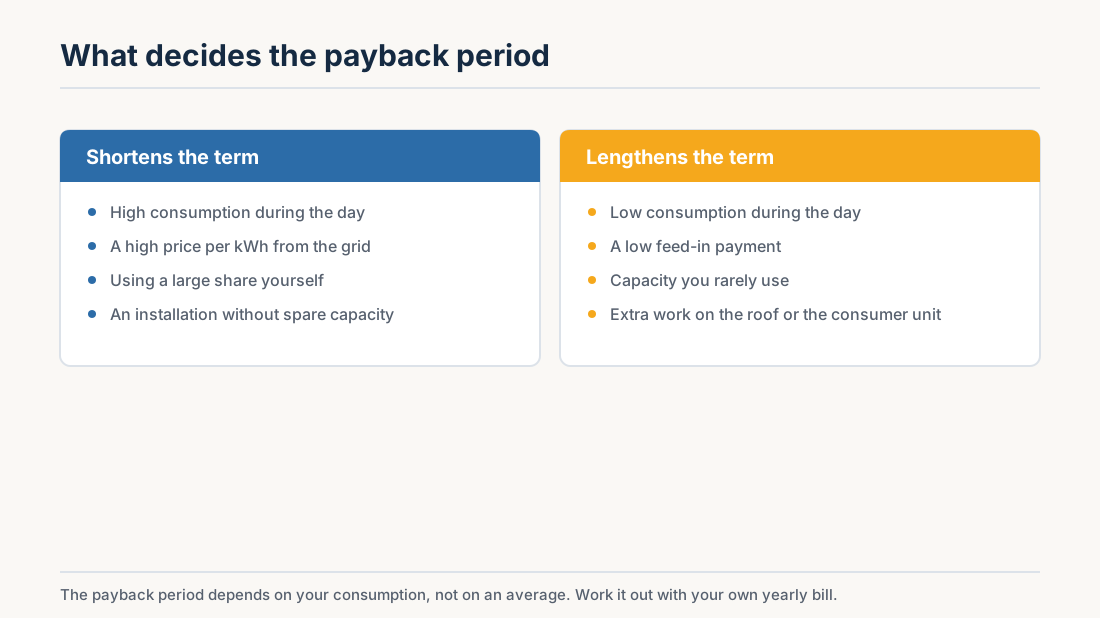
Smart home batteries represent a good investment if you have high solar energy production and face increasing electricity costs. Typical payback periods range from 7 to 10 years depending on your energy usage patterns, tariff structures, and system capacity.
How much more does a smart battery system cost compared to a standard battery?
Smart battery systems generally cost between €500 and €2,000 more than standard models. This premium is due to advanced energy management software and monitoring tools that optimize charging schedules based on electricity tariffs and household consumption.
Indicative prices for the Belgian market, checked in August 2026 against energy-village.be, thuisbatterij.be and zen-zonne-energie.be. These are market ranges for an installed system including VAT, not a quotation: your price depends on capacity, brand and the state of your existing installation.
Read also
Ready to cut your energy bill?
Compare quotes for solar panels, home batteries and charging points.