Home battery belgium
energy sharing battery belgium price and guide
Energy sharing battery Belgium systems store and redistribute solar electricity among multiple users, improving self-consumption rates from around 30 - 40% to 70 - 85%. These systems combine battery storage, smart meters, and local energy agreements to reduce reliance on the grid and stabilize electricity costs.
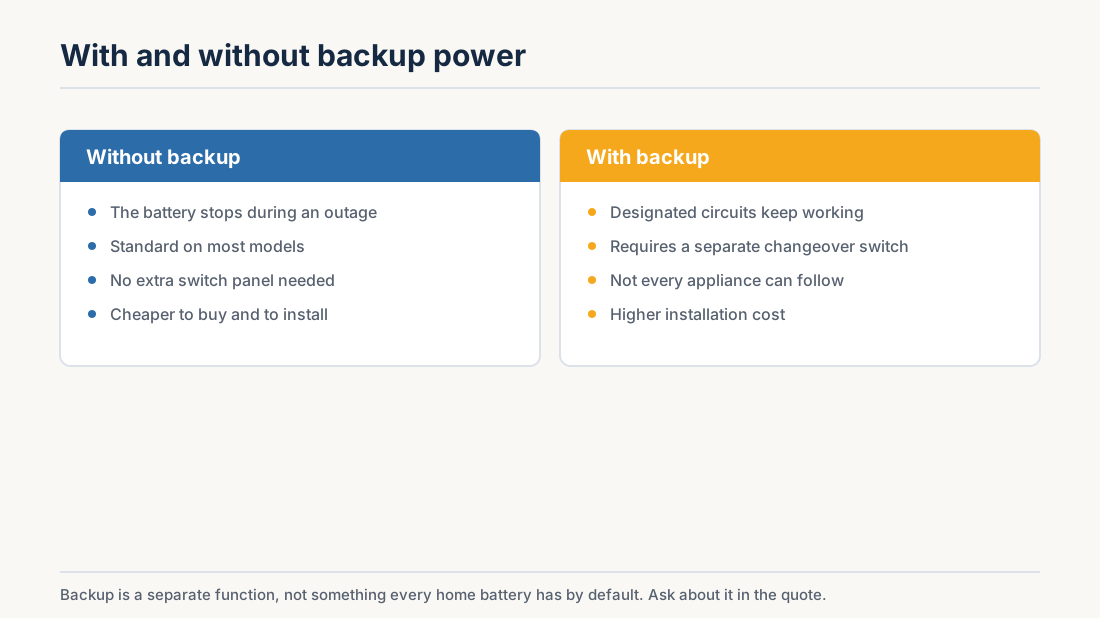
With the phase-out of reverse metering and the introduction of new tariffs, storing and sharing energy locally has become more financially attractive than selling surplus energy at approximately €0.05 per kWh.
What defines an energy sharing battery Belgium system and how does it operate?
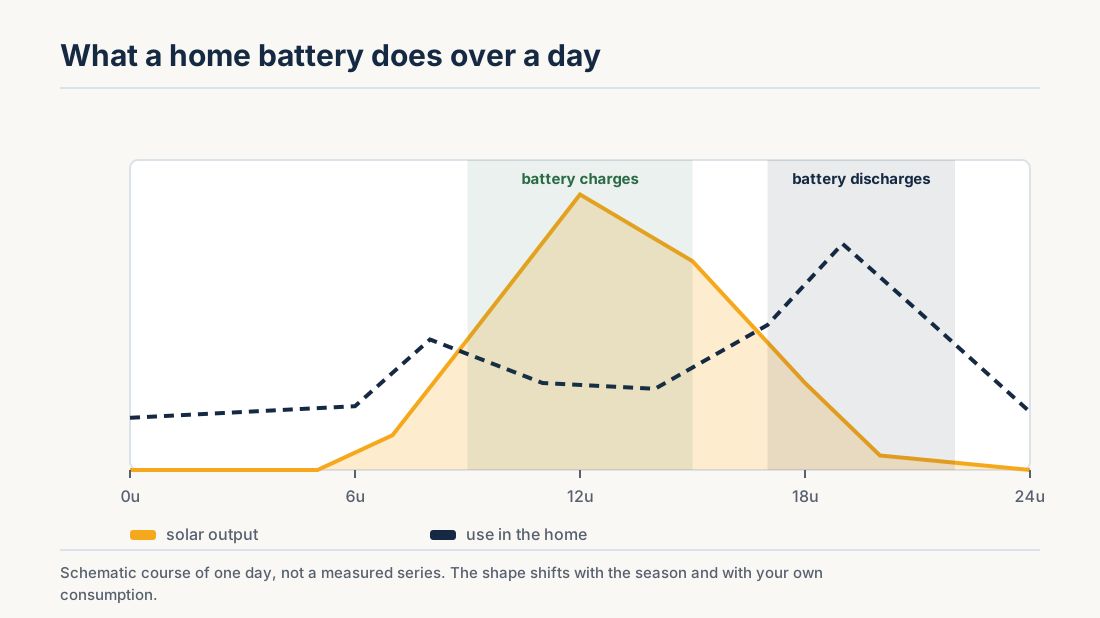
An energy sharing battery Belgium system stores surplus solar electricity in a battery and shares it with multiple users according to their real-time consumption. Smart meters collect electricity data every 15 minutes, enabling the Distribution System Operator to allocate energy based on a predefined agreement.
In a typical residential building, solar panels generate electricity during the day. Unused solar energy is stored in a battery rather than being exported to the grid. Later, this stored electricity is distributed locally among residents during higher consumption periods, which decreases dependence on grid electricity, especially during peak hours.
The difference between traditional and shared energy systems is significant:
- Without energy sharing, surplus electricity sells for about €0.03 - €0.06 per kWh.
- When energy is shared locally, it is exchanged at a higher rate of €0.10 - €0.15 per kWh.
- Self-consumption of solar energy increases to 70 - 80% with sharing.
How do smart meters facilitate energy sharing?
Smart meters track electricity production and consumption in 15-minute intervals, providing the necessary data for accurate sharing of energy among participants. Without smart meters, managing and allocating shared energy would not be feasible.
In what ways does a battery enhance energy sharing efficiency?
Batteries store excess electricity generated during sunny periods and release it during times of higher demand, such as evenings. This shift in energy usage increases the portion of solar energy consumed locally and reduces purchases from the grid, ultimately lowering electricity costs.
Combining energy sharing with battery storage changes how you use solar energy by increasing self-consumption and reducing your electricity bill. It also gives you more control over electricity costs rather than depending on fluctuating market prices. For best results, start with a building-level project and install a properly sized battery to maximize benefits. You can compare different solutions and request personalized quotes through Soleva to find the best fit for your needs.
Frequently Asked Questions
What does an energy sharing battery Belgium setup cost?
The overall price usually includes solar panels, battery storage, and installation. For residential systems, prices typically range between €15,000 and €20,000 including VAT, depending on the system capacity. Batteries start around €2,500, with costs increasing for larger shared systems based on the storage size and complexity.
Are tenants eligible to join an energy sharing battery Belgium system?
Tenants can participate if they have a smart meter registered in their name. Joining an existing energy sharing scheme does not require landlord approval. Tenants benefit from lower electricity prices and access to renewable energy produced locally within the building.
How is the shared electricity price established?
The price is negotiated among participants and usually falls between €0.10 and €0.15 per kWh. This rate remains more stable than fluctuating market prices. Additionally, network charges decrease by up to 80%, contributing to overall lower electricity costs compared to standard supplier tariffs.
What savings can I expect compared to traditional grid electricity?
Shared electricity typically costs about €0.15 - €0.18 per kWh, whereas standard grid electricity averages around €0.25 per kWh. This difference can translate to savings between 25% and 30%, depending on your consumption patterns and the efficiency of your system.
How does a battery impact the returns on energy sharing?
Batteries improve returns by storing surplus solar energy and reducing reliance on grid electricity. Systems equipped with batteries achieve self-consumption rates between 70% and 85%, compared to 30% to 40% without storage. This improvement shortens the payback period to approximately six to eight years, depending on system capacity and electricity usage.
Indicative prices for the Belgian market, checked in August 2026 against energy-village.be, thuisbatterij.be and zen-zonne-energie.be. These are market ranges for an installed system including VAT, not a quotation: your price depends on capacity, brand and the state of your existing installation.
Read also
Ready to cut your energy bill?
Compare quotes for solar panels, home batteries and charging points.