Home battery belgium
dynamic energy tariff home battery price & savings
A dynamic energy tariff home battery system stores electricity when prices are low and uses it during high-price periods, reducing your electricity bill and increasing your control over energy consumption. These systems rely on hourly market prices and smart management tools, such as Homewizard tariff monitoring, to optimize charging and discharging cycles.
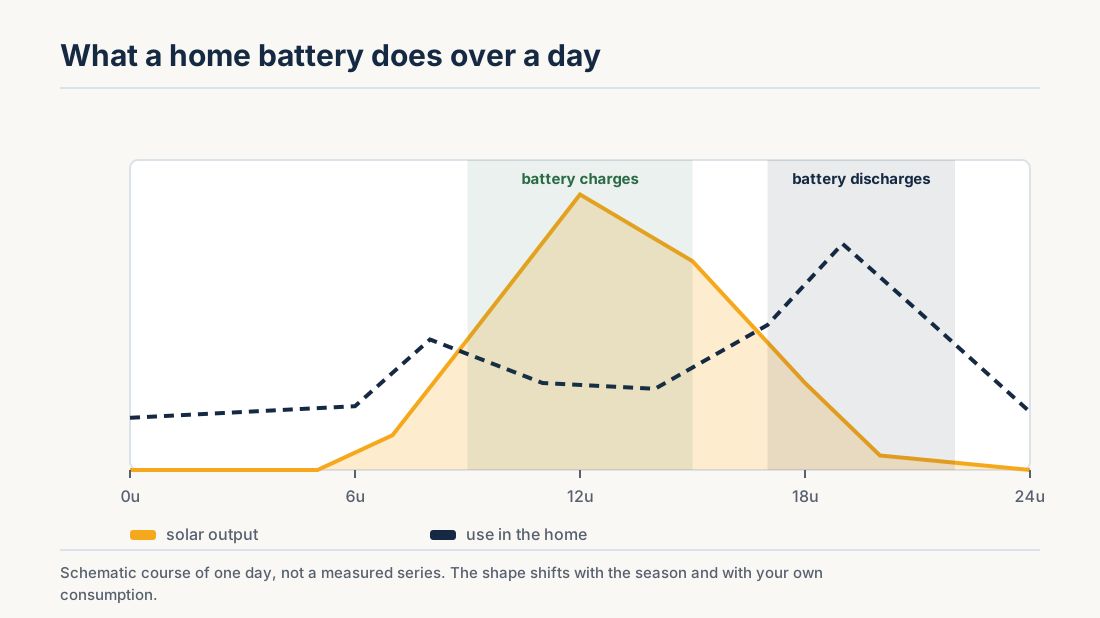
In Belgium, electricity prices have been negative for over 400 hours in a year, creating real opportunities to store inexpensive energy instead of wasting it.
What is a dynamic energy tariff home battery and how does it function?
A dynamic energy tariff home battery stores electricity according to changing hourly market prices and uses it strategically to lower your costs and increase self-consumption. It connects a home battery to a dynamic electricity contract where prices fluctuate each hour depending on supply and demand from exchanges like EPEX SPOT.
The principle is straightforward. You charge the battery during low-price periods and discharge it when prices are higher, a strategy known as price arbitrage.
How do dynamic energy tariffs differ from fixed contracts?
Dynamic tariffs adjust prices hourly following real-time market conditions, whereas fixed contracts maintain a constant rate, and variable contracts update prices periodically. The key distinction is that dynamic tariffs offer greater flexibility.
- Fixed contract: stable price without flexibility.
- Variable contract: periodic price adjustments.
- Dynamic contract: hourly pricing driven by supply and demand.
This flexibility becomes valuable when combined with energy storage.
Why does integrating a home battery increase the value of dynamic tariffs?
A battery allows you to bypass timing limitations inherent in electricity use. Without storage, you must consume electricity as it is generated. With a battery, you can shift energy use across peak and off-peak hours, increasing self-consumption and reducing reliance on the grid.
Discover how storage complements solar energy systems for homes to maximize efficiency.
How does price arbitrage operate with a home battery?
Price arbitrage involves purchasing electricity during low-cost hours and using or selling it when prices rise. A home battery automates this process seamlessly.
What are typical daily price differences for electricity?
Electricity prices commonly vary between €0.15 and €0.30 per kWh daily. Even after considering battery efficiency losses, the savings from this price difference remain substantial.
What efficiency can I expect from a home battery during arbitrage?
Modern batteries attain round-trip efficiencies between 85% and 95%, meaning some energy is lost during charging and discharging cycles. Despite this, the price gap typically ensures a profitable arbitrage.
Consider this simplified example:
- Charging price: €0.10 per kWh
- Discharge value: €0.30 per kWh
- Battery efficiency: 90%
- Effective profit: approximately €0.17 per kWh
This arbitrage mechanism is the primary source of savings in dynamic tariff setups.
What is the cost of a dynamic energy tariff home battery system?
The cost of a dynamic energy tariff home battery system typically ranges from €5,000 to €10,000 incl. VAT, influenced by factors such as battery capacity, inverter type, and installation complexity.
Typical pricing categories include:
- 5 kWh system: €4,000 - €5,000 incl. VAT
- 10 kWh system: €7,000 - €10,000 incl. VAT
- 15 kWh system: €9,000 - €13,000 incl. VAT
What components are included in the total price?
The overall cost covers several elements including:
- The battery unit
- A hybrid inverter
- Professional installation labor
- Necessary electrical upgrades
Sample cost breakdown for a 10 kWh system
A 10 kWh battery system approximately costs:
- Battery unit: €5,500
- Inverter: €1,200
- Installation labor: €1,500
- Electrical upgrades: €400
Total estimated price: €8,600 incl. VAT
For broader context, compare this with investments in solar panel systems to assess full system economics.
Which factors most influence savings with dynamic tariffs?
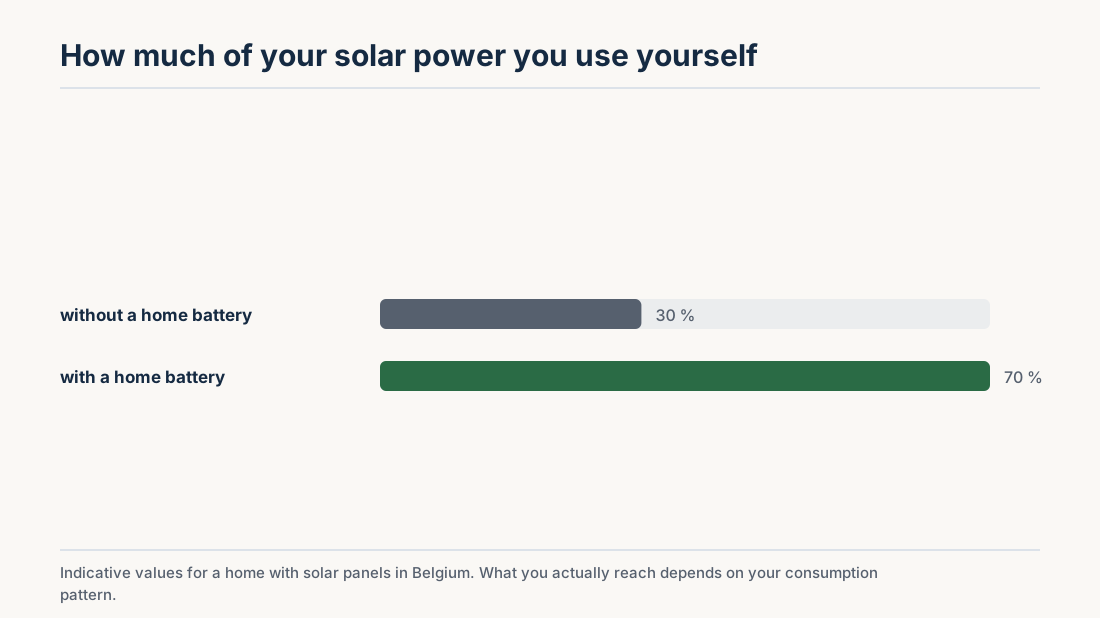
Savings depend on the volatility of electricity prices, the size of your battery, and the control strategy applied. An optimized system can generate additional savings of €400 to €800 annually from price arbitrage alone.
How does battery capacity impact savings?
With larger batteries, you can store more inexpensive electricity. A 10 kWh battery captures more low-price energy than a 5 kWh system, thereby increasing potential savings.
What benefits does an Energy Management System provide?
An Energy Management System (EMS) automates charging decisions based on price signals, weather forecasts, and your consumption patterns. This automation raises system efficiency and reduces the need for manual management.
Many users share real-world experiences and strategies on platforms like dynamic energy tariff home battery Reddit discussions.
In what situations does pairing a dynamic tariff with a battery offer the greatest benefits?
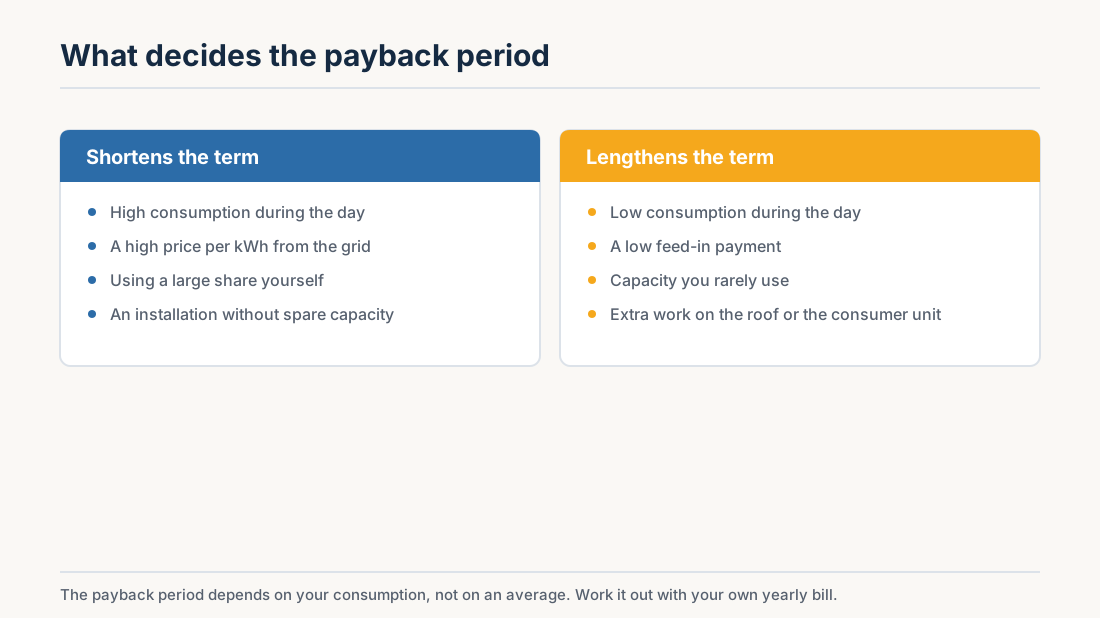
Dynamic tariffs with batteries perform best in households that have flexible energy use and significant electricity consumption.
Which household types benefit most from this setup?
- Homes equipped with solar panels
- Properties with high annual electricity use
- Households with electric vehicles or heat pumps
These profiles allow for energy shifting that maximizes savings.
How do negative electricity prices affect your battery usage?
Negative prices occur when electricity supply surpasses demand. Having a battery enables you to store electricity during these times and use it later, avoiding paying for exporting solar energy without compensation.
When might a dynamic energy tariff home battery not be the ideal choice?
A dynamic tariff combined with a battery may not suit all situations. Households with low electricity consumption experience fewer profitable arbitrage opportunities. Additionally, if you lack a smart control system, your battery use will be less efficient.
If you prefer the certainty of stable monthly bills, dynamic pricing might introduce unwelcome variability.
How does a dynamic tariff compare against a fixed electricity contract?
A dynamic tariff offers the possibility of lower costs and flexibility, while fixed contracts provide predictable billing amounts.
- Dynamic tariff: potentially lower average costs when optimized
- Fixed tariff: steady, predictable electricity bills
- Battery integration: benefits primarily occur with dynamic pricing
Dynamic tariffs align better with the increasing share of renewable energy and support grid stability. Combining batteries with modern solar installations enhances this synergy and drives efficiency.
Managing your energy use through timing and smart control is more important than simply reducing consumption. By combining a battery with a dynamic electricity tariff, you can store inexpensive power, avoid costly peak rates, and even take advantage of negative pricing periods. To achieve the greatest savings, focus on selecting the right battery size and implementing automated control strategies. Using platforms like Soleva, you can compare different solutions and request quotes from qualified professionals tailored to your household needs.
Frequently Asked Questions
How does a dynamic energy tariff home battery perform during winter months?
Although solar energy production decreases in winter, the home battery system still benefits from price arbitrage by charging during inexpensive night hours and discharging at peak times. While overall savings are lower compared to summer, price fluctuations continue to offer opportunities to reduce energy costs even without solar input.
What price differences exist between dynamic and fixed electricity tariffs?
Dynamic tariffs vary hourly based on the market and often fall during periods of high renewable energy generation. Fixed tariffs maintain stable rates that tend to be higher on average. Over the long term, dynamic tariffs combined with smart control and battery storage generally result in lower annual energy expenses.
Is it possible to use a dynamic energy tariff home battery without solar panels?
Yes, you can charge the battery from the grid during low-price hours and use stored energy when prices rise. However, pairing the system with solar panels typically increases total savings and reduces your dependency on the grid.
How do taxes and fees affect savings during negative electricity prices?
Even when electricity prices become negative, taxes and grid fees still apply and often make up a significant portion of your bill. Thus, electricity rarely becomes completely free. Nonetheless, a battery helps maximize benefits by storing energy when prices are lowest despite these additional charges.
How dependable is automation using Homewizard tariff monitoring tools?
Tools that incorporate Homewizard tariff data provide real-time insights into energy consumption and pricing. They can schedule appliances and optimize battery operations automatically. Their effectiveness depends on proper setup and integration but generally reduces manual effort and improves saving consistency.
Indicative prices for the Belgian market, checked in August 2026 against energy-village.be, thuisbatterij.be and zen-zonne-energie.be. These are market ranges for an installed system including VAT, not a quotation: your price depends on capacity, brand and the state of your existing installation.
Read also
Ready to cut your energy bill?
Compare quotes for solar panels, home batteries and charging points.