Home battery belgium
Home battery brands compared | Prices & best picks
Choosing between home battery brands determines how much solar energy you store, how safely the system operates, and how long it lasts. The current market features modular lithium systems with capacities typically ranging from 5 kWh to 15 kWh, and entry models often start around €3,000 incl. VAT. Each top home battery brand varies in battery chemistry, inverter compatibility, and smart features.
Which home battery brands are considered the top choices?
The top home battery brands combine high safety standards, long cycle life, and strong compatibility with various inverters. These brands stand out because they use Lithium Iron Phosphate (LFP) or advanced lithium chemistries that can achieve 6,000 or more charge cycles while maintaining stable performance.
The most relevant options in a home battery brands list include:
- Tesla Powerwall 3 - 13.5 kWh capacity, an all-in-one system with integrated inverter and full home backup capabilities
- BYD Battery Box Premium HVS - 8.3 to 26.6 kWh modular high-voltage system compatible with a wide range of inverters
- Enphase IQ Battery 5P - 5 to 10 kWh, featuring microinverter integration and advanced monitoring software
- LG Energy Solution Prime+ - 16 kWh, offering high energy density and a compact footprint
- FranklinWH aPower - 15 kWh, designed for whole home backup with generator integration
- Sungrow SBR - scalable system with 100% usable capacity
- Sigenergy SigenStor - integrates EV charging and energy management into one system
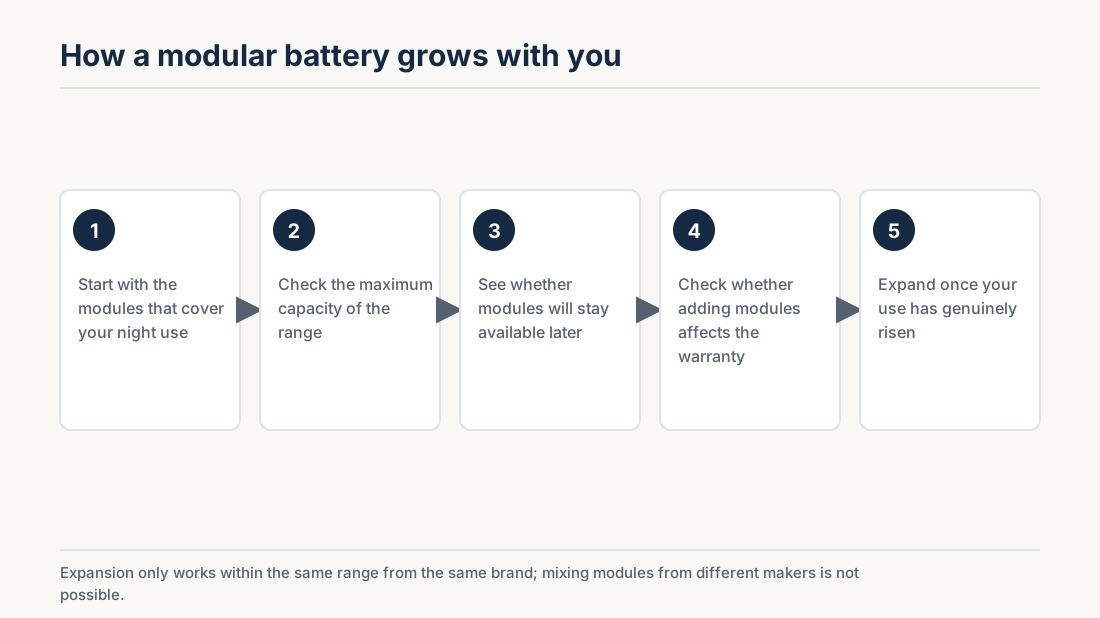
No single brand suits every home; prioritizing compatibility with your inverter and future expansion plans over brand recognition is essential.
Which home battery brands are leading the market in Australia?
In Australia, home battery brands show strong growth in modular systems. Sigenergy, Sungrow, and BYD are gaining traction due to their scalability and reliable performance in warm climates. These batteries maintain efficiency even at temperatures above 30°C, which is important for Australian homes.
What features make a home battery brand affordable?
Affordable home battery brands focus on modular entry-level systems with capacities between 5 kWh and 10 kWh. These options reduce the upfront investment while allowing you to expand the system later. LFP chemistry contributes to longer lifespan without a significant increase in cost.
How do the best home battery systems compare?
The best home battery systems vary in capacity, usable energy, warranty, and smart features. Comparing these aspects makes it easier to choose the right system.
Key specifications to consider include:
- Capacity range: 5 kWh to 26 kWh depending on the model
- Usable capacity: typically from 90% to 100% based on battery design
- Cycle life: ranges between 6,000 and 10,000 full charge cycles
- Warranty: usually spans 10 to 15 years
- Battery chemistry: LFP for safety, NMC for higher energy density
A home battery comparison chart can help match these specifications with your household’s energy usage. For example, homes with high evening consumption benefit more from higher usable capacity rather than a larger nominal capacity.
Compatibility with your existing solar inverter is critical if you already have solar panels installed. You can explore system combinations in our solar panel systems overview to understand how batteries integrate with your current setup.
What are the differences between AC and DC coupled battery systems?
AC coupled systems have an integrated inverter and connect to existing solar installations, making them suitable for retrofits. DC coupled batteries connect directly to the solar panels using a hybrid inverter and tend to achieve higher efficiency, which is better for new installations.
How do smart features impact battery performance?
Smart features manage battery charging using algorithms that consider weather forecasts and electricity tariff schedules. Advanced systems shift energy use to off-peak hours, which reduces electricity bills and increases self-consumption of solar energy.
What is the typical price range for home battery brands?
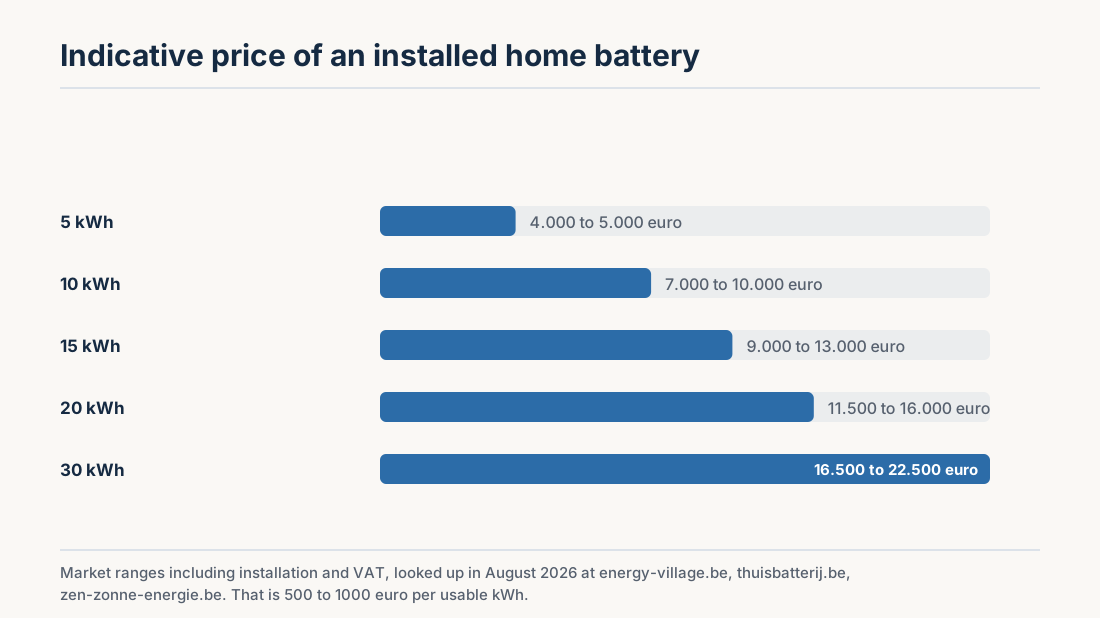
The price of home battery storage depends on system capacity, battery chemistry, and the type of setup. Entry-level systems start around €3,000 incl. VAT, while larger systems can exceed €8,000 incl. VAT.
Typical pricing ranges are:
- 5 kWh system: €4,000 to €5,000 incl. VAT
- 10 kWh system: €7,000 to €10,000 incl. VAT
- 15 kWh system: €9,000 to €13,000 incl. VAT
These prices do not include installation and any necessary electrical upgrades.
How to calculate the total cost of a 10 kWh battery system?
A complete 10 kWh battery system typically includes several components. The total investment can be broken down as follows:
- Battery unit 10 kWh: €5,000
- Hybrid inverter: €1,200
- Installation and labor: €1,500
- Electrical upgrades: €400
The total cost amounts to approximately €8,100 incl. VAT. The final price can vary depending on your existing solar setup and the complexity of electrical work required. For more details on complete installations, see our solar panel installation guide.
Which factors affect the quality of home battery brands?
The quality of home battery brands is determined by technical attributes that influence lifespan and return on investment.
- Depth of Discharge (DoD) - the amount of energy you can use before recharging
- Cycle life - the number of full charge cycles the battery can withstand
- Operating temperature - how well the battery performs in hot or cold climates
- Warranty terms - covering capacity retention and throughput limits
- Scalability - the ability to expand capacity without replacing the entire system
Warranty clarity is key. Some brands define end of life at 60% capacity retention, while others guarantee 70% or more, which affects long-term value significantly.
Why is battery chemistry important?
Lithium Iron Phosphate (LFP) batteries provide higher thermal stability and longer lifespan, making them well suited for residential storage due to safety and durability. Lithium Nickel Manganese Cobalt (NMC) batteries offer higher energy density but tend to degrade faster.
How does inverter compatibility influence your choice?
Inverter compatibility ensures that the battery interfaces properly with your solar setup. Some brands work only with specific inverter models, while others support multiple systems. Choosing a battery with flexible compatibility simplifies installation and future upgrades.
When is a specific home battery brand the best choice?
Selecting the right brand depends on your household’s energy usage, solar production, and plans for expansion.
Typical scenarios include:
- Small households with around 3,000 kWh annual consumption benefit from 5 kWh systems
- Medium households with solar panels generally use 10 kWh batteries to increase self-consumption
- Large homes or those requiring backup power often need systems with 13 kWh capacity or more
If you plan to expand your solar system later, modular battery systems provide flexibility. You can also review sizing using our solar energy capacity guidance to align battery capacity with your panel output.
Is a 10 kWh battery sufficient to power a house?
A 10 kWh battery typically covers evening and nighttime energy use for most households. However, it may not supply power continuously to high-demand appliances during extended outages. Larger systems or backup integrations with generators can address these limitations.
How do leading Australian solar battery brands compare to global ones?
Top solar battery brands in Australia emphasize temperature resistance and modular design to maintain efficiency above 30°C and allow flexible expansion. Global brands focus more on integration with smart grids and home energy systems, including virtual power plant participation and dynamic energy pricing.
For homeowners comparing the top 10 solar batteries in Australia versus European systems, climate adaptation and grid interaction features are the main differences.
What trends are shaping the top 10 solar battery brands?
The top solar battery brands are following three main trends:
- Modular design that allows scalability
- Advanced energy management software to optimize usage
- Integration with electric vehicle charging and smart home technologies
Additionally, emerging sodium-ion batteries are expected to reduce prices, especially for smaller residential systems, in the coming years.
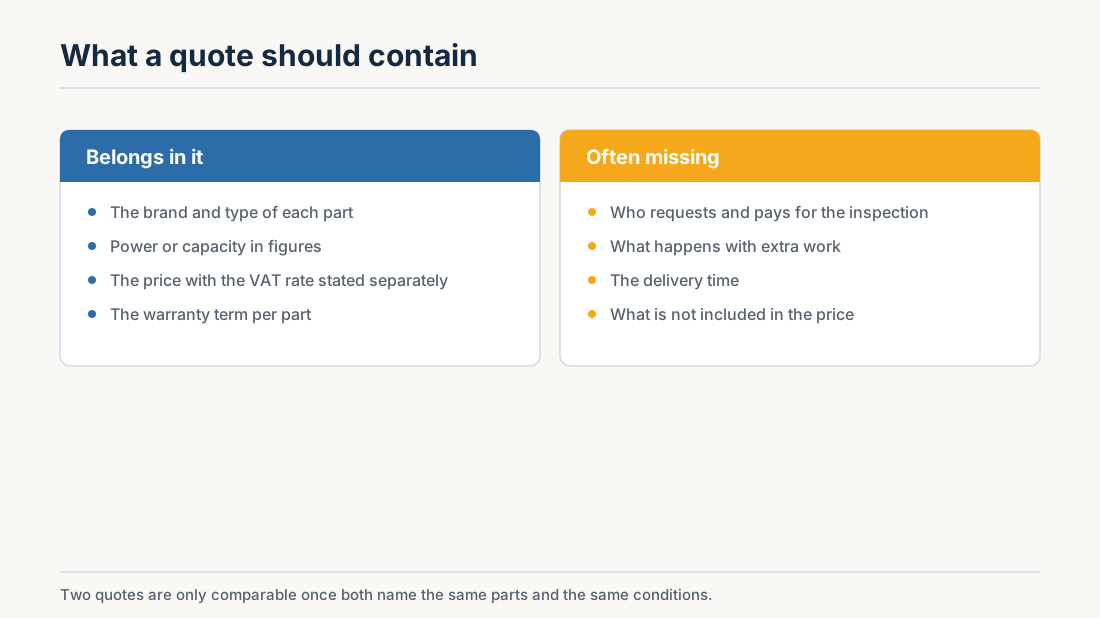
Evaluating different home battery systems involves focusing on capacity, inverter compatibility, and reliability rather than relying solely on brand popularity. A well-matched battery enhances your self-consumption of solar energy and decreases your dependence on the grid. I recommend assessing your energy usage first, then comparing at least three personalized quotes to find the best fit. Through Soleva, you can receive expert advice and access offers suited to your home and budget.
Frequently Asked Questions
What are the best home battery brands in Europe?
The best home battery brands in Europe prioritize compatibility with inverters and adhere to strict safety standards. Systems using Lithium Iron Phosphate (LFP) chemistry are predominant due to their fire resistance and durability. European consumers often prefer modular batteries that adapt to evolving energy needs and comply with grid regulations, making scalability an important factor in their choice.
What is the price of a 5 kWh home battery system?
A 5 kWh home battery system typically costs between €4,000 and €5,000 incl. VAT. Prices vary based on battery chemistry, brand reputation, and included smart features. Installation and inverter upgrades usually add another €1,500 to €3,000, depending on the complexity of the setup.
How can I compare home battery brands effectively?
To compare home battery brands, analyze their usable capacity, warranty coverage, and inverter compatibility. A higher nominal capacity does not always translate into better performance if the usable energy is limited. Using a comparison chart can simplify your evaluation and help you avoid overspending on unnecessary features.
What is the price of a 10 kWh battery including installation?
The total price for a 10 kWh battery system with installation generally ranges from €7,000 to €10,000 incl. VAT. This cost includes the battery unit, hybrid inverter, labor, and any electrical adjustments needed. The final price depends on your current solar system and whether additional upgrades, like distribution board modifications, are required.
Which home battery brands provide the best smart features?
Brands offering the best smart features include real-time energy monitoring, automatic charging based on electricity tariffs, and predictive energy management. Advanced systems analyze weather forecasts and consumption patterns to optimize charging cycles, improving energy savings without requiring manual intervention.
Indicative prices for the Belgian market, checked in August 2026 against energy-village.be, thuisbatterij.be and zen-zonne-energie.be. These are market ranges for an installed system including VAT, not a quotation: your price depends on capacity, brand and the state of your existing installation.
Read also
Ready to cut your energy bill?
Compare quotes for solar panels, home batteries and charging points.