Home battery belgium
Renon Power home battery: price and review
Storing excess solar energy efficiently requires a reliable system, and Renon Power battery achieves this with advanced lithium technology and smart energy control. This battery system uses LiFePO4 chemistry and modular capacity to increase your self-consumption and reduce dependence on the electricity grid. Models range from compact 5 kWh units to scalable systems up to 100 kWh, offering various options for different energy needs.
How does a Renon Power battery work exactly?
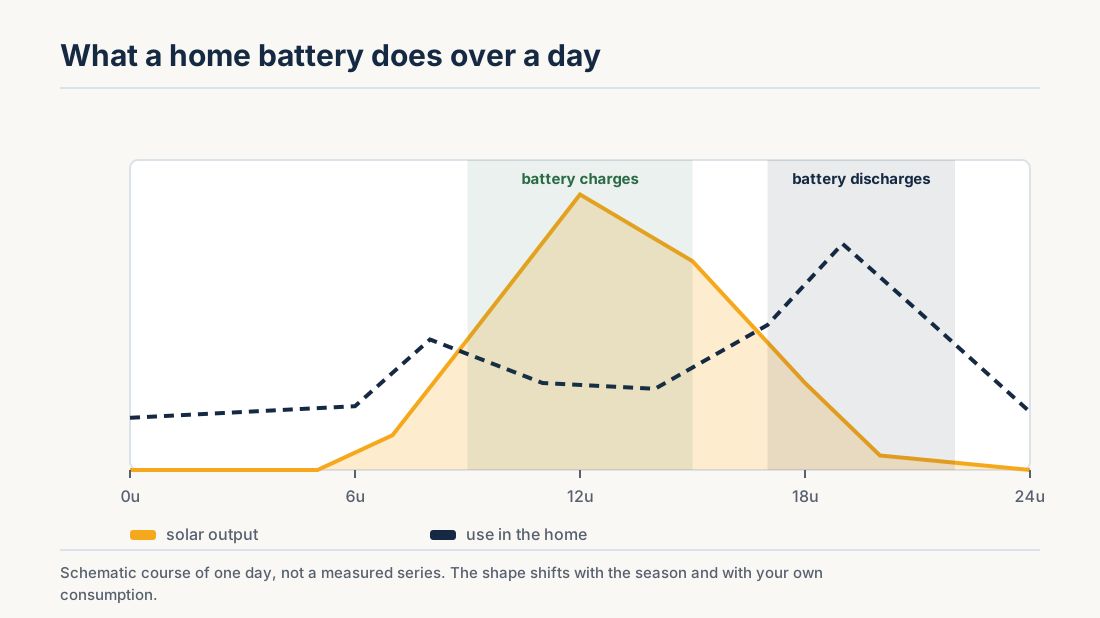
A Renon lithium battery stores the electricity generated by your solar panels and discharges it when solar production decreases or demand increases. The system manages direct current storage and controlled discharge through an inverter, ensuring efficient energy use.
The process involves energy storage, intelligent management, and delivery to your home or business. This approach increases your self-consumption and decreases reliance on grid electricity.
How does energy storage and discharge operate?
The battery captures surplus solar energy during daytime production. It then supplies this stored energy at night or during peak tariff periods, lowering your dependence on costly grid energy.
What role does the Energy Management System (EMS) play?
The Energy Management System continuously monitors energy production, consumption, and pricing. It automatically determines the optimal times to store or use energy, aiding peak shaving and optimizing consumption based on dynamic tariffs.
How is monitoring and control handled?
You can monitor the battery’s performance via an app or cloud platform, which provides real-time data such as battery charge level, energy savings, and consumption patterns. Accessing this information helps improve your energy management efficiency.
For a broader understanding of how energy storage systems operate, visit how home batteries function.
Which technologies and models does Renon Power Technology Inc provide?
Renon Power Technology Inc offers several battery models designed for residential and commercial applications. These systems utilize lithium iron phosphate (LiFePO4) technology, known for its safety, long lifespan, and consistent performance.
The main product families vary by capacity, scalability, and installation approach.
What are the primary residential models?
The common residential batteries include the following:
- Xcellent - offers 5.12 to 15 kWh capacity with a wall-mounted, compact design;
- EBrick - provides 5 to 20 kWh capacity in a stackable modular form;
- Xcellent Plus - a 16 kWh model with flexible installation options;
- Xtreme - scalable from 10 up to 100 kWh with high capacity suited for larger needs.
What are the key specifications of Renon batteries?
The Renon Battery spec sheet for the Xcellent model lists:
- Nominal voltage: 51.2V;
- Power output of up to 4.8 kW;
- Approximately 8,000 charge cycles;
- A 10-year warranty for peace of mind.
Are there commercial and industrial systems available?
Yes, Renon provides commercial-scale solutions like the ECube and MPack series that offer large-scale energy storage for factories, electric vehicle charging stations, and agricultural applications. These systems can reach capacities in the hundreds of kWh and integrate seamlessly with energy management systems.
For a comprehensive comparison of various battery systems, explore battery comparison insights.
What is the price range for a Renon Power battery system?
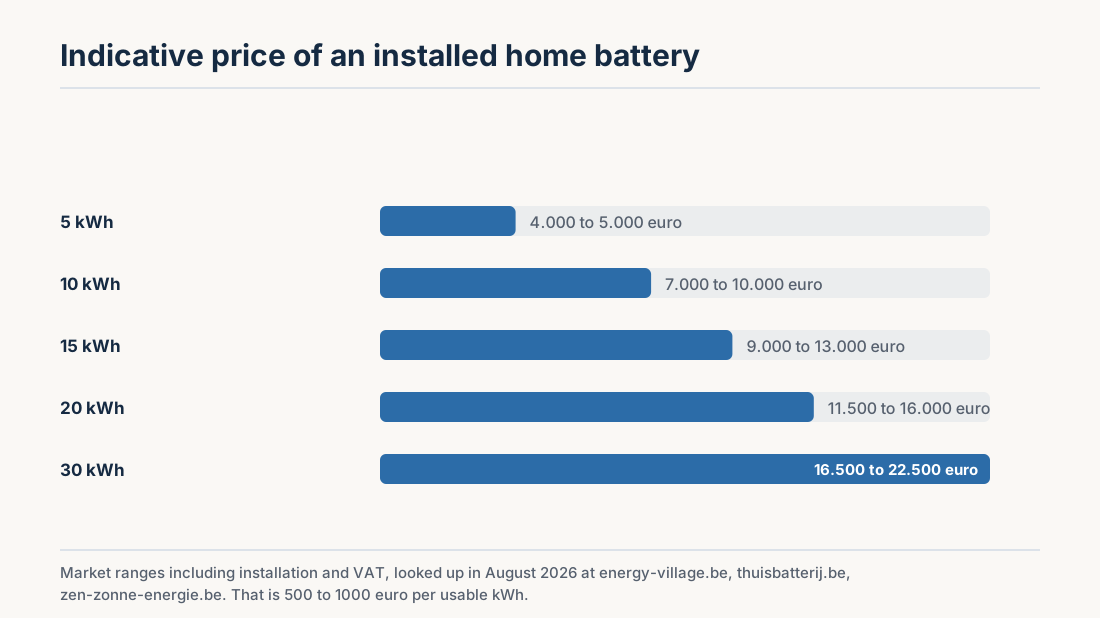
The cost of a Renon Power battery depends on the system’s capacity, specific model, and installation details. Entry-level units start from approximately €1,020 incl. VAT, while larger, high-capacity systems can exceed €4,650 incl. VAT.
The following price ranges illustrate typical options:
- 5 kWh systems - from €1,020 incl. VAT;
- 10 kWh systems - from €3,200 incl. VAT;
- 16 kWh models - from €4,000 incl. VAT;
- 10 to 100 kWh scalable systems - from €4,650 incl. VAT.
How do installation costs and components add up?
Here is a detailed calculation example for a 10 kWh system installation:
- Battery unit: €3,200;
- Hybrid inverter: €1,200;
- Installation labor: €1,500;
- Electrical upgrades: €400.
The estimated total price is approximately €6,300 incl. VAT.
Which factors influence the final price?
The price varies depending on:
- Battery capacity and scalability;
- Installation complexity at your site;
- Compatibility with your existing inverter;
- Advanced monitoring and EMS features included in the system.
For more detailed price benchmarks, visit the home battery price overview.
When does a Renon battery provide the most benefits?
A Renon battery system suits households equipped with solar panels, those with substantial energy consumption, or homes subject to dynamic electricity tariffs. It enhances self-consumption and helps you save during peak energy cost periods.
What makes it ideal for residential settings?
The system functions best in homes with solar capacities between 3 and 10 kWp. A practical guideline is to select a battery capacity roughly half your daily energy consumption.
For example, a household consuming 30 kWh daily would benefit from a 15 kWh battery.
How does it aid in managing dynamic tariffs and grid usage?
The battery stores energy when electricity prices are low and discharges during costly peak periods. This approach decreases your energy bills and assists in electrical grid stability.
Find out more about optimizing energy use with dynamic tariff battery usage.
Is the system suitable for business applications?
Absolutely. Renon commercial systems can minimize peak demand charges and support uninterrupted operations for various sectors, including manufacturing, agriculture, and electric vehicle charging networks.
What are the advantages and disadvantages of Renon Power batteries?
A review of Renon batteries highlights strengths such as durability, modular scalability, and efficiency, alongside some limitations like initial investment and space demands.
Which main benefits can you expect?
Key advantages include a long service life and adaptable design:
- Approximately 8,000 charge cycles;
- 10-year warranty coverage;
- Capacity to expand modularly;
- High safety profile due to LiFePO4 chemistry.
What are potential drawbacks?
Battery energy storage systems (BESS) typically require a significant upfront investment and need physical space. Additionally, efficiency can slightly decrease in cold environments; however, thermal management systems help reduce these losses, despite adding some complexity.
How does performance hold up in real-world conditions?
Renon batteries demonstrate solid winter performance. Models with heating systems can recover between 1.2 to 1.7 kWh daily during cold months, enhancing return on investment in colder climates.
For more information about battery lifespan, see battery lifespan details.
How does Renon compare to other home battery options?
Renon batteries emphasize durability and modular scalability. In contrast, competing products often focus on software ecosystems or design aesthetics. The choice varies based on battery chemistry, system flexibility, and cost effectiveness.
Which brands are considered top in the market?
Top battery brands include global leaders in lithium storage technology. Renon distinguishes itself through competitive pricing and easily expandable designs.
What defines the future of battery technology?
The ultimate goal is solid-state batteries that improve energy density and safety. Currently, Renon uses LiFePO4 technology, which prioritizes stability and longevity over maximum capacity.
When might a Renon Power battery not be the best choice?
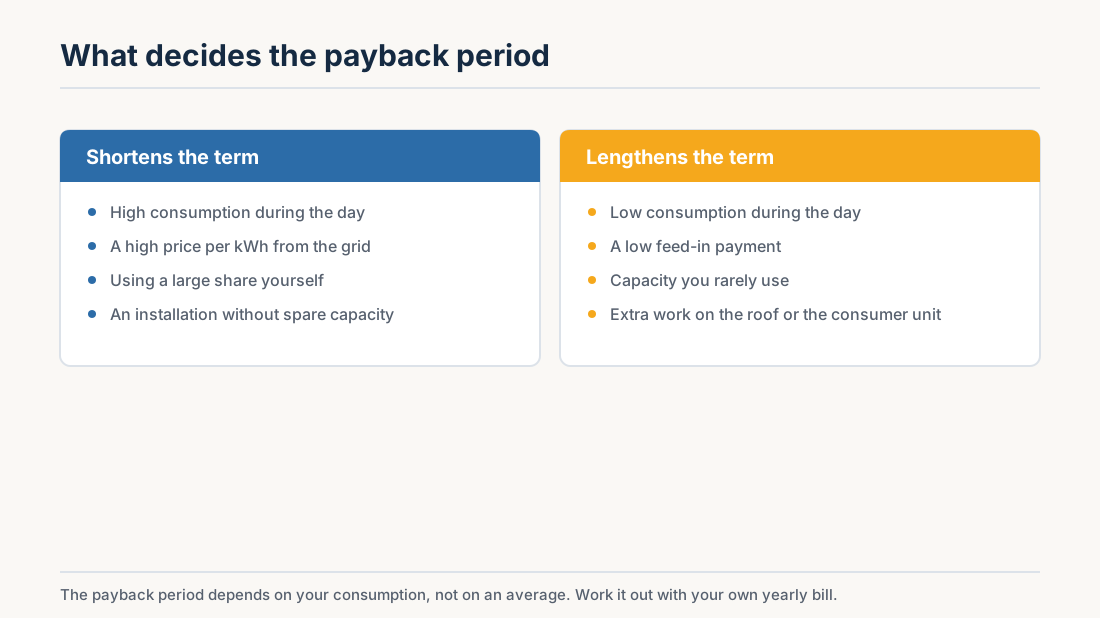
A large battery system is not advisable if your solar energy production is limited, as oversized storage leads to underused capacity and extended payback periods.
Selecting the right battery system should consider your specific energy use, solar production capacity, and budget. Renon batteries stand out due to their modular design, long lifespan, and excellent performance in colder conditions. Ensure you match the battery capacity with your daily energy consumption and inverter compatibility to avoid oversizing. Use resources like Soleva to compare multiple options and obtain several quotes to find the optimal configuration for your home or business.
Frequently Asked Questions
What information does a Renon Battery spec sheet provide?
A Renon Battery spec sheet details the battery’s voltage, capacity, expected charge cycle life, certifications, and communication protocols such as CAN or RS485. These specifics help ensure the system is compatible with your inverter and adheres to grid standards. Reviewing these details helps prevent installation problems and makes sure the battery matches your energy needs and electrical setup.
How much price difference exists between 5 kWh and 15 kWh Renon battery systems?
The price difference between the 5 kWh and 15 kWh systems can reach several thousand euros, as larger batteries contain more modules and deliver higher power output. Typically, 5 kWh units start near €1,000 while 15 kWh systems often exceed €4,000, depending on installation and configuration.
How does a Renon battery perform in winter conditions?
Renon batteries maintain reliable performance in winter because of their LiFePO4 chemistry and optional heating systems. Heated units can recover up to 1.7 kWh per day, improving efficiency and reducing energy losses during cold months in regions with extended cold weather.
What costs should I expect for Renon battery maintenance?
Maintenance costs for Renon batteries stay low since they require minimal servicing. Most work includes software updates and occasional inspections by certified installers. Expenses are generally higher after warranty expiration, when components like inverters or battery modules may require replacement.
Is a Renon Power battery compatible with smart home systems?
Yes, Renon Power batteries integrate with smart home setups through their Energy Management System and cloud platforms. They connect to devices like electric vehicle chargers and smart thermostats, enhancing overall energy efficiency by synchronizing storage, consumption, and automation within one controlled environment.
Indicative prices for the Belgian market, checked in August 2026 against energy-village.be, thuisbatterij.be and zen-zonne-energie.be. These are market ranges for an installed system including VAT, not a quotation: your price depends on capacity, brand and the state of your existing installation.
Read also
Ready to cut your energy bill?
Compare quotes for solar panels, home batteries and charging points.