Home battery belgium
Hanchu ESS home battery: price and review
A Hanchu ESS battery stores surplus solar energy, increasing your self-consumption to around 70%, which directly reduces your electricity bill. These systems utilize LiFePO4 lithium technology and are available in capacities such as 3.2 kWh, 5.12 kWh, and 9.4 kWh, generally accompanied by a 12-year warranty.
How does a Hanchu ESS battery work exactly?
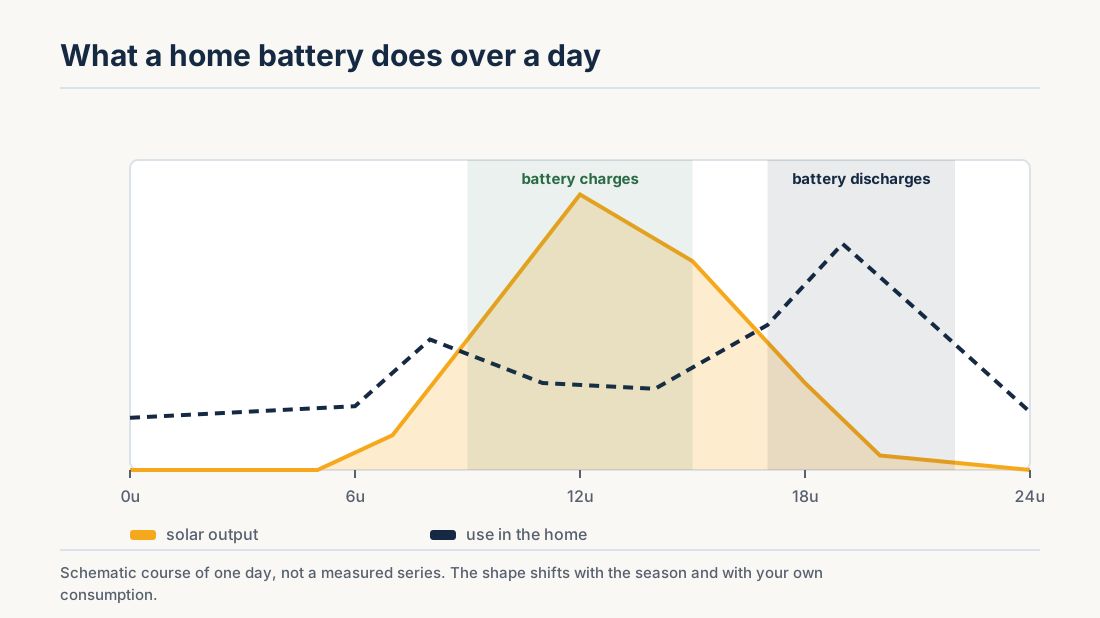
A Hanchu ESS battery stores electricity produced by solar panels during the daytime and supplies it when solar production stops or electricity demand is high. It uses a Battery Management System (BMS) to control charging, discharging, and ensure safety at all times.
Energy flow proceeds in a clear pattern: solar panels generate power, and a hybrid inverter manages the distribution between immediate household use and storage in the battery. The battery then releases stored energy during evening hours or peak electricity tariffs. For more details, explore how a home battery works.
What role does LiFePO4 technology play?
Lithium Iron Phosphate (LiFePO4) technology provides excellent thermal stability, a long lifespan, and high safety for the battery system. Hanchu batteries achieve about 95% depth of discharge, which means more usable capacity with minimal degradation.
How does the HANCHU ESS app enhance performance?
The HANCHU ESS app continuously monitors energy flows in real time and optimizes battery charging based on electricity tariffs, weather forecasts, and household consumption patterns to maximize savings.
What defines an ESS grade battery?
An ESS grade battery is designed specifically for stationary energy storage, offering stable cycling, high safety standards, and a long service life, typically exceeding 6,000 cycles.
Which Hanchu ESS battery models and capacities are available?
Hanchu ESS batteries come in different voltage types and capacities, allowing you to select the best option based on your household’s energy needs and solar production.
The primary models include:
- Hanchu ESS 3.2 kWh battery - a compact solution ideal for small households
- Hanchu ESS 5.12 kWh battery - a popular choice for average electricity consumption
and
- Hanchu ESS 9.4 kWh battery - suitable for larger households with greater energy demands.
What is the difference between low voltage and high voltage systems?
Low voltage systems, operating around 48V, are typically designed for residential use, while high voltage systems deliver higher power output suitable for larger homes or commercial applications.
How scalable are these batteries?
These systems support up to 16 battery units connected in parallel, allowing easy expansion without replacing the original configuration. For more on scalability, see modular battery systems.
What is the price of a Hanchu ESS battery?
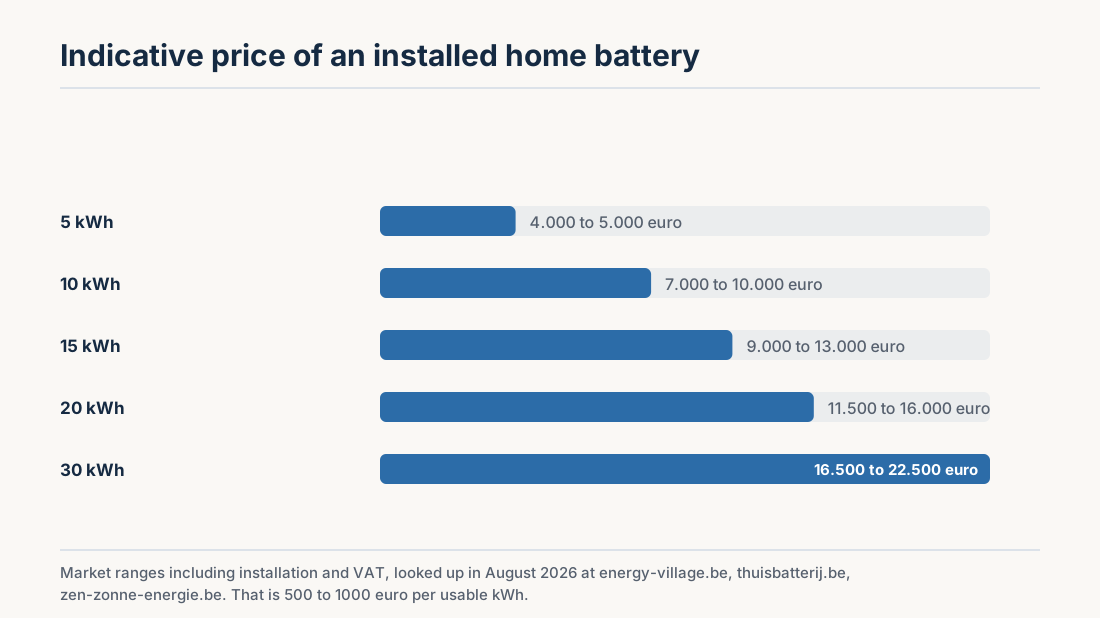
The complete Hanchu ESS battery system, including inverter and installation, typically costs between €4,000 and €10,000 incl. VAT. The final price varies based on battery capacity, voltage type, and installation complexity.
Typical price ranges per model are:
- 3.2 kWh battery only from €2,500 incl. VAT
- 5.12 kWh system from €4,000 incl. VAT installed
- 9.4 kWh system from €5,000 to €7,000 incl. VAT installed
Calculation example: what do you pay for an average system?
Consider a 10 kWh equivalent system composed of two 5.12 kWh battery modules with the following costs:
- Battery modules: 2 × €2,000 = €4,000
- Hybrid inverter: €1,200
- Installation: €1,500
- Electrical upgrades: €400
The total investment amounts to approximately €7,100 incl. VAT.
How much does an ESS battery cost per kWh?
The cost per kWh for these ESS batteries typically ranges between €500 and €1,000, depending on the specific configuration and installation details. For wider comparison, see home battery price ranges.
In which situations does a Hanchu ESS battery make the most sense?
Hanchu ESS batteries are most beneficial in households equipped with solar panels and moderate to high electricity consumption.
Ideal scenarios include:
- Households consuming between 3,500 and 6,000 kWh annually
- Homes with dynamic energy tariffs where hourly electricity prices vary
- Users aiming for higher self-consumption of their solar energy production
How does the system interact with tariffs and regulations?
In Belgium, the capacity tariff motivates households to store energy and reduce peak electricity usage. More information is available at capacity tariff explanation.
What about EV and smart home integration?
The Hanchu ESS battery integrates seamlessly with electric vehicle chargers and smart home devices, enabling energy usage shifting towards cheaper hours or solar generation peaks to maximize savings.
How long does a Hanchu ESS battery last?
The lifespan typically exceeds 6,000 cycles, equating to approximately 15 years of daily use under normal conditions.
What are the pros and cons of Hanchu ESS batteries?
The Hanchu ESS battery offers several advantages focusing on efficiency, safety, and flexibility.
Advantages include a high usable capacity due to depth of discharge, advanced safety features such as aerosol fire suppression, and a modular design that allows for easy expansion. The smart software integration further increases your energy savings.
Disadvantages include a significant initial investment and limited financial benefits if used without solar panels. Also, compatibility with older energy systems may require additional upgrades.
What warranty coverage applies to Hanchu batteries?
The standard warranty covers performance and product reliability for 12 years.
What should you know about maintenance and replacement?
Regular maintenance requirements are minimal. Replacement generally occurs after significant degradation over time. For further details, visit battery lifespan details.
How does the Hanchu ESS battery compare to alternative home batteries?
When comparing Hanchu ESS batteries with other home battery options, key factors are safety, scalability, and cost per kWh.
Distinctive features of Hanchu ESS include:
- Enhanced safety through LiFePO4 chemistry
- Flexibility to expand capacity modularly to large sizes
- Competitive pricing for medium to large systems
When might you avoid choosing this battery?
This battery system is less suitable for homes without solar panels or with very low annual electricity consumption below 2,000 kWh.
How does it perform in real usage?
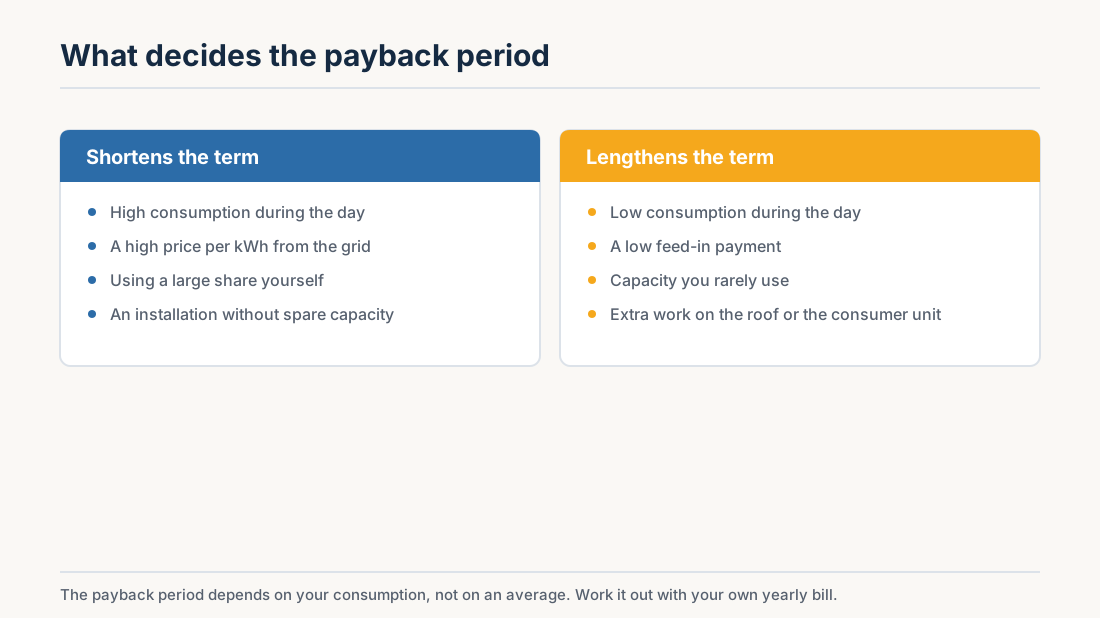
The round-trip efficiency typically ranges from 94% to 96%, minimizing energy losses. The combination with smart software features supports a return on investment period between 4 and 8 years. For further comparisons, see battery comparison options.
Selecting the right home battery depends on your household’s energy consumption, solar production, and budget. The Hanchu ESS battery stands out with its high safety standards, modular scalability, and strong efficiency, making it a suitable choice for most solar-equipped homes. If your goal is to reduce reliance on the grid while benefiting from dynamic tariffs, this battery system is a practical solution. To ensure you find the best equipment and price, use Soleva to compare certified installers and gather multiple quotes tailored to your situation.
Frequently Asked Questions
What is a Hanchu ESS battery review summary?
Reviews of Hanchu ESS batteries often emphasize their high safety, consistent performance, and strong value especially for larger capacity systems. Many users appreciate the reliable operation resulting from LiFePO4 technology and the modular design that allows simple system expansions without full replacements.
What is the Hanchu ESS battery price list based on capacity?
The Hanchu ESS battery price varies according to capacity and configuration. Entry-level systems start at about €4,000 incl. VAT installed, while higher-capacity models cost up to €10,000. These prices often include the inverter and installation, explaining the broad range between simpler and advanced setups.
How does HANCHU ESS login password and app access work?
The HANCHU ESS app requires a user login created during installation. Certified installers generally set up the account and provide your login details. If needed, you can reset the HANCHU ESS app password within the application to maintain secure access for monitoring and managing your system.
What is involved in Hanchu ESS battery replacement?
Replacing a Hanchu ESS battery involves changing individual battery modules rather than the full system. Thanks to its modular design, you can upgrade or replace units independently, which reduces long-term costs and minimizes downtime compared to non-modular battery systems.
Is a Hanchu ESS battery suitable without solar panels?
While a Hanchu ESS battery can operate without solar panels, financial benefits are limited. The primary savings come from storing self-produced solar energy. Without solar generation, your savings depend on strategies like grid charging during low tariffs, which usually offer a lower return on investment compared to solar paired configurations.
Indicative prices for the Belgian market, checked in August 2026 against energy-village.be, thuisbatterij.be and zen-zonne-energie.be. These are market ranges for an installed system including VAT, not a quotation: your price depends on capacity, brand and the state of your existing installation.
Read also
Ready to cut your energy bill?
Compare quotes for solar panels, home batteries and charging points.