Home battery belgium
Sungrow home battery: price and review
A Sungrow battery stores solar energy using lithium iron phosphate technology and provides scalable capacity between about 9 kWh and 100 kWh for residential applications. This system offers high safety, modular expandability, and compatibility with hybrid inverters, making it an excellent choice to increase self-consumption under the capacity tariff. This guide explains how Sungrow batteries operate, their pricing, lifespan, and when they fit best in your home energy setup.
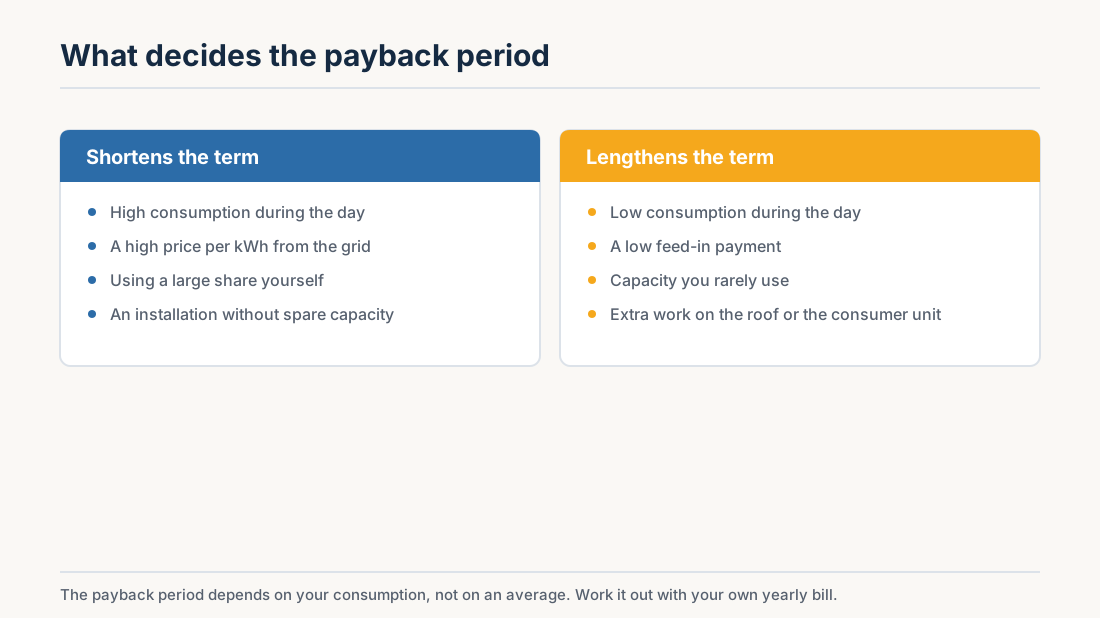
How does a Sungrow battery function?
A Sungrow battery stores excess solar energy in lithium iron phosphate (LiFePO4) cells and supplies electricity when your home needs it. The system integrates with a hybrid inverter that converts solar power into usable energy and controls the battery’s charging and discharging cycles.
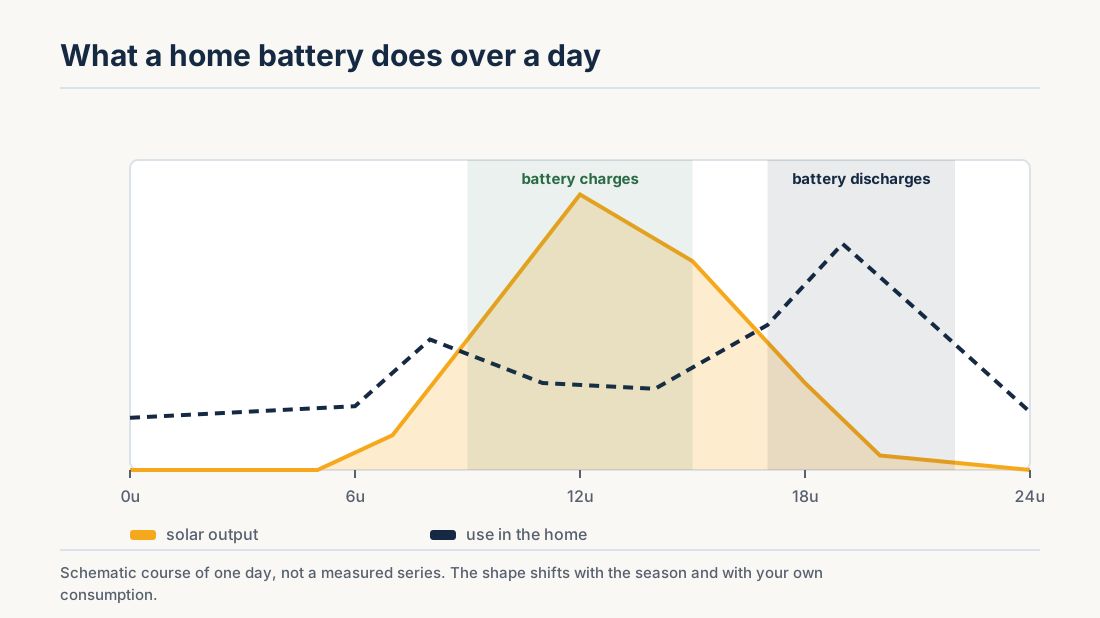
During daylight hours, the battery charges from your solar panels generating electricity. At night or when solar production is low, it releases stored energy to reduce electricity drawn from the grid. This approach boosts self-consumption and helps lower exposure to variable electricity pricing.
What is lithium iron phosphate technology?
LiFePO4 batteries offer excellent thermal stability and a long cycle life, reducing fire risk compared to other lithium chemistries. This technology supports deep discharges without rapid capacity loss. Sungrow battery systems typically achieve high usable capacity, often near 100% depth of discharge.
How does modular stacking enable scalability?
Sungrow batteries utilize stackable 3.2 kWh modules. At least three modules combine to form a 9.6 kWh system. You can expand up to eight modules per stack and link up to four parallel stacks for larger capacities.
- Minimum capacity: 9.6 kWh
- Common residential range: 9.6 - 25.6 kWh
- Maximum scalability: near 100 kWh
Why is a hybrid inverter necessary?
A hybrid inverter is essential for managing energy flows between solar panels, the battery, and the grid. The cost of a Sungrow hybrid inverter is competitive versus standalone inverters, providing better overall system value. These inverters also allow backup power functionality and support higher solar panel capacities.
Which Sungrow battery models and technologies are available?
Sungrow provides modular high-voltage lithium battery solutions for residential and commercial use. The primary product lines include the SBR and SBH series.
What characterizes the SBR battery models?
The SBR series features 3.2 kWh modules supporting flexible capacity expansion.
- SBR096: 9.6 kWh
- SBR128: 12.8 kWh
- SBR160: 16 kWh
- SBR192: 19.2 kWh
- SBR256: 25.6 kWh
These systems are designed for plug-and-play installation with minimal wiring, which reduces installation time and labor costs.
What distinguishes the SBH and MG6RL series?
The SBH series offers larger 5 kWh modules to support higher-capacity systems. The Sungrow MG6RL refers to integrated storage configurations primarily used in larger scale energy solutions.
What is a Sungrow Low Voltage Battery?
The Sungrow Low Voltage Battery targets smaller residential systems with easier integration. However, high voltage solutions remain more popular due to enhanced efficiency and flexible placement options.
What is the price range of Sungrow batteries?
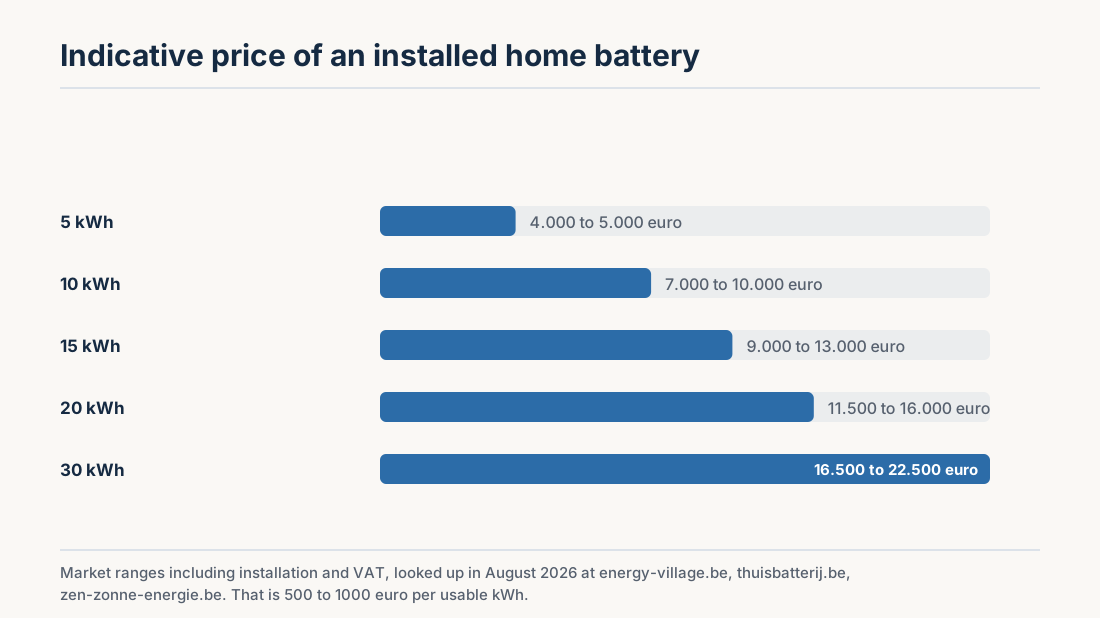
The Sungrow battery price typically ranges from €5,000 to €15,000 incl. VAT for residential systems, influenced by capacity, inverter model, and installation complexity.
Costs increase with battery size and installation requirements, though larger batteries deliver lower cost per kWh despite higher upfront investment.
Price overview by capacity
Here are typical price ranges for common residential system sizes:
- 10 kWh system: €7,000 - €10,000
- 15 kWh system: €9,000 - €13,000
- 20 kWh system: €11,500 - €16,000
Full cost calculation example
A representative installation costs include the following:
- Battery modules (12.8 kWh): €6,000
- Hybrid inverter: €2,000
- Installation labor: €1,500
- Electrical upgrades and protection: €800
The total investment is approximately €10,300 incl. VAT.
Compared to other home battery prices, Sungrow systems usually fall into the lower to mid-price market segment.
When does choosing a Sungrow battery make the most sense?
A Sungrow battery is most effective when your household generates surplus solar energy during the day. The battery stores this energy and makes it available after sunset.
How does the system improve self-consumption?
By storing daytime solar energy, the system significantly increases your self-consumption. This is especially valuable under the capacity tariff, where peak grid usage raises costs.
Which households benefit the most?
Sungrow batteries suit homes with:
- Annual energy consumption between 3,000 and 6,000 kWh
- Electric heating systems or electric vehicle charging
- Dynamic electricity tariffs with variable pricing
While you can use a battery without solar panels via a grid-charging setup, financial savings generally decrease without solar generation.
What are the advantages and disadvantages of Sungrow batteries?
Sungrow batteries offer a compelling combination of affordability and dependable performance, though some limitations exist.
Advantages include modular expandability, strong safety from LiFePO4 chemistry, and competitive pricing. Users often report consistent performance and high coverage throughout the night.
Disadvantages involve a less intuitive monitoring application and dependence on a Sungrow hybrid inverter ecosystem. The software user experience is a weaker point compared to the hardware quality.
The modular design is especially impressive, allowing you to start with a smaller system and expand later without replacing existing modules, which reduces initial risk.
How does a Sungrow battery compare to other home batteries?
Sungrow batteries stand out through their modular design and cost efficiency. They are ideal for value-conscious homeowners seeking scalable energy storage.
Key distinguishing features include:
- High usable capacity, with near-full depth of discharge
- Warranty covering around 10 years with 70% capacity retention
- Expandable up to approximately 100 kWh
- Price positioned below many premium battery systems
Are Sungrow solar batteries reliable?
Yes, Sungrow batteries provide excellent value and stable performance. The mix of safe lithium iron phosphate technology, modular design, and competitive pricing contributes to their popularity.
Is Sungrow a Chinese company?
Yes, Sungrow is headquartered in China and is among the world’s leading inverter producers. The company operates globally and enjoys strong financial stability.
A Sungrow battery balances price, safety, and scalability well, especially if you want to maximize your solar energy usage. Its modular design and lithium iron phosphate technology provide a future-proof solution for many households. To find the system that fits your needs, start by calculating your daily energy consumption and request multiple quotes from trusted suppliers through Soleva to compare sizes and configurations effectively.
Frequently Asked Questions
What is the lifespan of a Sungrow battery?
A Sungrow battery typically lasts around 10 years with standard residential use. The warranty ensures that at least 70% of battery capacity remains after this period. The actual lifespan depends on the number of charge cycles, temperature conditions, and how the battery is used daily.
How much does a 20 kWh Sungrow battery cost?
The price for a 20 kWh Sungrow battery usually ranges between €11,500 and €16,000 incl. VAT. The final price varies based on inverter choice, installation complexity, and any necessary electrical upgrades. Larger systems lower the cost per kWh but increase the upfront investment, and sizing should be tailored to your energy needs.
Does a Sungrow battery work during a power outage?
Yes, when connected with a compatible hybrid inverter, a Sungrow battery can provide backup power during outages. It switches almost instantly to battery supply, allowing essential household appliances to continue operating. Backup capacity depends on system size and your home’s load management setup.
Can you expand a Sungrow battery after installation?
Yes, the modular design enables you to add additional battery modules to increase capacity later. It is possible to expand from as little as 9.6 kWh up to over 25 kWh per module stack, and by adding more stacks, even higher capacities are achievable. Planning expansions early helps minimize additional installation costs.
Is a Sungrow battery suitable without solar panels?
Yes, a Sungrow battery can operate without solar panels by charging from the electricity grid. This configuration may work well with dynamic electricity tariffs where prices fluctuate, but cost savings are generally lower because you pay for all charging energy from the grid rather than using free solar power.
Indicative prices for the Belgian market, checked in August 2026 against energy-village.be, thuisbatterij.be and zen-zonne-energie.be. These are market ranges for an installed system including VAT, not a quotation: your price depends on capacity, brand and the state of your existing installation.
Read also
Ready to cut your energy bill?
Compare quotes for solar panels, home batteries and charging points.