Home battery belgium
For-E battery price and review
The For-E battery stores electricity using hybrid supercapacitor technology, extending its lifespan up to 50 years while maintaining high safety standards and fast charging capabilities. This system combines electrostatic energy storage with graphene-enhanced conductivity, which increases efficiency and durability compared to traditional lithium-ion batteries. Continue reading to discover comprehensive insights into this innovative energy storage solution.
Homeowners often research For-E battery reviews or compare the For-E battery price before selecting a system for solar self-consumption. This guide explains how the technology works, the costs involved, when it is most beneficial, and how it compares with other home energy storage options available through Soleva.
How exactly does a For-E battery work?
The For-E battery combines supercapacitors and traditional battery storage into a hybrid supercapacitor system that stores energy electrostatically rather than chemically. Energy is stored in an electric field between conductive materials instead of through chemical reactions.
This design enables faster charging and discharging cycles while significantly reducing degradation over time. The system responds instantly to peaks in energy demand, which enhances solar power self-consumption.
What is a hybrid supercapacitor?
A hybrid supercapacitor is an energy storage device that merges the high power density of capacitors with the substantial energy density of batteries. It balances fast response times with long-term storage capacity effectively.
Why is electrostatic storage important?
Electrostatic storage avoids chemical reactions, which lowers the risk of overheating and greatly extends the battery’s lifespan compared to lithium-ion systems.
What role does graphene play in For-E systems?
Graphene enhances conductivity and reduces internal resistance, leading to quicker charging times and improved efficiency throughout repeated charge-discharge cycles.
To understand how this battery integrates into a complete setup, you can read more about home battery solutions.
Which For-E battery technologies and configurations are available?
The For-E battery system provides various configurations tailored for both residential and commercial applications. Each setup prioritizes scalability and seamless integration with solar panel systems.
What residential options exist?
- Wall-mounted units ranging from 6 kWh to 14 kWh
- Stackable configurations expandable up to 48 kWh
- Backup-ready systems featuring integrated inverters
What commercial solutions are offered?
- Rack-mounted systems designed for high power requirements
- Containerized solutions from 20 kWh to large-scale megawatt-hour storage
How does the For e link software enhance battery operation?
The For e link energy management system employs artificial intelligence to analyze consumption, solar generation, and electricity tariff data. It automatically determines optimal times to store or utilize energy, reducing dependence on the electrical grid.
You can explore other battery technologies in detail at different battery types explained.
What is the cost of a For-E battery?
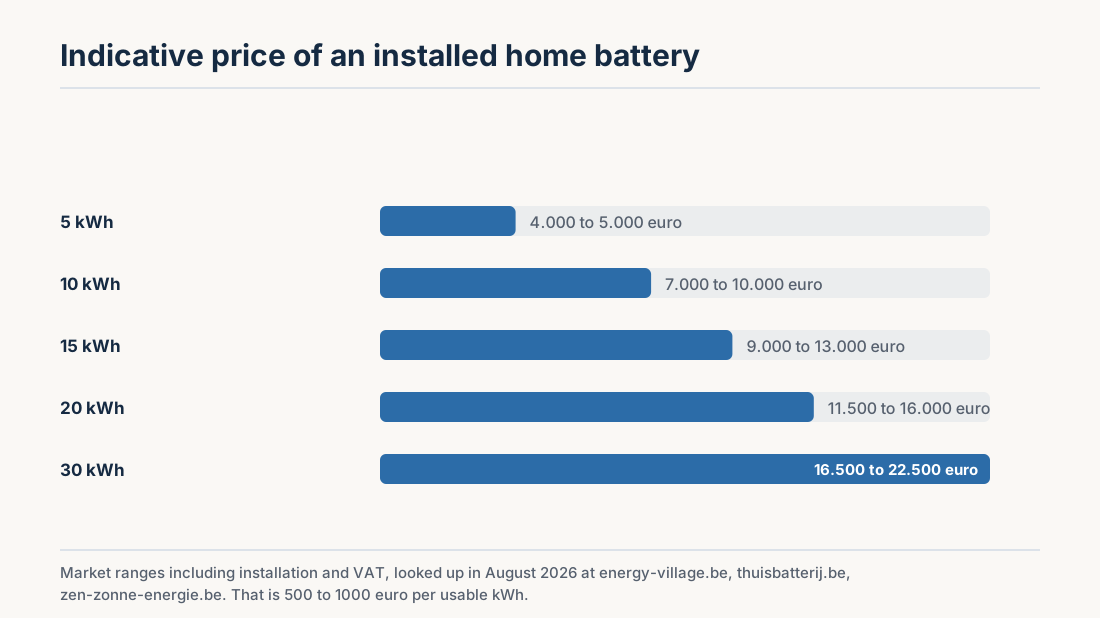
The For-E battery price typically ranges between €6,000 and €10,000 including VAT, depending on capacity, installation complexity, and software integration. These prices are consistent with market averages for home battery systems.
Costs vary according to system size and configuration. Common capacities include:
- 6 kWh system suitable for smaller households
- 10 kWh system designed for average energy consumption
- 14 kWh system intended for higher consumption or electric vehicle charging
What does a full installation cost look like for a 10 kWh system?
A typical 10 kWh For-E battery installation involves several cost components, such as:
- 10 kWh battery unit: €6,500
- Hybrid inverter: €1,200
- Installation and wiring: €1,500
- Backup box and monitoring equipment: €600
The total investment amounts to approximately €9,800 including VAT.
For comparison, see the general pricing overview at home battery price overview.
In which situations does a For-E battery provide the most benefits?
A For-E battery is especially beneficial when you aim to increase solar self-consumption and reduce your reliance on the electrical grid. It performs optimally in households equipped with solar panels and subject to dynamic electricity tariffs.
When is the system most efficient?
- Homes with annual electricity consumption above 4,000 kWh
- Solar installations that produce peak energy during daylight hours
- Users with variable electricity tariffs or significant peak usage
How does the For-E battery correspond to current Belgian energy policies?
The Belgian capacity tariff system incentivizes users to reduce peak grid consumption. The rapid response capability of a For-E battery helps lower peak loads and associated grid costs.
Can the For-E battery be used off-grid?
Yes. When paired with adequate solar capacity and configured for backup power, it ensures continuous electricity supply through instant switching capabilities.
What are the advantages and disadvantages of a For-E battery?
The pros and cons directly relate to the For-E battery’s unique electrostatic design.
Advantages include an exceptionally long lifespan of up to 50 years, rapid charging, and enhanced safety due to the absence of chemical reactions. The system also operates reliably within temperature ranges from -20°C to +40°C without any performance decline.
Disadvantages include limited publicly available data, higher initial costs in certain configurations, and reliance on sophisticated software to achieve optimal performance.
A particularly impressive feature is the extended lifespan, which significantly improves long-term economic value compared with typical batteries that last 15 to 20 years.
How does a For-E battery compare to lithium-ion systems?
The For-E battery differs from lithium-ion batteries predominantly in storage technology, longevity, and safety.
| Feature | For-E Hybrid System | Lithium-ion Battery |
| Storage Method | Electrostatic | Chemical |
| Lifespan | Up to 50 years | 10 - 15 years |
| Charging Speed | Very fast | Moderate |
| Safety | Non-flammable | Thermal risk present |
| Cycle Life | Over 32,000 cycles | 4,000 - 8,000 cycles |
For further comparison, visit lithium battery alternatives.
Selecting the right energy storage system depends on factors such as lifespan, safety, and your electricity usage patterns. The For-E battery stands out due to its electrostatic storage technology, rapid response, and long-lasting durability. It is particularly suited for households aiming to lower peak consumption and maximize solar self-consumption. To gain detailed pricing and system sizing information, you should request multiple quotes through Soleva and compare options tailored to match your energy needs.
Frequently Asked Questions
What is a For-E battery, and how does it differ from other batteries?
The For-E battery is a home energy storage device that utilizes hybrid supercapacitor technology instead of traditional chemical storage. This method extends lifespan and enhances safety by allowing faster charging. Its electrostatic energy storage reduces wear and removes the fire hazards typically linked to lithium-based batteries.
How much does a For-E battery cost for an average household?
For a typical home, a For-E battery costs between €6,000 and €10,000 including VAT, depending on the capacity and complexity of installation. A 10 kWh system with integrated inverter and backup components generally approaches the higher end of this price range, especially for households with sophisticated energy management requirements.
What does a For-E battery review say about its lifespan?
Reviews consistently highlight the For-E battery’s exceptional lifespan as a key advantage. It can last up to 50 years or exceed 30,000 charge cycles, significantly outperforming lithium-ion batteries, which usually last 10 to 15 years. This extended durability improves the long-term return on investment despite the higher initial price.
In what way does the For e link software help reduce electricity costs?
The For e link software lowers electricity expenses by analyzing your consumption patterns, solar production, and electricity tariffs. Using artificial intelligence, it decides when to charge the battery during low-cost periods and when to discharge at peak prices. This automation reduces grid dependency and increases the use of your solar energy.
How does the For-E battery price compare with other technologies?
The For-E battery price is competitive with other premium home battery systems but offers a longer lifespan and greater cycle efficiency. Although lithium batteries may be initially less expensive, the total lifetime cost of a For-E battery becomes more attractive due to fewer replacements and more consistent performance over several decades.
Indicative prices for the Belgian market, checked in August 2026 against energy-village.be, thuisbatterij.be and zen-zonne-energie.be. These are market ranges for an installed system including VAT, not a quotation: your price depends on capacity, brand and the state of your existing installation.
Read also
Ready to cut your energy bill?
Compare quotes for solar panels, home batteries and charging points.