Home battery belgium
Zendure home battery: price and review
Storing solar energy for later use, a Zendure battery provides a plug-and-play home storage solution that connects directly to your socket without requiring installation. Systems like the SolarFlow 2400 AC offer modular capacity combined with smart energy control, while expansion units such as the Satellite Battery increase flexibility. These batteries suit households aiming for higher solar self-consumption and reduced dependence on the grid.
How does a Zendure battery work exactly?
A Zendure battery stores electricity generated by your solar panels or drawn from the grid and supplies it when your demand increases or electricity prices rise. This system uses bidirectional AC technology, allowing it to charge and discharge through a standard socket without any modifications to your fuse box.
It integrates seamlessly with your solar panel setup and tracks both production and consumption via smart meters like Zendure’s P1 or 3CT devices. The built-in software automatically shifts energy usage patterns to lower your reliance on the grid.
How does energy storage and release function?
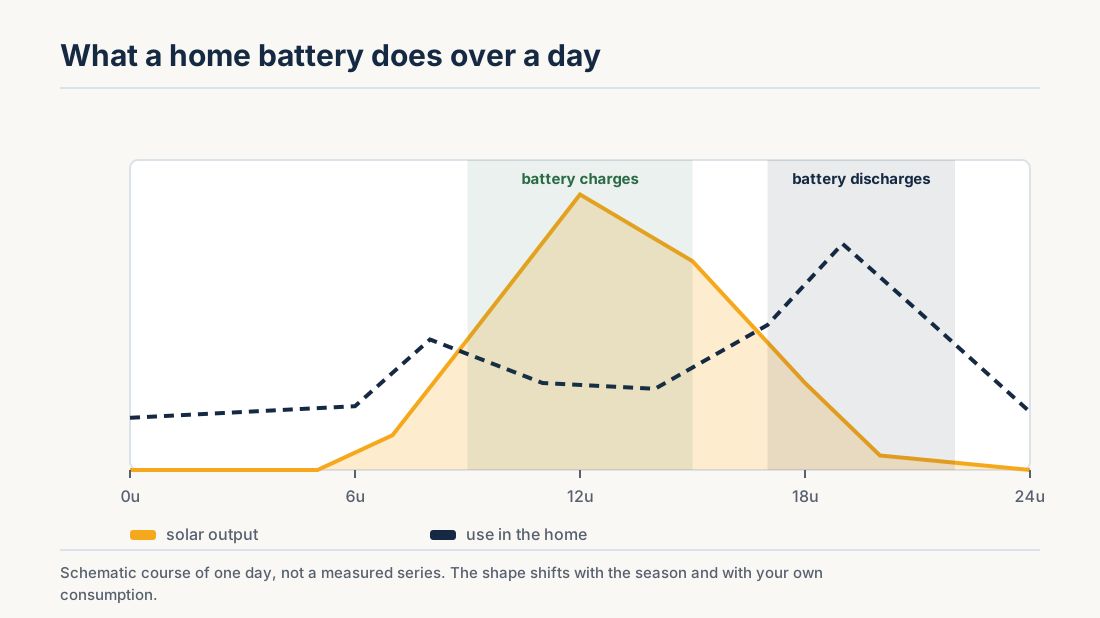
The battery charges when solar production exceeds consumption or when electricity tariffs are low. It then discharges energy during periods of high prices or reduced solar output. This approach improves your self-consumption of solar energy and minimizes energy exported back to the grid.
What role do the Zendure app and Home Energy Management System (HEMS) play?
The Zendure app and HEMS manage energy flows in real time, overseeing solar panels, batteries, electric vehicle charging, and household appliances. They allow integration with smart home platforms like Zendure Shelly and Home Assistant, enabling automated optimization of your energy usage.
Which technologies and models exist for Zendure battery systems?
The most popular Zendure products combine modular battery units with AC-coupled inverters, making the systems scalable and adaptable to different energy needs.
The main system options include:
- SolarFlow 2400 AC - a plug-in system delivering up to 2400W output with expandable storage capabilities.
- Hyper 2000 - a hybrid system designed for higher loads and multi-phase electrical setups.
- Power Station - portable energy storage suitable for off-grid scenarios or emergencies.
- Super Mini - a compact power bank ideal for charging small devices.
What are the main battery modules?
Zendure uses stackable battery modules that allow you to increase storage capacity gradually:
- AB2000X - offers 1.92 kWh capacity.
- AB3000X - provides 2.88 kWh capacity.
- Expandable to systems up to 17.28 kWh.
What technology does Zendure employ in its batteries?
Zendure batteries utilize LiFePO4 (lithium iron phosphate) technology, which delivers high safety levels, a long lifespan exceeding 6000 charge cycles, and stable performance under outdoor conditions. For further details, you can explore our article on lithium battery technology.
What is the price of a Zendure battery?
The price of a Zendure battery varies depending on the capacity, chosen modules, and system configuration. Entry-level setups start around €489 incl. VAT, while larger modular systems can cost over €5,000 incl. VAT.
Here are common price points:
- AB2000X module - from €489 incl. VAT.
- AB3000X module - approximately €699 incl. VAT.
- SolarFlow 2400 AC base system - from €969 incl. VAT.
- Complete configurations with multiple batteries range from €1,799 to €5,144 incl. VAT.
Example calculation for a typical setup
Consider the costs of this representative system:
- SolarFlow 2400 AC unit - €969 incl. VAT.
- Two AB3000X battery modules - €1,398 incl. VAT.
- Smart meter (P1 or 3CT) - approximately €150 incl. VAT.
- Mounting and cables - around €200 incl. VAT.
This totals an investment of about €2,717 incl. VAT.
For a wider comparison, visit our home battery price overview.
In which situations does a Zendure battery make the most sense?
A Zendure battery fits households seeking flexible energy storage without the need for complex installation work. The system performs best in homes equipped with solar panels and dynamic energy pricing models.
When can it maximize your savings?
Pairing the battery with a dynamic energy tariff helps you charge during low-cost periods and discharge when electricity prices surge, leading to direct reductions in your energy bills.
Which types of homes benefit the most?
Zendure batteries suit certain living situations particularly well:
- Apartments or rental properties where installation permission is restricted.
- Households with balcony or small-scale solar installations.
- Users subject to capacity tariffs and peak demand charges.
- Small businesses experiencing variable energy needs.
In Belgium, battery adoption is steadily increasing with a market growth rate of 2.21% and rising demand for solar self-consumption solutions.
What are the advantages and disadvantages of Zendure battery systems?
The main benefits of a Zendure battery include its flexibility, user-friendliness, and modular expansion capabilities. Thanks to its plug-in design, you can use it immediately without facing installation hassles.
A notable advantage is its scalability, allowing you to start with a small system and add capacity as your energy demands grow, minimizing upfront investment risks.
On the downside, the system’s power output is lower compared to fully integrated home battery setups. Larger households with significant consumption might require more robust solutions.
Additionally, the reliance on socket-based output limits peak performance compared with fixed systems directly connected to your home’s electrical infrastructure.
How does a Zendure battery compare with traditional home battery systems?
Zendure batteries emphasize simplicity and flexibility rather than maximum capacity and advanced integration that traditional batteries provide.
Key differences include:
- Zendure offers plug-in systems requiring no installation.
- Traditional batteries typically need inverters and electrical system upgrades.
- Zendure units are modular and portable.
- Traditional systems provide fixed, higher capacity solutions.
Which system suits your needs best?
If you rent your home or belong to a small household, a plug-in Zendure battery system might be the best choice. Larger households with extensive solar installations often benefit more from traditional fixed systems. For additional details, you can read our article on how home batteries operate.
When should you avoid choosing Zendure?
Avoid Zendure batteries if you need high continuous power output or full backup power for all your appliances. In such cases, consider systems with backup power capabilities for improved reliability, as described in our section on backup functionality.
Choosing a Zendure battery system depends on how much flexibility and scalability you require in your home energy storage. These plug-in batteries provide a convenient option for households that prefer quick setup, modular growth, and intelligent energy management without dealing with complex installations. They are excellent if you want to start small and expand later. To ensure the best fit for your solar production and energy consumption, compare different models and seek personalized advice from trusted providers like Soleva.
Frequently Asked Questions
Is Zendure a Chinese company?
Yes, Zendure originates from China and specializes in energy storage and power electronics. The company’s products are developed for global markets, including Europe. It operates manufacturing and innovation centers internationally to ensure compatibility with European energy standards and systems.
How long does a Zendure power bank last?
A Zendure power bank typically lasts beyond 6000 charge cycles, thanks to its LiFePO4 technology. This translates into approximately 10 to 15 years of daily use. Factors like temperature, charging routines, and usage patterns affect lifespan, but the technology ensures stable long-term performance compared to standard lithium batteries.
What devices are compatible with Zendure batteries?
Zendure systems are compatible with solar panels, smart meters, electric vehicle chargers, and household devices. They also support integration with energy monitoring tools and smart home platforms. This compatibility extends to balcony solar systems and any devices that connect through energy management networks.
What voltage do Zendure batteries operate at?
The voltage of Zendure batteries varies based on module design and system arrangement. Most systems function within low-voltage residential ranges and use AC coupling to safely deliver energy for household use. This allows direct connection to standard sockets without specialized wiring requirements.
What is the typical Zendure battery price for a full system?
For a complete system, Zendure battery prices generally range from €1,000 to over €5,000 incl. VAT, depending on storage capacity and module count. Smaller setups usually include one or two batteries, while larger configurations stack multiple units for greater capacity and autonomy.
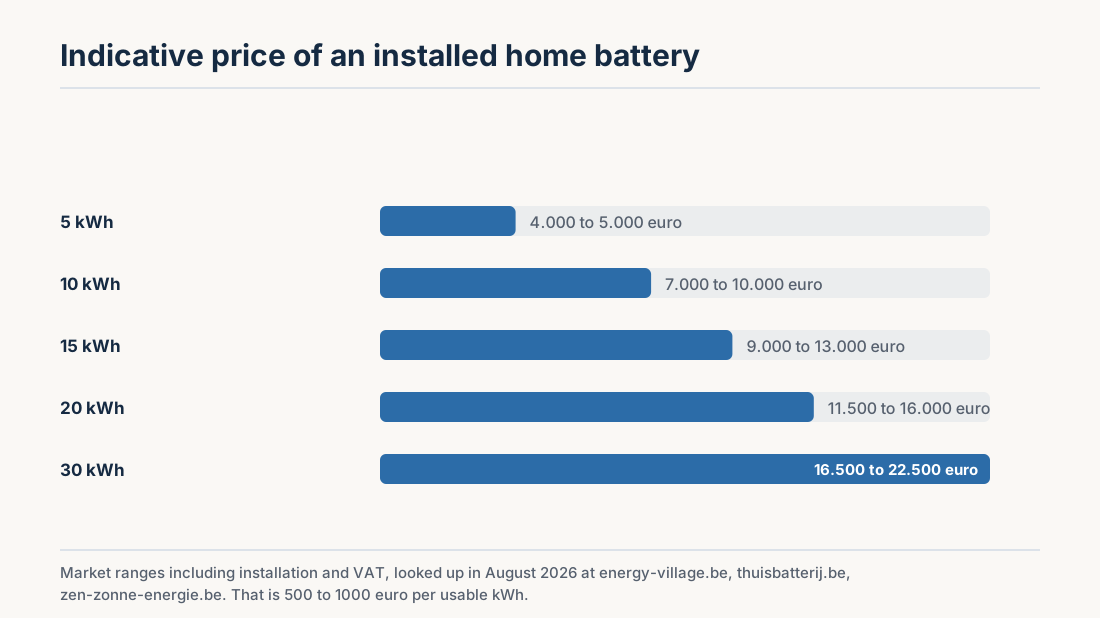
Indicative prices for the Belgian market, checked in August 2026 against energy-village.be, thuisbatterij.be and zen-zonne-energie.be. These are market ranges for an installed system including VAT, not a quotation: your price depends on capacity, brand and the state of your existing installation.
Read also
Ready to cut your energy bill?
Compare quotes for solar panels, home batteries and charging points.