Home battery belgium
Pylontech home battery: price and review
Using a Pylontech battery allows you to store solar energy efficiently by employing modular lithium iron phosphate (LiFePO4) technology, which significantly increases self-consumption and lowers dependence on the grid. Popular models like the Pylontech battery US5000 and US3000 provide scalable capacity and boast high efficiency levels above 95%. These batteries are primarily used alongside solar panels to shift energy usage to evening hours.
This guide explains how Pylontech battery systems operate, discusses pricing, highlights the best models available, and outlines when installing one makes financial sense.
How does a Pylontech battery operate?
A Pylontech battery system stores surplus solar energy in lithium iron phosphate cells and supplies electricity to your home when needed. It uses a Battery Management System (BMS) that controls the charging, discharging, and safety aspects.
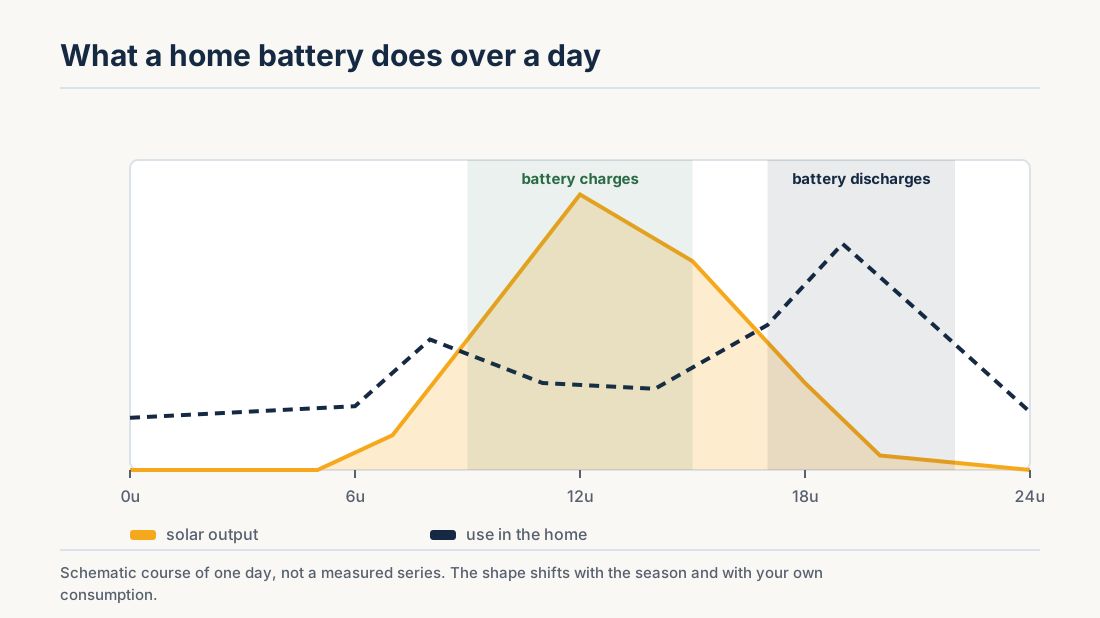
The energy flow follows a clear path. Solar panels generate electricity, and an inverter converts it for home use. Unused power is stored in the battery for later consumption. This setup can increase self-consumption from 30 - 50% to as much as 70 - 90% in many households.
What role does the Battery Management System fulfill?
The BMS continuously monitors voltage, temperature, and charge cycles to prevent overcharging and deep discharge. These protections extend the battery’s lifespan beyond 6,000 cycles, which translates to approximately 15 - 20 years of effective service life.
How does modular storage add flexibility?
Thanks to its modular design, you can stack multiple battery units. Starting with a 5 kWh system, you can expand capacity to 25 kWh or more without replacing the entire system. This feature supports households that experience increasing energy demands over time.
Which Pylontech battery models and configurations exist?
Pylontech offers both low voltage and high voltage systems in various capacities to fit different requirements. The most common configurations include:
- Pylontech battery US3000 - compact modules with approximately 3.5 kWh capacity, affordable and space-efficient
- Pylontech battery US5000 - approximately 4.8 kWh per module, ideal for most residential installations
- 5 kW systems - assembled from stacked modules to provide higher output
- Force H2 and H3 series - high voltage systems designed for larger solar installations
- Battery Box H3 - scalable packages that can reach 30 kWh and beyond for extensive storage needs
Which Pylontech battery model is most suitable?
Your energy consumption determines the best option. For most households, the US5000 offers a balanced combination of capacity and scalability. Larger homes with higher energy demands benefit more from the H3 series systems.
What differentiates low voltage from high voltage systems?
Low voltage batteries typically work well with standard hybrid inverters found in many homes. High voltage systems, however, are more efficient for large-scale installations and reduce energy losses due to lower current flow.
How much does a Pylontech battery cost?
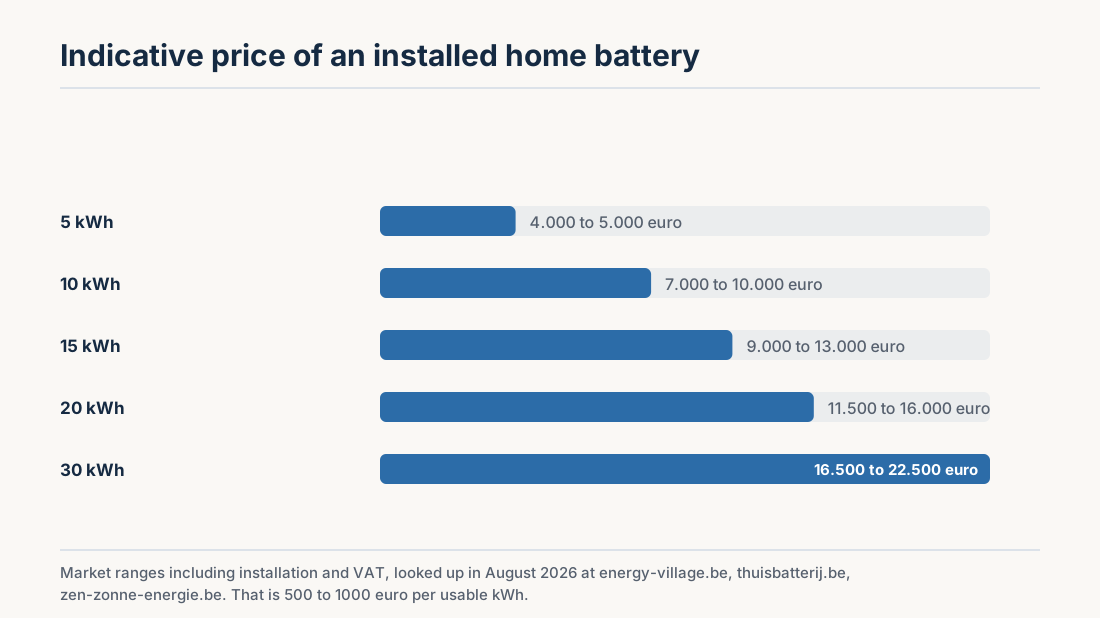
The total cost of a Pylontech battery system varies between €4,000 and €20,000 including VAT, depending on capacity and the complexity of the installation.
Approximate price ranges by system capacity are:
- 5 kWh - €4,000 - €5,000 installed
- 10 kWh - €7,000 - €10,000 installed
- 15 kWh - €9,000 - €13,000 installed
- 20 kWh - €11,500 - €16,000 installed
- 25 kWh - €15,000 - €20,000 installed
What is the price range for the Pylontech US5000 battery?
The Pylontech US5000 battery costs between €3,000 and €4,200 for hardware only. A fully installed system with multiple modules typically totals between €6,000 and €10,000, depending on the configuration.
Can you see a detailed calculation example?
Consider a 10 kWh system based on US5000 modules with the following breakdown:
- 2 battery modules - €6,000
- Hybrid inverter - €1,500
- Installation and wiring - €2,000
- Necessary electrical upgrades - €500
The full investment sums to approximately €10,000 including VAT.
When is installing a Pylontech battery most beneficial?
A Pylontech battery is particularly advantageous for households with surplus solar energy production and that have a digital electricity meter.
Homes with solar systems ranging from 3 to 15 kWp find it especially useful. The battery stores excess energy generated during the day and supplies power during peak tariff hours.
In what ways does it help reduce electricity bills?
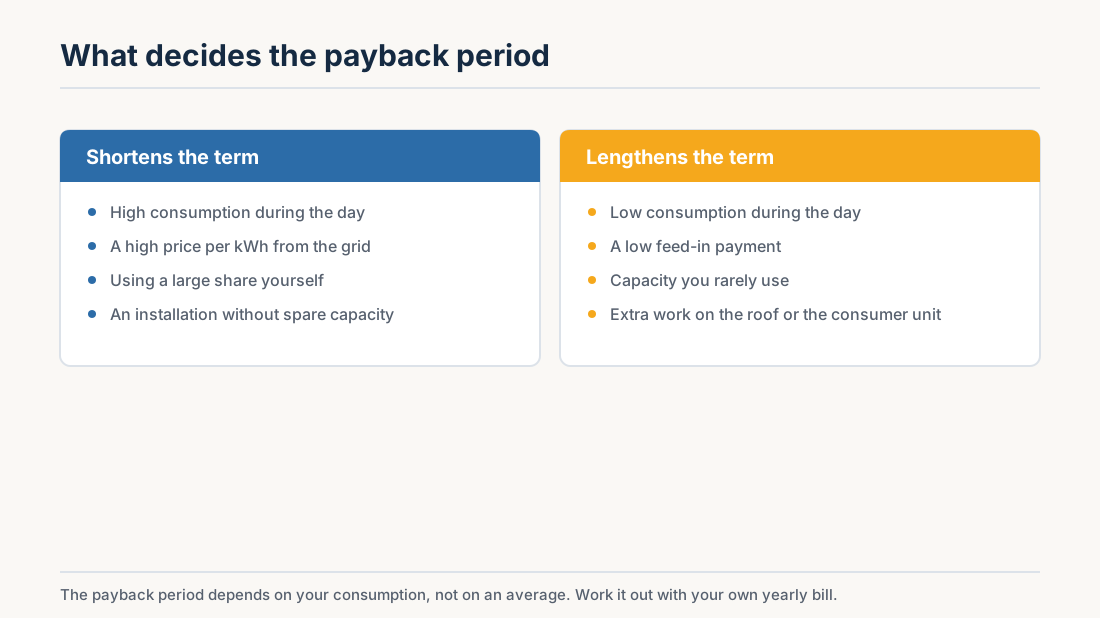
The battery enables you to shift consumption away from costly peak periods, which shortens the payback period of your solar installation and reduces capacity tariff charges.
What is the significance of a digital meter?
Digital meters incentivize self-consumption by rewarding the energy you use directly, rather than exporting it at lower rates. The battery enhances the amount of solar energy you can utilize, improving financial returns.
What are the main advantages and disadvantages of a Pylontech battery?
Reviews of Pylontech batteries show they excel in safety, longevity, and expandability, though the initial investment remains considerable.
Key advantages include high safety from lithium iron phosphate chemistry and the ability to expand capacity modularly. The battery integrates smoothly with solar installations and supports intelligent energy management solutions.
On the downside, the upfront cost is relatively high, and inverter compatibility is necessary to ensure proper operation. Adding backup power functionality can also increase installation complexity and costs.
How does a Pylontech battery compare with other home battery brands?
Pylontech distinguishes itself with its modular design and safety profile compared to other lithium-ion battery types.
Key differences include:
- Use of lithium iron phosphate (LiFePO4) chemistry, which is safer than nickel manganese cobalt (NMC) alternatives
- A life cycle exceeding 6,000 charge cycles, allowing for a longer lifespan
- Expandable, scalable modules for flexible storage capacity
- High efficiency levels above 95%, minimizing energy losses
What are the leading Chinese lithium battery brands?
The market features several top manufacturers, with Pylontech standing out due to its vertical integration and consistent quality control. The company manages both cell production and system assembly, enhancing reliability compared to brands that outsource these components.
When might a Pylontech battery not be the right choice?
This battery is less suitable for homes without solar panels or for households with very low energy consumption. In these cases, the financial return may be limited due to reduced self-consumption opportunities.
Choosing a home battery system involves evaluating capacity, scalability, and compatibility with your solar setup. A Pylontech battery offers modular flexibility and a long lifespan, making it a reliable option for households seeking consistent performance over many years. To get started, consider your typical daily energy use and select a capacity that fits, with the option to expand later if needed. Using services like Soleva helps you compare available options and request tailored quotes to find a system that suits your home and budget.
Frequently Asked Questions
Where is Pylontech headquartered?
Pylontech is a Chinese company that operates globally, specializing in energy storage solutions. Founded in 2009, it focuses on lithium iron phosphate battery technology and oversees manufacturing from cell production to system integration. This vertical control ensures higher quality and reliability than brands that outsource major components.
How long does a Pylontech US5000 battery last?
The Pylontech US5000 typically lasts over 6,000 charge cycles at high performance, translating into approximately 15 to 20 years under normal residential use. The lithium iron phosphate chemistry minimizes degradation, usually less than 2% annually with proper operation.
What is the typical cost of a Pylontech battery for a family home?
A family home’s Pylontech battery system generally costs between €7,000 and €15,000 including VAT. The exact price depends on the storage capacity, inverter type, and complexity of installation. Systems around 10 kWh often strike a good balance between investment and energy savings.
Can a Pylontech battery work without solar panels?
While a Pylontech battery can operate without solar panels by storing grid electricity, this setup tends to offer limited financial benefit. Because it does not store surplus solar energy, efficiency gains are reduced, and the payback period usually becomes longer compared to pairing the battery with solar generation.
How does installing a Pylontech battery affect self-consumption?
By storing excess solar energy generated during the day and releasing it at night, a Pylontech battery significantly improves your home’s self-consumption rate. This leads to less energy being exported to the grid and a higher proportion of locally generated electricity being used directly, with many households achieving up to 80% self-consumption post-installation.
Indicative prices for the Belgian market, checked in August 2026 against energy-village.be, thuisbatterij.be and zen-zonne-energie.be. These are market ranges for an installed system including VAT, not a quotation: your price depends on capacity, brand and the state of your existing installation.
Read also
Ready to cut your energy bill?
Compare quotes for solar panels, home batteries and charging points.