Home battery belgium
SAJ home battery: price and review
A SAJ home battery efficiently stores excess solar energy generated by your panels and reduces your reliance on the grid by shifting electricity use to evenings and peak tariff periods. These systems use LiFePO4 battery chemistry, offer modular capacity options from 5 kWh to 40 kWh, and integrate seamlessly with a SAJ inverter for smart energy management.
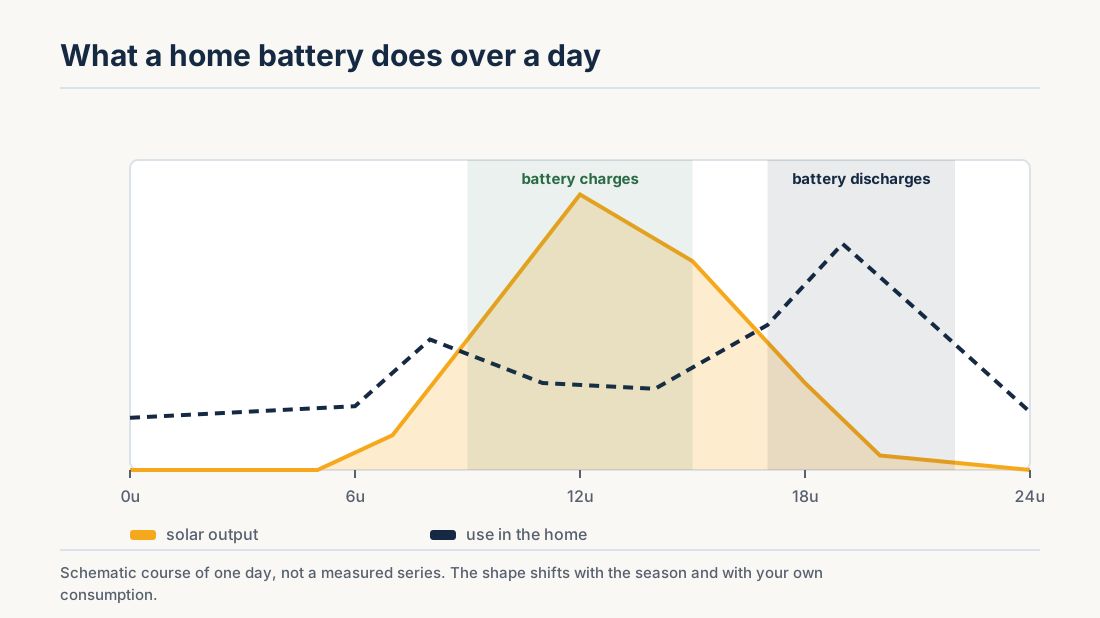
In Belgium, increasing self-consumption needs and rising capacity tariffs highlight the growing value of battery storage solutions for households with solar panels. This guide explains how SAJ battery storage operates, presents pricing details, compares popular models such as the SAJ HS3 Battery and SAJ B2 battery, and helps you decide if this solution suits your home energy needs.
How does a SAJ home battery function?
A SAJ home battery captures and stores electricity generated by your solar panels during the day and supplies it to your home when needed, typically in the evening or during peak electricity tariff hours. This battery system connects to a SAJ inverter, which manages energy flows by converting and distributing power among your solar panels, battery bank, and the electrical grid.
A Battery Management System (BMS) within the battery continuously monitors parameters such as voltage, temperature, and charging cycles for each cell. This system safeguards the battery against overcharging and extends its operational life beyond 6,000 charge cycles.
The energy flow follows a straightforward process:
- Solar panels produce electricity during daylight hours.
- Any surplus electricity charges the home battery.
- Stored energy powers household appliances during non-sunny hours.
- The grid supplies electricity only when the battery’s charge or solar output is insufficient.
How do SAJ inverter and battery integration operate together?
The SAJ inverter and battery work as an integrated system where the inverter determines the optimal distribution of energy between your home, the battery, and the grid. Hybrid inverters facilitate both direct consumption and battery storage, optimizing overall system efficiency.
For further information on inverter compatibility and system sizing, visit the solar inverter options page.
What role does the eSAJ app and smart control have?
The eSAJ app enables smart energy management by adjusting battery charging and discharging based on your household consumption patterns and dynamic electricity tariffs. This strategic control helps lower electricity costs by charging the battery during off-peak hours and maximizing self-consumption.
Learn more about dynamic energy pricing and control strategies at dynamic energy tariffs.
Which SAJ battery models and technologies are available?
The primary SAJ battery models include the SAJ HS3 Battery and the SAJ B2 battery. Both utilize lithium iron phosphate cells known for high thermal stability and long operational lifespans.
These options are categorized as follows:
- HS series: All-in-one systems combining inverter and battery storage.
- B2 series: Modular battery units designed to expand existing systems.
- Available in low voltage and high voltage configurations to suit various installation needs.
What features characterize the SAJ HS3 Battery?
The HS3 system integrates battery storage, inverter functionality, and energy management in a single compact unit. It supports expansion up to 40 kWh capacity and includes options for electric vehicle charging integration.
What features characterize the SAJ B2 battery?
The B2 series comprises modular 5.1 kWh battery units that you can stack to reach a total capacity of up to 25 kWh, making it suitable for homes equipped with a compatible SAJ inverter.
What is the cost of a SAJ home battery?
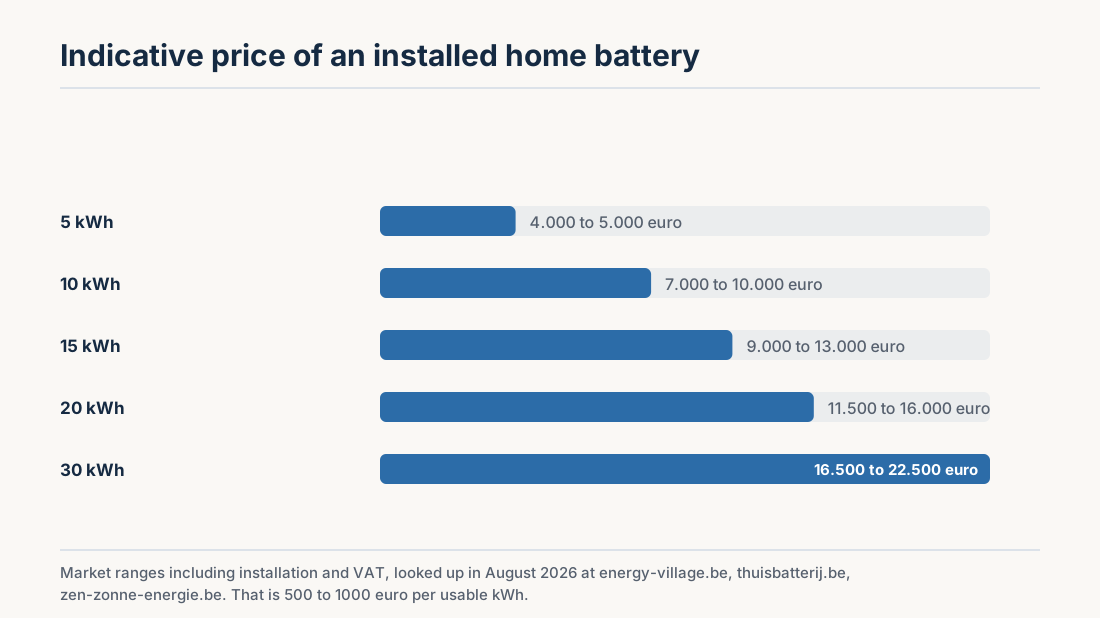
The cost for a typical SAJ home battery system ranges from approximately €5,000 to €12,000 including VAT. The final price depends on the battery capacity, installation complexity, and the level of inverter integration required.
Approximate prices by system size are:
- 5 kWh system: around €4,000 - €5,000
- 10 kWh system: around €7,000 - €10,000
- 20 kWh system: around €11,500 - €16,000
Example cost calculation for a 10 kWh system
A typical installation cost breakdown includes multiple components:
- Battery modules (10 kWh): €5,500
- Hybrid inverter: €1,200
- Installation and wiring: €1,500
- Electrical upgrades and inspection: €500
This results in a total investment of about €8,700 including VAT. This aligns with Belgian market averages of €400 - €600 per kWh installed.
Which factors most influence the price of a SAJ battery?
Key factors affecting the cost include:
- The battery capacity and number of modules you purchase.
- The type of inverter and degree of system integration.
- The complexity of the installation and the grid connection requirements.
For detailed price comparisons, consult our battery price overview.
When is installing a SAJ home battery most beneficial?
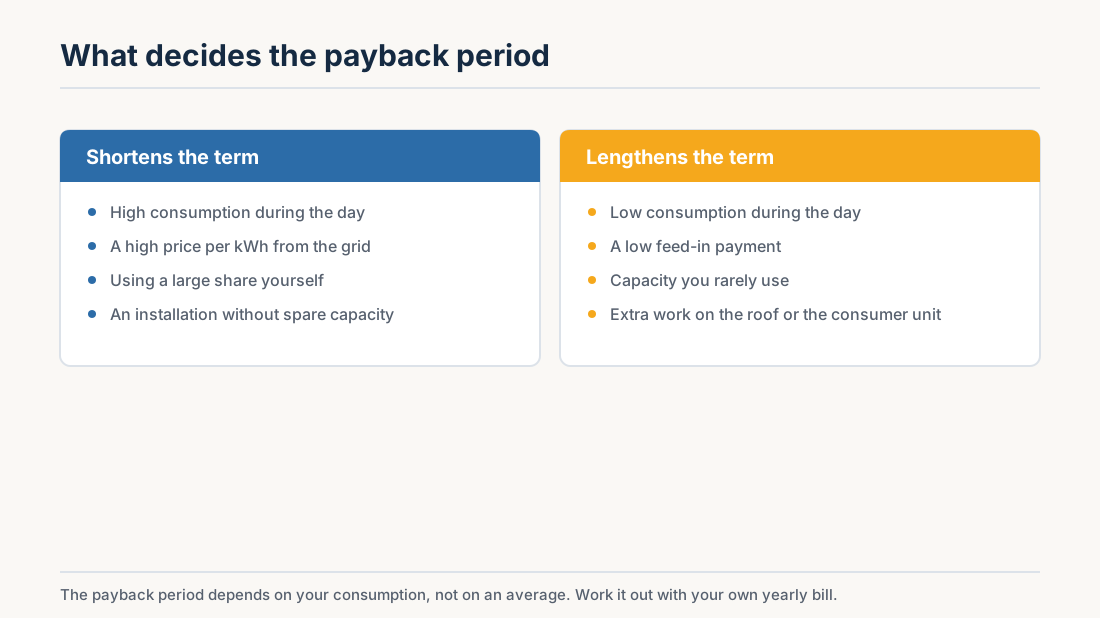
A SAJ home battery delivers the most value when your household generates more solar energy than it consumes during the daytime, enabling self-consumption rates up to 70%.
This system best suits households that:
- Have solar panel installations between 6 and 8 kWp.
- Experience high electricity use during the evening hours.
- Are on dynamic electricity contracts with varying tariffs.
- Use electric vehicle charging at home.
How does the capacity tariff affect the value of a battery?
The capacity tariff charges consumers based on their peak electricity demand. By supplying stored energy during these peaks, a battery reduces peak consumption and related costs. Detailed information is available at capacity tariff impact.
How long does a 10 kWh SAJ home battery last?
A 10 kWh battery typically provides several hours of backup for essential household loads. For example, a household with a continuous load of 2 kW can expect approximately 5 hours of power supply during an outage or low solar production.
What are the advantages and disadvantages of a SAJ home battery?
Reviews of SAJ home batteries highlight strengths such as high efficiency, modular design, and advanced smart control, with the primary drawback being the initial cost.
The key advantages are:
- High round-trip efficiency up to 97%.
- Safe and durable LiFePO4 battery chemistry.
- Modular design allows you to expand capacity without full system replacement.
Potential disadvantages include:
- Limited financial benefit for households with low night-time electricity use.
- Absence of direct subsidies can increase upfront costs.
Are SAJ batteries reliable?
Yes, SAJ batteries deliver reliable and safe performance due to stringent safety certifications, IP65-rated enclosures, and integrated battery management systems. These features, combined with smart software control, make SAJ batteries suitable for modern home energy setups.
How does a SAJ home battery compare to other energy storage options?
SAJ systems focus on modular expandability and close integration with hybrid inverters, distinguishing them from plug-in or fixed battery solutions.
Key comparisons include:
- Modular systems offer scalability and future-proofing options.
- Plug-in batteries provide lower initial costs but come with limited storage capacity.
- AC-coupled systems allow easier retrofits but typically operate with lower efficiency.
You can explore other battery types in the different battery types section.
In which cases should you not choose a SAJ system?
Opting against a large battery may make sense if your solar production is low or your electricity consumption is evenly distributed throughout the day, as this reduces the return on investment. For more details, visit battery profitability.
Integrating a modular storage system with smart energy management significantly enhances how you utilize solar power at home. The key benefits include scalability and compatibility with dynamic electricity tariffs. However, the initial investment can be substantial. Households with high evening energy use or those charging electric vehicles stand to gain the most from such systems. Begin by analyzing your energy consumption profile and obtaining multiple quotes through Soleva to compare suitable system sizes and pricing before making your decision.
Frequently Asked Questions
What is the price of a SAJ home battery per kWh?
The installed cost of a SAJ home battery ranges between €400 and €600 per kWh, covering the battery hardware, inverter integration, and professional installation. Smaller systems often have a higher cost per kWh, while larger modular configurations reduce the average price because of shared installation expenses.
Who manufactures SAJ solar batteries?
SAJ solar batteries are produced by Shenzhen All Kinds of Power Tech Co., also known as SAJ Electric. The company specializes in residential energy storage solutions and hybrid inverters tailored for households combining solar panels with advanced energy management.
Can you use a SAJ home battery without solar panels?
Yes, a SAJ home battery can operate independently of solar panels by charging from the electrical grid during low tariff periods and supplying power during higher price intervals. This approach, known as energy arbitrage, is most effective when paired with dynamic tariff contracts and smart energy management.
How does the price of the SAJ HS3 Battery compare to the B2 battery?
The SAJ HS3 Battery typically costs more because it integrates an inverter and energy management system into one unit. The B2 battery serves solely as storage and requires a compatible inverter, which can lower the initial hardware cost but depends on system compatibility and installation variables.
How reliable is a SAJ home battery during power outages?
SAJ home batteries equipped with backup functionality automatically switch to emergency power mode during outages. When paired with a backup box, they provide electricity to essential circuits without interruption. The backup duration depends on the battery capacity and the household’s power load, with most residential setups supporting critical appliances for several hours.
Indicative prices for the Belgian market, checked in August 2026 against energy-village.be, thuisbatterij.be and zen-zonne-energie.be. These are market ranges for an installed system including VAT, not a quotation: your price depends on capacity, brand and the state of your existing installation.
Read also
Ready to cut your energy bill?
Compare quotes for solar panels, home batteries and charging points.