Home battery belgium
Dyness home battery: price and review
Using a Dyness battery increases your household’s energy self-consumption by storing solar energy through lithium iron phosphate technology. The system offers modular capacity, advanced safety features, and smart monitoring with the Dyness battery app. Available in compact 5 kWh units or expandable systems like the Dyness battery 10kW setup, it adapts to different energy needs.
This guide explains how the system operates, its pricing, available models, and real-world performance with solar panels, helping you make an informed decision.
How does a Dyness battery work exactly?
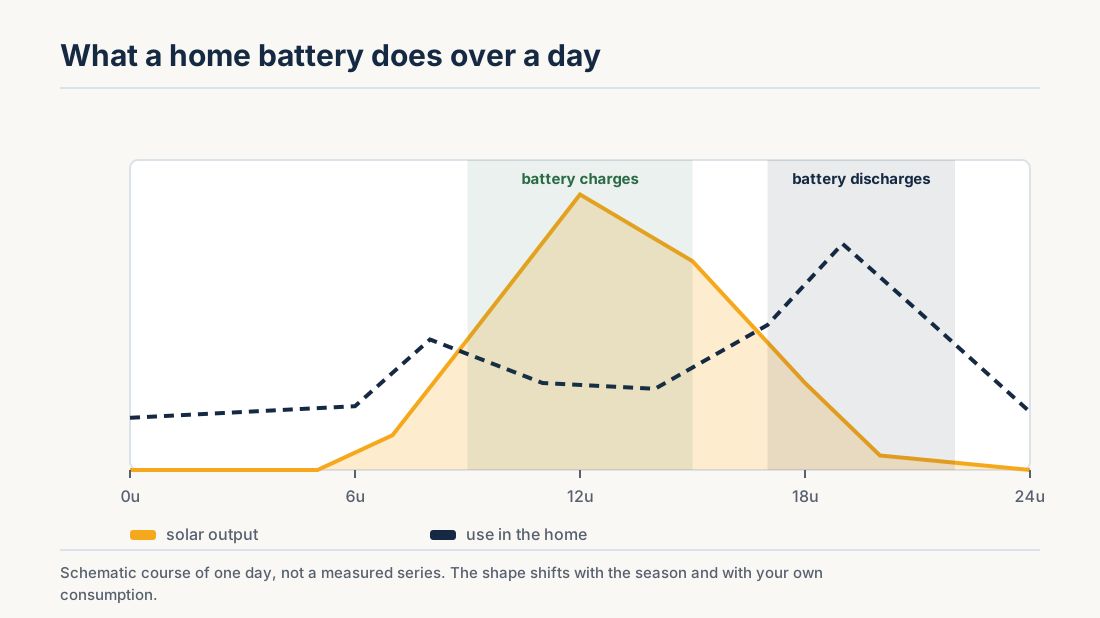
A Dyness battery stores electricity generated by solar panels or drawn from the grid, releasing it when your household consumption exceeds production. The system relies on lithium iron phosphate (LiFePO4) chemistry, ensuring high thermal stability and a long cycle life.
The main components of the system include:
- Battery modules that store energy measured in kWh
- A Battery Management System (BMS) that controls voltage, temperature, and safety measures
- A hybrid inverter that converts DC power into usable AC power
- Communication protocols such as CAN or RS485 that connect devices
What role does the BMS play in a Dyness system?
The Battery Management System continuously monitors each cell to prevent overcharging, deep discharge, and overheating. It balances cell charge during cycles, extending the battery’s lifespan beyond 6000 charge cycles, equivalent to about 10 to 15 years of daily use.
How does the Dyness battery app enhance performance?
The Dyness battery app provides real-time tracking of energy flows. It allows you to adjust charging modes, monitor consumption, and optimize your usage during peak tariff periods. This functionality increases your savings, especially when combined with dynamic energy pricing strategies.
What is the Dyness battery charger?
The Dyness battery charger is integrated within the inverter system. It regulates charging speed and maintains safe current flow based on the battery’s status and grid input, ensuring efficient and secure operation.
Which Dyness battery models and capacities are available?
Dyness offers modular energy storage systems for both residential and commercial use. Models mainly vary based on voltage and scalability to suit different household sizes and energy demands.
The primary product categories include:
- 5 kWh systems designed for small households
- 10 kWh systems suitable for average families
- High voltage Tower systems designed for large homes
- Stack and PowerBrick systems offering scalable storage options
What distinguishes the LV series from the Tower series?
The LV series operates at 48 V, making it suitable for compact installations. The Tower series runs at higher voltages between 480 V and 577 V, supporting greater power output for larger homes.
Which capacities are commonly installed?
Typical capacities include 5.12 kWh modules such as the DL5.0C, 10.24 kWh systems like the Powerbox, 14.3 kWh PowerBrick units, and expandable towers that go beyond 21 kWh.
Is it possible to expand a Dyness battery system later?
Yes, the modular design allows for stacking or parallel connections. This means you can start with a smaller system and expand it later if your energy requirements increase.
How much does a Dyness battery cost?
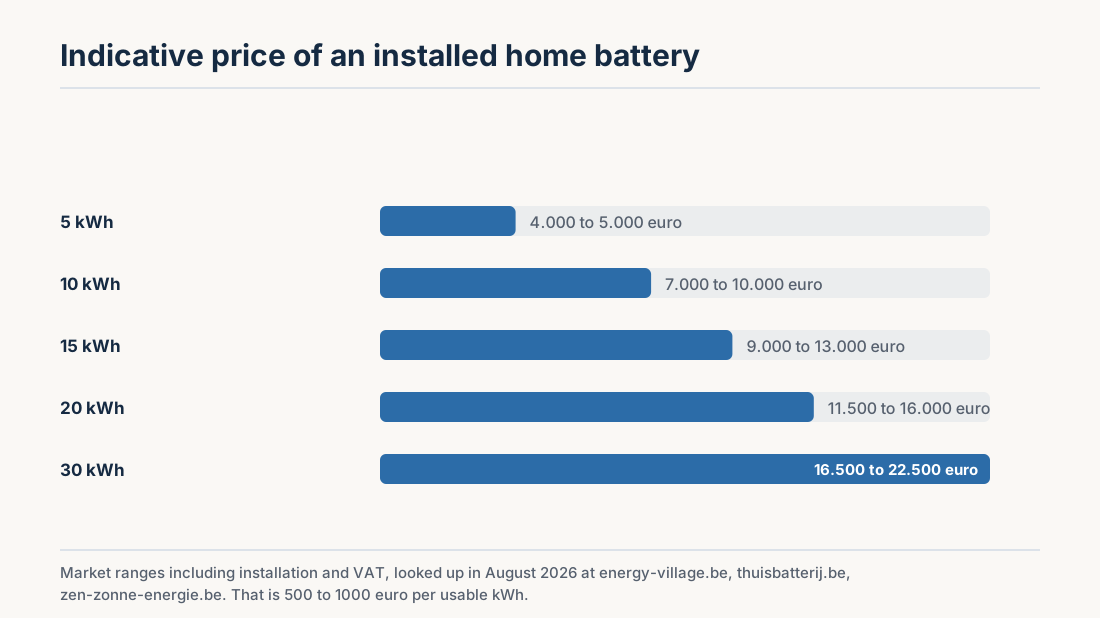
The price for a Dyness battery ranges between €2,600 and €6,000 including VAT, depending on the capacity and system type. Additional costs such as installation and inverter fees contribute to the total investment.
Typical price components are:
- 5 kWh system: €4,000 - €5,000
- 10 kWh system: €7,000 - €10,000
- High voltage systems: €4,000 - €6,000+
- Installation: €750 - €1,000
Can you provide a full cost example?
A representative installation might look like this:
10 kWh battery €4,200 + inverter €1,000 + installation €900 + electrical upgrades €400 = €6,500 including VAT.
What factors influence the final price?
The total cost depends on the size of the system, inverter compatibility, and the complexity of installation. Using a three-phase setup or integrating with three-phase systems raises the expense but can improve overall performance.
In what scenarios does a Dyness battery provide the most value?
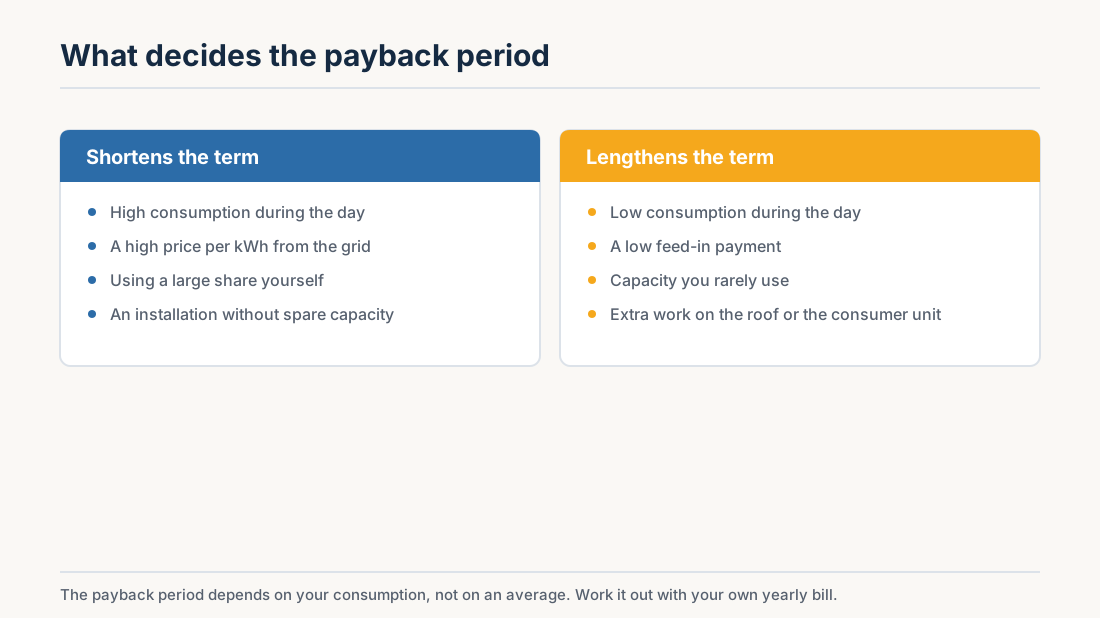
A Dyness battery benefits households equipped with solar panels and consistent daily electricity consumption. It typically boosts self-consumption from around 35% to over 70%.
When is a 5 kWh system enough?
A 5 kWh Dyness battery suits small households with limited daytime electricity use. It stores excess solar energy to be used during evening hours.
Which households should consider a 10 kWh system?
A 10 kWh Dyness battery fits families with higher energy demands, such as those owning electric vehicles or heat pumps. This system stores ample energy to significantly reduce dependence on the grid.
How does the Dyness battery operate with solar panels?
The battery captures surplus electricity produced by solar panels during the day. To understand the interaction of solar panels and batteries, visit how solar panels produce energy.
What advantages and disadvantages does a Dyness battery have?
Dyness batteries offer benefits in safety, scalability, and compatibility, though they require a considerable initial investment and precise system configuration.
Key strengths include:
- LiFePO4 chemistry enhancing safety and extending lifespan
- Modular design allowing expansion to larger capacities
- Compatibility with many hybrid inverter models
- Integrated monitoring available through the dedicated app
Considerations include:
- The initial investment remains substantial
- Optimal performance depends on correctly sizing the system
- Professional installation is necessary for safety and efficiency
What should you be careful about when choosing a Dyness battery?
System configuration significantly affects performance. Oversizing the battery increases costs without enhancing savings. Selecting a battery sized correctly to match your consumption pattern ensures the best return on investment.
How does a Dyness battery compare to other home batteries?
Dyness batteries distinguish themselves through cobalt-free LiFePO4 cells, modular architecture, and built-in safety features like aerosol fire suppression in advanced units.
Which features make Dyness competitive?
Its main competitive advantages are:
- More than 6000 charge cycles ensuring long life
- IP54 or IP55 ratings for suitable indoor and outdoor installations
- A global production and support network for reliable service
- Smart energy management functionalities via the app
What defines the best Chinese lithium battery?
The best Chinese lithium batteries prioritize safety, longevity, and compatibility. Dyness stands out due to its LiFePO4 chemistry, effective BMS control, and flexible expansion possibilities.
Which are the top three battery brands?
The leading battery brands feature proven safety records, solid warranties, and scalability options. Dyness ranks among these due to its global presence and reliable performance in residential energy storage solutions.
When might a Dyness battery not be the ideal choice?
A Dyness battery may not be suitable if your home lacks solar panels or your electricity consumption is very low, as these conditions reduce the system’s economic benefits.
Situations where alternatives are advisable include:
- Households with consumption below average levels
- Homes without solar installations or limited roof space
- Short-term property ownership
To explore battery options without solar panels, consider reviewing battery use without solar panels.
A Dyness battery integrates safe lithium iron phosphate technology with modular expansion and intelligent energy management, making it a strong option for modern homes requiring energy storage. Its long lifespan and flexibility are key benefits, while the main limitation lies in the upfront investment cost.
Before installation, carefully match battery capacity with your household’s energy consumption and solar production. Use tools like Soleva to compare different systems and obtain multiple quotes to ensure you select the best setup for your needs.
Frequently Asked Questions
What is the lifespan of a Dyness battery?
Typically, a Dyness battery lasts between 10 and 15 years with daily use. It can achieve over 6000 charge cycles while retaining at least 70% of its original capacity. The lifespan depends on your usage patterns, depth of discharge, and correct system sizing. Monitoring the battery with the Dyness app helps maintain optimal performance over time.
Who manufactures Dyness batteries?
Dyness batteries are produced by Dyness Digital Energy Technology Co., Ltd., a global company headquartered in China. It operates several production and research centers worldwide, focusing on lithium energy storage systems for residential, commercial, and industrial markets.
What does a typical Dyness battery installation cost?
The cost for a Dyness battery installation in a typical home ranges from €3,000 to €6,500 including VAT, depending on the battery’s capacity and installation specifics. Systems around 5 kWh are at the lower price range, while 10 kWh setups with inverter and installation are more expensive. Final prices vary based on configuration and electrical requirements.
Can a Dyness battery supply backup power during outages?
Yes, when paired with a hybrid inverter that supports emergency power, a Dyness battery can provide backup electricity for essential loads like lighting and refrigeration during power outages. The duration of backup depends on the battery capacity and the load size, so designing your system correctly is important.
Is a Dyness battery useful without solar panels?
A Dyness battery can operate without solar panels by charging from the grid during low tariff hours and discharging during peak electricity periods to reduce bills. This approach works best with dynamic pricing contracts, although the savings are generally less compared to systems paired with solar panels.
Indicative prices for the Belgian market, checked in August 2026 against energy-village.be, thuisbatterij.be and zen-zonne-energie.be. These are market ranges for an installed system including VAT, not a quotation: your price depends on capacity, brand and the state of your existing installation.
Read also
Ready to cut your energy bill?
Compare quotes for solar panels, home batteries and charging points.