Home battery belgium
IKEA home battery: price and review
A home battery from IKEA stores excess solar energy, reducing your reliance on the electricity grid, especially during peak evening hours when electricity prices are higher. This modular lithium iron phosphate system offers scalable capacity between 5 and 30 kWh, fitting homes of various sizes. By increasing your use of self-generated energy, you can save up to 40% on your electricity bills.
How does an IKEA home battery work exactly?
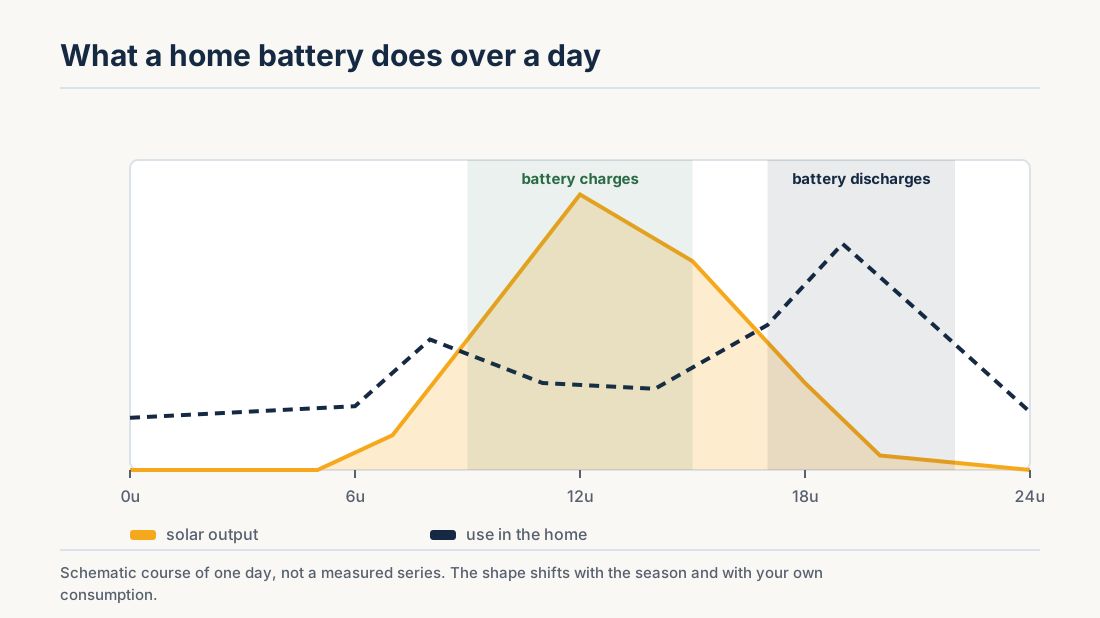
An IKEA home battery captures electricity generated by your solar panels and stores any surplus for later use. This stored energy powers your household during periods when solar production is low or nonexistent, such as evenings or cloudy days.
By increasing self-consumption, the battery helps you use more of your solar energy onsite, which is increasingly important due to the digital meter transition and capacity-based electricity tariffs.
What technology powers the IKEA home battery?
The battery utilizes lithium iron phosphate (LFP) cells, known for their high thermal stability, long lifespan, and enhanced safety compared to other lithium-ion types.
- The battery supports over 6,000 charge-discharge cycles
- It allows a full 100% depth of discharge without harm
How does energy flow within your home using the system?
Solar panels generate electricity that your home uses immediately. Any excess electricity charges the battery. When your solar panels do not produce enough energy, the battery supplies power to your appliances.
This flow is most efficient when paired with a hybrid inverter, which manages both energy production and storage seamlessly.
Which technologies and configurations are available for an IKEA home battery?
The IKEA home battery features a modular design, combining a power module with expandable storage modules, allowing you to match the system size to your household’s energy demand.
What storage capacities can you choose from?
Capacity options range from 5 kWh to 30 kWh, with common setups including:
- 5 kWh for small households
- 10 kWh for average family homes
Larger capacities up to 30 kWh are suitable for homes with electric vehicles or higher energy consumption.
How does modular expansion benefit you?
Starting with a smaller battery and adding modules later allows you to spread costs and upgrade your capacity as your energy needs grow, such as when introducing an electric vehicle.
In what ways does the IKEA home battery integrate with solar panels?
The system connects directly to your residential solar setup and supports both single-phase and three-phase electrical configurations. If necessary, a professional inverter upgrade may be required to ensure compatibility.
What is the price of an IKEA home battery?
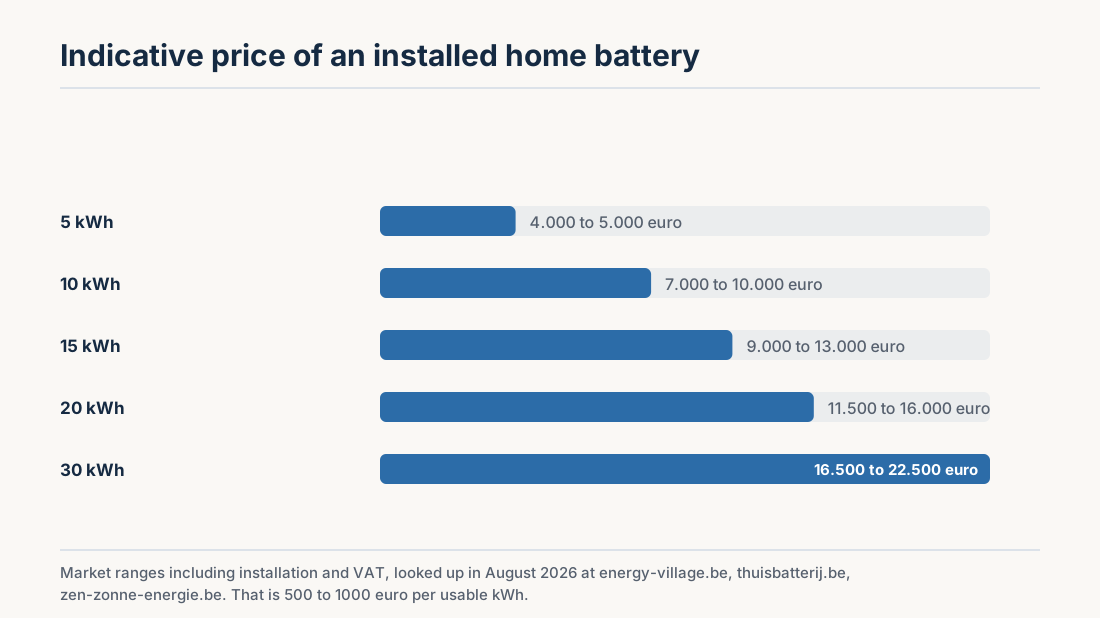
IKEA home battery prices in Belgium typically range between €8,000 and €15,000 including VAT, depending on system capacity, inverter choice, and installation complexity.
| Capacity | Average Price incl. VAT |
|---|---|
| 5 kWh | €8,000 - €10,000 |
| 10 kWh | €10,000 - €13,000 |
| 15 kWh | €13,000 - €15,000 |
What does a full cost breakdown for a 10 kWh system look like?
A typical investment includes several components:
- Battery modules for 10 kWh: €8,500
- Hybrid inverter: €1,200
- Installation labor: €1,500
- Electrical upgrades: €400
The total cost sums to approximately €11,600 including VAT.
Comparing this with general home battery pricing helps you assess the value offered by IKEA’s system.
Are subsidies available, and what returns can you expect?
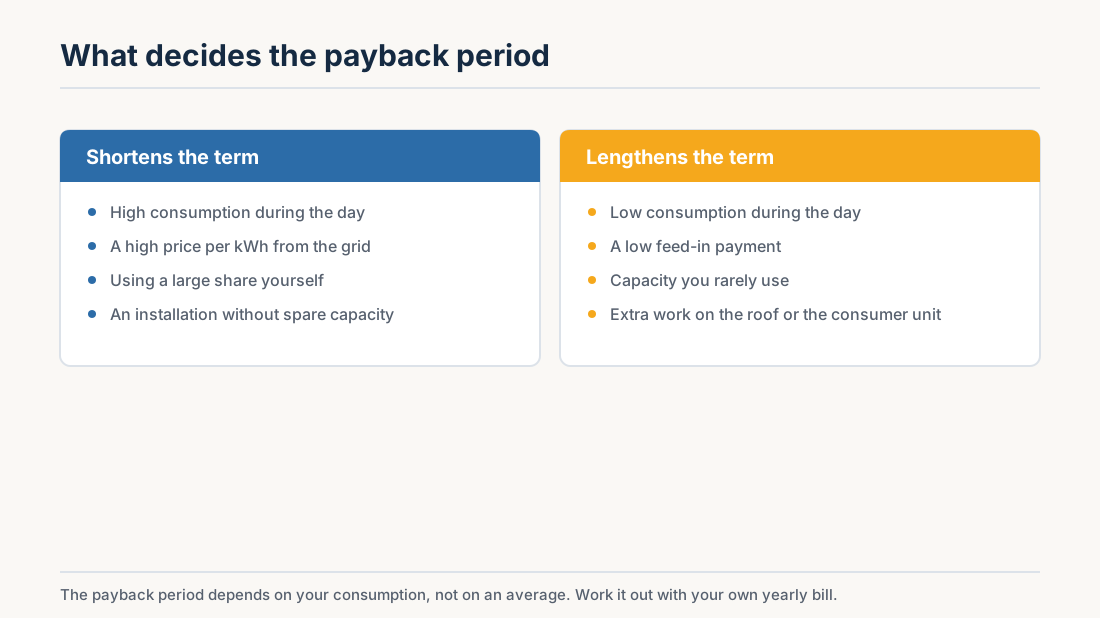
Flemish homeowners may qualify for the Mijn VerbouwPremie subsidy, offering up to €1,750 for eligible systems. Typical payback periods range from 8 to 10 years, influenced by your degree of self-consumption and local energy prices.
When does an IKEA home battery suit your needs best?
An IKEA home battery is most beneficial for households already using solar panels and equipped with a digital meter, as it reduces grid dependency and optimizes your energy usage patterns.
Who gains the most from this solution?
- Homes consuming around 4,000 kWh annually
- Solar systems producing more than 4 kWp
- Families experiencing peak energy usage during evenings
How does the battery affect capacity-based electricity tariffs?
Belgium’s capacity tariff charges based on your peak usage. By reducing these peaks with stored energy, the battery can lower grid fees. This works best when combined with an effective self-consumption strategy.
Is the IKEA battery suitable for electric vehicle charging?
Yes, but your battery capacity must align with your EV charging needs. Since electric vehicles often require 40 to 100 kWh for full charges, a 10 kWh battery can support daily partial charging and help balance household energy loads.
What are the advantages and disadvantages of an IKEA home battery?
IKEA’s system offers simplicity and flexibility with its modular design and safe LFP technology. It integrates well with solar systems and can reduce your electricity bills by up to 40%.
On the downside, availability in Belgium may be limited, and the system depends on specific installation partners. Additionally, detailed technical information is less comprehensive compared to some established brands, which affects performance comparisons.
Transparency remains essential for making an informed choice, so reviewing technical specifications carefully is recommended.
How does an IKEA home battery compare with standard home batteries?
IKEA’s battery shares core features with other home storage systems but emphasizes an accessible, all-in-one package targeted at typical household needs.
| Feature | IKEA Solution | Standard Systems |
|---|---|---|
| Capacity | 5 - 30 kWh modular | 5 - 20 kWh typical |
| Technology | LFP cells | LFP or NMC cells |
| Installation | Partner-based | Installer network |
| Focus | Bundled solution | Customizable configurations |
For more flexibility, explore our comprehensive home battery overview to compare different options.
When should you avoid choosing an IKEA home battery?
If you need highly customized storage solutions or immediate product availability in Belgium, the IKEA option may not suit your requirements. Complex or large-scale installations may benefit more from tailor-made systems.
Combining solar energy production with efficient storage offers the best home energy solution. IKEA’s modular and straightforward home battery suits many standard households by enabling scalable expansion and easy integration. Before deciding, consider system availability and seek transparent technical details. Comparing multiple options with Soleva and obtaining several quotes help align the system with your current consumption and future energy plans.
Frequently Asked Questions
How long does an IKEA smart blind battery last?
An IKEA smart blind battery lasts several months on a single charge, depending on how often you adjust the blinds. Frequent daily adjustments shorten battery life. The battery uses rechargeable lithium technology, allowing hundreds of recharge cycles before replacement is needed, so periodic recharging is sufficient.
How long does an IKEA home battery take to charge?
Charging time for an IKEA home battery ranges between 4 and 8 hours, depending on the battery’s size and the charger’s power output. Environmental factors such as temperature also affect how efficiently and quickly the battery charges.
Does IKEA offer electric vehicle charging points at their stores?
Many IKEA stores provide electric vehicle charging stations for customers in their parking areas. Availability depends on location and demand, so it is advisable to check your local store’s facilities in advance to avoid waiting during busy periods.
How does IKEA home battery cost compare with similar alternatives?
The IKEA home battery’s cost aligns closely with market prices in Belgium, typically between €8,000 and €15,000 including VAT. Its bundled approach simplifies purchasing and installation compared to other systems, which may require separate product selections and more complex setups.
Can an IKEA home battery function without solar panels?
While an IKEA home battery can operate by storing grid electricity, its financial advantages significantly diminish without solar panels. The main benefit comes from increasing usage of your self-produced solar energy, so running the battery without solar panels primarily shifts energy use timing rather than reducing costs significantly.
Indicative prices for the Belgian market, checked in August 2026 against energy-village.be, thuisbatterij.be and zen-zonne-energie.be. These are market ranges for an installed system including VAT, not a quotation: your price depends on capacity, brand and the state of your existing installation.
Read also
Ready to cut your energy bill?
Compare quotes for solar panels, home batteries and charging points.