Home battery belgium
Kstar home battery: price and review
A Kstar battery stores excess solar energy efficiently and supplies power to your home when needed, typically offering capacities between 5 kWh and 20 kWh. These systems utilize LiFePO4 lithium iron phosphate technology and integrate seamlessly with hybrid inverters to provide reliable energy storage and backup capabilities.
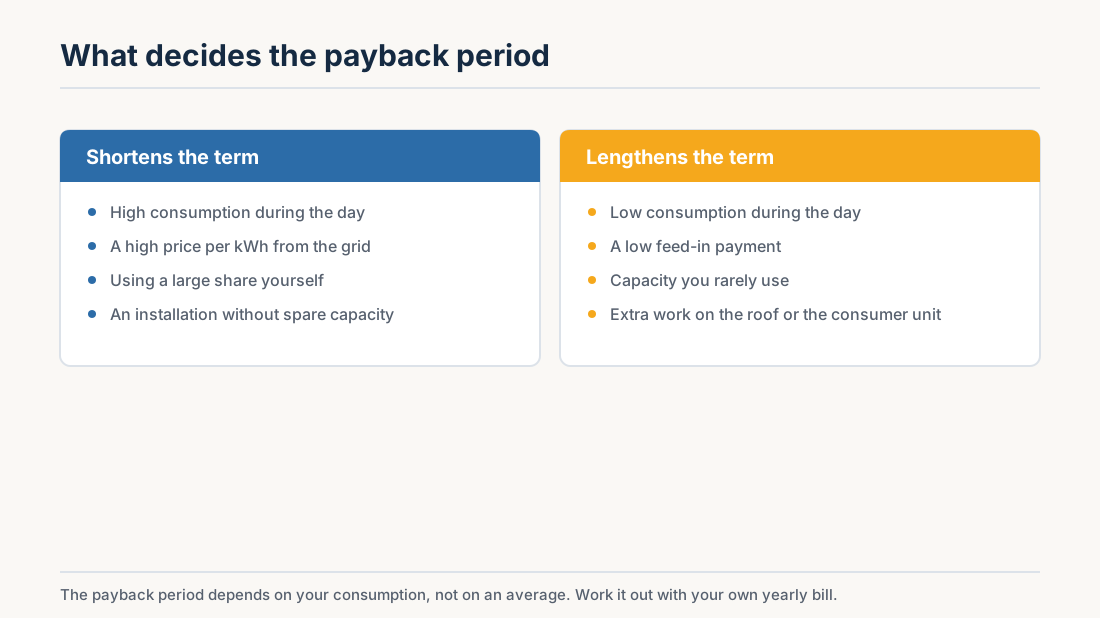
How does a Kstar battery work exactly?
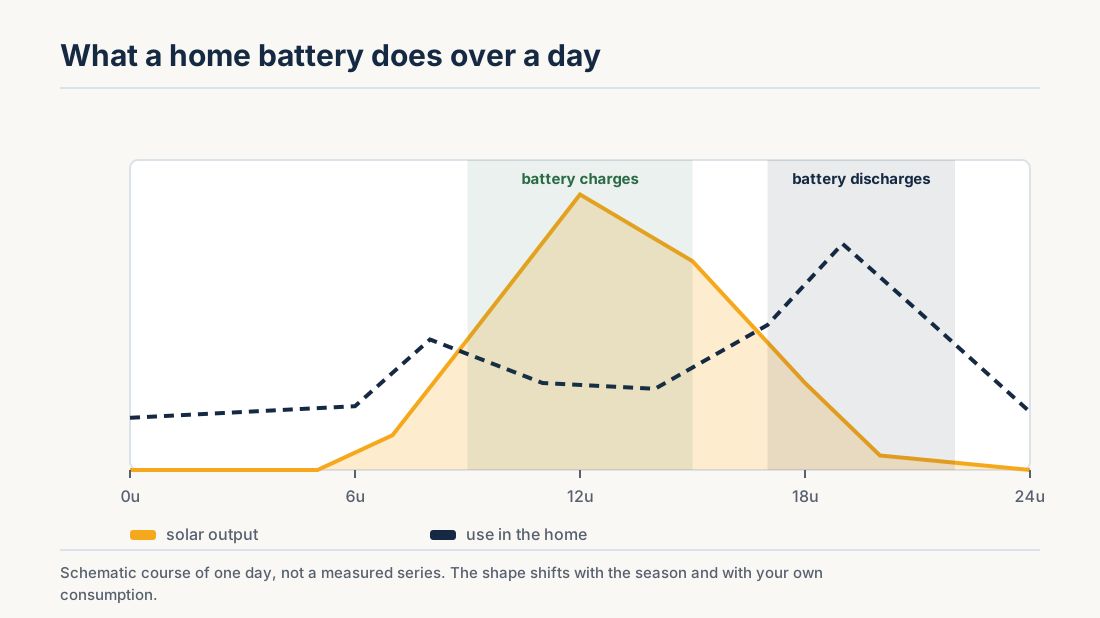
A Kstar battery stores electricity as direct current and converts it into usable alternating current through an integrated or hybrid inverter. It charges by harnessing energy from solar panels or from low-tariff grid electricity and discharges stored energy when your power demand increases.
How does energy storage and release function?
The battery captures surplus solar energy generated during the day and then supplies this stored electricity during the evening or nighttime hours. This process reduces your reliance on the grid, improving your self-consumption rate and lowering your electricity bills effectively.
What role does the Battery Management System play?
The Battery Management System (BMS) continuously monitors the battery’s voltage, temperature, and charge cycles. It protects the battery from overload, overheating, and deep discharge, which helps to extend its lifespan up to approximately 10,000 cycles.
How does integration with solar systems work?
The battery connects to your solar panels via a hybrid inverter, allowing automatic switching between solar power, battery storage, and grid energy for optimized usage. For more information about solar panel integration, see our solar panel systems page.
Which technologies or models are available for Kstar battery storage?
Kstar offers modular lithium battery systems designed primarily for residential and small commercial applications. The main product lines include the Blue H3 and Blue H5 models.
What are the main specifications?
- Capacity ranges from 5.1 kWh to 20.4 kWh
- Uses Lithium Iron Phosphate (LiFePO4) technology
- Depth of Discharge up to 90%
- Protection with IP65 rating for durability
What makes modular systems useful?
Because the modules stack, you can increase your battery capacity incrementally without replacing your entire system. This flexibility suits households with growing energy needs or higher consumption demands.
How does a Kstar BESS differ from standard batteries?
A Kstar BESS (Battery Energy Storage System) integrates the battery, inverter, and smart software into a single solution. This reduces installation complexity, improves operational efficiency, and simplifies system management.
What is the price of a Kstar battery?
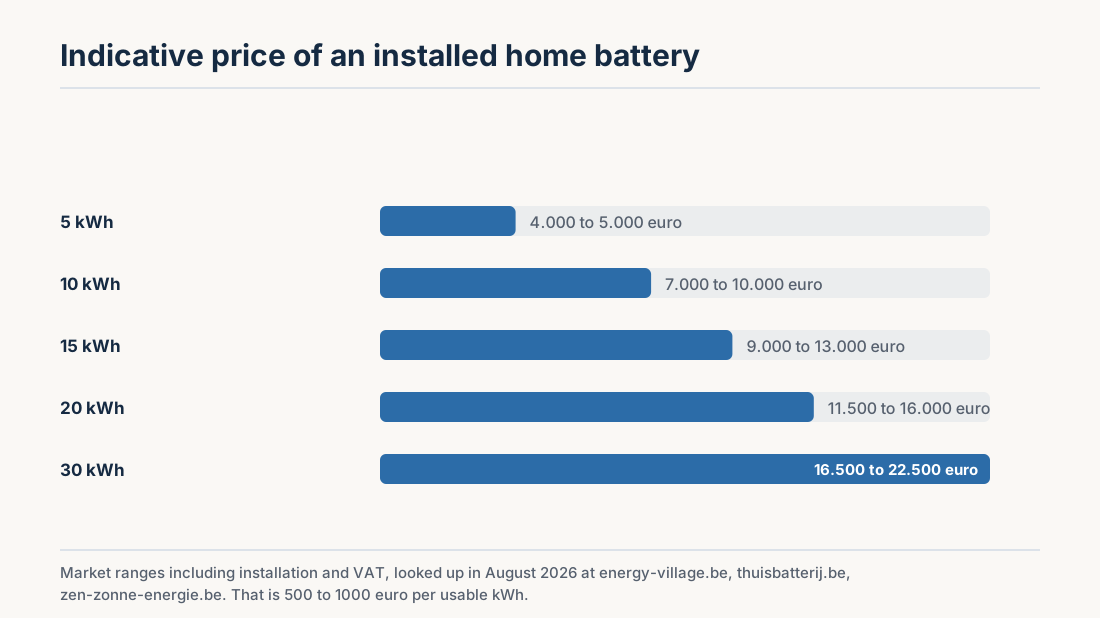
The price of a Kstar battery ranges from approximately €4,087 to €12,500 including VAT, depending on the capacity you select.
Typical price brackets are as follows:
- 5.1 kWh capacity: €4,087 - €4,200
- 10.2 kWh capacity: €6,000 - €6,200
- 15.3 kWh capacity: €8,500 - €8,700
- 20.4 kWh capacity: €12,291 - €12,500
Calculation example for a full system
Consider a 10.2 kWh system with the following cost components:
- Battery unit: €6,200
- Hybrid inverter: €1,200
- Installation: €1,000
- Electrical upgrade work: €400
The total investment would be around €8,800 including VAT.
For a broader price overview, visit our home battery price overview page.
In which situations does a Kstar battery make the most sense?
A Kstar battery is most beneficial in homes equipped with solar panels that have moderate to high electricity consumption.
Which households benefit most?
Homes that produce surplus solar energy during the day gain the most advantages. A battery system around 10 kWh is suitable for households using between 3,500 and 5,000 kWh of electricity annually.
How does it perform with dynamic tariffs?
The battery system can charge during off-peak periods when electricity prices are low and discharge during peak times. Learn more about tariff optimization on our dynamic tariff optimization page.
Is it suitable for backup power?
Yes, certain Kstar battery models include UPS functionality to supply power during outages. More details are available on our battery backup systems page.
What are the pros and cons of a Kstar battery?
A Kstar battery demonstrates strong efficiency and scalability, along with some limitations.
The key advantages include a high cycle life and the integrated inverter design. Its LiFePO4 chemistry improves safety and lifespan, while the modular design supports easy future expansion.
The main drawback is brand recognition, as some users prefer more established brands. Additionally, local availability of support may vary depending on your region.
How does Kstar compare with other home battery systems?
The Kstar battery competes effectively with other lithium-ion storage systems, particularly in price and modular flexibility.
Comparison factors include:
- Efficiency exceeding 94%
- Lifespan reaching up to 10,000 charge cycles
- Warranty period of approximately 10 years
- Scalability through modular expansion
For more detailed comparisons, visit our battery comparison page. For many homeowners, Kstar balances cost and performance well, making it a suitable choice for those desiring scalable storage with straightforward installation.
Selecting the right battery system depends on your energy consumption, solar production, and budget considerations. A Kstar battery stands out with its modular design, strong safety features, and competitive pricing. Focus on choosing the correct capacity to match your household needs. To make a well-informed decision, use Soleva to request multiple quotes and compare different configurations and options available in your area.
Frequently Asked Questions
Is a Kstar battery suitable without solar panels?
Yes, you can use a Kstar battery without solar panels by charging it with grid electricity during low-price periods. This setup can help reduce your energy costs when combined with dynamic tariffs. However, the financial benefits increase significantly when the battery stores surplus solar energy generated by your panels.
What is the price difference between Kstar H3 and H5?
The price gap between the H3 and H5 models is generally small, often a few hundred euros depending on the capacity selected. The H5 series features slightly enhanced performance and updated design, which accounts for its higher price.
How long does a Kstar battery last?
A Kstar battery typically lasts up to 10,000 charge cycles, which translates to approximately 10 years under normal household usage. Maintaining proper temperature conditions and moderate cycling habits can help extend the battery’s lifespan beyond this baseline.
Can a Kstar battery power an entire house?
Yes, a Kstar battery can temporarily power an entire household if it has sufficient capacity. Larger models, such as those with 15 kWh or 20 kWh, can supply power for several hours depending on your home’s energy consumption and whether solar panels recharge the battery during the day.
Does a Kstar battery work with electric vehicles?
Yes, a Kstar battery integrates with home energy systems that include electric vehicle charging stations. It stores solar energy and supplies it to your EV charging setup, reducing grid dependency and supporting more efficient energy use when charging your car at home.
Indicative prices for the Belgian market, checked in August 2026 against energy-village.be, thuisbatterij.be and zen-zonne-energie.be. These are market ranges for an installed system including VAT, not a quotation: your price depends on capacity, brand and the state of your existing installation.
Read also
Ready to cut your energy bill?
Compare quotes for solar panels, home batteries and charging points.