Home battery belgium
Duravolt plug-in home battery: price and review
A Duravolt plug-in battery stores electricity in a compact 2.56 kWh or 5.12 kWh unit and connects directly to a standard socket, allowing you to start using stored energy immediately without any installation work. This system uses LiFePO4 battery cells and features a built-in micro-inverter that enhances safety and maintains efficiency above 96.5%. You can use it with solar panels or dynamic energy contracts to store cheap electricity and consume it later.
How does a Duravolt plug-in battery work exactly?
The Duravolt system stores electricity and releases it later based on your household’s demand and grid conditions. It connects to your home network using a standard 230V socket and communicates with a P1 meter to measure your consumption in real time.
How does the charging and discharging process operate?
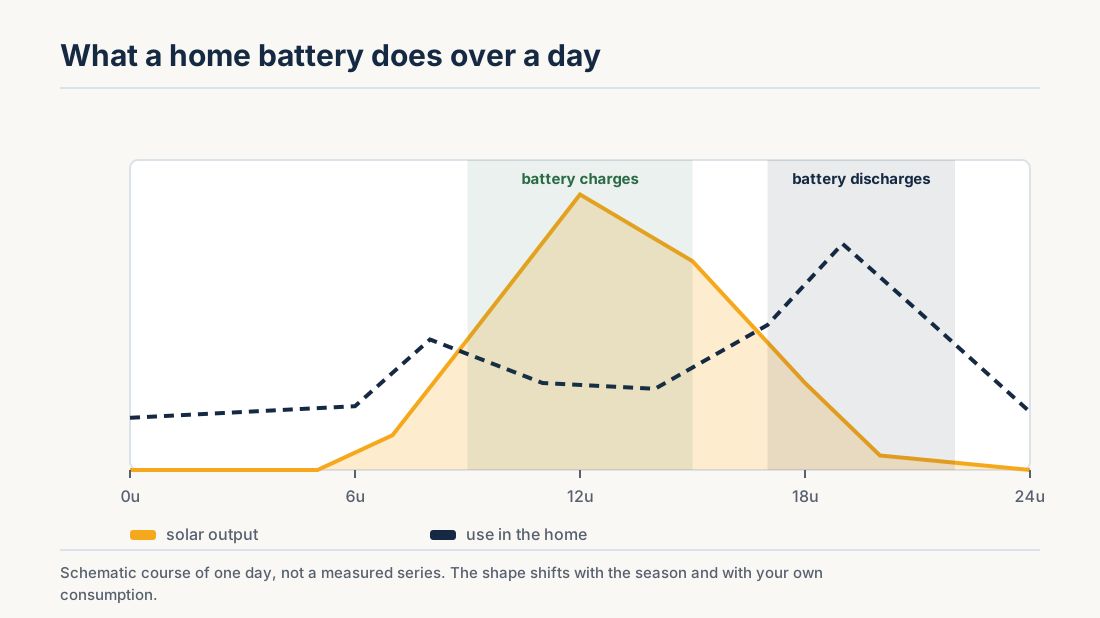
The battery charges when your solar panels produce excess electricity or when energy prices are low. It discharges when your consumption increases or when prices rise. The integrated Energy Management System automatically controls this process.
What role does the micro-inverter play in this system?
The built-in 800W micro-inverter converts stored DC energy into usable AC electricity. This conversion reduces loss compared to oversized inverters and improves efficiency especially in small households.
How is the P1 meter integration implemented?
The included P1 meter reads data from your smart meter and communicates it to the battery, allowing precise balancing between electricity consumption and storage. For more details on system logic, see how a home battery works.
Which technologies or variants exist for this plug-in battery?
The Duravolt plug-in battery comes in two main models differing in capacity and application.
What are the available Duravolt models?
- Duravolt Plug-In Battery 5 12kWh - 5.12 kWh capacity, suited for average households;
- 2.56 kWh version - compact entry-level option.
What core specifications define the battery’s performance?
- Battery type: LiFePO4;
- More than 6000 charge cycles;
- Lifespan up to 15 years;
- Standard output of 800W, up to 2500W with a dedicated circuit upgrade;
- Protection rating: IP65 for weather resistance.
How does Duravolt compare to alternatives like HomeWizard Plug-In Battery?
The HomeWizard battery focuses on simplicity and monitoring integration, while Duravolt emphasizes scalability, dynamic tariff trading, and offers higher peak output when upgraded, making it more flexible for energy optimization.
What is the price of a Duravolt plug-in battery?
The price ranges from €1,199 to €1,899 incl. VAT depending on the capacity model you choose.
What are the typical prices per model?
- 2.56 kWh model costs approximately €1,199 incl. VAT;
- The 5.12 kWh Duravolt plug-in battery ranges from €1,400 to €1,899 incl. VAT.
Can you see a calculation example for a typical setup?
A standard 5.12 kWh system including monitoring and optimized setup includes:
- Battery unit: €1,400;
- P1 meter: €25;
- Dedicated circuit upgrade: €300;
- Monitoring setup and accessories: €100.
The total investment equals approximately €1,825 incl. VAT. Compared to traditional home battery systems, this plug-in solution avoids installation costs and lowers the upfront investment significantly.
In which situations does a Duravolt plug-in battery make the most sense?
This battery suits households seeking quick savings without complex installation work.
When is it ideal to use with solar panels?
It can increase your solar self-consumption rate from about 30% to 70%, reducing reliance on the grid and minimizing feed-in losses. For optimization strategies, visit solar self-consumption tips.
Can it work effectively without solar panels?
The system stores electricity during low-price grid hours and discharges during peak tariff periods. This application is effective with a dynamic energy contract.
Which households benefit most from this battery?
- Homes with solar installations sized between 3 and 6 kWp;
- Users with variable electricity usage patterns;
- People who prefer avoiding installation expenses.
What are the advantages and limitations of the Duravolt plug-in battery?
Understanding both sides helps determine if this battery fits your needs.
What are the main advantages?
The battery installs in minutes without needing an electrician. Its LiFePO4 chemistry enhances safety and extends lifespan. The Energy Management System enables energy trading, offering extra saving opportunities.
What limitations should you consider?
The standard 800W output limits use of heavy appliances unless you upgrade to a dedicated circuit. Additionally, app and P1 meter integration may require some configuration efforts. For expectations on lifespan, please review battery lifespan details.
In which scenarios is this system not recommended?
This battery is not suitable for large households with high peak electricity demand or for those planning full off-grid living. Larger systems with full inverter integration perform better in those cases.
How does the Duravolt plug-in battery compare with traditional home batteries?
The key differences lie in installation requirements, price points, and scalability.
What is the comparison overview?
- Plug-in battery offers a lower price and straightforward setup;
- Traditional home battery provides higher capacity with full system integration;
- The plug-in system offers flexibility and expandability.
Which option offers better return on investment?
Plug-in batteries typically deliver faster returns for smaller setups due to lower initial costs. For a detailed analysis, see battery payback insights.
How does this type of battery fit into the Belgian energy market?
With net metering being phased out and capacity tariffs introduced, locally storing energy gains importance. Batteries like the Duravolt support consumers to benefit directly from these tariff changes, particularly through a capacity tariff strategy.
Choosing the right battery depends on your energy consumption and your preference to avoid complicated installations. The Duravolt plug-in battery stands out for its easy setup, strong safety features, and accessible pricing. If you want to achieve energy savings quickly without major home modifications, this system can fit your needs well. Begin by assessing your consumption patterns and request personalized advice through Soleva to identify the ideal setup for your household.
Frequently Asked Questions
What is the price of the Duravolt plug-in battery?
The price generally ranges from €1,199 to €1,899 incl. VAT depending on the battery capacity and configuration. The smaller 2.56 kWh model offers a lower entry cost, while the 5.12 kWh version provides more storage and better coverage for average households.
How reliable is the Duravolt plug-in battery based on user reviews?
Customers consistently praise the ease of installation and the savings on energy bills. Most reviews emphasize the quick setup and stable operation, though a few note that app usability and P1 meter setup could improve.
Does the Duravolt plug-in battery require technical knowledge for installation?
The installation manual provides clear, step-by-step instructions with visuals, making it accessible even for beginners. While basic WiFi knowledge helps, no electrical expertise is necessary for standard plug-in operation.
How does the Duravolt plug-in battery compare to the HomeWizard Plug-In Battery?
Duravolt focuses on scalability and dynamic energy trading capabilities, whereas HomeWizard emphasizes seamless integration with its monitoring ecosystem. Your choice depends on whether you prioritize energy automation or flexible optimization.
Is a plug-and-play home battery like the Duravolt future-proof in Belgium?
Yes, plug-in batteries align well with increasing electricity price fluctuations and the reduction of net metering benefits. Their flexibility and affordable price make them suitable as household energy needs and regulations evolve.
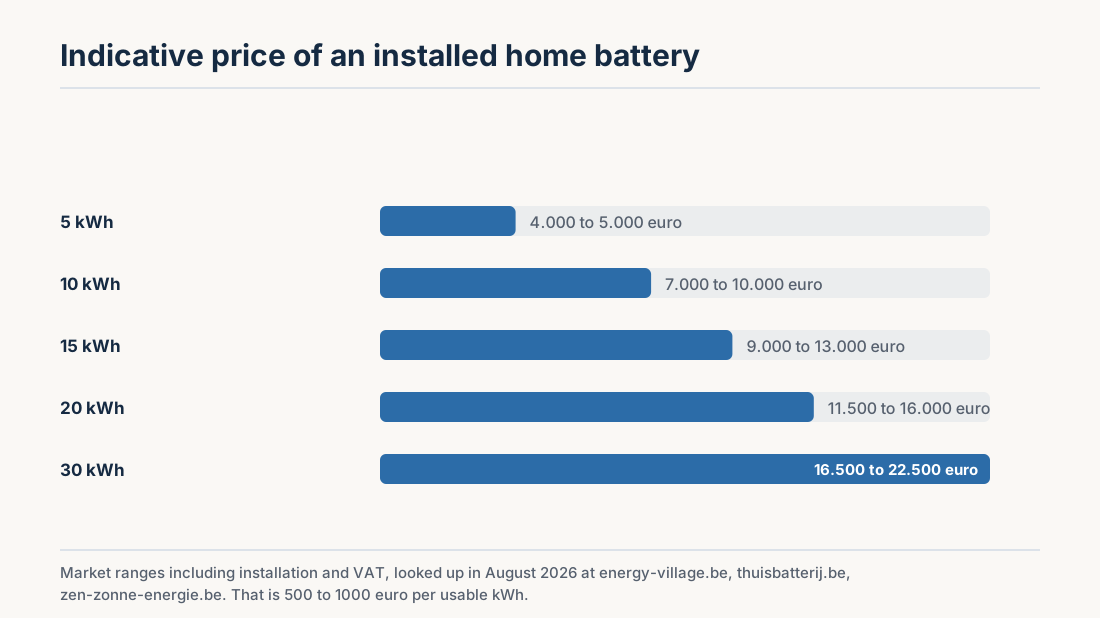
Indicative prices for the Belgian market, checked in August 2026 against energy-village.be, thuisbatterij.be and zen-zonne-energie.be. These are market ranges for an installed system including VAT, not a quotation: your price depends on capacity, brand and the state of your existing installation.
Read also
Ready to cut your energy bill?
Compare quotes for solar panels, home batteries and charging points.