Home battery belgium
Greenrock saltwater home battery: price and review
A Greenrock saltwater battery stores solar energy using sodium-ion technology and stands out with its safe, non-flammable, and environmentally friendly design. This system replaces lithium with saltwater electrolytes, improving safety and reducing environmental impact while providing a lifespan exceeding 15 years. Typically priced around €680 per kWh excluding installation, the battery integrates directly with solar panels to enhance your home’s energy self-consumption.
What makes the Greenrock saltwater battery ideal for storing solar energy?
The Greenrock saltwater battery is particularly suitable for solar energy storage because it safely stores excess electricity without fire risks and delivers a steady power supply for household use. It utilizes sodium-ion chemistry with a saltwater electrolyte, eliminating the need for toxic or flammable materials and enhancing indoor safety.
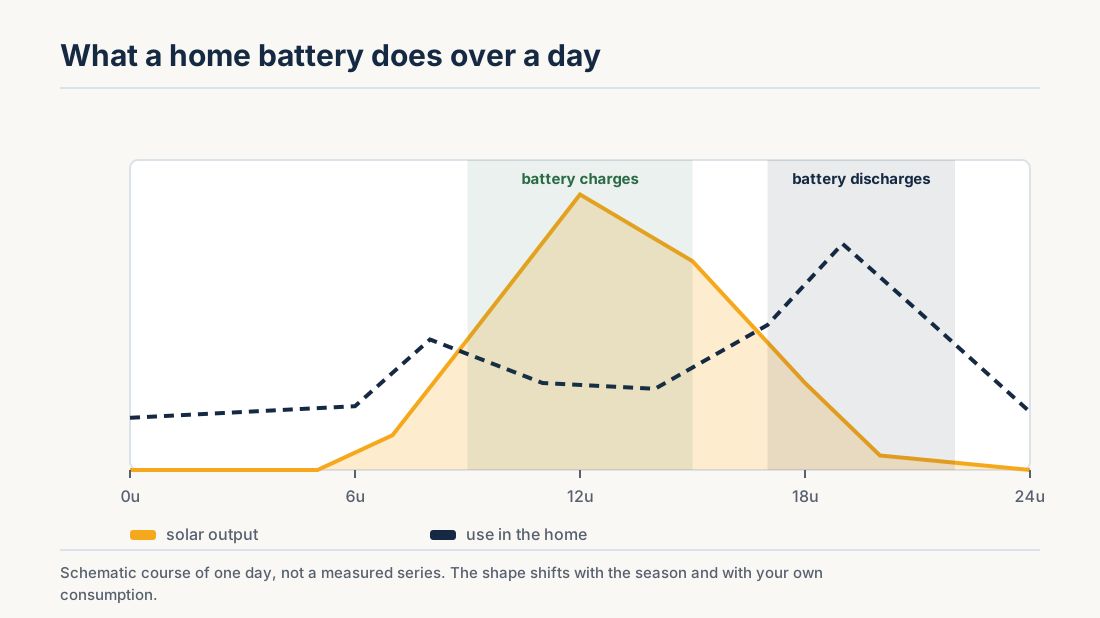
This technology supports greater self-consumption by storing solar energy produced during the day for use in the evening. As a result, households can boost their self-consumption rates from approximately 55% up to 75% or more when pairing solar panels with battery storage.
How does the sodium-ion saltwater system function?
The battery stores energy by exchanging ions between electrodes submerged in a saltwater solution. Unlike lithium-based systems, it operates at ambient temperature and uses only one electrolyte. This simple design increases safety and reliability while reducing maintenance needs.
- The non-flammable electrolyte improves indoor safety significantly
- Absence of rare metals reduces the environmental footprint
- The stable chemistry ensures a long cycle life, reaching around 5,000 cycles
Why is safety a significant benefit?
Saltwater batteries prevent the risk of thermal runaway, making them well-suited for indoor installation in residential settings. This directly addresses safety issues often related to lithium batteries in densely populated housing.
How does the Greenrock zoutwaterbatterij compare to lithium-ion and lead-acid batteries?
The Greenrock zoutwaterbatterij prioritizes safety and environmental sustainability, whereas lithium-ion batteries emphasize compact size and higher energy density.
The key differences are as follows:
- Saltwater battery: safest option, fully recyclable
- Lithium-ion battery: offers the highest energy density
- Lead-acid battery: lowest initial cost but has a shorter lifespan
Which performance traits are most important?
Saltwater batteries have lower energy density, meaning they require more physical space for the same capacity. Their charge speed is slower due to a lower C-rate. However, this technology offers stable performance over time with minimal degradation.
In what situations does saltwater outperform lithium?
Saltwater batteries are an excellent choice when safety, lifespan, and environmental concerns outweigh the need for compactness. Homes with sufficient installation space benefit most from this system, while lithium remains preferable for tight spaces.
What is the cost of a Greenrock saltwater battery system?
The Greenrock saltwater battery price averages €680 per kWh excluding installation. Costs vary based on capacity and system integration requirements.
Typical price points for various system sizes are:
- 5 kWh system - approximately €3,400
- 10 kWh system - approximately €6,800
- 20 kWh system - approximately €13,600
How does a full installation cost break down?
A representative 10 kWh system includes the following expenses:
- Battery modules (10 kWh) - €6,800
- Inverter integration - €1,200
- Installation and wiring - €1,500
- Energy management system - €500
The total investment reaches approximately €10,000 including VAT. This aligns with typical price ranges for saltwater battery residential systems. For a broader comparison of home battery prices and technologies, you can review a full home battery price overview.
What maintenance does a saltwater battery require?
A zoutwater batterij thuis requires no active maintenance because it employs stable and non-degrading materials. It does not need cooling systems or periodic chemical balancing.
What does annual maintenance involve?
Regular maintenance mainly focuses on software and system monitoring, with little need for physical intervention.
- Updating energy management software
- Monitoring performance through an app interface
- Conducting visual inspections of electrical connections
How long does the battery last?
The battery has a lifespan exceeding 15 years and supports about 5,000 charge-discharge cycles. This durability matches or surpasses many lithium battery systems used in homes. For more detailed durability information, see our page on battery lifespan expectations.
Which residential settings benefit most from a zoutwater thuisbatterij kopen?
A zoutwater thuisbatterij kopen is ideal for homes prioritizing safety, sustainability, and long-term energy autonomy.
In which scenarios does this system perform best?
This battery suits households with:
- Solar panels generating high daytime electricity
- Off-grid or rural locations with unreliable grid access
- Electric vehicles or heat pumps requiring additional energy storage
Combining the battery with solar panels for home use significantly increases energy efficiency and savings.
How does this battery system interact with energy tariffs?
In areas that have capacity-based tariffs, using battery storage reduces peak grid consumption, which lowers fees and improves return on investment. For further details, explore our page on capacity tariff battery strategies.
What factors should you consider when choosing a Greenrock battery system?
Selecting a Greenrock battery involves assessing your required capacity, available installation space, and typical energy usage.
Which technical features are critical?
- Available capacities between 2.5 kWh and 30 kWh
- A system voltage of 48V
- Continuous output power near 500W per module
What are the drawbacks of a zoutwater batterij?
The main disadvantages include its larger physical size and slower charging speeds. These characteristics may limit use in compact homes or high-power applications. For a detailed comparison to other battery types, see different battery technologies explained.
If you want personalized recommendations, Soleva can connect you with certified installers who analyze your home’s setup and suggest the best configuration.
Selecting a saltwater battery system ultimately depends on your priorities. You benefit from exceptional safety, long lifespan, and lower environmental impact, while accepting a larger size and slower charging rate. If you seek reliable and low-maintenance energy storage, this option meets many expectations. Begin by comparing different system sizes and request several quotes through Soleva to find the best capacity that matches your energy needs.
Frequently Asked Questions
What is the Greenrock saltwater battery price per kWh?
The Greenrock saltwater battery costs approximately €680 per kWh excluding installation. Your final price depends on the system’s size, inverter compatibility, and how complex the installation is. Larger battery systems tend to reduce the price per kilowatt-hour because fixed installation expenses are spread across more capacity, increasing your investment’s efficiency.
How do Greenrock battery experiences compare to lithium batteries?
Experiences with Greenrock batteries emphasize their exceptional safety and reliability. Users report stable performance without any overheating problems. Compared to lithium batteries, feedback often notes the larger size and slower charging times, with the trade-off favoring sustainability and peace of mind, especially in indoor settings.
Can a zoutwater battery function without solar panels?
Yes, a zoutwater battery operates without solar panels by storing electricity drawn from the grid. This approach is especially effective when combined with dynamic electricity tariffs, allowing you to charge the battery during low-price periods and use stored energy during higher-price times. Although this method delivers savings, the greatest benefits come when you combine the battery with solar generation.
What is the price difference between saltwater and lithium batteries?
The price difference primarily depends on system configuration, but saltwater batteries typically have a similar or slightly lower cost per kWh than lithium options. Lithium batteries offer higher energy density and compactness, while saltwater batteries emphasize enhanced safety and longer lifespan, which influence long-term value more than initial costs.
Does the Greenrock saltwater battery provide backup power?
Yes, the Greenrock saltwater battery supports backup power through an island mode operation. It can maintain essential household appliances like refrigerators and lighting during power outages. The extent of backup power depends on your system’s size and setup, so ensuring proper sizing is key to keeping critical devices running when the grid fails.
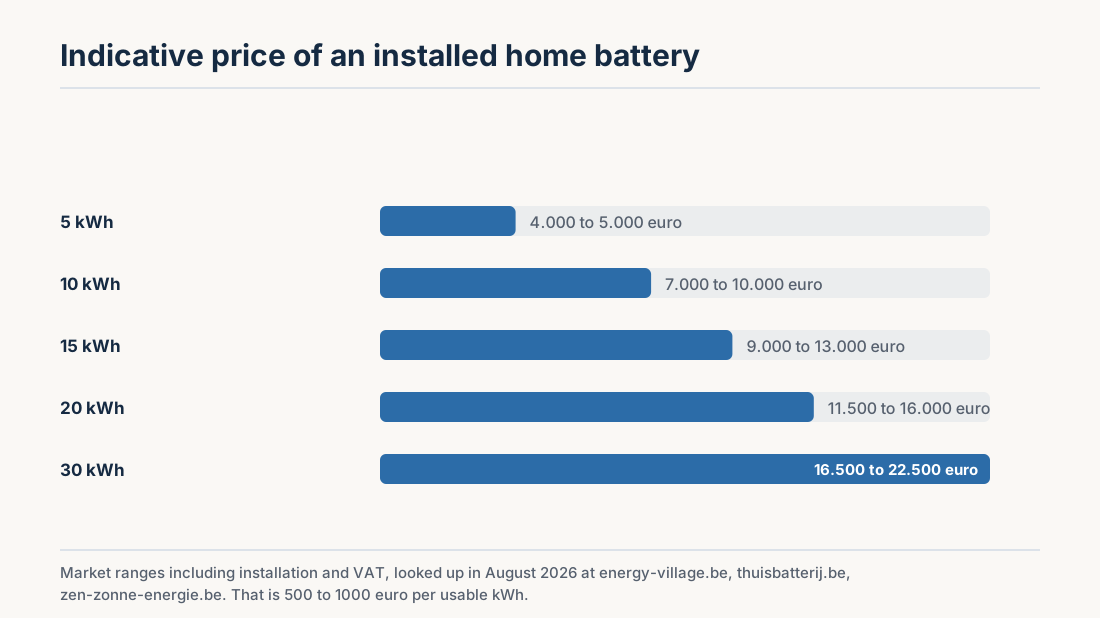
Indicative prices for the Belgian market, checked in August 2026 against energy-village.be, thuisbatterij.be and zen-zonne-energie.be. These are market ranges for an installed system including VAT, not a quotation: your price depends on capacity, brand and the state of your existing installation.
Read also
Ready to cut your energy bill?
Compare quotes for solar panels, home batteries and charging points.