Home battery belgium
home battery lifespan explained (2026 guide)
The typical home battery lifespan ranges from 10 to 15 years, while premium lithium iron phosphate systems can last 15 to 20 years when properly used and installed. The actual lifespan depends on factors such as battery chemistry, daily charge cycles, and how deeply you discharge the battery.
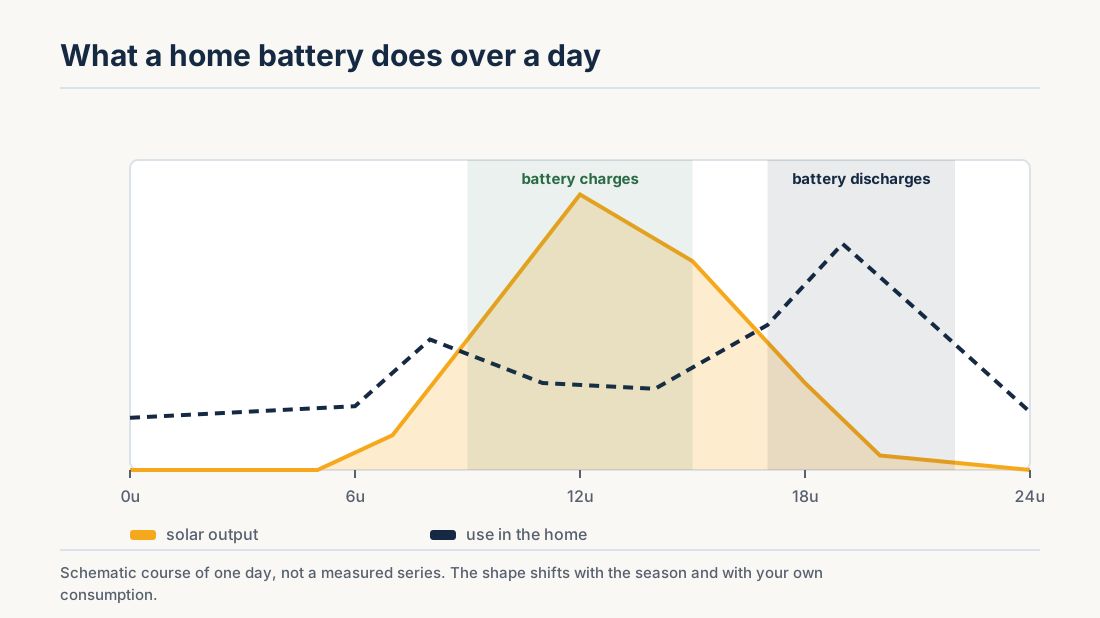
This guide explains how long a solar home battery usually lasts, what causes degradation, and how different usage patterns like night consumption or power outages affect its performance over time.
What is the average home battery lifespan in real conditions?
The average home battery lifespan spans 10 to 15 years for lithium-ion batteries, with advanced lithium iron phosphate (LFP) batteries lasting up to 20 years under stable conditions. This timeframe includes both calendar age and cycling, as batteries gradually lose capacity instead of suddenly failing. Capacity retention is essential to maintain real performance. After 10 years, most batteries keep 60 to 80% of their original energy storage due to chemical wear causing battery degradation.
How does solar home battery lifespan compare to other battery types?
Solar home batteries generally last longer than older technologies because lithium-based batteries endure more cycles and degrade more slowly. For example:
- Lithium-ion solar batteries last about 10 to 15 years
- Lithium iron phosphate (LFP) batteries last between 15 and 20 years
- Lead-acid batteries last 3 to 7 years
- Saltwater batteries last 5 to 10 years
Compared to car batteries, which usually last 3 to 5 years, home batteries benefit from controlled usage and advanced battery management systems that extend their lifespan significantly.
How does Tesla home battery lifespan compare with others?
The Tesla home battery lifespan is consistent with industry standards, backed by a 10-year warranty guaranteeing above 70% capacity retention. In real-world use, the battery often performs beyond the warranty period if moderate cycling is maintained.
How do battery cycles and usage impact lifespan?
The lifespan of your home battery is closely tied to the number of charge-discharge cycles it undergoes. Each full cycle slightly reduces capacity, with modern batteries typically supporting between 6,000 and 10,000 cycles before becoming less effective. Daily cycling, as common in solar energy systems, causes faster degradation compared to occasional backup use.
What is cycle life and its importance?
Cycle life refers to the total number of times a battery can charge and discharge before its capacity falls below a usable level. Solar home batteries used daily reach their cycle limits sooner than those used less frequently.
What does the 20/80 rule mean for batteries?
The 20/80 rule advises maintaining battery charge levels between 20% and 80% to reduce stress on battery cells. Following this guideline lowers degradation and prolongs battery lifespan.
How does depth of discharge affect battery lifespan?
Depth of discharge measures how much energy you extract from the battery during each cycle. Keeping discharge levels shallow, such as using only a portion of the battery’s capacity per cycle, reduces chemical strain and extends the battery’s usable life.
Which battery technology offers the longest lifespan?
Lithium iron phosphate (LFP) technology offers the longest lifespan due to its combination of high cycle life and thermal stability. Standard lithium-ion batteries remain popular because they offer a balance between price and lifespan. Other technologies, like flow batteries, can last over 20 years but are less common in residential settings.
- Standard lithium-ion batteries offer balanced cost and longevity
- LFP batteries provide the highest cycle count and longest lifespan
- Flow batteries exceed 20 years but are rarely installed in homes
Although LFP batteries require a higher initial investment, they often present better long-term value due to extended service life.
How long does a solar battery last during night or power outages?
The runtime of a solar battery overnight or during outages depends on its capacity and your household’s electricity consumption. For example, a 10 kWh battery system typically supports essential loads through the night.
How long will a 10 kWh home battery last?
A 10 kWh home battery generally lasts between 8 to 24 hours, depending on how many appliances you run. Basic usage such as lighting extends the runtime, while heavy usage like heating or electric cooking shortens it.
How long does a solar battery last during a blackout?
During power outages, limiting energy use to critical devices like lighting, refrigeration, and internet equipment helps your battery last longer. Running the entire home at once drains the battery more quickly.
How long can a 20 kWh battery power a house?
A 20 kWh battery can supply an average home for 1 to 2 days if consumption remains moderate. Larger battery systems increase backup autonomy but involve higher upfront costs.
What environmental and installation factors influence battery lifespan?
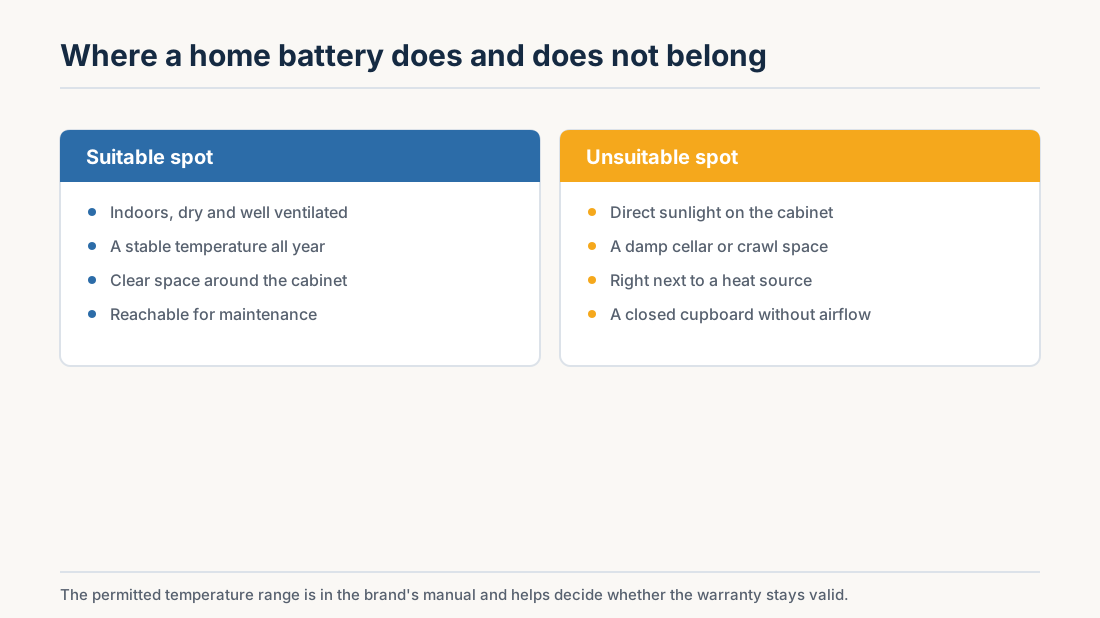
Battery lifespan is affected significantly by environmental conditions and installation quality. Stable indoor temperatures and well-designed systems slow chemical degradation and maintain efficiency over time.
Why is temperature important for battery longevity?
High temperatures speed up battery degradation, while cold temperatures reduce performance. The best battery environments are controlled indoor locations such as garages or basements.
How does installation quality affect battery lifespan?
Professional installation ensures proper wiring, ventilation, and balance within the system. Poor installation causes overheating and accelerates battery aging.
What role does the battery management system play?
The battery management system controls charging rates, prevents overuse, and balances individual battery cells. This system protects the internal components and directly extends the battery’s lifespan.
How can you calculate and extend your home battery lifespan?
You can estimate battery lifespan by analyzing usage patterns, cycle counts, and capacity decline trends. Home battery lifespan calculators use these inputs to help predict when replacement might be necessary.
Example calculation for a 10 kWh battery lifespan
Consider this example for a battery used daily:
- Daily usage: 1 full cycle
- Cycle life: 6,000 cycles
- Estimated lifespan: 16 years
In real-world conditions, factors such as temperature and system inefficiencies may shorten this estimate slightly.
What practical steps can extend your battery’s lifespan?
- Keep discharge levels below 80%
- Install the battery in a temperature-controlled area
- Limit unnecessary cycling and avoid deep discharges
- Regularly monitor the battery’s performance
Combining your battery with solar panels for home energy enhances overall efficiency and reduces reliance on the grid.
What financial impacts does battery lifespan have?
The financial benefit of a battery depends largely on how long it provides energy savings relative to its purchase and installation cost. A longer lifespan improves return on investment by reducing replacements.
Typical system costs vary between €1,800 and €12,000 incl. VAT depending on size and features.
Lifetime value calculation example for a 10 kWh system
- Battery unit price: €6,000
- Inverter cost: €1,200
- Installation fees: €1,500
- Electrical upgrades: €800
- Total investment: €9,500 incl. VAT
If the system saves approximately €600 per year in electricity costs, the payback period is around 15 years, which closely aligns with its expected lifespan. Ensuring that your battery’s lifespan matches or exceeds its payback period is key to obtaining real financial value from your investment.
Home battery systems generally provide reliable service for over a decade, with lithium-based batteries lasting beyond 15 years when properly cared for. To maximize benefits, focus on controlled charging, maintaining stable temperatures, and selecting a battery size suited to your energy needs. For personalized advice, consider requesting multiple quotes and comparing expected lifespan and costs through Soleva before making your decision.
Frequently Asked Questions
How does daily usage affect home battery lifespan?
Daily usage significantly influences home battery lifespan. Batteries cycled every day, like in solar energy setups, tend to reach their cycle limits faster. Using the battery less often or partially cycling it reduces chemical wear and prolongs its effective life.
Is 78% capacity considered good battery life after several years?
Yes, retaining 78% battery capacity after several years is considered good. Manufacturers usually guarantee around 60 to 70% capacity after 10 years. Approaching 80% capacity indicates the battery remains effective for energy storage and cost savings, especially when used for self-consumption.
What is the cost difference between batteries with short and long lifespans?
Batteries with longer lifespans, such as LFP systems, have higher upfront costs but reduce the frequency of replacements and offer better long-term value. A lower-cost battery with a shorter lifespan may result in higher total expenses over time due to earlier replacements.
How does the lithium-ion home battery lifespan compare to other types?
Lithium-ion home batteries usually last 10 to 15 years, which surpasses lead-acid batteries and is comparable to newer saltwater technologies. They also allow deeper discharges and operate more efficiently, making them a preferred choice for solar energy storage at home.
How can a solar battery lifespan calculator assist in planning?
A solar battery lifespan calculator estimates when you might need to replace your battery based on your usage habits. It accounts for daily cycling, capacity loss, and degradation rates, helping you choose an appropriately sized battery and avoid unnecessary expenses on excess capacity.
Indicative prices for the Belgian market, checked in August 2026 against energy-village.be, thuisbatterij.be and zen-zonne-energie.be. These are market ranges for an installed system including VAT, not a quotation: your price depends on capacity, brand and the state of your existing installation.
Read also
Ready to cut your energy bill?
Compare quotes for solar panels, home batteries and charging points.