Home battery belgium
home battery subsidy wallonia explained
The home battery subsidy Wallonia no longer provides direct grants but now offers an incentive tariff that lowers electricity costs for battery owners by encouraging smart charging during low-price hours. This financial support depends on eligibility criteria such as having a smart meter and solar panels. By optimizing battery use, households can save between €300 and €500 annually.
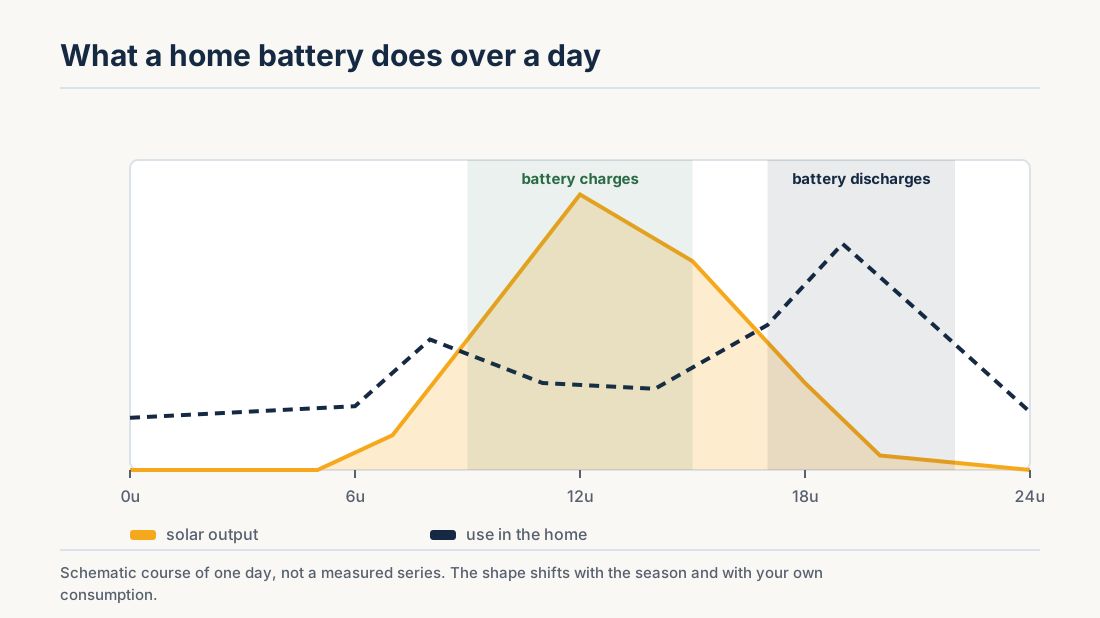
What is the home battery subsidy Wallonia and how much can you save?
The home battery subsidy Wallonia has transitioned from offering direct grants to providing financial benefits through an incentive-based electricity tariff. This tariff reduces your yearly electricity expenses by rewarding efficient energy storage and consumption. The system is managed by the Walloon energy regulator CWaPE and encourages households to use batteries to balance energy demand.
The tariff follows a time-based pricing model with different cost periods throughout the day:
- Green hours (1am - 7am and 11am - 5pm) have the lowest prices, ideal for charging your battery.
- Amber hours (7am - 11am and 10pm - 1am) have moderate pricing.
- Red hours (5pm - 10pm) have the highest prices and should be avoided for battery use.
By shifting your consumption to green hours, you can reduce distribution costs by up to 14%. A typical household equipped with solar panels and a battery can achieve annual savings ranging from €300 to €500 by using the tariff correctly.
Why did Wallonia remove direct subsidies?
Wallonia phased out direct grants after 2024 to promote grid stability instead of upfront incentives. The focus now rewards consumer behavior through dynamic pricing rather than subsidizing installations. This approach aligns with the increasing importance of energy storage in balancing supply and demand.
What financial benefit replaces the subsidy?
The financial advantage arises from lower energy bills due to optimized charging and discharging strategies. Batteries help to increase your self-consumption rate from 30%-50% up to 60%-80%, which reduces the amount of electricity you need to buy from the grid.
Who qualifies for the home battery subsidy Wallonia eligibility?
Eligibility for the home battery subsidy Wallonia depends mainly on technical and property-related criteria, rather than on income or battery size. Most households qualify if they meet the infrastructure requirements.
Key eligibility conditions include:
- Having a communicating smart meter (SMR3) installed and activated.
- Holding a grid connection up to 56 kVA, covering approximately 99% of households.
- Using an energy supplier that offers the incentive tariff.
- Possessing a solar panel installation to maximize benefits.
Do property conditions affect eligibility?
Yes, certain property requirements based on Wallonia’s energy grant policies influence eligibility for related incentives. Your property should:
- Be at least 15 years old.
- Be owned or legally occupied by you.
- Be used primarily for residential purposes.
These conditions mainly pertain to renovation grants but also impact combined energy projects involving batteries and solar panels.
Which devices improve eligibility performance?
Hybrid inverters and energy management systems enhance eligibility performance. Combining a solar panel system with a battery significantly increases your savings by storing excess solar production instead of exporting it to the grid.
What is the effective price after applying home battery subsidy Wallonia benefits?
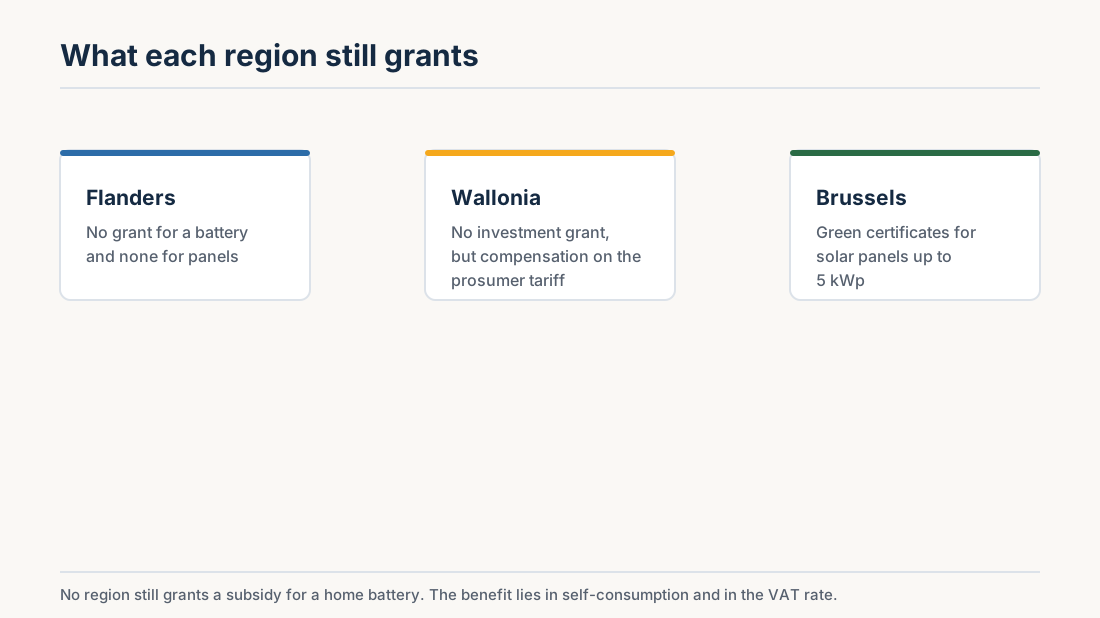
The initial price of a home battery remains unchanged; however, the system’s yearly savings lower the effective cost over time.
A typical price breakdown includes:
- Battery unit cost between €1,800 and €12,000, depending on capacity.
- Inverter cost around €2,000 if not integrated with the battery.
- Installation fees ranging from €500 to €1,000.
Example calculation with incentive tariff savings
To illustrate the financial effect, consider a 10 kWh battery system with the following costs:
- Battery: €6,000
- Hybrid inverter: €2,000
- Installation: €800
- Monitoring system: €200
The total investment amounts to €9,000 including VAT. With annual savings of about €400 through the incentive tariff, the payback period is approximately 22 years. When increasing self-consumption and factoring in rising electricity prices, this payback period effectively shortens. The key takeaway is that the tariff enhances long-term value instead of reducing upfront costs.
How does the home battery subsidy Wallonia calculator estimate savings?
A home battery subsidy Wallonia calculator estimates potential savings by analyzing your energy consumption, battery capacity, and tariff utilization. It calculates the amount of energy shifted to low-price hours and the reduction in grid electricity consumption.
How does Wallonia’s incentive compare to other regional incentives?
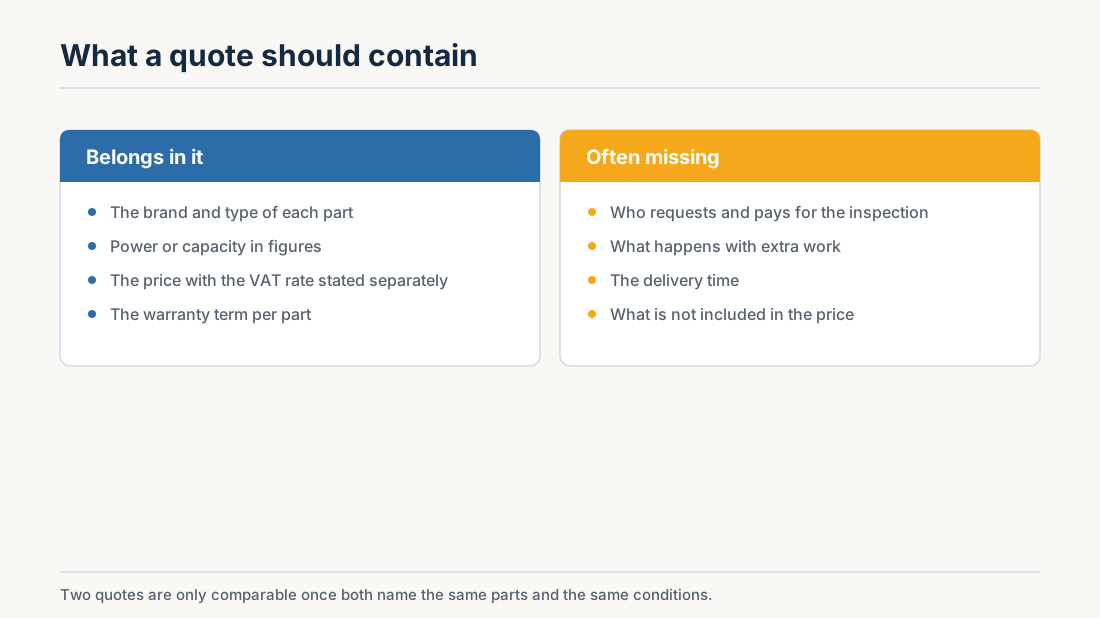
Wallonia’s approach differs from other regions by focusing on operational savings via dynamic tariffs instead of offering direct battery grants.
Comparison summary:
- Wallonia uses dynamic pricing with no direct battery grants.
- Flanders previously provided grants up to €2,550 for battery installations.
- Brussels phased out compensation systems earlier, relying on market pricing.
Are additional incentives available in Wallonia?
Some indirect supports remain, including:
- Reduced VAT rate of 6% for buildings older than 10 years.
- Municipal bonuses depending on property location.
- QUALIWATT support for SMEs, providing up to €15,000.
While these programs do not target batteries directly, they help reduce overall system costs.
How does the incentive tariff influence return on investment (ROI)?
The incentive tariff improves ROI by lowering peak electricity expenses and encouraging daily battery cycling. This increases annual savings without the need for additional hardware investments.
How do you apply for and maintain compliance with the Wallonia incentive tariff?
You can activate the incentive tariff through your energy supplier after fulfilling the technical requirements. The application follows a straightforward process.
Step-by-step application process
- Request installation of a smart meter through your grid operator.
- Connect your battery and solar panel system.
- Select an energy supplier that offers the incentive tariff.
- Activate the tariff within your energy contract.
- Use automation tools to optimize charging during low-price periods.
What ongoing requirements must you follow?
To remain compliant, you must operate your battery mainly during green hours and avoid excessive consumption during peak times. Smart monitoring systems track your usage and ensure adherence to the rules.
Combining your battery with a solar energy system and, optionally, a heat pump enhances savings by shifting more consumption to low-cost intervals.
Advanced solutions featuring intelligent battery management systems (BMS) and automation improve efficiency by managing charging cycles and responding automatically to price signals without manual adjustments.
Financial support for home batteries in Wallonia has moved from upfront subsidies to ongoing savings via dynamic pricing. The incentive tariff rewards you when you store and consume energy during low-price hours, improving self-consumption and lowering your electricity bills. To take advantage of this system, start by analyzing your energy consumption patterns and request customized quotes from Soleva to explore realistic savings opportunities.
Frequently Asked Questions
Is there still a home battery subsidy Wallonia available today?
No direct subsidy currently exists for home batteries in Wallonia. Instead, an incentive tariff lowers electricity costs by rewarding smart energy use during low-price periods. Households with solar panels and batteries can achieve meaningful savings by optimizing their consumption.
What is the price advantage of the home battery subsidy Wallonia system?
The system’s financial benefit results from yearly savings rather than upfront price reductions. Most users save between €300 and €500 annually by shifting electricity use to low-cost green hours, reducing the overall cost of their battery investment over time.
Does home battery subsidy Wallonia eligibility require solar panels?
While not mandatory, having solar panels greatly enhances savings. A battery without solar panels stores grid electricity, limiting the financial benefits. With solar panels, you can store excess solar energy, increasing self-consumption and maximizing savings.
How accurate is a home battery subsidy Wallonia calculator?
The calculator gives realistic savings estimates if you input accurate information such as annual consumption and battery size. It models charging behaviors according to tariff periods. Savings may vary depending on individual habits, energy prices, and system setup.
What will happen to home battery investments after 2030 in Wallonia?
As compensation systems are phased out, self-consumption becomes more critical, enhancing the value of home batteries. Future pricing models are expected to further reward flexibility, making battery storage a more attractive long-term investment.
Indicative prices for the Belgian market, checked in August 2026 against energy-village.be, thuisbatterij.be and zen-zonne-energie.be. These are market ranges for an installed system including VAT, not a quotation: your price depends on capacity, brand and the state of your existing installation.
Read also
Ready to cut your energy bill?
Compare quotes for solar panels, home batteries and charging points.