Home battery belgium
home battery liège price and installation guide
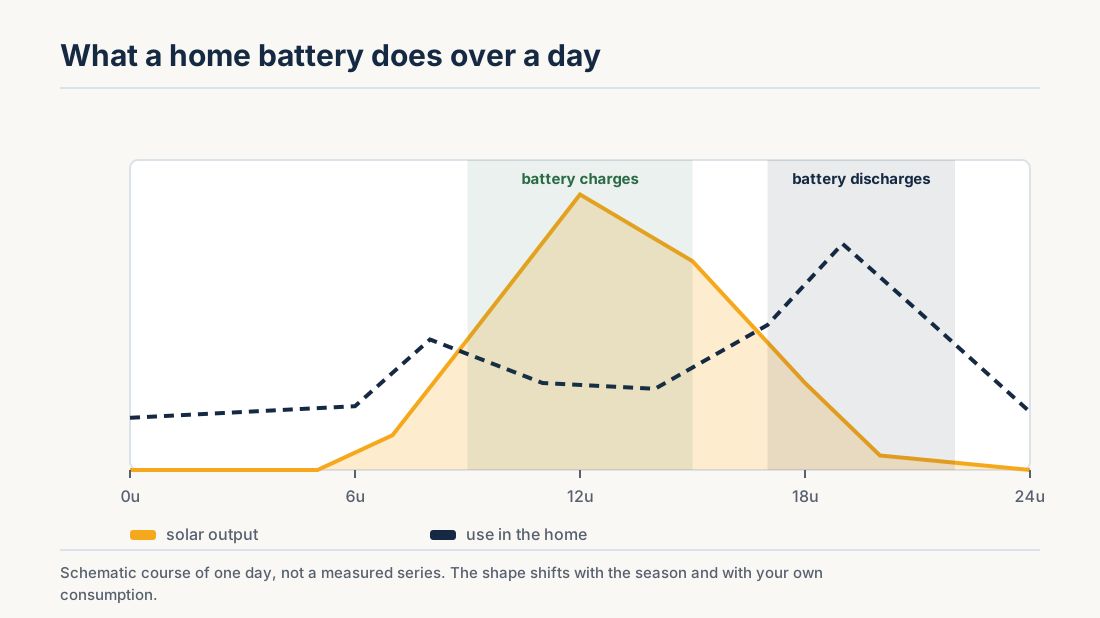
Installing a home battery in Liège enables you to store excess solar energy effectively and reduces your reliance on the electrical grid by up to 60 - 80%. Homeowners commonly pair lithium-based battery systems with solar panels to boost self-consumption and stabilize energy costs over the years. A typical system cost in Liège ranges between €4,400 and €14,500 depending on capacity and additional features.
This guide explains how home batteries work, their costs, which systems fit your home best, and how to select the ideal installer.
What is the price of a home battery in Liège?
The cost of a home battery system in Liège typically falls between €4,400 and €14,500 incl. VAT for a fully installed solution including inverter and necessary components. The main factors affecting the price are the battery capacity, the type of electrical connection, and the included features such as backup power capability.
Below are common system sizes with their price ranges.
- 5 kWh: €4,000 - €5,000, suitable for small households
- 8 - 10 kWh: €7,000 - €10,000, ideal for average homes
- 16 kWh: €7,500 - €9,500, for households with higher energy use
- 32 - 50 kWh: €25,000 - €35,000, designed for large homes or small businesses
Batteries usually cost around €600 - €1,000 per kWh, with the remainder of the price covering installation, inverter, and related components.
What factors most influence the price?
The total investment depends on technical specifications affecting system size and complexity.
- Battery capacity measured in kWh
- Connection type: single phase or three phase
- Inverter configuration: hybrid or separate inverter
- Additional functions such as backup power and energy management system (EMS)
Example of a full cost calculation for a Liège household
Here is a realistic cost breakdown for an 8 kWh lithium battery system.
- Battery modules: €5,200
- Hybrid inverter: €1,200
- Installation and wiring: €1,400
- Electrical panel upgrade: €400
The total investment amounts to approximately €8,200 incl. VAT. This setup is suitable for a household with an annual electricity consumption around 4,000 kWh.
Which system types fit homes in Liège?
The ideal home battery system depends on your property characteristics, energy usage, and existing solar setup. Many residents install batteries alongside solar panels for residential use to increase self-consumption effectively.
Three main system configurations dominate the market in the area.
How do you select the right battery capacity for your household?
Matching battery capacity to your solar generation and daily consumption is essential for optimal performance.
- 4 - 6 kWh systems are suitable for small households
- 6 - 10 kWh fits an average family’s energy needs
- 10 - 16 kWh supports households with high consumption, such as those with electric vehicles or heat pumps
Typically, a Liège home with 8 to 12 solar panels benefits most from an 8 to 10 kWh battery system.
What distinguishes AC coupling from DC coupling?
AC coupling involves connecting the battery to an existing solar system through an inverter, making it ideal for retrofits. In contrast, DC coupling stores energy directly from the panels with higher efficiency, which suits new installations better.
What battery technologies are available?
Different battery chemistries vary in efficiency, safety, and lifespan.
- Lithium-ion batteries offer 90 - 95% efficiency and last between 10 and 15 years
- LiFePO4 technology provides improved safety and extended cycle life
- Lead-acid batteries have a lower purchase price but reduced efficiency around 70 - 80%
In Liège, most installations use lithium-based systems due to their performance advantages.
How do you choose the right solar installer in Liège?
Selecting a qualified installer influences your system’s performance, safety, and long-term reliability. Certified installers comply with Belgian electrical standards and offer guarantees.
Using a service like Soleva, you receive personalized quotes from verified professionals experienced in battery and solar integration.
Which criteria are most important when choosing an installer?
- Proper certification and compliance with RGIE regulations
- Experience with integrating battery storage and solar systems
- Availability of clear performance monitoring tools
- A warranty period of at least 10 years
What should a comprehensive installation quote include?
A detailed quote ensures transparency and prevents unforeseen costs.
- Specified battery capacity and usable kWh
- Details about inverter type and system configuration
- Total price including installation and components
- Projected performance and estimated savings
Are subsidies or tax benefits available for home batteries in Liège?
Currently, Wallonia does not offer direct subsidies for home batteries. However, indirect financial advantages are available through tax reductions and reduced energy expenses.
Which financial benefits can you access?
- A reduced VAT rate of 6% applies for homes older than 10 years
- Reduced electricity bills by maximizing self-consumption
- Access to green financing options such as energy efficient loans
How does local regulation affect profitability?
The prosumer tariff in Wallonia encourages using self-generated electricity. A home battery lowers grid injections and increases the financial return on your solar investments.
Price fluctuations in electricity markets increase the value of stored energy, especially when combined with smart energy management practices.
How does the installation process work from quote to setup?
Installing a home battery system in Liège follows a clear process overseen by certified installers to ensure safety and effectiveness.
What are the typical installation steps?
- Conduct energy analysis to understand household consumption
- Determine optimal system size based on solar production and usage
- Install the battery in an appropriate space like a garage or technical room
- Connect the battery to the inverter and main electrical panel
- Test system functionality and set up monitoring tools
How long does installation usually take?
Installing a home battery typically takes between half a day and two days, depending on the complexity of the system and existing electrical infrastructure.
The battery system integrates smoothly with your existing photovoltaic panels and can be upgraded later for uses such as electric vehicle charging.
What safety and compliance measures are important?
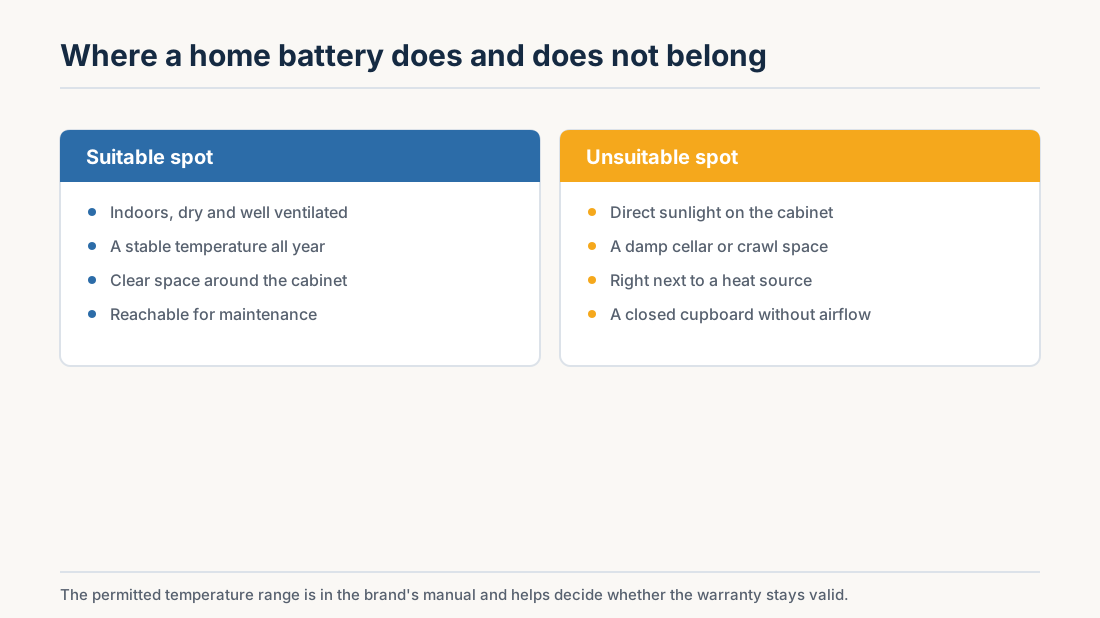
Installers adhere to RGIE regulations to ensure electrical safety. Proper ventilation and temperature control protect lithium batteries from overheating and extend their lifespan.
A home battery offers significant control over your energy consumption by storing solar power and reducing dependency on the grid. Key factors to consider include choosing the right capacity, selecting an appropriate system type, and working with a trusted installer. Start by analyzing your actual consumption and request multiple quotes through Soleva to find the best match for your home’s needs and budget.
Frequently Asked Questions
What is the price of a home battery Liège for a small household?
A small home battery system with 4 to 6 kWh capacity in Liège generally costs between €4,400 and €6,000 incl. VAT. This size suits households with limited electricity consumption and a compact solar installation. The final cost varies depending on the inverter type, complexity of installation, and whether your electrical panel requires upgrading.
Is a home battery Liège useful without solar panels?
Yes, a home battery system can function without solar panels by storing electricity during low-tariff periods from the grid and using it when prices are higher. While this setup offers some savings through smart energy management and tariff optimization, the financial benefits are greater when combined with solar generation.
What is the price difference between 1 phase and 3 phase home battery systems?
The price for a single-phase system tends to be €1,000 to €2,500 less than a three-phase system, depending on capacity. Three-phase connections support higher power demands and are recommended for larger homes or those with heat pumps and electric vehicles. Installation complexity and equipment cost also affect the total investment.
How long does a home battery typically last in Liège?
Lithium home batteries generally last between 10 and 15 years, corresponding to about 4,000 to 6,000 full charge cycles. The actual lifespan depends on how the system is used, ambient temperature, and discharge depth. Systems installed indoors with stable environmental conditions usually maintain better performance for longer.
Can you combine a home battery with an electric vehicle charger?
Integrating a home battery with an electric vehicle (EV) charger is a practical way to maximize solar energy use. The battery stores surplus solar power that can later charge your EV, reducing grid consumption during peak periods. When combined with an energy management system, this setup enables smart charging strategies for improved efficiency and cost savings.
Indicative prices for the Belgian market, checked in August 2026 against energy-village.be, thuisbatterij.be and zen-zonne-energie.be. These are market ranges for an installed system including VAT, not a quotation: your price depends on capacity, brand and the state of your existing installation.
Read also
Ready to cut your energy bill?
Compare quotes for solar panels, home batteries and charging points.