Home battery belgium
home battery subsidy brussels explained
The home battery subsidy Brussels offers indirect financial benefits mainly through green certificates, renovation incentives, and energy loans that lower your investment costs. In Brussels, combining a battery with solar panels increases self-consumption, which improves your financial return by replacing income from grid injection. A typical home battery costs between €4,000 and €15,000 incl. VAT before incentives.
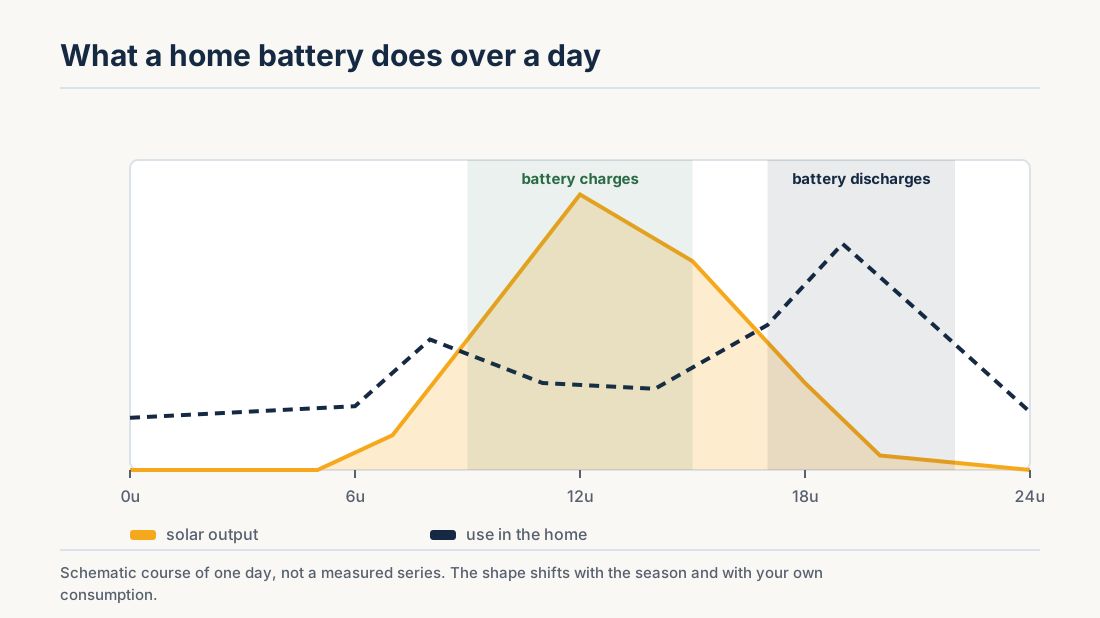
What is the home battery subsidy Brussels and how much can you receive?
The home battery subsidy Brussels does not exist as a direct, fixed grant for private households. Instead, financial support is available through indirect mechanisms such as green certificates, RENOLUTION grants, and various local incentives. These options reduce your overall investment cost rather than providing a one-time cashback.
The main financial supports include:
- Green certificates: These certificates, earned through electricity production, have a value of about €95 each and remain valid for 10 to 15 years.
- Battery bonus: Systems combined with solar panels receive approximately a 20% additional value on green certificates.
- RENOLUTION grant: This grant supports energy renovation, including efficiency improvements related to battery installations.
- Municipal subsidies: Some municipalities contribute a portion of installation costs based on income levels.
Brussels focuses on rewarding energy efficiency and increased self-consumption, not just the battery hardware itself. This means that to benefit most, you should design your energy system strategically rather than solely searching for subsidies.
How do green certificates improve your financial return?
Green certificates generate ongoing income based on solar electricity production. When combined with a battery, more of the produced energy is consumed on-site, enhancing your financial return compared to installing solar panels alone.
Are direct grants available for home batteries in Brussels?
No direct, fixed subsidies for residential batteries exist in Brussels. Support comes through broader energy programs and financing options, unlike earlier direct premiums seen in other regions.
Who qualifies for the home battery subsidy Brussels?
Eligibility depends on the type of incentive, your property, and installation specifics. You qualify when your project fits the criteria for energy renovation or renewable energy production frameworks.
Eligibility requirements include:
- Location: The property must be located in the Brussels-Capital Region.
- Ownership or occupancy: Both owners and tenants may qualify depending on the incentive.
- Certified installation: Installations must comply with electrical regulations and pass inspections.
- Solar integration: Many benefits require the system to be combined with solar panels.
For guidance on combining systems, reviewing solar panel systems can help you align your battery capacity effectively with your production.
Is a digital meter necessary?
Yes, a digital meter is necessary to enhance battery performance and ensure accurate billing. It tracks consumption and injection accurately, which directly affects your financial benefits.
Is planning permission required for battery storage installations?
Most residential batteries installed indoors or integrated with existing systems do not require planning permission. However, local rules apply for visible outdoor installations, which may require permits.
What is the expected price after applying the home battery subsidy Brussels incentives?
The final price after incentives depends on how you combine various supports. Before incentives, a home battery typically costs between €4,000 and €15,000 incl. VAT.
Estimated price scenarios include:
- Without incentives: €4,000 - €15,000 incl. VAT.
- With green certificate benefits: Long-term certificate income reduces overall payback time.
- With RENOLUTION support: Partial cost reduction depending on income and eligibility.
- With green loans: Financing options lower the initial financial burden.
Typical cost breakdown for a 10 kWh home battery system
- Battery unit (10 kWh): €6,000 incl. VAT
- Hybrid inverter: €1,200 incl. VAT
- Installation and inspection: €800 incl. VAT
- Electrical upgrades: €500 incl. VAT
The total investment amounts to approximately €8,500 incl. VAT. Combining this with solar production revenues and energy savings reduces your effective cost over time.
Can a home battery save you money?
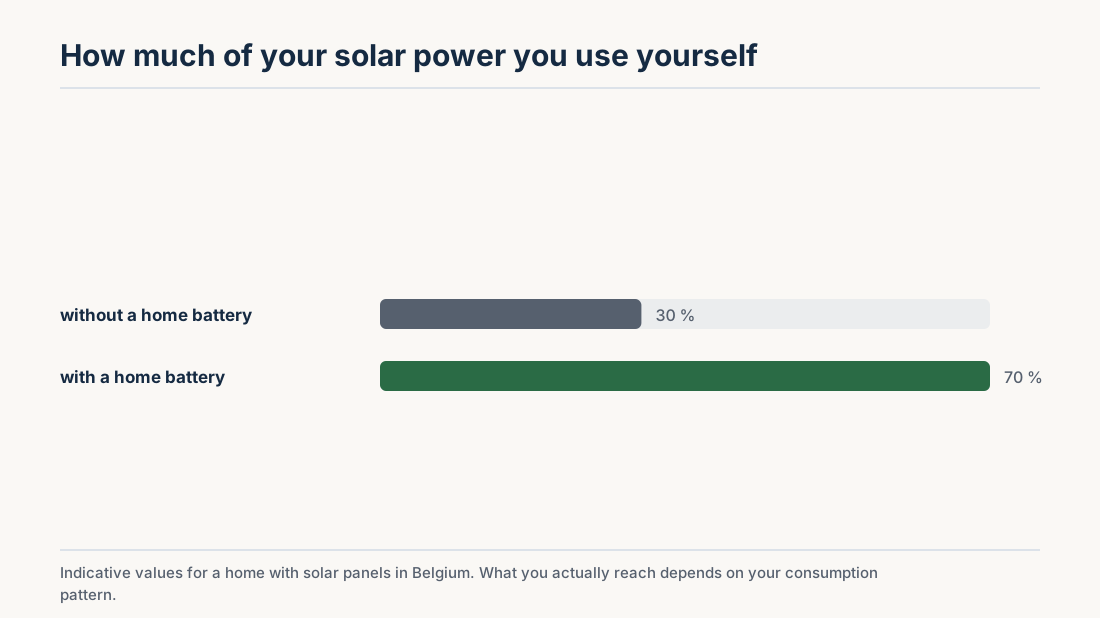
Yes, a home battery saves money when you use at least 60% of the stored energy yourself. Savings grow with higher electricity prices and effective energy management strategies.
How does the home battery subsidy Brussels compare with incentives from other regions?
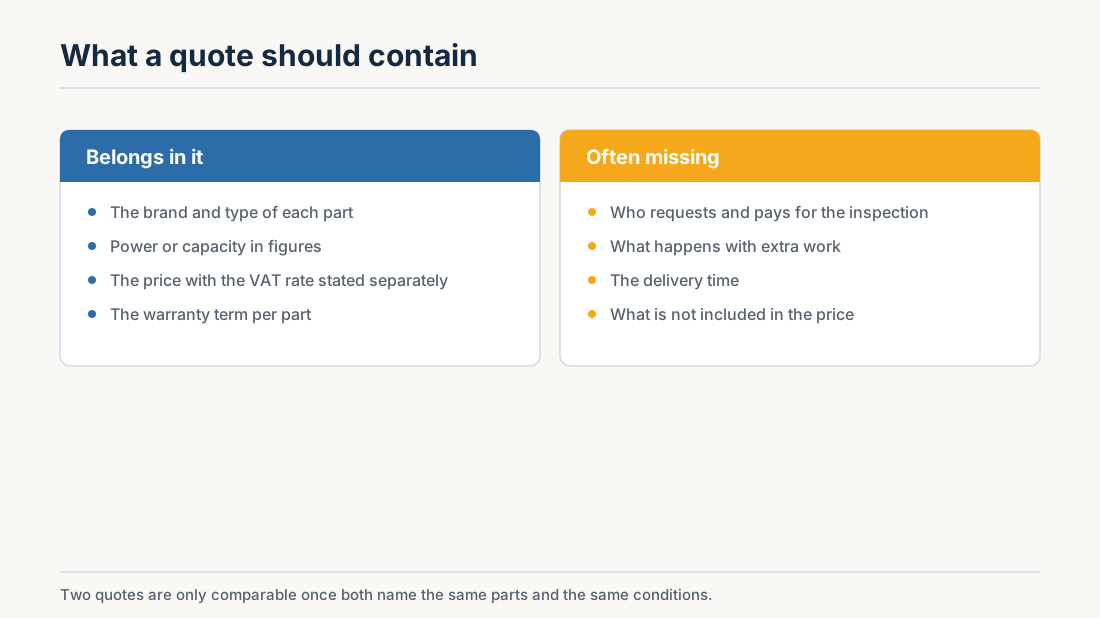
The home battery subsidy Brussels differs by providing indirect support rather than direct financial premiums. This affects how you calculate your possible returns and plan your investment.
Comparison details:
- Brussels: Incentives are mainly through green certificates and renovation grants.
- Other regions: Some offer direct subsidies for residential batteries, though many are phased out.
- Financing tools: Brussels offers low-interest loans up to €25,000 to assist with upfront costs.
What is the 20% rule related to solar panels?
The 20% rule refers to the additional value added to green certificates when you integrate a battery with solar panels, improving the financial benefits of the combined system.
Can multiple incentives be combined?
Yes, RENOLUTION grants, green certificates, and financing tools can be combined to layer your financial benefits. This approach reduces both your upfront expense and payback period.
How should you apply step by step for incentives in Brussels?
The application process requires careful preparation and must be completed in a timely manner. Missing steps may lead to rejection.
Follow these steps:
- Register your project through IRISbox before starting installation.
- Submit all technical details and contractor information accurately.
- Wait for approval, usually within 45 days.
- Complete installation within 12 months of approval.
- Submit all invoices and compliance certificates afterward.
Which documents are needed for the application?
Prepare invoices, technical specifications, electrical inspection reports, and proof of the installation date. Missing documents may delay approval.
Is there a mandatory declaration requirement?
Yes, you must declare your battery within 30 days after commissioning. This declaration ensures compliance with energy regulations and helps grid monitoring.
How can you maintain eligibility and optimize your savings?
Maintaining eligibility requires following operational and regulatory requirements that protect your safety and financial returns.
- Hire certified installers: Electrical standards compliance is obligatory.
- Monitor energy usage: Smart systems enhance self-consumption.
- Keep documentation: Retain all invoices and certificates for verification.
- Maximize solar output: Combining storage with a solar panel installation improves overall system efficiency.
Is it possible to live off-grid in Belgium?
Living fully off-grid is uncommon in Belgium due to limited winter solar production. Most homeowners stay connected to the grid while using battery storage to reduce dependence.
What improves battery performance over time?
A Battery Management System regulates temperature, charge cycles, and safety features. Lithium iron phosphate technology supports up to 6,000 cycles, extending battery lifespan and enhancing performance.
In Brussels, support for home batteries is provided mainly through indirect incentives rather than direct subsidies. Your potential savings depend on how effectively you combine green certificates, renovation grants, and solar production with smart usage strategies. The most significant benefits arise from maximizing self-consumption and layering available financial supports. To proceed, start by assessing your needs and request multiple quotes through Soleva. This approach helps you compare realistic offers and avoid paying more than necessary while benefiting from regional incentives.
Frequently Asked Questions
Is there a real home battery subsidy Brussels for private homes?
No, Brussels does not provide a fixed direct subsidy for residential batteries. Instead, financial support comes via green certificates, renovation grants, and financing options that reduce the overall investment indirectly. Combining these supports with solar panels and high self-consumption improves long-term returns.
What is the price of a home battery after incentives in Brussels?
The final price depends on your system setup and usage. A home battery valued between €4,000 and €15,000 incl. VAT becomes more affordable over time through energy savings and earnings from certificates. The actual reduction varies with your solar output and battery usage efficiency.
How long does approval take for home battery subsidy Brussels applications?
Approval usually takes about 45 days after you submit your application through IRISbox. You must apply before installation starts and finish installation within 12 months after approval. Incomplete documents or missing technical information often cause delays.
What is the price difference between small and large home batteries?
Costs depend on capacity. Smaller batteries (3 - 5 kWh) typically range from €4,000 to €5,000, while larger systems up to 20 kWh cost between €11,500 and €16,000 incl. VAT. Bigger batteries offer greater energy independence but require careful sizing and a higher investment.
Does combining solar panels increase home battery subsidy Brussels benefits?
Yes, using solar panels together with a battery boosts the financial benefits. Green certificates provide income from solar production, and the battery increases self-consumption. This setup reduces electricity drawn from the grid and improves overall investment returns compared to installing each separately.
Indicative prices for the Belgian market, checked in August 2026 against energy-village.be, thuisbatterij.be and zen-zonne-energie.be. These are market ranges for an installed system including VAT, not a quotation: your price depends on capacity, brand and the state of your existing installation.
Read also
Ready to cut your energy bill?
Compare quotes for solar panels, home batteries and charging points.