Home battery belgium
home battery subsidy flanders explained
The home battery subsidy in Flanders ended for new applications after 2024, with only a limited bonus available in 2025 under strict conditions such as requiring a digital meter. As direct subsidies have phased out, financial support now mainly comes from tax deductions and energy-saving measures linked to the capacity tariff.
Homeowners must rely more on savings from self-consumption and carefully consider home battery prices per kWh combined with solar panel integration to make their investment viable. This guide explains the past subsidies, eligibility criteria, pricing details, and how alternative incentives like the ‘My renovation premium’ affect your renovation strategy.
What is the current home battery subsidy situation in Flanders and what support can you still get?
There is no active general subsidy for new home battery installations in Flanders. The previous program offered a premium covering up to 40% of the investment, capped at €1,725, but it ended for batteries installed after March 2023 and was fully discontinued after 2024.
In 2025, a transitional bonus of up to €850 is available under specific conditions, including mandatory installation of a digital meter. No further subsidies are planned for new installations beyond this.
What was the home battery subsidy in Flanders in 2021?
The 2021 subsidy scheme granted €250 per kWh of battery storage capacity with the following conditions:
- €250 per kWh of installed capacity
- Maximum €3,200 per system
- Up to 35% of total investment cost
- One subsidy per grid connection every ten years
This program led to significant adoption, with 73,258 home battery systems registered as of 2024.
Why was the subsidy discontinued?
The Flemish government ended the subsidy because the home battery market matured and funds were redirected to other technologies like heat pumps. The policy focus has shifted from subsidizing purchases toward promoting grid stability and optimizing energy consumption.
This change means homeowners now evaluate battery investments more on usage efficiency than on upfront cost support.
Who qualified for the previous Flemish home battery subsidy and what were the conditions?
Applicants had to meet both technical and administrative criteria to qualify for the subsidy. These requirements remain important for compliance and optimal system performance even without current subsidies.
What technical requirements were mandatory?
Systems needed to include:
- A digital meter capable of bidirectional measurement
- An inverter limited to a maximum of 10 kVA power
- No use of lead-acid batteries
- Smart control features limiting grid feed-in to a maximum of 60%
- A two-way communication interface for grid interaction
These specifications aligned battery operation with grid regulations and are still relevant under the capacity tariff framework.
What installation and ownership rules applied?
The battery system had to be installed by a certified installer registered with the network operator. Only private homeowners qualified; companies and commercial installations were excluded. When combining batteries with solar panels, understanding solar system basics helps optimize overall performance.
How much does a home battery cost now that subsidies have ended?
Without subsidies, home battery prices reflect full market costs based on capacity and technology.
Typical price ranges include:
- 3 kWh system at about €4,000 including VAT
- 5 to 6 kWh systems between €5,000 and €7,000 including VAT
- 8 kWh systems from €5,000 up to €8,000 including VAT
Example of a typical home battery installation cost
A standard installation cost might be broken down as follows:
Battery (6 kWh): €6,000 + inverter: €1,200 + installation: €1,500 + electrical upgrades: €400 = approximately €9,100 including VAT.
This example highlights the financial impact of subsidy removal on total project costs.
How does the home battery price per kWh affect your decision?
Battery prices per kWh typically range from €500 to €1,000. Although larger batteries lower the cost per kWh, they require higher total investment. Combining your battery with an appropriately sized solar panel system significantly improves your financial return by maximizing self-consumption. You can use solar panel sizing insights to align production with storage capacity.
How do home battery subsidies compare with other incentives like tax deductions in Flanders?
Although direct subsidies have ended, other financial supports are available depending on your situation.
What is the Increased Investment Deduction?
The Increased Investment Deduction offers companies the ability to deduct up to 15.5% of their investment costs for energy-saving technologies from taxable profits. While mainly aimed at businesses, this impacts the wider market and potentially future pricing.
Are there specific subsidies for certain sectors?
Some regional support programs include:
- EP+ subsidy providing up to 30% support for small and medium-sized enterprises (SMEs)
- VLIF subsidy offering up to 40% for agricultural businesses
- Various municipal incentives that differ by locality
Most private homeowners are not eligible for these programs, which further emphasizes optimizing self-consumption without relying on direct grants.
How can you apply for a home battery subsidy in Flanders today?
Currently, you cannot submit new applications for general home battery subsidies, but understanding the previous process helps you prepare for registration and compliance.
- Install a battery system that complies with technical requirements, using a certified installer
- Register the system with your network operator
- Submit invoices and technical documentation proving installation and specifications
- Provide proof that a digital meter was installed and commissioned
- Await approval depending on the budget and application order (note: this step is no longer applicable for new subsidies)
Even without subsidies, registration and documentation remain important for grid integration and insurance purposes.
What documents were required for previous applications?
Typical documents included purchase invoices, technical specifications, installation certificates, and compliance confirmations with grid regulations.
How do you maintain eligibility and maximize savings without subsidies?
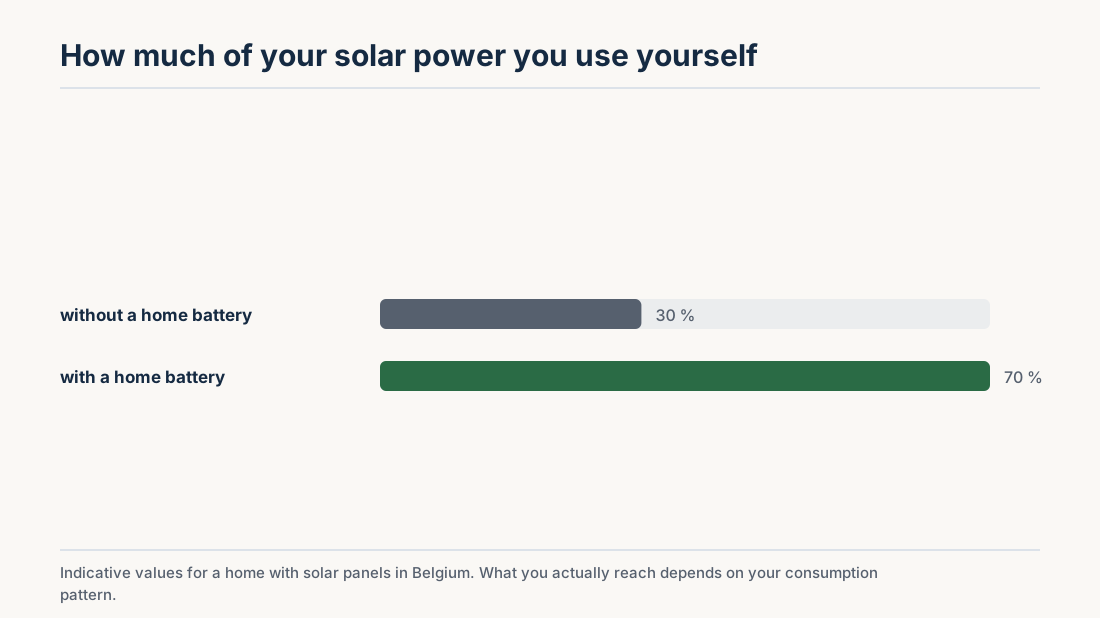
Maximizing savings currently depends more on your energy consumption patterns and system optimization than on direct financial support.
How does the capacity tariff influence your savings?
The capacity tariff in Flanders charges between €56 and €87 per kW of peak electricity usage per year. A home battery reduces these peaks by storing energy during low demand and releasing it during high demand, which can reduce annual grid costs by approximately €150 to €300 depending on your usage behavior.
What is the role of digital meters in improving returns?
As of 2025, about 66% of homes in Flanders will have digital meters that measure energy injection and consumption separately. Because you are compensated less for energy injected into the grid than what you pay for consumption, storing your own energy with a battery increases its value.
How does home battery investment fit into broader renovation strategies?
Batteries perform best when part of a comprehensive renovation plan. Incentive programs like the ‘My renovation premium’ primarily support insulation, windows, and solar panels instead of home batteries. A renovation cost calculator for Belgium can help you evaluate the combined benefits of upgrading insulation, installing solar panels, and adding storage. Often, a battery installation becomes a final step to optimize energy use rather than an initial focus of renovation.
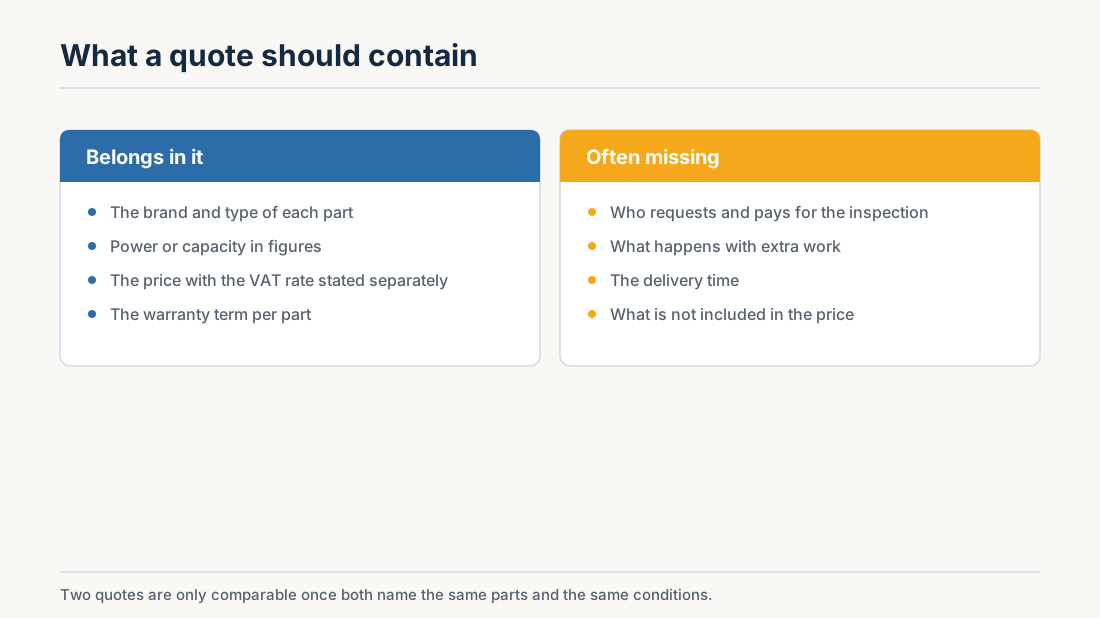
Direct subsidies for residential home batteries in Flanders have ended, shifting the focus to energy efficiency and savings through smart usage. A battery is worthwhile when your solar production exceeds your immediate needs and when you aim to reduce peak electricity consumption subject to the capacity tariff. To make an informed decision, start by analyzing your energy consumption and solar production patterns, then compare system sizes and financial returns realistically. Using services like Soleva, you can request multiple quotes to find the best solution before committing to installation.
Frequently Asked Questions
Is there still a home battery subsidy in Flanders available today?
Currently, no general home battery subsidy exists for new installations in Flanders. The previous subsidy ended after 2024, with only a limited 2025 bonus available under strict conditions. Financial advantages now mainly come from energy savings, improved self-consumption, and indirect incentives rather than direct subsidies.
What is the typical price of a home battery in Flanders without subsidy support?
Prices vary based on battery capacity, technology, and installation complexity. Most homeowners pay between €5,000 and €9,000 including VAT for a complete home battery system. Larger systems reduce cost per kWh but entail a higher total investment. Integrating batteries with solar panels increases financial benefits significantly.
Does the ‘My renovation premium’ program include support for home batteries?
The ‘My renovation premium’ does not cover standalone home batteries. It focuses on improving insulation, windows, and renewable energy production such as solar panels. Nevertheless, combining these energy-saving upgrades with a battery enhances overall efficiency and reduces reliance on the grid, improving long-term savings.
What is the typical payback period without a home battery subsidy in Flanders?
The payback period usually ranges from 8 to 14 years, depending on your energy prices, consumption patterns, and system size. High rates of self-consumption and effective energy management can shorten this timeframe. Without subsidies, optimizing your usage becomes more critical than selecting the cheapest battery.
How does the cost of storing energy with a battery compare to feeding electricity into the grid?
The difference in value depends on your energy contract and the rates for feeding electricity back to the grid. Compensation for injected energy is generally lower than the price you pay for electricity consumption. Using a battery to store energy for later use avoids buying electricity at a higher rate, making self-consumption more financially advantageous.
Indicative prices for the Belgian market, checked in August 2026 against energy-village.be, thuisbatterij.be and zen-zonne-energie.be. These are market ranges for an installed system including VAT, not a quotation: your price depends on capacity, brand and the state of your existing installation.
Read also
Ready to cut your energy bill?
Compare quotes for solar panels, home batteries and charging points.