Home battery belgium
Sessy home battery: price and review
Using a Sessy home battery allows you to store surplus solar energy and access it later, reducing your reliance on the electricity grid and lowering your energy bills. This system works seamlessly with existing solar panels and offers capacities of 5 kWh and 10 kWh, suitable for both small and larger households. Starting at approximately €3,550 incl. VAT, the Sessy system is one of the more affordable smart batteries available in Europe.
How does a Sessy home battery function precisely?
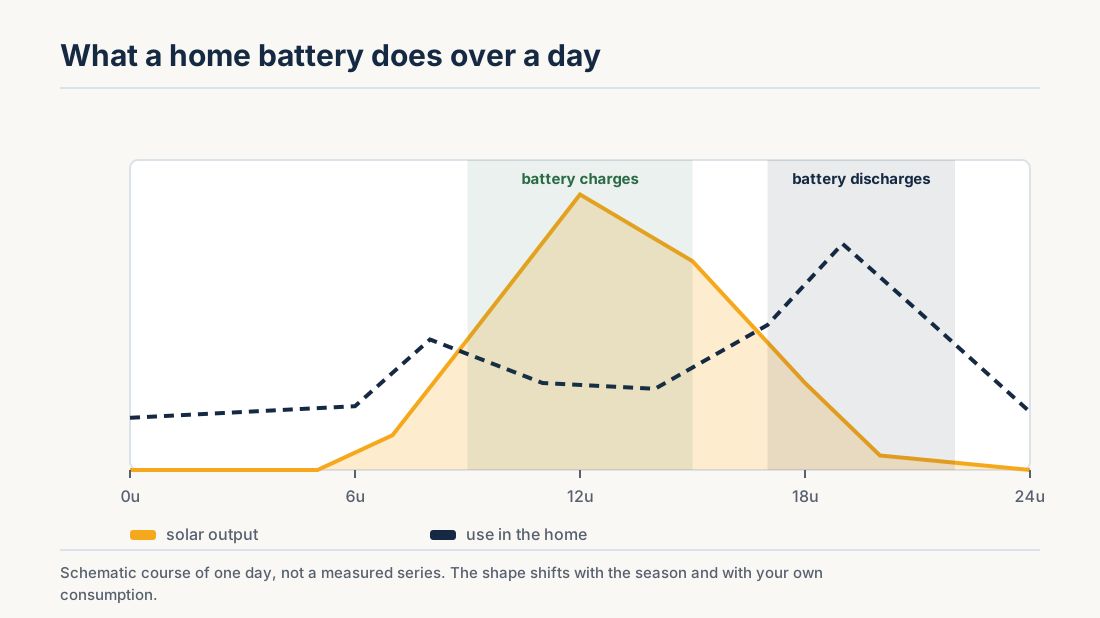
A Sessy home battery utilizes lithium iron phosphate (LiFePO4) cells to store electricity generated by your solar panels and releases it when your household’s energy demand exceeds solar production. It continuously monitors your energy production, consumption, and grid interaction via a smart meter.
The battery charges from surplus solar energy and discharges during high-demand periods, such as evenings, increasing your self-consumption rate from about 30 - 40% to 70 - 85%, thereby lowering your dependency on the grid.
How does smart energy management optimize the battery’s performance?
The built-in software automatically manages charging and discharging based on factors like self-consumption and dynamic electricity tariffs. You can integrate the battery with dynamic energy pricing to charge during cheaper periods and discharge when electricity prices are higher.
How is the Sessy home battery compatible with existing solar installations?
The battery connects between your inverter and electricity meter without needing significant modifications. It supports both single-phase and three-phase electrical systems, ensuring compatibility with most solar setups. For more detailed guidance, consult the home battery operation guides.
Which configurations and technologies does the Sessy system offer?
The Sessy home battery features modular lithium technology that allows flexible capacity expansion. You can begin with a single module and add more as your energy requirements grow.
What capacities can you choose from?
Common configurations include:
- 5 kWh - ideal for smaller households with moderate evening energy use
- 10 kWh - suited for families with higher consumption or heat pumps
- Up to 30 kWh - through modular expansion catering to larger homes
What benefits does LiFePO4 technology provide?
LiFePO4 batteries offer improved thermal stability and a longer service life compared to conventional lithium-ion batteries. They typically support over 6,000 charge cycles, which translates to roughly 10 years of daily operation. For a deeper understanding, see the page on lithium iron phosphate battery systems.
What are the costs associated with a Sessy home battery?
The price of a Sessy home battery starts at around €3,550 incl. VAT for the 5 kWh system. A 10 kWh configuration usually costs approximately €7,100 incl. VAT depending on the setup.
The following price ranges provide a typical overview:
- 5 kWh system - €3,550 incl. VAT
- 10 kWh system - €7,100 incl. VAT
- Expansion up to 20 kWh or 30 kWh increases the overall investment proportionally
Example of a complete installation cost breakdown
A representative setup includes multiple cost components, outlined below.
- 5 kWh battery module - €3,550
- Installation by a certified professional - €400
- Electrical adjustments - €300
- Monitoring and system configuration - €150
This brings the total approximate investment to €4,400 incl. VAT.
For further comparisons with other battery systems, see the home battery price overview and specific pages such as 10 kWh battery pricing.
In which situations does a Sessy home battery offer the most benefits?
The Sessy battery is particularly effective for households equipped with solar panels and significant evening energy demand. It increases your energy independence and helps shield you from electricity price fluctuations.
When can you expect the highest financial return?
- Households with solar panels and substantial evening consumption
- Users of dynamic energy contracts with variable pricing
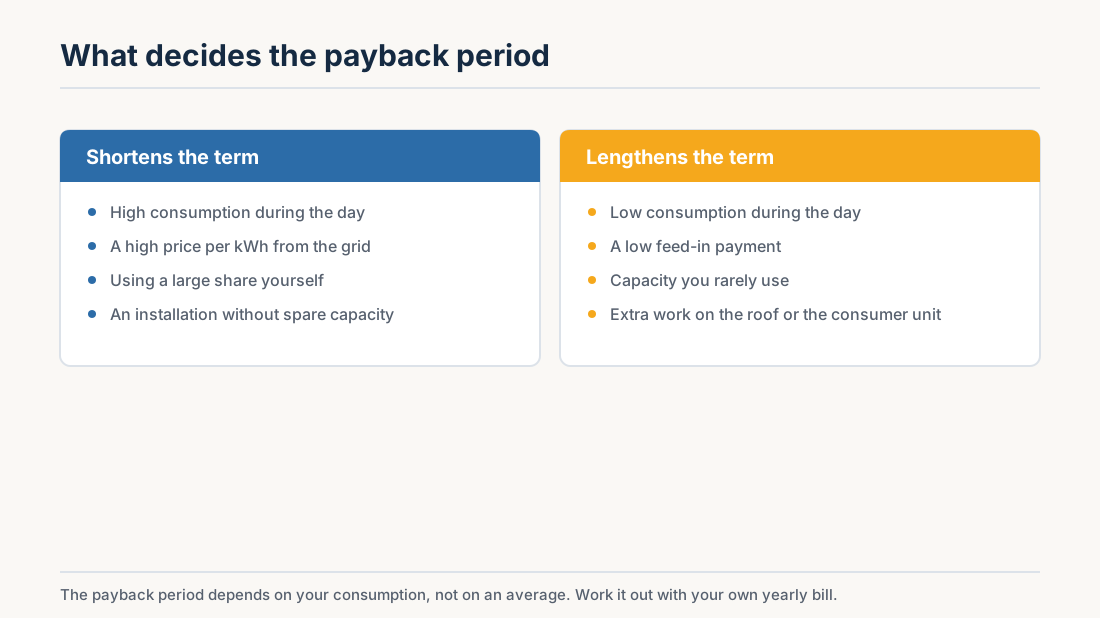
- Scenarios where feed-in tariffs are low compared to electricity purchase prices
How does the battery perform under new energy tariff structures?
Energy tariffs separating import and export prices often result in lower revenues for sold electricity than the cost of purchased electricity. Using a battery to store and consume your own solar energy increases financial returns. More details are available in the battery profitability analysis.
What are the advantages and limitations of the Sessy home battery?
The Sessy system offers benefits such as cost management, modular flexibility, and ease of use. It operates automatically without requiring manual intervention.
Key advantages include the absence of subscription fees, compatibility with all inverter types, and support for modular expansions. Additionally, it integrates with home automation systems through an API.
However, the system has some limitations. Each module delivers limited power output, and optimal savings depend on electricity price differences. Small systems may not fully cover households with very high energy consumption.
How does Sessy compare to alternative products like the Quatt home battery?
The primary distinction between Sessy and alternatives such as the Quatt home battery lies in its modularity and straightforward setup. Sessy emphasizes the ability to scale the system according to your energy needs and ensures compatibility with existing installations.
Key comparison points
- Modularity - Sessy supports expansions up to 30 kWh
- Installation duration - typically completed within 2 to 3 hours
- Software - included without subscription fees
- Compatibility - works with any energy supplier
You can explore broader comparisons through home battery comparison tools.
When should you avoid choosing a Sessy home battery?
You should reconsider selecting a Sessy battery if your energy consumption is low or you do not have solar panels, as the financial benefits will be limited under these circumstances.
Households without solar installations may find more advantage in flexible energy tariffs, as explained in the page on using batteries without solar panels.
Also, if you require high discharge power for heavy appliances, larger or more powerful systems could perform better than the Sessy battery.
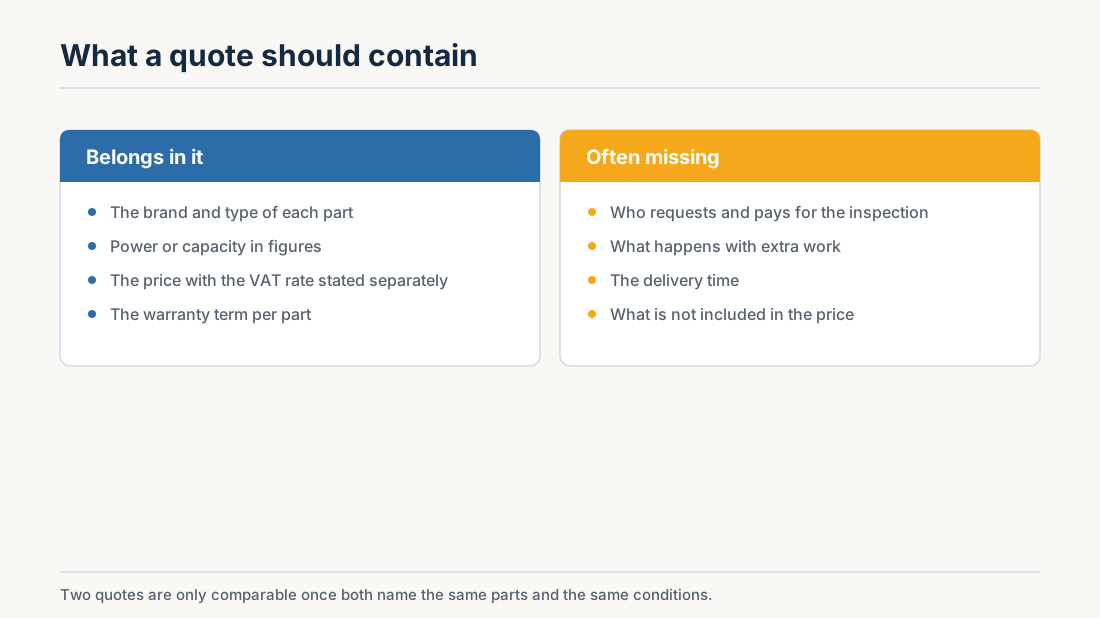
Using a smart battery enhances how you manage your electricity consumption and reduces your reliance on the grid, especially when combined with solar panels. The Sessy home battery distinguishes itself with its modular design, transparent pricing, and lack of subscription charges. To make the best decision, compare different battery systems and request multiple quotes through Soleva to ensure the battery capacity fits your actual energy needs.
Frequently Asked Questions
What is the price of a Sessy home battery including installation?
The price for a Sessy home battery including installation generally ranges from €3,950 to €4,500 for the 5 kWh model. This includes installation costs, necessary electrical adjustments, and system configuration. Larger battery capacities will increase the total price accordingly, depending on your current electrical setup and installation complexity.
How long does a Sessy home battery last?
The Sessy home battery supports more than 6,000 charge cycles, which corresponds to about 10 years of daily use. Its LiFePO4 technology maintains consistent performance over time, causing less degradation compared to older lithium battery types. The actual lifespan may vary depending on how frequently you charge and discharge the battery.
Is it possible to use a Sessy home battery without solar panels?
Yes, you can use a Sessy home battery without solar panels if you have a dynamic energy contract. The battery will charge during hours when electricity is cheaper and discharge during peak pricing periods, enabling you to benefit from price arbitrage rather than solar self-consumption. This setup suits apartments or homes lacking roof space for solar panels.
What is the cost difference between the 5 kWh and 10 kWh Sessy systems?
The 10 kWh Sessy system costs about €3,550 more than the 5 kWh option. While the 5 kWh system starts around €3,550 incl. VAT, the 10 kWh model typically reaches €7,100 incl. VAT. The higher capacity increases your energy storage potential, which benefits households with larger electricity demands.
Is a Sessy home battery suitable for homes in the Netherlands and Belgium?
Yes, Sessy home batteries suit households in the Netherlands and Belgium well. They are designed to operate effectively with local grid conditions and energy contracts, including support for dynamic tariffs. The system adapts to evolving energy regulations, which emphasize low feed-in tariffs and increased solar self-consumption.
Indicative prices for the Belgian market, checked in August 2026 against energy-village.be, thuisbatterij.be and zen-zonne-energie.be. These are market ranges for an installed system including VAT, not a quotation: your price depends on capacity, brand and the state of your existing installation.
Read also
Ready to cut your energy bill?
Compare quotes for solar panels, home batteries and charging points.