Home battery belgium
compare home batteries | Prices & Best Options
Comparing home batteries involves evaluating capacity, power output, efficiency, and price per kWh to identify the best system for your energy needs. Typical batteries store between 7 and 10 kWh and can raise your solar self-consumption from around 30 - 40% up to 70 - 85%, significantly lowering dependency on the grid.
This comprehensive guide explains how to compare solar batteries effectively, outlines expected price ranges, and helps you select the system best suited for your home and energy goals.
What factors define a reliable home battery comparison?
| Brand | Coupling | Module step | Capacity | Power |
|---|---|---|---|---|
| Tesla Powerwall 3 | AC and DC | 13.5 kWh | 13.5 kWh to 54 kWh | 11.04 kW |
| BYD Battery-Box Premium HVS en HVM | DC | 2.56 kWh / 2.76 kWh | 5.12 kWh to 22.1 kWh | set by the inverter |
| Huawei LUNA2000-5-15-S0 | DC | 5 kWh | 5 kWh to 30 kWh | 5 kW |
| Marstek Venus E 3.0 | AC | 5.12 kWh | 5.12 kWh to 15.36 kWh | 2.5 kW |
| Enphase IQ Battery 5P | AC | 5 kWh | 5 kWh to 70 kWh | 3.84 kW |
| AlphaESS SMILE5 | AC and DC | 2.9 kWh / 5.7 kWh / 10.1 kWh / 13.3 kWh | 2.9 kWh to 80 kWh | 5 kW |
| Pylontech US5000 | DC | 4.8 kWh | 4.8 kWh to 72.96 kWh | set by the inverter |
The figures come from the manufacturers' own specifications, checked in August 2026. These are the same seven brands as on the warranty page, so you can read both tables side by side. Brands whose specification sheet was not publicly available are deliberately left out.
An effective comparison of home batteries centers on usable capacity, power output, efficiency, and price per kWh. These factors determine how long your battery can power household appliances and the overall value you receive from stored energy. Without focusing on these metrics, comparison results can be misleading.
Below are the key attributes to examine closely.
- Usable capacity in kWh indicates how long your energy supply lasts
- Power output in kW dictates how many appliances can operate concurrently
- Round-trip efficiency reflects the percentage of stored energy available for use
- Warranty period signals the battery’s expected lifespan and reliability
How does usable capacity influence your choice?
Usable capacity is the actual amount of energy you can draw from the battery. For example, a 10 kWh battery with full depth of discharge allows use of the entire 10 kWh, whereas lower discharge limits reduce usable energy. Most households find that 7 - 10 kWh meets daily needs, while larger homes may require between 10 and 15 kWh for comprehensive overnight coverage.
Why is power output critical in a home battery?
Power output determines the number of appliances that can run simultaneously. A battery with high storage but low power output may struggle to power heavy devices such as air conditioning units. A balanced system ensures sufficient capacity and power output to manage peak demand without limiting household activities.
How do the top 10 solar batteries compare in performance?
Comparisons of the top 10 solar batteries in Australia reveal variation in capacity, efficiency, and warranty terms. These factors profoundly affect day-to-day performance and reliability during power outages.
Key specification ranges include:
- Capacity: from 5 kWh to 15 kWh per unit
- Power output: from 3 kW up to 11 kW or more
- Efficiency: typically between 89% and 97%
- Warranty: lasting from 10 up to 15 years
What insights does a home battery comparison chart provide?
Home battery comparison charts show lithium iron phosphate batteries are prevalent due to their enhanced safety and extended lifespan. These batteries commonly offer over 6,000 charge cycles and retain 70 - 80% of their capacity at end-of-life. This chemistry presents significantly reduced fire risk and improved durability compared to older lithium-ion types.
How does comparing Tesla home batteries affect your decision?
When evaluating Tesla home batteries, buyers often focus on their high power output and the benefit of integrated inverter design. This integration simplifies the installation process and enables full-home backup capabilities. However, the higher initial cost compared to modular systems is an important consideration in your total investment.
What are the typical prices for home battery storage systems?
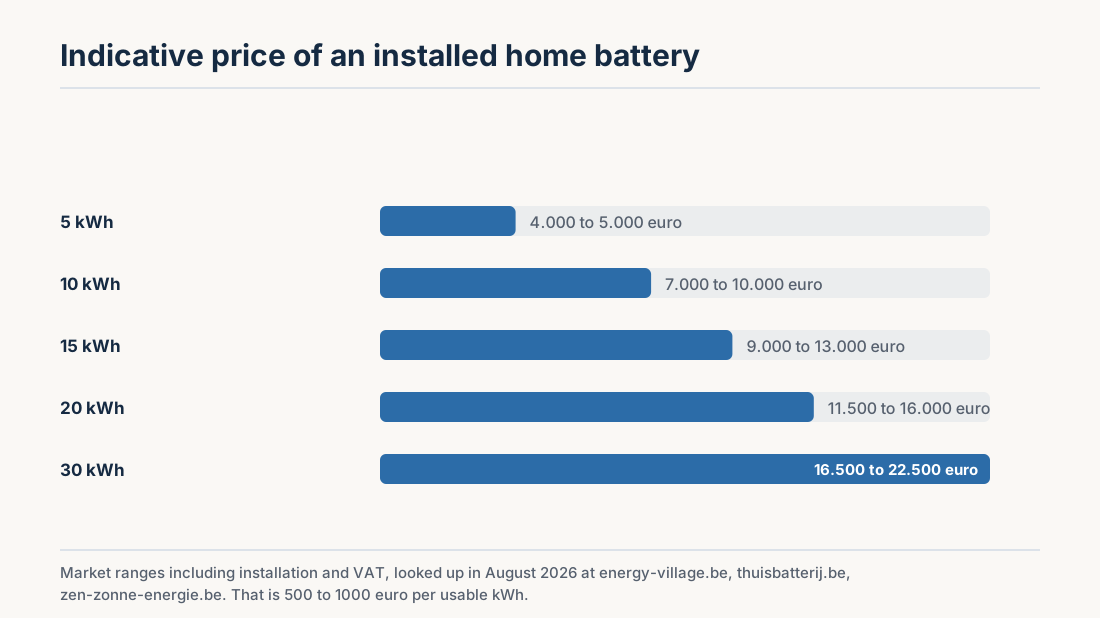
Prices for home battery storage vary between €2,500 and €18,000 incl. VAT, influenced by capacity, system complexity, and installation requirements. Entry-level systems generally start at about 5 kWh capacity, while advanced full-home systems exceed 15 kWh.
Typical price ranges include:
- 5 kWh system: €4,000 - €5,000 incl. VAT
- 10 kWh system: €7,000 - €10,000 incl. VAT
- 15 kWh system: €9,000 - €13,000 incl. VAT
What does a typical installation cost breakdown look like?
A representative 10 kWh lithium home battery installation includes the following costs:
- Battery unit: €5,500
- Hybrid inverter: €1,200
- Installation labour and materials: €1,500
- Electrical upgrades: €400
The total investment is approximately €8,600 incl. VAT.
Why do home battery prices vary?
Price differences arise from the type of inverter used, complexity of installation, and system scalability. AC-coupled systems often have higher upfront costs but offer easier retrofitting capabilities. DC-coupled systems minimize energy losses but require compatible inverters, influencing overall pricing.
Which key factors influence home battery price differences?
The cost of home batteries depends on five main factors, all of which impact performance and long-term investment value.
- Battery chemistry and expected lifespan
- Capacity size measured in kWh
- Maximum power output capability
- Complexity and requirements of installation
- System scalability and expansion options
How does battery chemistry affect overall value?
LiFePO4 batteries generally offer longer lifespans and enhanced safety compared to NMC batteries. Their reduced degradation rates have made this chemistry popular in modern home battery systems. The greater lifespan leads to fewer replacements and improved long-term cost efficiency.
Why does scalability impact pricing?
Systems designed for modular expansion permit adding battery units as energy needs grow. This flexibility raises upfront costs but lowers expenses for future upgrades, making them suitable for households planning increased energy consumption.
In what way should you compare solar batteries for your home?
Effective comparison requires matching battery specifications to your specific energy consumption and solar energy production. Doing so helps you avoid overspending on unneeded capacity or undersizing your system.
Consider these practical steps:
- Calculate your average daily energy consumption
- Determine how long you want backup power to last
- Choose a capacity that aligns with your usage needs
- Ensure compatibility with your existing solar power system
What battery size suits different households?
Small households typically find 5 kWh systems adequate. Average homes benefit from 7 to 10 kWh, while larger families often require between 10 and 15 kWh to cover their energy needs effectively. Proper sizing avoids performance shortfalls and unnecessary costs.
How do solar battery comparisons in Australia relate to other regions?
While technical specifications such as capacity, efficiency, and power output remain consistent globally, regional differences in electricity tariffs and feed-in policies influence battery adoption and payback periods. Australian comparisons therefore provide useful insights for other markets with adjusted financial considerations.
What advantages and disadvantages do home battery systems offer?
Home batteries offer increased energy independence and the potential to lower electricity bills, though they require a sizable investment upfront. The balance between benefits and cost depends on your personal usage patterns and local electricity rates.
Advantages include higher solar self-consumption and backup power during grid outages. Drawbacks comprise the initial cost and gradual degradation in storage capacity over time.
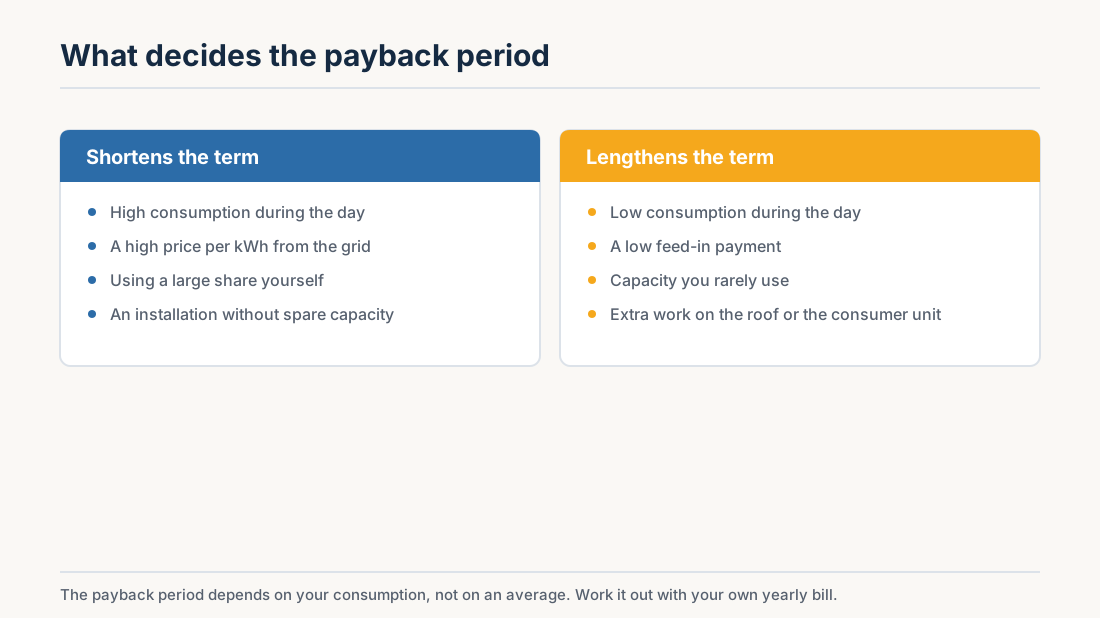
Under what conditions is a home battery worthwhile?
Installing a battery system is most valuable when electricity prices are high and compensation for excess energy sent back to the grid is low. In such cases, storing solar energy for later use becomes more economical than exporting it. Homeowners with solar panels stand to gain the most.
When might a home battery be an unsuitable choice?
Batteries are less beneficial if your energy consumption is low or when grid feed-in tariffs remain generous. These situations extend the payback period and decrease the financial appeal of installing storage.
How does using a home battery compare with relying on solar panels alone?
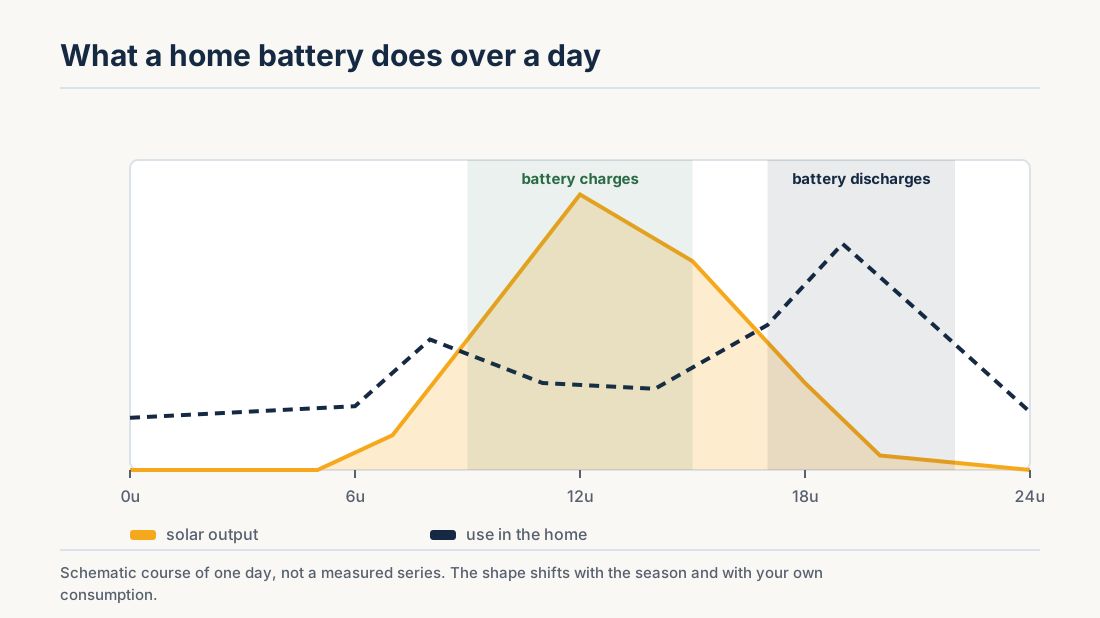
A home battery enhances solar panel systems by storing surplus energy for use during periods without sunlight, while panels without storage simply feed excess electricity back to the grid. This storage capability increases self-consumption and reduces grid reliance.
For more details on solar system basics, see solar panel systems explained.
What are the changes in daily energy use with a battery?
With a battery, you can use stored solar energy throughout the night instead of purchasing electricity from the grid. This reduces dependence on external power sources and helps stabilize your energy expenses.
What savings can you expect long-term?
Batteries can shorten system payback times when electricity prices climb. They also provide protection against fluctuations in tariffs and peak pricing periods, contributing to increased financial stability over time.
Selecting the right home battery system depends on your energy consumption levels, backup power needs, and budget. Capacity and power output determine daily functionality, while the price per kWh impacts overall value. To make a well-informed decision, compare several offers and focus on verified specifications rather than marketing messages. Using Soleva, you can request tailored quotes and find solutions that fit your home accurately.
Frequently Asked Questions
How do I compare home batteries effectively?
To compare home batteries effectively, analyze their usable capacity, power output, efficiency, and price per kWh. Understanding how long a battery can power your devices and how quickly it can supply energy helps you avoid choosing systems that don’t meet your needs.
What is the price difference when you compare home batteries?
The price varies significantly depending on battery capacity and system design. Smaller batteries cost a few thousand euros, while larger, high-performance systems can reach tens of thousands of euros. Higher prices often correspond with longer warranties and better specifications, enhancing overall value.
How much capacity do I need when I compare solar batteries?
Most households require between 7 and 10 kWh of battery capacity for daily energy needs. Smaller homes might find 5 kWh sufficient, and larger households often need 10 to 15 kWh. Your ideal capacity depends on your average energy consumption and backup duration preferences.
Is it better to compare solar battery prices or performance?
Performance should take precedence over price alone. Batteries with low efficiency or limited power output may underperform despite a low cost. Evaluating price per kWh alongside efficiency and lifespan yields a more accurate assessment of long-term savings.
Do home battery storage comparisons in Australia apply in Europe?
Yes, the key technical aspects such as capacity, efficiency, and power output are consistent worldwide. However, regional differences in electricity tariffs and incentives influence the financial benefits and payback times, so costs and savings may vary.
Read also
Ready to cut your energy bill?
Compare quotes for solar panels, home batteries and charging points.