Home battery belgium
cheapest home battery price and options
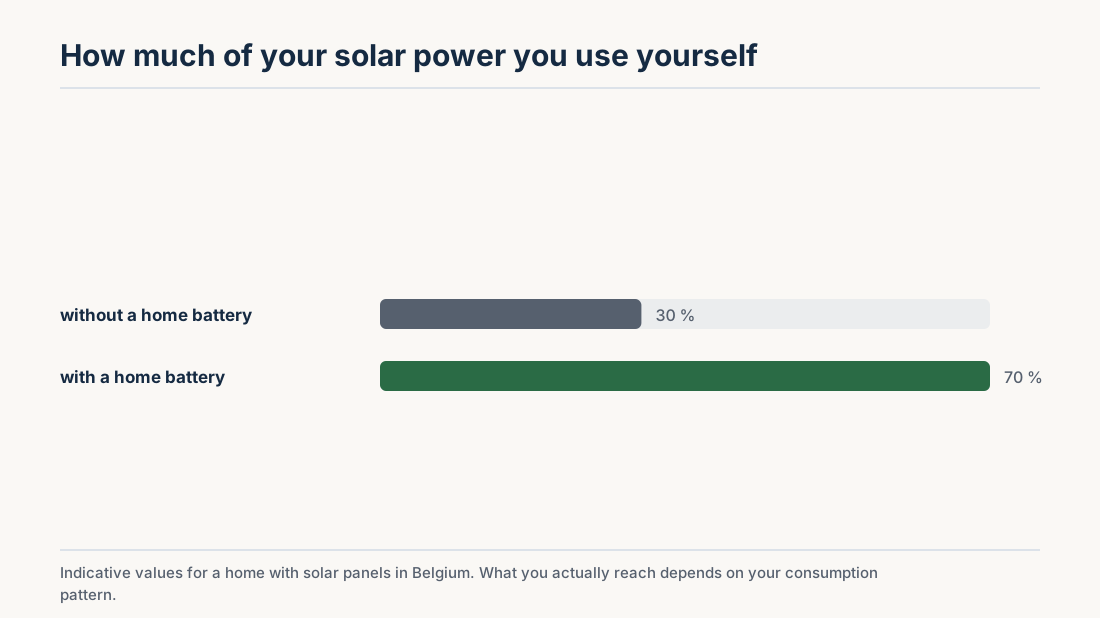
The cheapest home battery currently costs approximately €900 for a 5 kWh system, storing electricity for later use and reducing your reliance on expensive grid power. The overall home battery price primarily depends on capacity and technology like lithium LiFePO4, which provides a long lifespan and stable performance. Using a solar panel battery for your home can boost self-consumption from around 30% to up to 70%, improving your energy efficiency.
What is the price of the cheapest home battery?
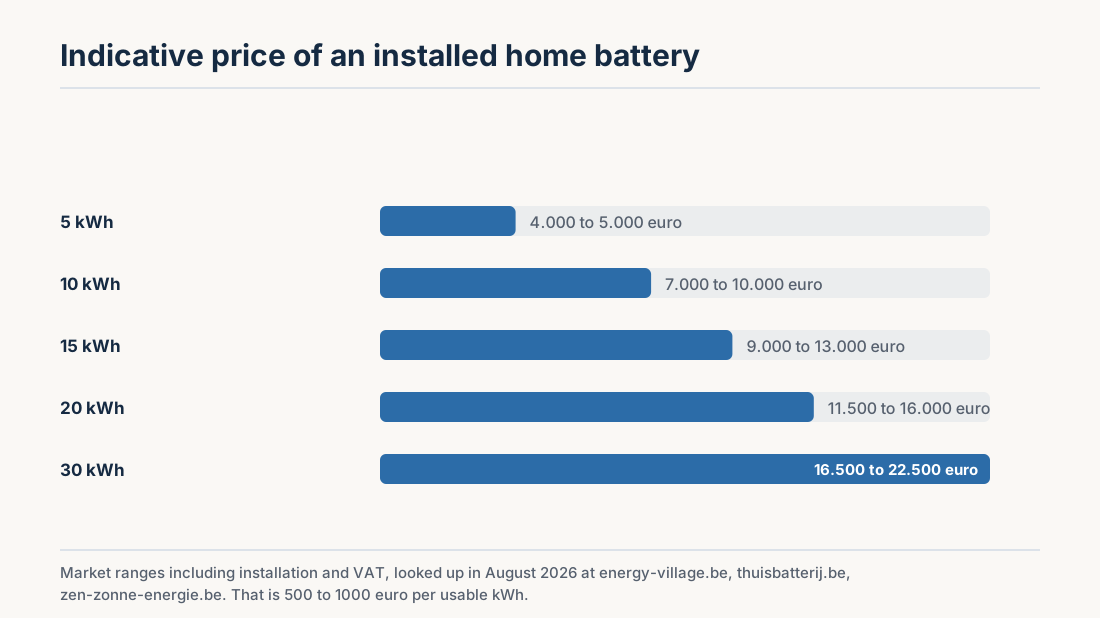
The cheapest home battery starts at about €900 including VAT for an entry-level 5 kWh system. Systems sized between 7 and 10 kWh, suitable for average households, cost between €7,000 and €10,000 including VAT. Larger capacity batteries, from 10 to 20 kWh, can range from €5,000 up to €12,000 depending on configuration and installation complexity.
Below are the most relevant price ranges:
- 5 kWh battery: from €900 including VAT
- 7 - 10 kWh battery: €7,000 - €10,000 including VAT
- 10 - 20 kWh battery: €11,500 - €16,000 including VAT
These prices apply to home battery storage systems using LiFePO4 technology. This battery chemistry supports 6,000 to 8,000 cycles and typically lasts around 15 years. If you already have solar panels, combining them with a home battery improves system efficiency and helps reduce your grid electricity purchases.
Which capacity gives the lowest price per kWh?
Mid-sized batteries, ranging between 7 and 10 kWh, offer the lowest price per kWh. These batteries balance the initial purchase price and the amount of usable energy. Although smaller batteries have a lower total cost, their cost per kWh is higher. Conversely, larger systems require a bigger upfront investment but can offer better value per kWh.
Is a 20 kWh home battery still considered cheap?
A 20 kWh home battery is more expensive in total cost but can offer better value per kWh for large households. It fits well for homes with high energy consumption, electric vehicles, or heat pumps, providing sufficient storage capacity to meet their needs.
Which factors determine the cheapest home battery price?
The price of the cheapest home battery depends mainly on capacity, battery technology, installation complexity, and smart control features. Each of these factors influences the final investment required.
The main price drivers include:
- Capacity measured in kWh - larger capacity increases total price but lowers cost per kWh
- Battery chemistry - LiFePO4 offers improved lifespan and safety compared to cheaper alternatives
- Installation needs - upgrades to inverters or electrical panels add to the cost
- Smart control systems - these features enhance savings but add to the initial price
How does battery technology affect price?
LiFePO4 batteries are currently the dominant technology due to their safety profile and long lifespan. Cheaper battery types tend to degrade faster, which reduces their long-term value. Batteries that last longer offer a lower effective cost per stored kWh over their lifetime.
Does installation increase the total price?
Yes, installation significantly affects the total price. Connecting a battery system to an existing solar panel setup often requires integrating inverters and electrical panels, which adds to labor and component costs. More complex home electrical systems increase these expenses further.
Calculation example: what do you pay for an average home battery?
An average household might install a 10 kWh battery system. The total cost includes several components contributing to the final price.
The breakdown below shows a realistic example:
- Battery unit (10 kWh): €2,000 including VAT
- Hybrid inverter: €1,200 including VAT
- Installation and labor: €1,500 including VAT
- Electrical upgrades: €400 including VAT
- Energy management system: €300 including VAT
The total investment totals approximately €5,400 including VAT. This setup represents a balanced option between price and performance, improving self-consumption and reducing dependence on grid electricity.
How long will a 10 kWh home battery last?
A 10 kWh home battery typically lasts between 10 and 15 years with daily use. Its lifespan is influenced by charging cycles and depth of discharge. LiFePO4 batteries maintain stable performance over thousands of cycles, ensuring reliable operation for many years.
Is a 5 kWh battery enough to run a house?
A 5 kWh battery can support basic household appliances such as lighting, refrigerators, and electronics for several hours. However, it is usually insufficient to power larger appliances like heat pumps or electric vehicle chargers on its own.
How do you save on costs without compromising quality?
You can reduce your home battery cost by selecting the right capacity and avoiding unnecessary upgrades. A smaller system that fits your actual daily consumption often performs more efficiently than an oversized one.
Effective cost-saving strategies include:
- Choosing a battery size that matches your daily energy use
- Selecting modular systems that allow future expansion
- Combining the battery with solar panels for better returns
- Utilizing smart control systems to take advantage of dynamic electricity tariffs
Using smart energy management can increase your savings by more than €500 annually in many households by optimizing charging and discharging times according to electricity prices.
What is a cost-effective home battery usage scheme?
A cost-effective home battery strategy depends on maximizing self-consumption and leveraging dynamic electricity tariffs. Charging the battery during low-price periods and using stored energy during peak times significantly lowers energy expenses.
Is a home battery backup without solar panels worthwhile?
A home battery backup system without solar panels provides limited financial benefits. Most households save less than €100 per year, which usually does not offset the initial purchase and installation costs.
What is included or excluded in a home battery quote?
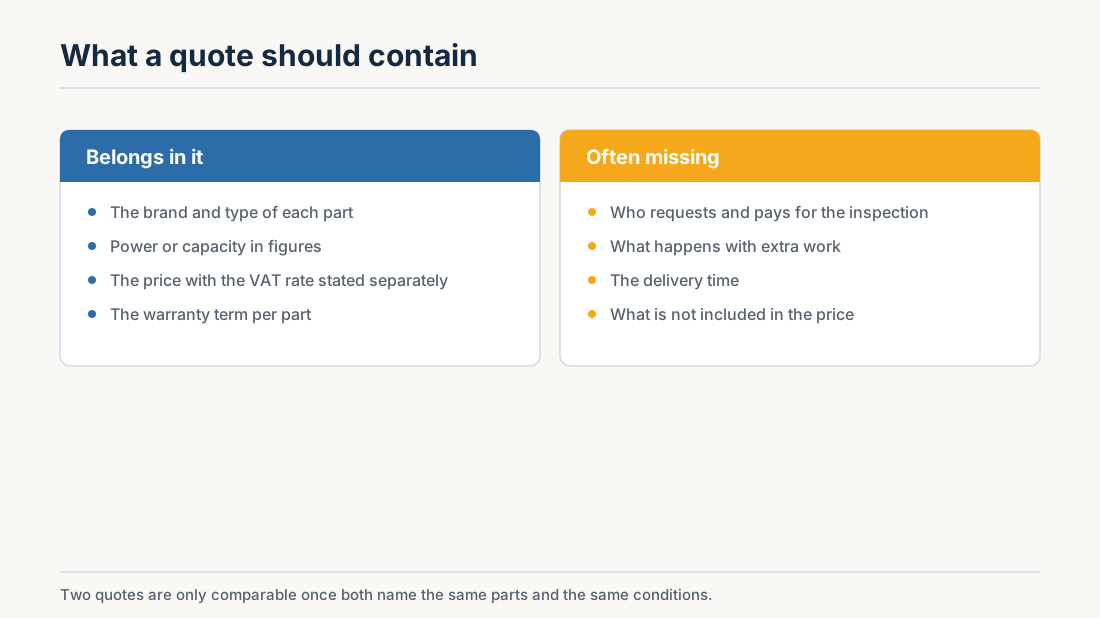
A typical home battery quote usually covers essential components but often excludes additional expenses that affect the overall project cost. Being aware of inclusions and exclusions helps you avoid unexpected charges.
Commonly included and excluded items are:
- Included: battery unit, inverter, basic installation services
- Included: monitoring software and system setup
- Excluded: electrical panel upgrades or replacements
- Excluded: structural modifications or extended cabling work
How long does it take for a 400W solar panel to charge a 100Ah battery?
A 400W solar panel typically charges a 100Ah battery within 4 to 6 hours under ideal sunlight conditions. Actual charging time varies depending on sunlight intensity and overall system efficiency.
What should you check before requesting home battery quotes?
Before requesting quotes, ensure you compare battery capacity, warranty coverage, and compatibility with your existing solar installation. Soleva assists you by enabling requests for multiple quotes, helping you find the most cost-effective and suitable option.
Selecting the right home battery system involves balancing upfront costs with long-term savings. While a small entry-level battery reduces initial expenses, choosing a mid-sized system can boost efficiency and decrease energy bills more rapidly. Focus on matching the battery capacity to your daily energy needs and integrating smart control features for optimal performance. By using Soleva, you can obtain multiple quotes to compare options and secure the most affordable and effective home battery solution.
Frequently Asked Questions
What is the cheapest home battery for solar?
The cheapest home battery for solar energy use is a 5 kWh system priced at around €900, which uses LiFePO4 battery technology. This setup works well for small households with limited evening energy consumption. Connecting it with solar panels improves savings by storing excess energy rather than exporting it to the grid at low rates.
What is the price of a home battery per kWh?
Home battery prices vary from approximately €100 to €600 per kWh depending on system size and installation costs. Smaller batteries have a higher cost per kWh, while mid-sized batteries offer better value. Installation and inverter integration also influence the overall cost per usable kilowatt-hour.
What is the best home battery size for a small house?
A 5 to 7 kWh battery system generally fits the daily energy needs of a small house. This size avoids unnecessary expenses while providing sufficient storage capacity for evening energy use. Such compact systems balance investment and efficiency effectively.
How long does a cheap home battery typically last?
Cheaper home batteries built with LiFePO4 technology usually last between 10 and 15 years. Their lifespan depends on usage patterns and charging cycles. Systems that include smart energy management can maintain better performance over time and experience less degradation than basic models.
Is the cheapest home battery always the best purchase?
The cheapest home battery is not always the best option, as lower prices may come with fewer charge cycles, reduced warranties, and limited smart features. Investing slightly more in a mid-range system often yields higher reliability and stronger long-term savings.
Indicative prices for the Belgian market, checked in August 2026 against energy-village.be, thuisbatterij.be and zen-zonne-energie.be. These are market ranges for an installed system including VAT, not a quotation: your price depends on capacity, brand and the state of your existing installation.
Read also
Ready to cut your energy bill?
Compare quotes for solar panels, home batteries and charging points.