Home battery belgium
home battery payback period belgium explained
The home battery payback period in Belgium ranges between 3.5 and 8 years, influenced by electricity tariffs, self-consumption rates, and battery size. Storing your solar energy instead of injecting it into the grid increases this payback period, as consumption prices average around €0.30 per kWh compared to just €0.05 per kWh for injected energy.
What Defines the Current Home Battery Payback Period in Belgium?
The home battery payback period in Belgium refers to the length of time required to recover your initial investment through electricity savings. Currently, this period is typically between 3.5 and 8 years, due to recent changes in electricity tariffs. Older estimates showed payback times from 8 to 14 years, but new policies have shortened this timeframe effectively.
The primary factor behind this improvement is the change from net metering to separate pricing for electricity injection and consumption. Electricity you consume costs approximately €0.30 per kWh, while the price for injected electricity is about €0.05 per kWh. This significant price difference makes storing energy far more valuable than selling it back to the grid.
How Does the Solar Home Battery Payback Period Compare to Solar Panels Alone?
The payback period for a solar home battery system in Belgium is usually longer than that for solar panels alone; however, batteries enhance the overall system returns. Solar panels typically pay back within 6 to 9 years, while adding a battery can extend or stabilize returns, depending on your usage patterns.
Without a battery, you use only 30% to 40% of the solar energy you generate directly. Adding a battery increases this self-consumption to between 60% and 85%, which substantially raises your savings per kilowatt-hour.
What Is the Payback Period for a Tesla Home Battery in Belgium?
The Tesla home battery payback period in Belgium follows the same principles as other lithium-ion systems. Payback time depends primarily on the battery capacity, which typically ranges from 5 to 10 kWh, and your daily energy usage patterns. While the higher purchase price can lengthen the payback period, smart energy management and dynamic electricity tariffs can shorten it significantly.
Which Key Factors Affect the Payback Period?
Your payback period depends on multiple factors including your energy consumption habits, system size, and the specific tariff structure you are subject to. Below are the main factors that influence your returns.
How Does Increasing Self-Consumption Improve Profitability?
Self-consumption measures how much solar energy you use directly rather than exporting it to the grid at a low tariff. Increasing your self-consumption from 30% to 70% can double the financial benefits of your solar system.
- Using 30% of your solar energy implies heavy dependence on the grid for the rest
- Using 70% maximizes your savings by reducing grid purchases
- Battery storage allows you to shift solar energy use to evening hours
What Is the Impact of the Digital Meter and Tariffs?
The digital meter separately records your consumption and injection, replacing the older reversing meter system. This separation introduces more realistic pricing and affects your savings.
Key tariff components include:
- An injection tariff averaging €0.05 per kWh
- A consumption tariff averaging €0.30 per kWh
- A capacity tariff based on your peak power use
Using a battery helps reduce your peak consumption, which lowers capacity tariff costs and improves your overall financial return.
How Should Battery Size Be Matched to Your Solar Installation?
Battery capacity should align with your solar system size. A common guideline is approximately 1 kWh of battery capacity per 1 kWp of solar panels.
For example:
- A 4 kWp solar installation would pair well with a 4 to 6 kWh battery
- Oversized batteries increase costs but do not always yield proportional savings
Choosing a battery that is too large for your needs decreases profitability because unused capacity incurs additional expense without increasing your savings.
How Do You Calculate the Home Battery Payback Period in Belgium?
The home battery payback period is calculated by dividing the total investment cost by the amount of your annual savings. This calculation must consider your real-world conditions and inputs.
What Information Is Needed for an Accurate Calculation?
To perform an accurate payback calculation, you need:
- The total cost of the system including installation
- Your yearly energy consumption
- The percentage of self-consumption you expect to achieve
- The prices for electricity consumption and injection
Realistic Calculation Example
Consider a 5 kWh battery system with the following costs:
- Battery unit: €4,500
- Inverter: €1,200
- Installation: €1,500
- Electrical adjustments: €400
This results in a total investment of €7,600 including VAT.
Assuming you increase your self-consumed energy by 2,500 kWh annually, and save approximately €0.25 per kWh due to the price difference, your annual savings amount to €625.
The estimated payback period is therefore €7,600 divided by €625, which equals about 12 years. However, with dynamic tariffs and optimized energy management, savings rise and the payback period can decrease to between 6 and 8 years.
How Do Belgian Tariffs and Regulations Influence the Payback Period?
Belgium’s energy policies strongly affect the financial attractiveness of home batteries. The introduction of digital meters has changed the economic framework for self-consumers.
What Effect Does the Injection Tariff Have on Economics?
The injection tariff pays significantly less for electricity you export compared to what you pay for consumption. This large price gap motivates storing electricity locally rather than feeding it back into the grid.
How Does the Capacity Tariff Impact Your Savings?
The capacity tariff charges you based on your peak power usage. Installing a battery smooths out these peaks by supplying stored energy during high-demand moments, reducing your capacity tariff and improving overall savings.
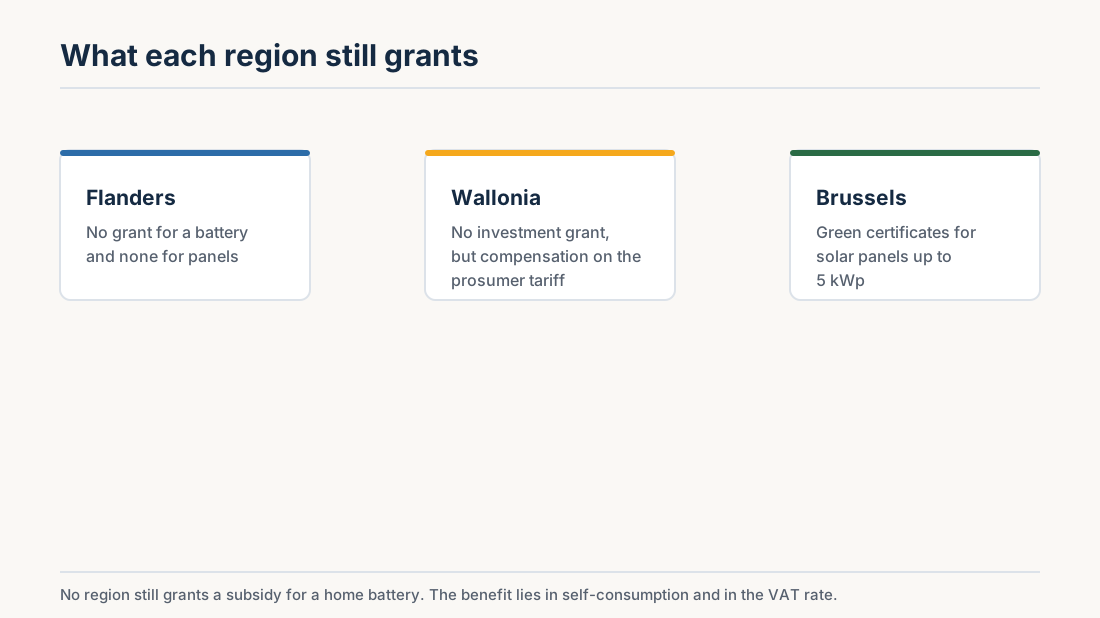
Are There Regional Differences Within Belgium?
Yes, regional policies vary across Belgium.
- In Flanders, digital meters and capacity tariffs dominate the approach.
- Wallonia formerly offered prosumer tariffs.
- Brussels enforces strict injection-based pricing.
Despite these differences, all regions are shifting toward models that emphasize self-consumption.
When Is Investing in a Home Battery a Good or Poor Choice?
Home batteries offer the best financial returns when your electricity usage aligns well with solar generation and when tariffs incentivize self-consumption.
Under What Conditions Does a Battery Achieve the Best Payback Period?
The shortest payback periods occur when:
- Your solar production peaks during daytime hours
- You consume a majority of your electricity in the evening
- You are subject to dynamic or high electricity tariffs
- You use a smart energy management system for optimization
When Might You Consider Not Installing a Battery?
Installing a battery is less advantageous if:
- Your household consumes very little energy
- You do not have solar panels installed
- The difference between injection and consumption prices is small
In such cases, investing initially in solar panels alone typically provides better financial returns than adding a battery. Check the advantages of solar panels for your home before adding storage.
What Is an Honest Assessment of the Home Battery Investment?
If you already have solar panels and a digital meter, installing a home battery is becoming increasingly financially sensible due to evolving tariffs. Without solar panels, however, the investment generally does not pay back effectively.
How Can You Improve Your Home Battery Payback Period?
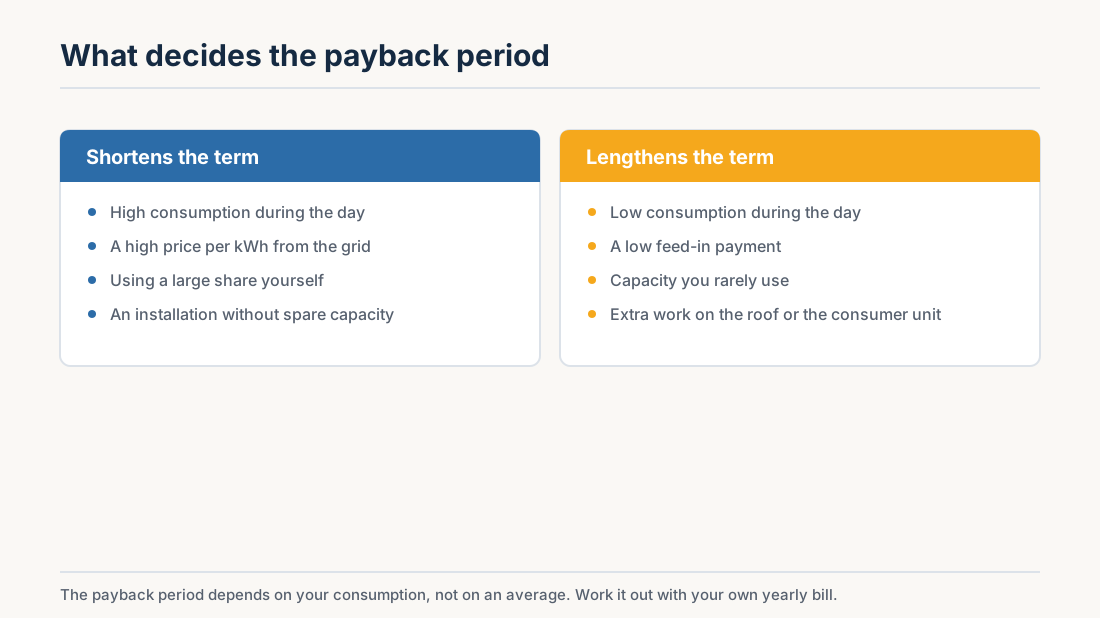
You can shorten your payback period by maximizing your energy savings and avoiding unnecessary costs in the system.
Which Practical Steps Boost Financial Returns?
Consider the following actions to increase your system’s efficiency and savings:
- Operate appliances during peak solar production hours
- Use smart energy management systems that optimize battery charging and discharging
- Charge electric vehicles during daytime when solar power is available
How Does a Smart Battery System Contribute?
A smart battery system adjusts its charging and discharging based on electricity tariffs and your solar output. This optimization maximizes usable solar energy and reduces your dependence on the grid, improving your overall savings.
What Are Home Battery Plug-In Systems?
Home battery plug-in systems offer a lower initial cost but provide limited capacity compared to full home battery installations. They are suitable for smaller households but typically deliver lower savings.
If you want to explore system combinations, see how installing a complete solar energy setup can enhance your overall performance.
Investing in a home battery in Belgium becomes financially worthwhile when you optimize your self-consumption and adapt to current electricity tariffs. The greatest benefits arise from storing energy for your own use instead of selling it at low prices and from reducing peak grid consumption costs. To make an informed decision, begin by analyzing your energy use and solar production and then request multiple quotes via Soleva to compare realistic savings scenarios before proceeding with your investment.
Frequently Asked Questions
How long does a home battery last compared to its payback period?
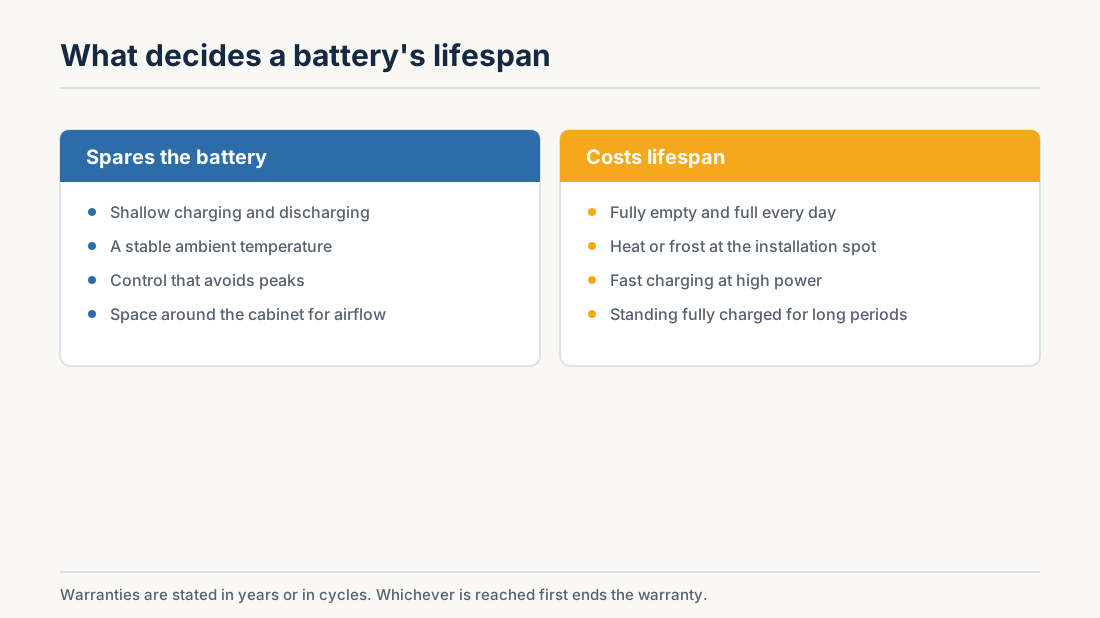
A home battery typically lasts between 10 and 15 years, which outlasts most payback periods in Belgium. This means you can expect several years of net profit after recovering your investment. Battery life depends on factors such as charging cycles, your usage patterns, and temperature conditions inside your home.
What is the price difference between small and large home batteries?
Prices differ mainly due to capacity and the size of the inverter. Smaller systems have lower upfront costs but higher price per kWh stored. Larger systems require more investment but decrease the price per kilowatt-hour over time due to better efficiency.
Can dynamic tariffs reduce the home battery payback period Belgium?
Yes, dynamic electricity tariffs help reduce the payback period by allowing you to charge your battery during low-price periods and use stored energy when prices are higher. This improves your savings per kWh without extra hardware costs.
What impact does battery degradation have on payback calculations?
Battery degradation gradually lowers your storage capacity over time, which slightly reduces your annual savings. Including this effect in calculations provides more accurate financial projections and prevents overly optimistic payback estimates.
Is financing a home battery a good option?
Financing spreads the initial cost over time but increases total expenditure due to interest payments, which extends your payback period. However, it allows you to benefit from immediate savings on energy bills. The decision depends on your available capital and long-term financial planning.
Indicative prices for the Belgian market, checked in August 2026 against energy-village.be, thuisbatterij.be and zen-zonne-energie.be. These are market ranges for an installed system including VAT, not a quotation: your price depends on capacity, brand and the state of your existing installation.
Read also
Ready to cut your energy bill?
Compare quotes for solar panels, home batteries and charging points.