Home battery belgium
Viessmann home battery: price and review
A home battery system stores excess solar energy and uses it when your household demand exceeds production, increasing self-consumption up to 70% or more. The Viessmann home battery model Vitocharge VX3 features a hybrid inverter, a modular battery capacity ranging from 5 to 15 kWh, and smart control via Viessmann One Base.
This guide explains how the Viessmann home battery system works, outlines pricing details, identifies when the system is beneficial, and compares it to alternative solutions.
How does a Viessmann home battery work exactly?
The Viessmann accu stores surplus electricity generated by solar panels and releases it when production drops, such as during the evening. The system includes a hybrid inverter that manages both the solar input and battery storage in one integrated unit.
The energy flow follows a clear cycle: solar panels produce electricity during the day, part of which the household consumes directly. Excess energy flows into the battery for storage. When home demand increases, the stored energy powers your home, reducing grid dependency.
What role does the hybrid inverter play?
The hybrid inverter converts the DC power from solar panels into AC electricity usable in your home and directs any surplus energy to the battery. It also manages discharging the battery during peak demand periods, enhancing efficiency and lowering reliance on the electricity grid.
How does energy management improve performance?
The system utilizes Viessmann One Base and the ViCare app to monitor solar production, consumption, and battery status in real time. This smart control optimizes energy flows for peak shaving and automatic adjustments, which helps you save on energy costs.
You can learn more about general battery principles on how home batteries work.
Which technologies define the Viessmann home battery system?
The Viessmann home battery uses lithium iron phosphate (LiFePO4) cells known for their high thermal stability and long lifespan. This battery chemistry supports between 6,000 and 10,000 charge cycles, maintaining strong performance over time.
The modular design allows you to expand the battery capacity without replacing existing units, making it suitable for both small households and larger energy installations.
What capacities and configurations are available?
Common configurations include:
- 5 kWh capacity for smaller households with limited consumption
- 10 kWh capacity for average families with solar panels
- 15 kWh capacity for high consumption households or those with electric vehicle charging needs
How does system integration work?
The battery system integrates with solar panels, heat pumps, and charging stations using EEBUS communication protocol. This integration allows energy to be allocated efficiently, such as charging an electric vehicle during peak solar production.
What is the price of a Viessmann home battery?
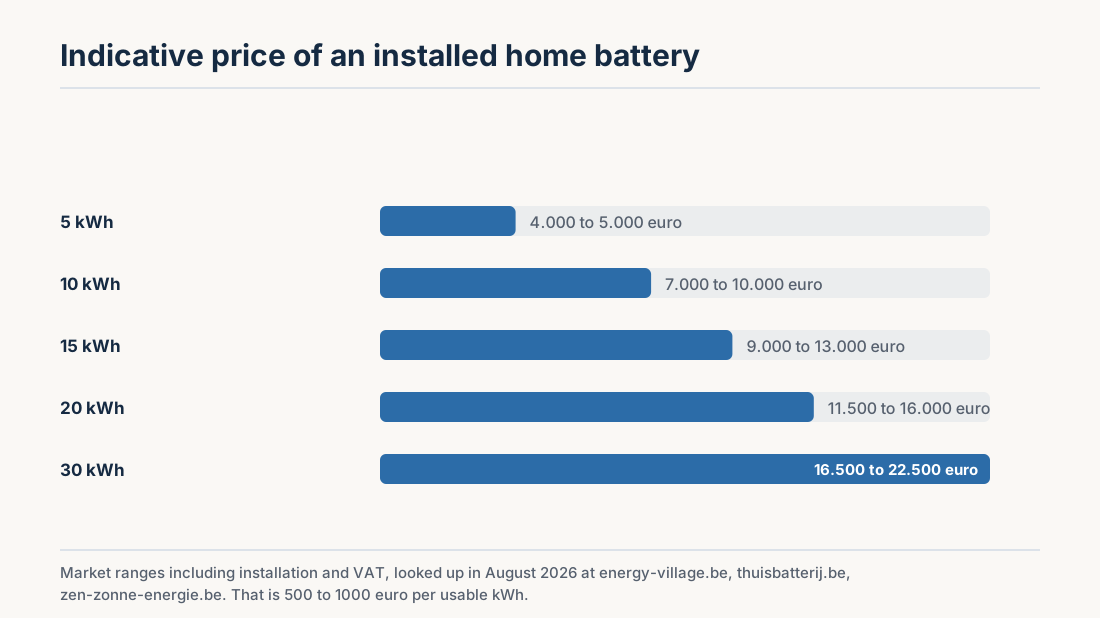
The price of a Viessmann home battery ranges from €4,000 to €11,000 incl. VAT, based on battery capacity and installation complexity.
Typical pricing per configuration is as follows:
- 5 kWh system - €4,000 to €5,000
- 10 kWh system - €7,000 to €10,000
- 15 kWh system - €9,000 to €13,000
Calculation example for a full installation
A typical installation for a family home includes the following components and costs:
- 10 kWh battery unit - €7,000
- Hybrid inverter - €1,200
- Installation and electrical wiring - €1,500
- Electrical upgrades and system configuration - €400
The total investment sums to approximately €10,100 incl. VAT.
For a broader price comparison, you can review the full battery price overview.
When does a Viessmann home battery make the most sense?
This battery system offers the greatest benefit in homes equipped with solar panels and with moderate to high electricity consumption. For example, a household with about 4,000 kWh yearly usage and a 5 - 6 kWp solar system typically benefits from a 5 - 10 kWh battery capacity.
Market trends in Belgium reinforce this, as battery storage leads capacity auctions and approximately one third of new cars sold are electric vehicles, increasing the need for home energy storage.
Which households benefit most?
- Homes with digital meters and no net metering
- Families using electric heating or electric vehicle charging stations
- Users enrolled in dynamic energy tariffs
How does the capacity tariff affect this choice?
The capacity tariff increases the value of peak shaving, as a battery reduces peak electricity consumption and thus lowers grid costs.
What are the advantages and disadvantages of the Viessmann home battery?
Reviews of the Viessmann home battery highlight its strong integration capabilities and high safety standards, balanced against investment costs.
Advantages include the safety provided by LiFePO4 chemistry, scalable modular design, and seamless integration with other energy systems. Additionally, the system supports backup power when equipped with the appropriate emergency module.
Potential drawbacks are the higher upfront investment and the fact that full functionality relies on staying within the Viessmann ecosystem.
Notably, the system maintains stable performance over time, showing minimal degradation, which supports long-term reliability.
How does the Viessmann home battery compare to other battery solutions?
The main distinctions lie in the degree of system integration and modular flexibility. Viessmann focuses on a complete energy ecosystem, connecting heating and electric vehicle charging alongside battery storage.
Key differences include:
- System integration with heating and EV charging
- Modular scalability up to 75 kWh capacity
- Advanced energy management through Viessmann One Base
- Optimal flexibility within the Viessmann ecosystem
For a wider comparison of battery systems, you can visit different battery systems.
If you seek system-wide optimization and integration, Viessmann’s solution is a very good choice. For those desiring a standalone battery installation, other options might provide greater flexibility.
Choosing the right home battery depends on your energy consumption, solar PV setup, and your long-term energy goals. The Viessmann home battery stands out due to its strong system integration, high safety standards, and flexible scalability. Its pricing is competitive for a high-quality lithium battery solution. If you want to increase your self-consumption and prepare for dynamic energy tariffs, this battery system suits your needs. We recommend that you use Soleva to compare options and request multiple quotes before making your final decision.
Frequently Asked Questions
What is the price of a Viessmann home battery in Belgium?
The price typically ranges between €4,000 and €11,000 incl. VAT. The final amount varies based on battery capacity, installation complexity, and any required electrical adjustments. Homes older than 10 years may be eligible for reduced VAT rates, which can improve affordability and shorten the payback time.
How long does a Viessmann home battery last?
The battery lifespan reaches 15 to 20 years under normal usage conditions. Thanks to LiFePO4 cells, the battery retains more than 80% of its capacity after 10 years. This long lifecycle results from the battery chemistry and controlled charging cycles that reduce capacity loss compared to traditional lithium-ion cells.
Is a Viessmann home battery suitable without solar panels?
Yes, the system can charge from the electricity grid, particularly when you have access to dynamic tariffs. However, financial savings increase significantly when combined with solar panels, as the battery stores your own generated energy. Without solar input, economic benefits mainly come from price differences between peak and off-peak electricity rates.
How much capacity do you need for a Viessmann home battery?
The ideal battery capacity depends on your annual electricity consumption and solar panel production. A practical rule of thumb is 1 kWh of battery capacity per 1,000 kWh of yearly consumption. For example, a household using 4,000 kWh annually typically performs well with a 5 kWh battery for a balanced investment and usage.
Does a Viessmann home battery work during power outages?
Yes, when the system is equipped with a dedicated emergency power module, it can provide backup power to essential circuits. This allows critical functions such as lighting, refrigeration, and internet equipment to remain operational during outages, enhancing your home’s energy security.
Indicative prices for the Belgian market, checked in August 2026 against energy-village.be, thuisbatterij.be and zen-zonne-energie.be. These are market ranges for an installed system including VAT, not a quotation: your price depends on capacity, brand and the state of your existing installation.
Read also
Ready to cut your energy bill?
Compare quotes for solar panels, home batteries and charging points.