Solar panels Belgium
watt peak solar panels explained
Understanding watt peak for solar panels means knowing the maximum power output a solar panel generates under standard test conditions, which directly influences the number of panels needed and the energy your system produces. Watt peak (Wp) defines the peak capacity and helps you compare panel sizes and wattages effectively.
What does watt peak mean in a solar panel?
Watt peak (Wp) is the maximum electrical power a solar panel produces under Standard Test Conditions (STC), which include 1000 W/m² sunlight intensity, 25°C cell temperature, and an air mass of 1.5. This rating is the panel’s nameplate capacity and does not represent its daily energy output.
For example, a 400 Wp panel can produce up to 400 watts in ideal laboratory conditions. In real-life situations, however, actual output is lower due to factors such as temperature, shading, and weather variations. In Belgium, a typical system produces around 900 to 1100 kilowatt-hours (kWh) annually per kilowatt peak installed.
How are solar panels rated in watts versus energy?
Solar panels are rated in watts, which describe instantaneous power under ideal conditions, not watts per hour. Energy production is measured in kilowatt-hours (kWh), reflecting the actual electricity generated over time. For instance, a 400 Wp panel receiving 4 hours of strong sunlight can produce around 1.6 kWh.
Does a 400 Wp solar panel always produce 400 watts?
No. A 400 Wp panel reaches 400 watts only under Standard Test Conditions. Actual power output varies between approximately 250 and 350 watts depending on sunlight intensity and temperature at the installation site.
What does a 500 Wp solar panel signify?
A 500 Wp solar panel generates up to 500 watts under ideal laboratory conditions. Higher wattage modules reduce the number of panels required, making them advantageous for roofs with limited space.
How does watt peak relate to actual solar output and efficiency?
Watt peak indicates potential maximum power, whereas efficiency and actual output reflect real energy harvest. Efficiency shows what portion of sunlight converts to electricity, typically ranging between 19% and 23% for modern panels.
Several factors cause the difference between Wp and actual production, including:
- Number of sunlight hours affecting daily generation
- Temperature, which reduces output around 0.3% to 0.5% for each degree Celsius above 25°C
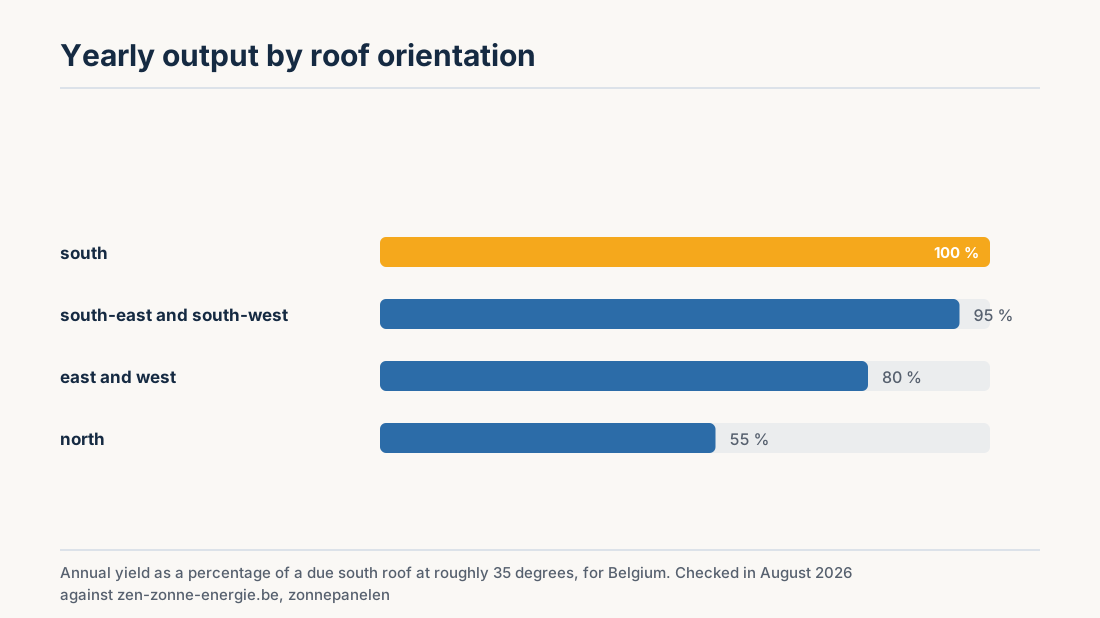
- Orientation and tilt, influencing energy yield by up to 20%
- System losses, such as inverter efficiency and wiring, decreasing output to approximately 75% to 85% of the panel’s rated Wp
What is the difference between Standard Test Conditions and real-world production?
Conditions used for rating panels under STC rarely exist outdoors. For example, a system rated at 4 kWp is unlikely to produce 4 kilowatts of power at any moment. Annual energy generation is more important than instantaneous peak power.
What is the highest wattage available for solar panels?
Residential solar panels generally have watt peak ratings between 400 and 550 Wp. Commercial panels can exceed 600 Wp, providing higher power density per square meter and potentially reducing installation size.
What does a watt peak solar panel system cost?
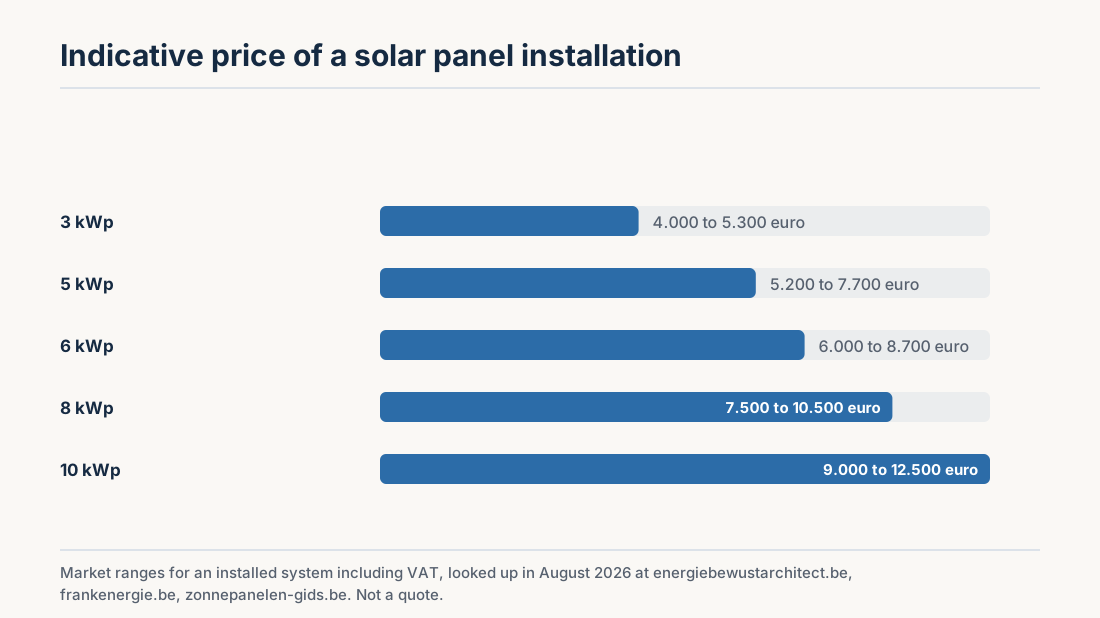
The total price depends on the system size measured in kilowatt peak (kWp). Panels with higher Wp ratings can simplify installation and decrease roof space needed.
Typical price ranges for solar panel systems include:
- 3 kWp system: €4,000 - €5,300 including VAT
- 5 kWp system: €5,200 - €7,700 including VAT
- 10 kWp system: €9,000 - €12,500 including VAT
Example calculation for a typical home installation
A 5 kWp system comprising 10 panels each rated at 500 Wp includes the following costs:
- Panels: 10 × €300 = €3,000
- Inverter: €1,200
- Mounting system: €800
- Installation: €2,500
The total investment sums to approximately €7,500 including VAT. You can explore and compare options on the solar panels overview page.
How should you maintain watt peak solar panel performance?
Watt peak output gradually decreases due to panel degradation and dirt accumulation, losing roughly 0.4% to 0.8% of output each year.
Annual maintenance practices
- Regular visual checks for dirt, shading, or damage
- Cleaning panels when output noticeably drops
- Monitoring inverter performance to ensure system efficiency
Monitoring long-term performance
Performance monitoring systems compare actual output against expected kilowatt-hours. Unexpected declines may reveal faults such as inverter failures or increased shading.
Which roof types and conditions optimize watt peak output?
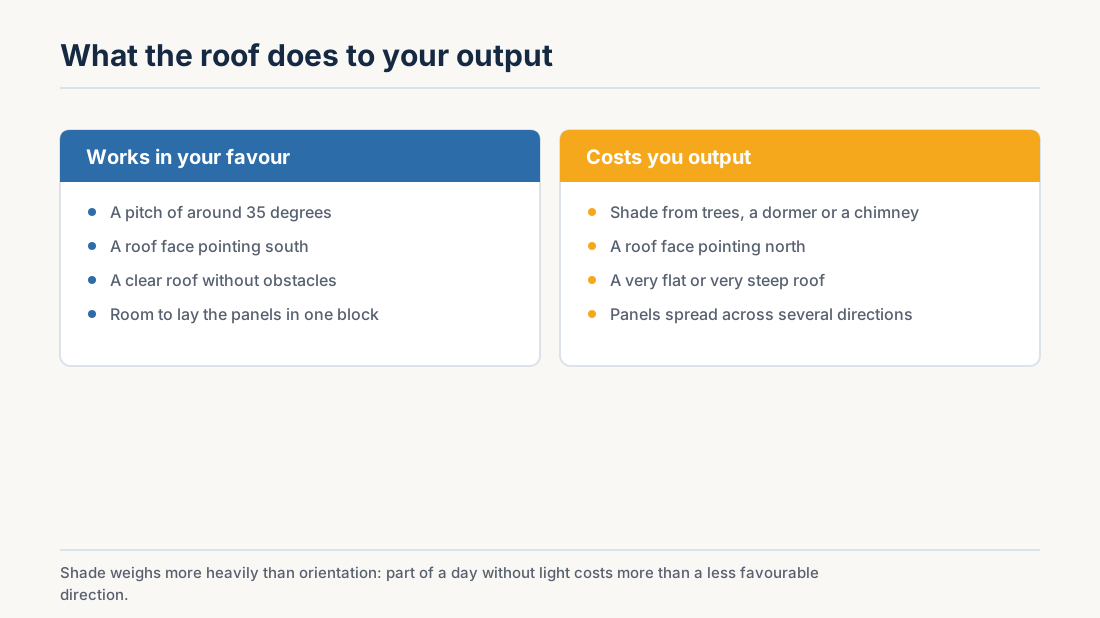
Roofs facing south with a tilt angle around 35 degrees typically maximize energy production. Alternatively, east-west facing panels distribute generation throughout the day, benefiting self-consumption.
Differences between flat and pitched roofs
Flat roofs require mounting systems to achieve optimal tilt, which may incur a 5% to 10% reduction in output. Pitched roofs generally align more naturally with ideal angles, improving performance.
Optimizing limited roof space
Using high watt peak panels of 450 to 500 Wp lowers the number of panels installed. This approach enhances efficiency for small or constrained roof areas.
What factors should you consider when choosing watt peak solar panels?
Select panels based on efficiency, degradation rate, and inverter compatibility to ensure effective system performance.
- Opt for panels rated 400 Wp or higher to conserve space
- Verify the degradation rate is below 0.5% annually
- Ensure the inverter size matches your system’s total capacity
- Check power tolerance specifications, such as 0/+5%
For personalized recommendations, review various options via solar panel solutions and request quotes through Soleva.
Choosing an effective solar energy system depends more on your annual electricity production than only on peak wattage. Watt peak provides a useful basis to compare solar panels, but actual performance is shaped by installation location, panel placement, and system design. Prioritize high-efficiency panels and accurate system sizing to maximize your roof’s potential. Begin by assessing your energy needs and request multiple quotes through Soleva to find the solar solution that fits your home best.
Frequently Asked Questions
What is watt peak solar panels explained in simple terms?
Watt peak describes the maximum power output of a solar panel under controlled laboratory conditions. This rating helps you compare different panels and size your system effectively. However, actual daily output is usually lower due to factors such as weather, temperature, and installation specifics, making annual energy production the key measure for homeowners.
Which is better, a 100W or a 200W solar panel?
A 200W panel produces twice the peak power of a 100W panel under identical conditions, meaning you need fewer panels to generate the same amount of electricity. Higher wattage panels improve space efficiency for home installations, while smaller panels are better suited for portable or off-grid applications with limited power needs.
How do you calculate the wattage of solar panels needed for a home?
To calculate required wattage, divide your annual electricity consumption by the expected energy production per kilowatt peak. For example, a household using 3,500 kWh per year generally needs around 3.5 to 4 kWp installed capacity. Dividing that by the wattage of individual panels, such as 400 Wp, determines how many panels to install.
How can you test the wattage of a solar panel with a multimeter?
You can measure voltage and current separately using a multimeter under strong sunlight, then multiply these values to approximate power output. Note this method provides an estimate and does not replace the official watt peak rating obtained under standardized laboratory conditions.
What is the 120% rule for solar panels?
The 120% rule applies to electrical panel sizing in grid-connected solar systems. It limits the combined rating of solar breakers to not exceed 120% of the main breaker’s capacity, protecting wiring and preventing overload situations within your electrical system.
Indicative prices for the Belgian market, checked in August 2026 against energy-village.be, thuisbatterij.be and zen-zonne-energie.be. These are market ranges for an installed system including VAT, not a quotation: your price depends on capacity, brand and the state of your existing installation.
Read also
Ready to cut your energy bill?
Compare quotes for solar panels, home batteries and charging points.