Solar panels Belgium
solar panel efficiency explained clearly
The efficiency of solar panels indicates the percentage of sunlight your system converts into usable electricity. Modern residential solar panels typically achieve about 20% to 22% efficiency under real-world conditions. Several factors influence this efficiency, including the type of photovoltaic cells, temperature behaviour, and the quality of installation.
What is the efficiency of a solar panel?
Solar panel efficiency refers to the percentage of sunlight that a photovoltaic module converts into electrical energy. For residential systems, efficiency typically ranges between 15% and 22%. For example, a panel with 20% efficiency generates 200 watts of electricity from 1000 W/m² of solar irradiance under Standard Test Conditions (STC).
This efficiency depends on both the solar cell efficiency and the overall panel design. Cell efficiency measures the conversion effectiveness at the semiconductor level, while panel efficiency accounts for factors like spacing, wiring, and frame losses.
How do you calculate solar panel efficiency in watts?
The solar panel efficiency formula calculates efficiency as the ratio of output power to input solar power:
- Efficiency = Pmax / (irradiance × area)
- For example, a 400W panel with an area of 2 m² exposed to 1000 W/m² irradiance would have: 400 W ÷ (1000 W/m² × 2 m²) = 20% efficiency.
This formula uses Watt-peak (Wp), representing the maximum power output at STC.
What do Standard Test Conditions mean?
Standard Test Conditions specify an operating temperature of 25°C, solar irradiance of 1000 W/m², and an Air Mass of 1.5. Because actual roof environments rarely match these parameters, real-world performance usually decreases by 5% to 15% compared to STC ratings.
What are quantum efficiency and fill factor?
Quantum efficiency measures the proportion of photons that generate an electric current inside the solar cell. The fill factor indicates how close a panel operates to its theoretical maximum power output. Silicon cells commonly achieve a fill factor of around 80%.
How does solar panel efficiency compare across different technologies?
Solar panel technologies vary in conversion efficiency, durability, and cost. Below are typical efficiency ranges for common types:
- Monocrystalline panels achieve 20% to 22% efficiency. They offer high performance and efficient use of space.
- Polycrystalline panels typically reach 15% to 17% efficiency. They are generally more affordable but less common.
- Thin film panels provide 10% to 13% efficiency. These are flexible but degrade faster over time.
- TOPCon panels improve voltage and durability, reaching 22% to 24% efficiency.
- Heterojunction Technology (HJT) panels feature the lowest degradation rates with efficiency between 23% and 25%.
Monocrystalline panels remain the most popular choice for households, balancing cost and performance. Explore solar panel solutions tailored to various roof types and needs.
Which solar panels currently offer the highest efficiency?
The highest commercially available solar panels have efficiencies approaching 25%. While laboratory multi-junction cells have reached as high as 47.6% efficiency under concentrated light, they are not practical for residential installations.
Are solar panel efficiencies improving over time?
Yes, solar panel efficiency has improved from about 15% to over 24% in recent years. Advances like back-contact cells, passivation layers, and higher silicon purity contribute to this progress. Future tandem cells combining silicon and perovskite materials aim to surpass 27% efficiency.
Which factors influence solar panel efficiency in real conditions?
Various external and technical factors reduce panel performance compared to laboratory conditions. Understanding these factors shows why system design is as important as panel efficiency ratings.
- Solar irradiance: Higher sunlight intensity increases electrical output directly.
- Temperature: Rising temperatures decrease panel voltage and efficiency.
- Shading: Even partial shading can reduce output by more than half.
- Dust and dirt: Surface contamination lowers light absorption and reduces performance.
- Orientation and tilt: South-facing installations with optimal tilt angles provide higher energy yields.
How does temperature affect solar panel efficiency?
Solar panel efficiency declines as temperature rises. Typically, efficiency decreases by about 0.38% for each degree Celsius above 25°C. On hot roofs, output can fall by 8% to 15%.
In what ways do shading and dirt impact solar output?
Dust and dirt block sunlight, reducing the panel’s maximum power point. Shading causes current mismatches in series-connected panels, significantly lowering total system output. Regular cleaning and the use of optimizers can help maintain performance.
How much energy can you expect per year based on efficiency?
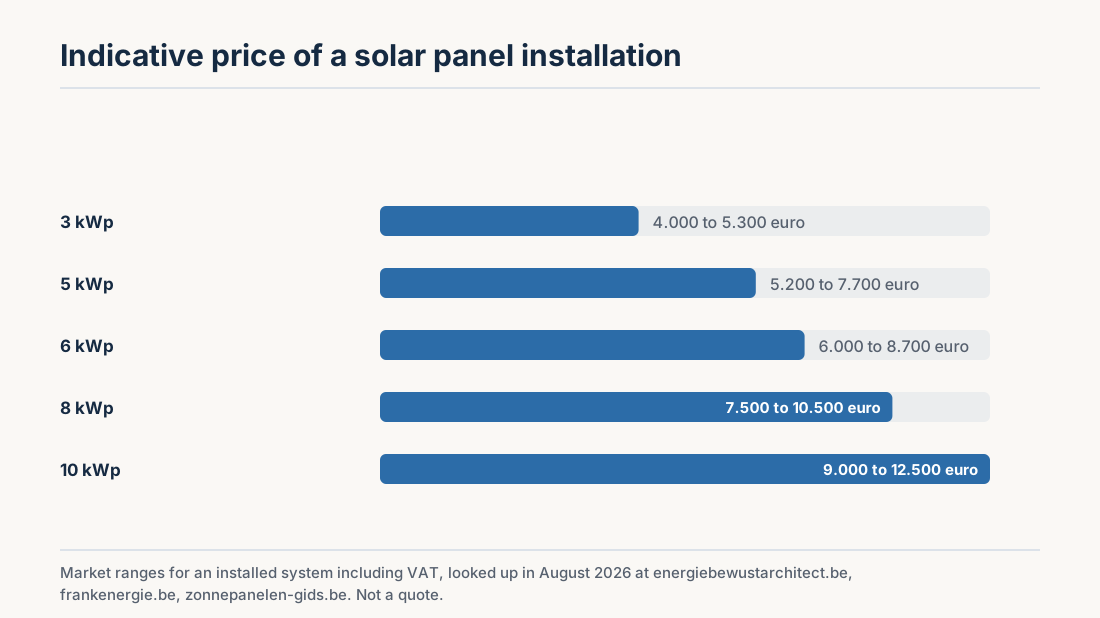
Solar panel efficiency directly impacts the annual energy yield. For instance, systems in Flanders typically produce between 900 and 1100 kWh for every kilowatt peak (kWp) installed.
Can you provide an example calculation for annual energy output?
A simple estimation using a solar panel efficiency calculator considers system size and local sunlight levels.
- System size: 5 kWp
- Annual yield: 1000 kWh per kWp
- Total expected output: 5 × 1000 = 5000 kWh per year
This production can cover a significant share of household electricity consumption. For tailored system sizing, review solar panel configurations that match your energy needs.
Is a 10 kW solar system sufficient to power a typical home?
Yes, a 10 kW system typically generates approximately 9000 to 11000 kWh annually in many European climates. This output commonly covers household demands, including electric heating and electric vehicle charging.
How does solar panel efficiency change over time, particularly after 10 years?
Solar panel efficiency decreases gradually due to material aging. On average, panels lose about 0.4% of efficiency annually, retaining around 96% of their original capacity after 10 years.
What information does a solar panel efficiency chart convey?
Solar panel efficiency charts illustrate performance decline over the lifespan of the panel:
- Year 1: Approximately 98% output
- Year 10: About 96% output
- Year 25: Between 84% and 90% output
Which factors contribute to efficiency degradation?
Exposure to UV rays, cycles of heating and cooling, and humidity cause material stress that degrades panels over time. N-type cells experience less degradation and maintain higher efficiency over their lifespan.
What advanced technologies help improve solar panel efficiency?
Recent innovations enhance light absorption and reduce internal energy losses within solar cells.
Which technologies are most effective at boosting efficiency?
- Back-contact cells: Remove front-side shading losses by relocating contacts to the rear.
- Passivation layers: Minimize electron recombination, increasing cell efficiency.
- Anti-reflective coatings: Decrease sunlight reflection by up to 25%, allowing more light absorption.
- Light-trapping structures: Enhance photon absorption within the cell.
What is the Shockley-Queisser limit?
The Shockley-Queisser limit defines the theoretical maximum efficiency of a single-junction solar cell at 33.16%. Multi-junction cells can exceed this limit by stacking multiple materials with different bandgaps.
How do tandem and perovskite cells improve solar panel efficiency?
Tandem solar cells combine materials such as silicon and perovskite to capture a wider range of sunlight wavelengths. Although still in research stages, these cells have exceeded 30% efficiency under laboratory conditions.
How does solar panel efficiency influence system design and return on investment?
Higher efficiency panels require less roof space and generate more energy, which enhances financial returns.
How does efficiency impact the required roof space?
Panels with high efficiency produce greater power per square meter, making it possible to install larger systems on smaller roofs.
In what ways does efficiency affect return on investment?
Higher efficiency systems generate more electricity over 25 to 30 years, often resulting in payback periods of 6 to 9 years.
What role does battery storage play in effective solar efficiency?
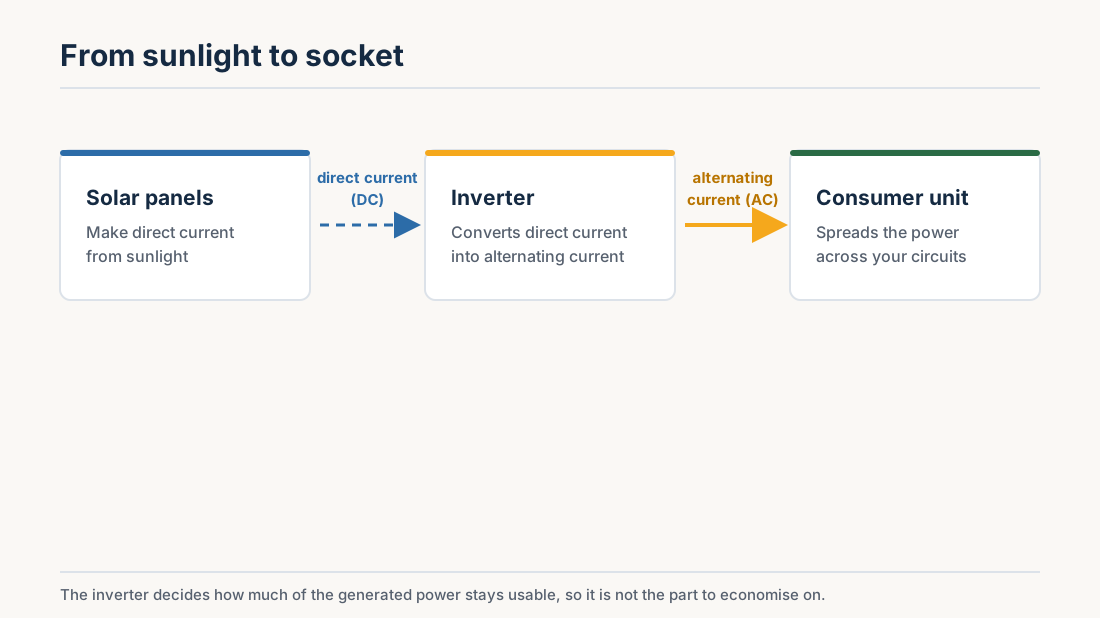
Integrating solar panels with a battery-ready solar system increases self-consumption of generated energy. This setup improves practical efficiency by reducing the amount of electricity exported to the grid.
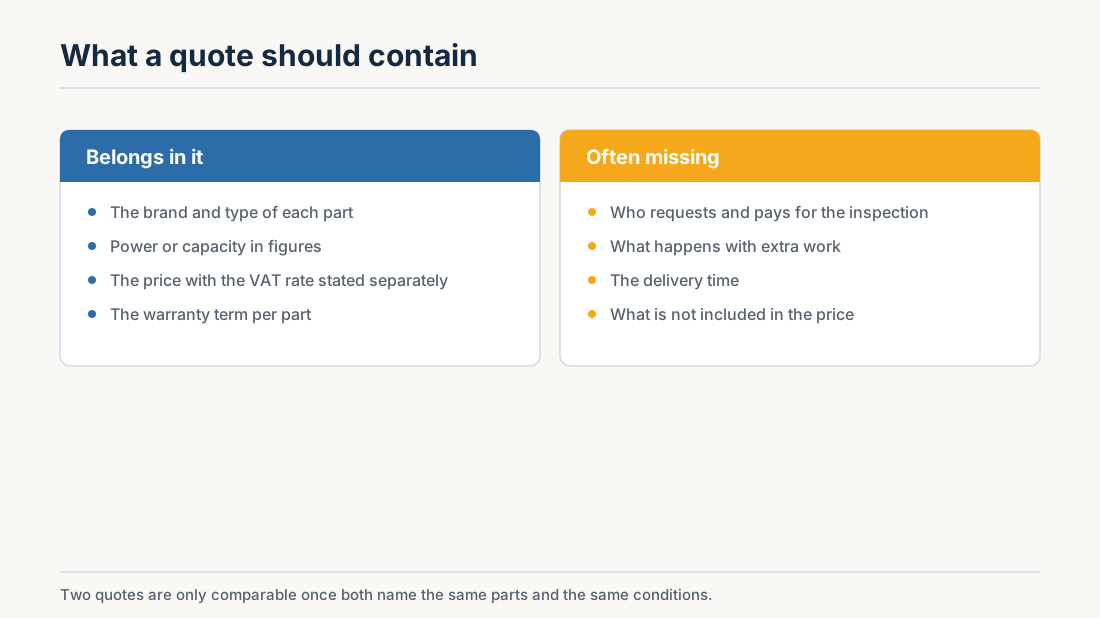
Choosing an efficient solar panel system depends on how well your panels convert sunlight and how they fit your roof’s characteristics. High-efficiency panels help minimize space requirements and maximize energy production over the system’s lifetime. Ensuring proper installation and an optimal orientation supports consistent real-world performance. To achieve the best results, start by assessing your energy consumption and roof layout. Then, obtain multiple quotes through Soleva to compare options and find professionals who can optimize both your system’s efficiency and financial returns.
Frequently Asked Questions
What is the efficiency of a solar panel in cloudy weather?
Solar panels continue to generate electricity during cloudy weather but at a reduced level. While the intrinsic efficiency of the panel cells does not change, available sunlight can drop substantially. Under heavy cloud cover, panels typically produce between 10% and 25% of their rated output, depending on the cloud density and panel technology.
How does solar panel efficiency relate to energy savings?
Higher solar panel efficiency means more electricity is produced per square meter, leading to lower consumption from the electricity grid. Your overall savings depend on your household’s self-consumption rate and local energy prices. Efficient systems reduce payback periods and increase financial benefits over time.
What is the price difference between 18% and 22% efficiency panels?
Panels offering 22% efficiency generally cost more per watt than those with 18% efficiency, reflecting the use of higher-quality materials and advanced technology. However, because fewer panels are needed to meet energy demands, installation costs can be lower, making high-efficiency systems financially appealing where roof space is limited.
Does cleaning solar panels significantly improve their efficiency?
Cleaning panels restores efficiency when dirt or dust obstructs sunlight. In dry or polluted regions, regular cleaning can noticeably improve energy production. In wetter climates, rain often keeps panels clean, but occasional manual cleaning ensures consistent output over time.
How does panel orientation affect solar panel efficiency?
Panel orientation affects the amount of sunlight received rather than the panel’s intrinsic efficiency. South-facing panels tilted around 30 to 35 degrees usually deliver the highest energy yield. East-west orientations spread production more evenly throughout the day, which can enhance self-consumption despite slightly lower peak efficiency.
Read also
Ready to cut your energy bill?
Compare quotes for solar panels, home batteries and charging points.