Solar panels Belgium
add solar panels to existing system price & guide
Adding solar panels to an existing system increases your energy production and reduces your reliance on grid electricity as your household demand grows. The feasibility depends on inverter capacity and available roof space, which directly influence how many panels you can integrate without upgrading other components. Often, expanding your system involves technical assessments, cost evaluations, and awareness of incentives like tax credits or regional subsidies.
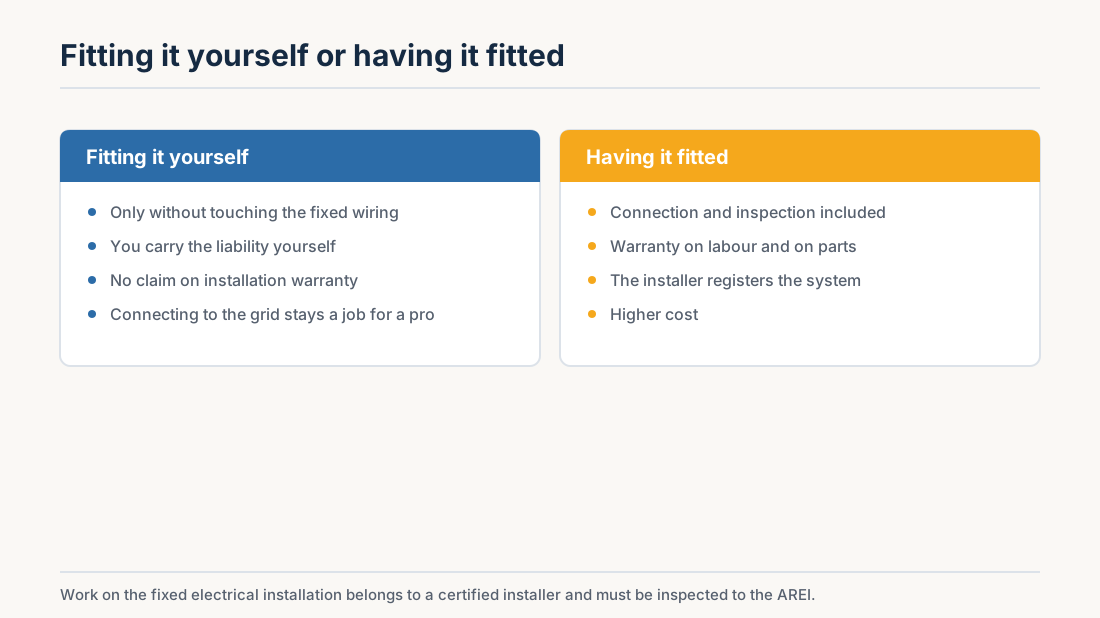
This guide explains how to expand your solar system, what costs to expect, which technical limits apply, and how to make your upgrade worthwhile with support from Soleva.
When Is Upgrading Smarter Than Replacing Your Solar System?
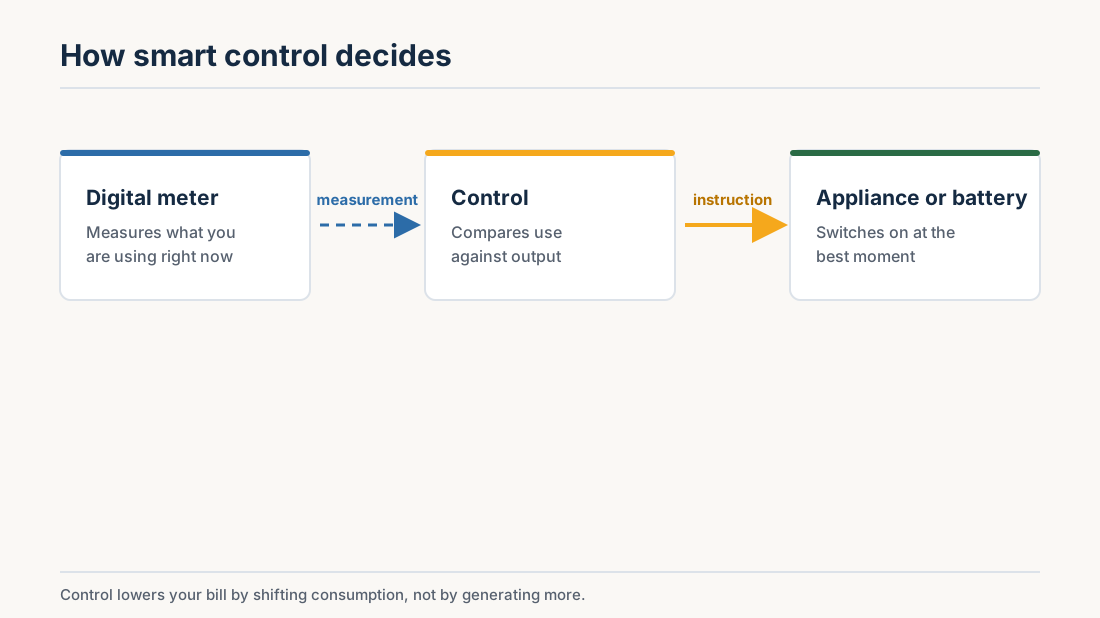
Upgrading an existing solar system is usually more cost-effective when it still performs above 80% of its original capacity and is less than 10 to 15 years old. Replacing the system becomes a better option if outdated components reduce compatibility or efficiency significantly.
Which Signals Indicate Expansion Is Possible?
You can expand your system if your inverter has enough spare capacity, your roof has sufficient usable space, and your electrical system can support additional load. Systems with microinverters are easier to expand because each panel operates independently.
When Does Replacement Outperform Expansion?
Replacement is preferable when your panels have significantly decreased energy output or when your inverter cannot manage extra input. Older installations may require rewiring, which adds to the upgrade costs.
To better understand how your system components interact, check our guide on how solar panel systems work.
What Installation Methods Are Available for Expanding a Solar System?
You can expand your solar system by adding panels to your roof, installing ground-mounted arrays, or creating separate arrays connected to your meter. Your choice depends on space availability and technical considerations.
Which Roof-Based Expansion Methods Are Most Effective?
Adding panels to unused roof sections with optimal sunlight exposure is the most common method. South-facing roofs or east-west orientations provide better energy yields. Structural assessments confirm if your roof can support additional panels safely.
Can You Install Panels on Other Structures?
Yes, panels can be mounted on garages, sheds, or carports if roof space is limited. Ground-mounted systems offer flexibility but require additional mounting hardware and wiring.
To estimate the system size that matches your energy consumption, refer to our detailed article on how many panels you need.
What Are the Costs to Add Solar Panels to an Existing System?
The cost to add solar panels to an existing system typically ranges between €1.3 and €2.5 per watt installed. The final price depends on how much existing equipment can be reused and the complexity of the expansion. If your inverter or electrical system requires upgrades, costs will increase accordingly.
Common expansion price ranges are:
- Adding 5 panels: €5,000 - €7,000 incl. VAT
- Adding 8 panels: €4,200 - €5,800 incl. VAT
- Adding 10 panels: €4,500 - €6,500 incl. VAT
Detailed Calculation Example for a Typical Expansion
Expanding with 8 panels rated at 400W each results in the following cost breakdown:
- 8 panels × €350 = €2,800
- Mounting system = €800
- Inverter upgrade = €1,500
- Installation and labor = €2,200
- Permits and inspection = €500
The total cost sums to approximately €7,800 incl. VAT.
Which Factors Affect the Price?
The final cost depends on inverter capacity, wiring complexity, and whether new permits are necessary. Expansions that do not require inverter replacement reduce total costs by about 10 to 20%.
For a comprehensive understanding, compare these costs with our full solar system price overview to see the savings possible through partial upgrades.
How Does the Installation Process Work from Start to Finish?
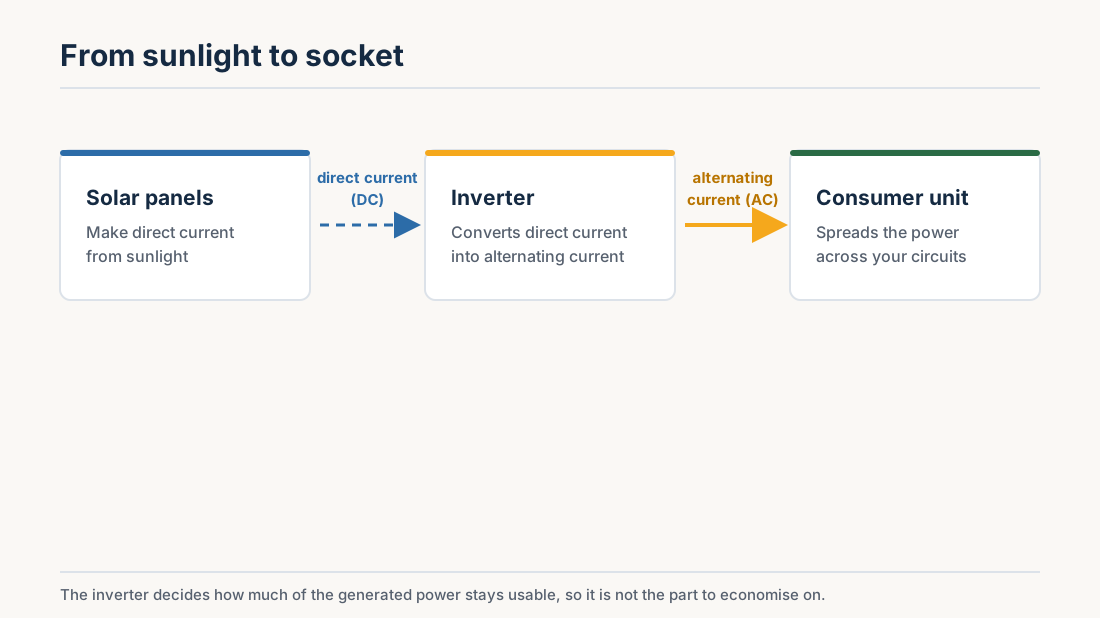
The installation process follows a clear sequence from initial assessment to system activation and usually takes between 2 and 6 weeks to complete.
Step-by-Step Expansion Process
- System audit to evaluate inverter capacity, wiring, and roof structure.
- Design phase to determine panel quantity and placement.
- Submission of permit applications to local authorities.
- Installation team mounts panels and connects wiring.
- Inspection to ensure compliance with electrical standards.
- System activation and grid connection of the expanded system.
How Do Utility Approvals and Net Metering Work?
Utility companies require updated interconnection agreements when you expand your system. Expansion may alter compensation schemes, especially in regions with updated net billing policies.
You can estimate your financial returns by using a price per kWh calculation, which helps you understand potential savings.
What Should You Consider When Choosing a Solar Installer?
Choose an installer with specific experience in expanding existing solar systems. Expansion projects demand electrical expertise and compatibility assessments beyond those required for new installations.
Which Installer Criteria Are Most Important?
- Experience with hybrid and existing solar systems.
- Familiarity with local regulations and subsidy programs.
- Ability to assess inverter limitations accurately.
- Providing clear, detailed quotations that include all costs.
Why Is It Beneficial to Work with Your Original Installer?
Your original installer understands the design of your current system and can reduce the risk of compatibility issues during expansion. If your original installer is unavailable, you can find certified professionals by requesting solar quotes through Soleva.
For more advice on selecting solar panels compatible with your system, see our guide on how to choose solar panels.
Expanding your solar power system is most effective when your existing components still function well and your inverter can handle additional capacity. Focusing on matching new panels to your actual energy needs helps you avoid unnecessary upgrades. Begin with a professional system evaluation, obtain at least three detailed quotes, and use Soleva to connect with installers experienced in solar system expansions and pricing.
Frequently Asked Questions
Can I add solar panels to my existing system and qualify for tax credits?
Yes, you may qualify for tax credits if you add solar panels to your existing system and the new installation meets current eligibility requirements. Tax credits apply only to the new components. Depending on your location, additional subsidies might be available, especially if you add battery storage or energy efficiency upgrades.
How much does it typically cost to add solar panels to an existing system?
Costs vary depending on system size and required upgrades, but expansions generally range between €5,000 and €12,500 incl. VAT. Expenses increase if you need to replace the inverter or upgrade electrical components. Smaller expansions are more affordable when your current system can support added panels without significant modifications.
Is it possible to add solar panels with a different panel type to my existing system?
Yes, you can mix panel types, but the voltage and current characteristics must be compatible to avoid performance issues. Installers often use optimizers or separate circuits to manage different panel types. Some homeowners also consider the visual mismatch between panel designs before proceeding with expansions.
What does the 20% rule mean for solar system expansions?
The 20% rule limits the amount of additional capacity you can add without requiring regulatory approval or changes to your grid connection. Many utilities allow expansions up to 10 to 20% of the original system size without updating contracts. Exceeding this limit usually requires new permits and may affect compensation arrangements.
Can I use a calculator to determine how many solar panels to add to my existing system?
Yes, calculators can help estimate the number of additional panels based on your energy consumption, roof space, and system efficiency. However, these tools provide only rough estimates. Professional installers perform detailed analyses considering shading, panel orientation, and inverter limits to ensure optimal system design.
Indicative prices for the Belgian market, checked in August 2026 against energy-village.be, thuisbatterij.be and zen-zonne-energie.be. These are market ranges for an installed system including VAT, not a quotation: your price depends on capacity, brand and the state of your existing installation.
Read also
Ready to cut your energy bill?
Compare quotes for solar panels, home batteries and charging points.