Solar panels Belgium
best solar panel brands guide
Choosing the best solar panel brands ensures you get high efficiency, extended warranties, and reliable performance over decades. Modern panels reach 21% - 24% efficiency using advanced N-type technology, offering significant energy output. This guide presents the top 10 solar panel brands, comparing their efficiency, warranty, and suitability for your home, climate, and energy goals.
Which brand offers the best solar panels?
The best solar panel brand is the one that provides the highest long-term energy output tailored to your roof and budget. Maxeon solar panels stand out for their durability and long warranty, while other value brands deliver solid performance at lower prices.
Quality depends on five key factors:
- Efficiency, typically ranging from 21% to 24.3% for modern N-type panels
- Warranty periods, which can vary from 25 to 40 years
- Degradation rates, generally between 0.25% and 0.5% per year
- Temperature coefficients, influencing how panels perform in heat
- Manufacturer stability, ensuring warranty claims are honored
Balancing efficiency with warranty coverage is vital, as a panel with slightly lower efficiency but better warranty terms often yields better value over time.
How do Maxeon solar panels distinguish themselves?
Maxeon solar panels incorporate back-contact cell technology, boosting efficiency to approximately 22.8% while reducing degradation to around 0.25% annually. This technology retains over 88% of output after 40 years. Their 40-year warranty is among the longest available, enhancing reliability for long-term investments.
Which solar panel brands are best suited for home use?
The best solar panel brands for residential use focus on steady energy output and strong installer support. Panels with around 22% efficiency tend to offer the best balance for most homes. However, when roof space is limited, selecting higher-efficiency options becomes important.
For a comprehensive understanding of system requirements, consider reviewing the complete solar panel setup options before choosing your preferred brand.
What are the top 10 solar panel brands worldwide?
The top 10 solar panel brands are ranked based on efficiency, warranty terms, and long-term performance, primarily utilizing N-type technologies such as TOPcon, HJT, and back-contact cells.
- Maxeon - 22.8% efficiency, 40-year warranty
- REC - 22.6% efficiency, excellent value
- Aiko - 24.3% efficiency, highest energy output
- Canadian Solar - 22.5% efficiency, high wattage models
- Jinko - 23.8% efficiency, extensive global presence
- Silfab - 22.1% efficiency, regional manufacturing
- JA Solar - 21.8% efficiency, budget-friendly option
- Trina Solar - 21.8% efficiency, cost-effective panels
- LONGi - 23.3% efficiency, innovative design
- Emerging N-type brands - efficiency above 22%
These leading brands outperform others due to their use of advanced N-type cell technologies, which reduce degradation and enhance real-world performance.
What criteria define the top solar panel manufacturers?
The world’s leading solar panel manufacturers meet stringent technical and financial standards including:
- Compliance with IEC 61215 and IEC 61730 quality standards
- Performance verification by organizations such as PVEL and NREL
- Global manufacturing capabilities and supply chain stability
- Warranty claim success rates exceeding 90%
Manufacturers that fail to meet these benchmarks may pose higher risks regarding long-term reliability.
What insights do Reddit discussions provide about top solar panel brands?
Community discussions on Reddit often emphasize the importance of installer skill and warranty support over brand reputation alone. This corresponds with industry data showing that installation quality significantly influences system output and longevity regardless of the panel brand.
How do different solar panel technologies affect brand performance?
The technology used in solar panels directly impacts their efficiency, lifespan, and performance under heat. N-type panels outperform older P-type designs across all these factors.
Key technologies include:
- TOPcon technology, offering efficiencies up to 23.8% with competitive costs
- HJT, providing improved temperature resilience and reduced degradation
IBC cells achieve the highest efficiencies, reaching up to 24.3%.
Why is N-type technology preferred?
N-type cells experience less light-induced degradation, allowing efficiencies from 19% to 24.3%. This results in greater lifetime energy output compared to older P-type panels, which degrade faster and max out near 21% efficiency.
Are polycrystalline panels still a viable option?
Polycrystalline panels have been phased out due to their lower efficiency of 15% to 18%. Today, virtually all new installations use monocrystalline N-type panels for superior performance.
How do prices vary between premium and value solar panel brands?
Prices differ depending on panel efficiency and warranty length. Premium panels cost more per watt but offer greater energy production and longer guarantees. Mid-range panels balance cost and performance, while budget options reduce upfront investment but may yield slightly lower output over time.
The price structure generally follows these tiers:
- Premium panels: highest efficiency and longest warranty
- Mid-range panels: best cost-performance ratio
- Budget panels: lowest initial expense
Can you see a cost breakdown example for a home solar system?
Consider a 10-panel system using high-efficiency panels, where the total costs include various components:
10 panels × €300 = €3,000
Inverter = €1,200
Mounting system = €600
Installation = €2,000
Total = approximately €6,800 incl. VAT
This example demonstrates that panel brand is just one part of the system cost. Choices for installation and inverter also significantly influence your investment.
Before deciding, examine the price of solar panel systems to understand the full financial picture.
Which solar panel brands should I avoid and why?
You should avoid brands with weak warranty support, inconsistent quality, or unstable financial backgrounds, as these factors increase your long-term risk.
Warning signs include:
- Warranty claim denial rates exceeding 15%
- Claim processing times longer than 90 days
- Opaque or unverifiable performance data
- Poor outcomes in independent reliability testing
Why is a manufacturer’s financial stability important?
Financial stability ensures the manufacturer can honor warranties that last from 25 to 40 years. A strong balance sheet enhances the security of your investment.
How does the installer affect the performance of your solar panel brand?
The quality of installation impacts system output regardless of the panel brand. A properly installed mid-range panel often outperforms a premium panel installed poorly. This makes comparing solar panel system configurations as important as choosing the brand itself.
In which cases do premium solar panel brands outperform others?
Premium brands excel when efficiency, available space, or environmental conditions are critical factors.
Typical scenarios include:
- Limited roof area needing maximal energy production
- Regions with hot climates requiring better temperature coefficients
- Long-term ownership where extended warranty is valued
How do solar panels perform under high temperatures?
Panels with a temperature coefficient near -0.26% per °C lose less energy in heat compared to those at -0.36% per °C. This translates into higher annual production in warmer areas.
When is choosing value brands more advantageous?
If your roof space is ample and budget constraints are tight, value brands offer the most cost-effective returns. The lower upfront cost compensates for slightly reduced efficiency in these situations.
Finding the best solar panel brand relies on balancing efficiency, warranty, and overall system cost. Premium panels provide higher energy output and longer guarantees, while value brands deliver robust results at lower prices. Focus on long-term performance and installation quality rather than brand ranking alone. Begin your selection by obtaining multiple quotes through Soleva and matching your choice to your roof size and energy needs.
Frequently Asked Questions
Which brand makes the best solar panels?
The best solar panel brand combines high efficiency, low degradation rates, and strong warranty coverage. Back-contact or N-type technology panels provide the highest performance. However, the best choice also depends on your roof’s size and budget, since installation quality and system design impact the final energy production as much as the panel itself.
What are the best solar panels top 5 models?
The top 5 solar panels include reliable, high-efficiency models balancing output and durability. These panels usually exceed 22% efficiency and carry warranties of at least 25 years. Their stable performance across climates makes them ideal for residential and small commercial systems.
What is the price difference between solar panel brands?
Price differences arise from variations in efficiency and warranty length. Premium panels are costlier but generate more electricity over time. Budget panels lower initial costs yet may yield slightly less output. Including inverter and installation costs narrows these price differences in total system investment.
Are expensive solar panels worth the price?
Expensive solar panels pay off when roof space is limited or when you prioritize long-term reliability. Higher efficiency means more energy per square meter, and better warranties reduce financial risk. For larger roofs, mid-range panels often provide better value as extra efficiency gains become smaller.
Do solar panel brands affect system lifespan?
Brands impact system lifespan through degradation and construction quality. Top-quality panels degrade about 0.25% to 0.4% annually, while lower-quality panels degrade faster. Over 25 years, this difference results in higher total energy production. Warranty coverage also protects system performance during its lifespan.
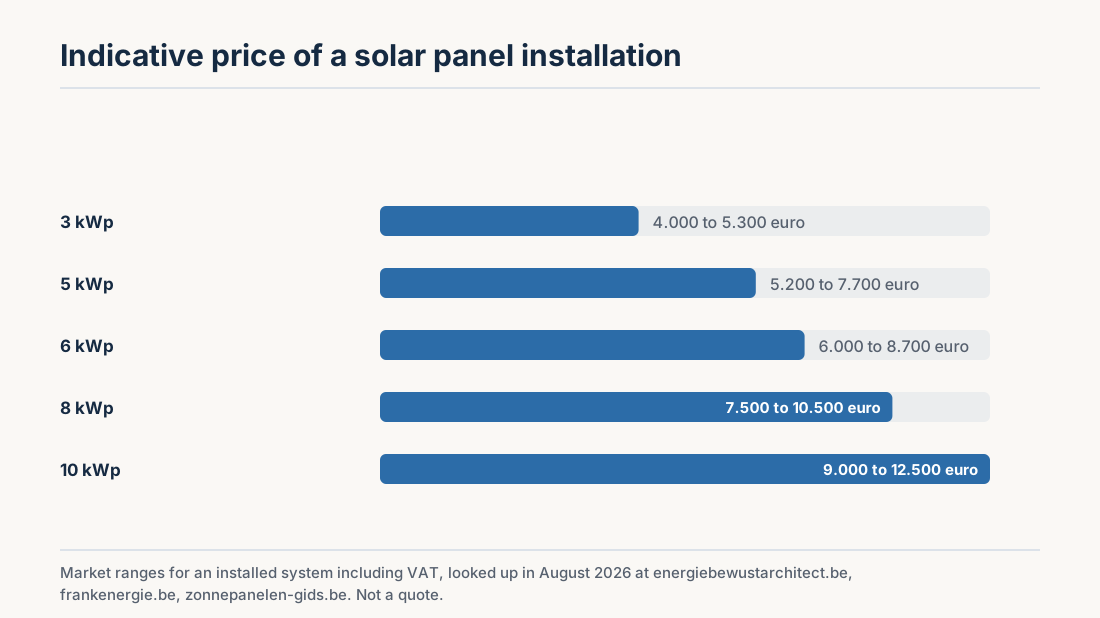
Indicative prices for the Belgian market, checked in August 2026 against energy-village.be, thuisbatterij.be and zen-zonne-energie.be. These are market ranges for an installed system including VAT, not a quotation: your price depends on capacity, brand and the state of your existing installation.
Read also
Ready to cut your energy bill?
Compare quotes for solar panels, home batteries and charging points.