Solar panels Belgium
solar panels in winter belgium performance & price
In Belgium, solar panels continue to generate electricity throughout the winter, producing approximately 25 - 35% of their annual energy output, which typically equals about 5.2 kWh daily for an average system. The actual performance depends on factors such as daylight duration and roof orientation, while cold temperatures can improve efficiency on sunny days.
How much energy can you expect from solar panels in winter Belgium?
Solar panels in Belgium produce around 25 - 35% of their yearly electricity during winter. For example, a typical 4 kWp solar system generates approximately 5.2 kWh on average each day during this season. This is lower than the summer production peaks of 15 - 20 kWh daily, mainly due to shorter sunlight hours and the sun’s lower angle in the sky.
Despite reduced sunlight, solar panel output does not drop to zero unless the panels are completely covered by snow. Even diffuse daylight on cloudy days contributes to stable and consistent energy production.
What factors cause reduced solar output in winter?
The lower energy production happens because of several environmental reasons that influence the amount of sunlight reaching your solar panels:
- Shorter daylight hours limit total sunlight exposure
- The sun’s low angle decreases direct sunlight intensity
- Cloudy weather reduces solar radiation to about 30% of its maximum
- Snow accumulation can temporarily block panels from sunlight
Why do cold temperatures improve solar panel efficiency?
Lower temperatures actually improve solar panel efficiency, as solar cells lose performance when operating above 25°C. Each degree above this reduces output by roughly 0.4%. During Belgium’s cold winters, panels can perform up to 10% better on clear days compared to hotter conditions.
This means that a cold but sunny winter day often yields energy efficiency comparable to or better than a hot summer day.
Will solar panels keep working effectively throughout winter?
Solar panels do work well during the winter months because they rely on sunlight, not heat, to generate electricity. Even when skies are overcast, the panels convert diffuse light into usable energy, allowing continued power generation in Belgium’s typically cloudy winter climate.
This steady, although reduced, production helps support household electricity needs, particularly when combined with smart energy use and storage solutions.
Does cloudy weather stop solar production?
Cloud cover decreases solar output but does not completely halt it. Under heavy clouds, panels still generate around 20 - 30% of their maximum capacity, ensuring ongoing energy supply.
Can snow prevent energy generation?
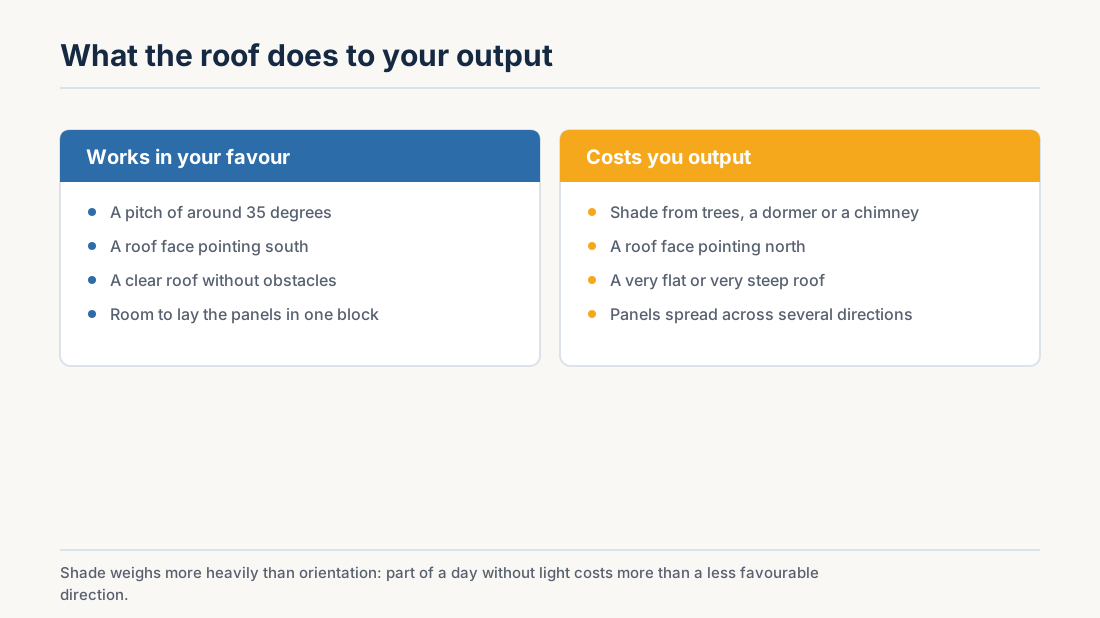
Snow only fully stops electricity production when it completely covers the panels. Frequently, light snow melts quickly or slides off because of the panels’ tilt angle. Installing panels at a steeper angle between 40° and 60° helps snow shed effectively, minimizing downtime.
How much do solar panels cost in winter Belgium?
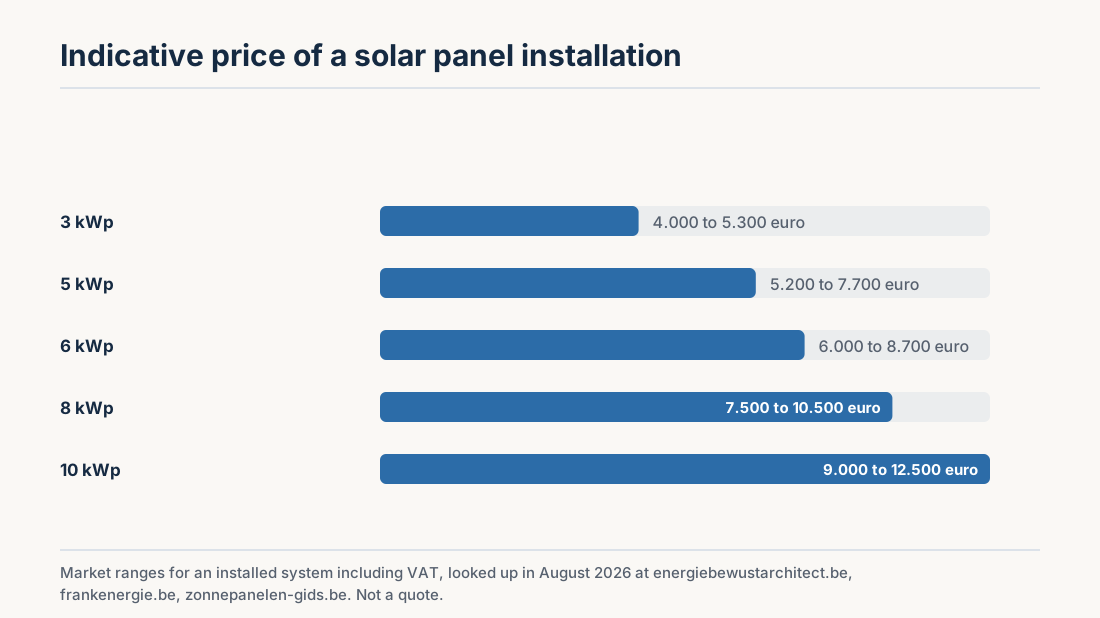
The cost of solar panels in winter Belgium remains consistent year-round since the expenses for equipment and installation do not change with the season. A typical residential solar system price depends largely on its size and component choices.
For a comprehensive understanding of costs and system sizing, you can refer to our solar panel systems overview.
Which factors influence the price of solar panels in Belgium?
Your total investment depends on several aspects related to system configuration and installation requirements:
- The number of solar panels and total kWp capacity
- The type and accessibility of your roof
- The inverter model and presence of monitoring systems
- Optional battery storage to maximize usage during winter
Example of a realistic solar system cost calculation
Here is a detailed cost breakdown for a standard solar installation:
- 10 solar panels at €250 each = €2,500
- Inverter cost = €1,200
- Mounting hardware = €600
- Installation labor = €2,000
The total investment amounts to approximately €6,300 including VAT. Such a system typically produces between 3,400 and 4,000 kWh annually, with winter generation forming a smaller but dependable portion.
Which solar panels offer the best performance in winter Belgium?
High-efficiency monocrystalline solar panels perform best during Belgium’s winter. They handle limited sunlight conditions well and fit efficiently within constrained roof space.
Modern panel efficiencies range from 15% to 22%, with some premium models achieving even higher results in diffuse lighting conditions.
Are Tesla solar panels any different during Belgian winters?
Tesla’s solar panels operate on the same photovoltaic principles as other reputable brands. Their winter performance depends largely on system design and efficiency ratings rather than the brand name itself.
Key factors include the panel’s low-light capabilities and quality of the inverter rather than brand recognition.
Which technical features improve winter solar efficiency?
Certain panel traits enhance performance in colder, low-light seasons:
- Solar cells with high efficiency for better light capture
- Strong temperature coefficients to maintain output in cold weather
- Anti-reflective coatings to optimize diffuse light absorption
- Durable glass that withstands snow and ice
How can you maximize solar panel output during winter in Belgium?
You can improve winter solar output by optimizing panel placement and maintenance. Small changes often result in measurable energy gains throughout the cold season.
For detailed system design strategies, consult our comprehensive solar panel guidance.
What tilt angles and orientations optimize winter performance?
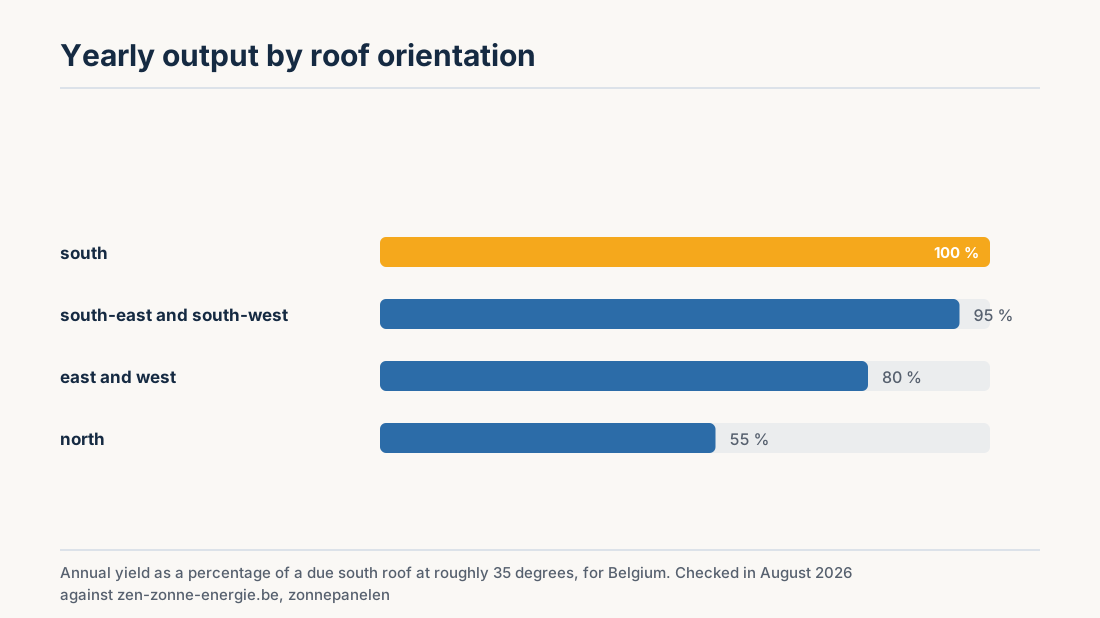
Panels angled steeply between 40° and 60° capture more low-angle sunlight and encourage snow to slide off quickly. Arranging panels in an east-west orientation balances energy production throughout daylight hours, enhancing winter usability.
Is battery storage beneficial during winter?
Yes, adding a battery increases self-consumption by storing surplus energy produced during lower-demand daylight hours for use later in the evening.
How does regular maintenance impact winter solar efficiency?
Clean panels generate more energy. While rain naturally removes much dust and debris, manual cleaning might be needed after extended dry periods. Removing snow promptly restores energy production that would otherwise be lost.
In what ways does winter production affect your solar investment returns?
Lower energy output in winter temporarily reduces daily generation but does not harm long-term profits. Belgium’s annual yields remain high at around 850 - 1,000 kWh per kWp, ensuring solid payback times.
Most installations recoup costs within a typical timeframe due to strong generation in spring and summer.
How does winter production influence payback periods?
Reduced winter output may slightly extend payback periods, but total yearly electricity generation is the key factor for investment returns. A 4 kWp system still produces sufficient electricity to deliver steady savings over time.
Is installing solar panels worthwhile in Belgium despite the winter season?
Absolutely. Rising electricity prices, combined with strong annual production and improved winter efficiencies, make solar energy a reliable investment. Even with weaker winter months, your system will generate electricity every day, maintaining overall value.
Winter conditions lead to lower solar panel output in Belgium, mainly due to shorter days and cloud cover, but they do not stop electricity generation or reduce the value of your investment. Cold temperatures enhance panel efficiency during clear days, helping maintain adequate energy production.
To make the most of your solar installation, focus on proper system sizing, optimal orientation, and incorporating storage solutions rather than worrying about winter limitations. Request multiple quotes through Soleva to find a solar setup that performs reliably throughout all seasons.
Frequently Asked Questions
Will solar panels still work in winter in Belgium?
Yes, solar panels continue to generate electricity throughout the Belgian winter by converting available light rather than relying on heat. Although production is lower compared to summer months, panels still provide useful energy daily, especially if paired with energy-efficient usage or battery storage.
What is the price of solar panels in winter Belgium compared to summer?
The cost of installing solar panels in Belgium does not vary between winter and summer. Equipment, labor, and other installation expenses remain the same year-round. Seasonal differences affect energy output, not purchase price. Winter installations can often benefit from shorter waiting times.
How cold is too cold for solar panels?
Solar panels operate efficiently even in very low temperatures and have no strict minimum temperature limits. In fact, their performance improves as temperatures fall below 25°C. Only extreme weather combined with snow or ice coverage can temporarily reduce electricity generation.
What does the 20% rule mean for solar panel installations?
The 20% rule ensures your solar system’s production stays within the safe limits of your home’s electrical infrastructure. Installers size systems to align with inverters and grid connection limits, preventing overload and ensuring stable operation year-round, including winter.
What is the 120 rule regarding solar panels?
The 120 rule refers to electrical panel safety requirements, limiting the solar input capacity connected to your distribution board. The sum of breaker ratings and solar system input must not exceed 120% of the panel’s rated capacity, protecting wiring and maintaining safety during both high and low production periods.
Indicative prices for the Belgian market, checked in August 2026 against energy-village.be, thuisbatterij.be and zen-zonne-energie.be. These are market ranges for an installed system including VAT, not a quotation: your price depends on capacity, brand and the state of your existing installation.
Read also
Ready to cut your energy bill?
Compare quotes for solar panels, home batteries and charging points.