Solar panels Belgium
Q Cells solar panels review
A detailed Q Cells solar panels review reveals these panels offer high efficiency, long-lasting warranties, and stable performance ideal for residential solar energy systems. Featuring monocrystalline modules with efficiency levels up to 22.5%, these solar panels maintain strong durability under real-world conditions. Homeowners often compare these panels based on price, lifespan, and energy output before making a decision.
This comprehensive guide covers performance, pricing, product lines, and comparisons to help you determine if these panels meet your energy goals.
Why are Q Cells solar panels considered a reliable option?
Q Cells solar panels stand out for combining high efficiency, low degradation rates, and extended warranties from a Tier 1 manufacturer. Originating in Germany and operating under the South Korean Hanwha Group, the brand benefits from financial stability and lasting support.
These panels utilize monocrystalline silicon cells, which convert sunlight into electricity more effectively than older technologies. Additionally, they feature anti-PID technology to minimize power loss caused by voltage stress over time.
How do Hanwha Q CELLS solar panels achieve durability?
Hanwha Q CELLS solar panels employ robust aluminum frames, corrosion resistance, and have proven performance in challenging environments. The panels undergo rigorous stress tests, including thermal cycling and damp heat exposure. Independent organizations have ranked them as top performers across multiple categories.
- Temperature coefficient near -0.30% per °C
- Resistance to salt mist corrosion
- High tolerance to mechanical load
Where are Q Cells solar panels manufactured?
Manufacturing of Q Cells solar panels takes place in the United States, South Korea, Malaysia, and China, while engineering efforts originate from Germany. This global production approach reduces supply risks and ensures consistent quality.
To explore how these panels fit into complete solar systems, consider reviewing various solar panel system types and configurations.
How efficient are Q Cells panels and what technologies do they use?
Q Cells solar panels deliver efficiency levels ranging from 19.5% to 22.5%, depending on the model. The latest Q.TRON series reaches the highest efficiencies through proprietary Q.ANTUM NEO technology.
What is Q.ANTUM technology?
Q.ANTUM technology enhances electron flow and reduces recombination losses within the solar cells. This results in improved output during low-light and partial shading conditions.
- Enhanced performance in cloudy weather
- Greater electricity generation per square meter
- Improved long-term operational stability
How does half-cut cell design enhance performance?
The half-cut cell structure divides solar cells into two halves, reducing electrical resistance and boosting efficiency. This design also improves shading tolerance, so when part of the panel is shaded, it affects less of the overall performance.
For guidance on calculating the number of panels needed, refer to our system sizing advice.
What is the pricing for Q CELLS solar panels?
Q CELLS solar panels generally fall into the mid-range price segment within the market. The total cost of systems using these panels ranges from approximately €4,500 to €11,000 incl. VAT, depending on system size and installation complexity.
The overall cost varies based on panel wattage, inverter selection, and installation details.
How does pricing vary by system size?
Typical system price breakdowns include:
- 6-panel systems: €4,500 - €6,000 incl. VAT
- 10-panel systems: €6,000 - €8,500 incl. VAT
- 16-panel systems: €8,500 - €11,000 incl. VAT
What does a typical system cost calculation look like?
Consider a 10-panel system using 400 watt Q Cell solar panels with the following components and costs:
- 10 panels × €250 = €2,500
- Inverter = €1,200
- Mounting system = €600
- Installation labor = €2,000
This results in a total cost of approximately €6,300 incl. VAT.
You can also compare these costs with a standard solar panel price overview to assess value.
What lifespan and warranty coverage do Q Cells panels provide?
The lifespan of Q Cells panels generally exceeds 25 years, maintaining performance retention between 86% and 90%. This longevity results from controlled degradation rates and warranty terms.
What warranty does Hanwha Q CELLS offer?
Hanwha Q CELLS solar panels come with comprehensive warranties including:
- 25-year product warranty
- 25-year performance warranty
- Up to 90.58% output guaranteed after 25 years for premium models
How does panel degradation affect long-term energy output?
Typical degradation rates for these panels range between 0.33% and 0.50% per year. A lower degradation rate means higher energy production over the system’s lifetime.
To enhance energy self-consumption, many homeowners pair these panels with a home energy storage system.
Which Q Cells models and wattages are available?
Q Cells offers several product lines designed to meet various budget and performance needs.
What are some popular Q Cells models and their specifications?
- Hanwha Q Cells Q.PEAK DUO BLK ML G10+ 410 - balanced performance model
- Q CELLS 425W solar panel - high-output option ideal for limited roof space
- Q.TRON series - premium models with efficiency up to 22.5%
How do I select the right wattage for my panels?
High wattage panels reduce the overall number of panels required. For standard roofs, a 400 watt model suits well, while 425 watt panels maximize output for smaller rooftop areas.
For ideas on system design, you can check our solar panel configurations guide.
How do Q Cells solar panels compare to alternatives in the market?
Q Cells panels offer a balanced combination of price, performance, and warranties. They do not focus solely on being the most premium or the cheapest choice, but instead provide strong value.
What differences exist between Q Cells and LG solar panels?
While LG panels have traditionally emphasized premium performance, Q Cells provides similar warranties and excellent efficiency with better value for most residential users.
Is Q Cells a Chinese company?
Q Cells is not based in China. The company was founded in Germany and is owned by the South Korean Hanwha Group, with manufacturing facilities across Asia and the United States.
What considerations should I keep in mind when choosing Q Cells panels?
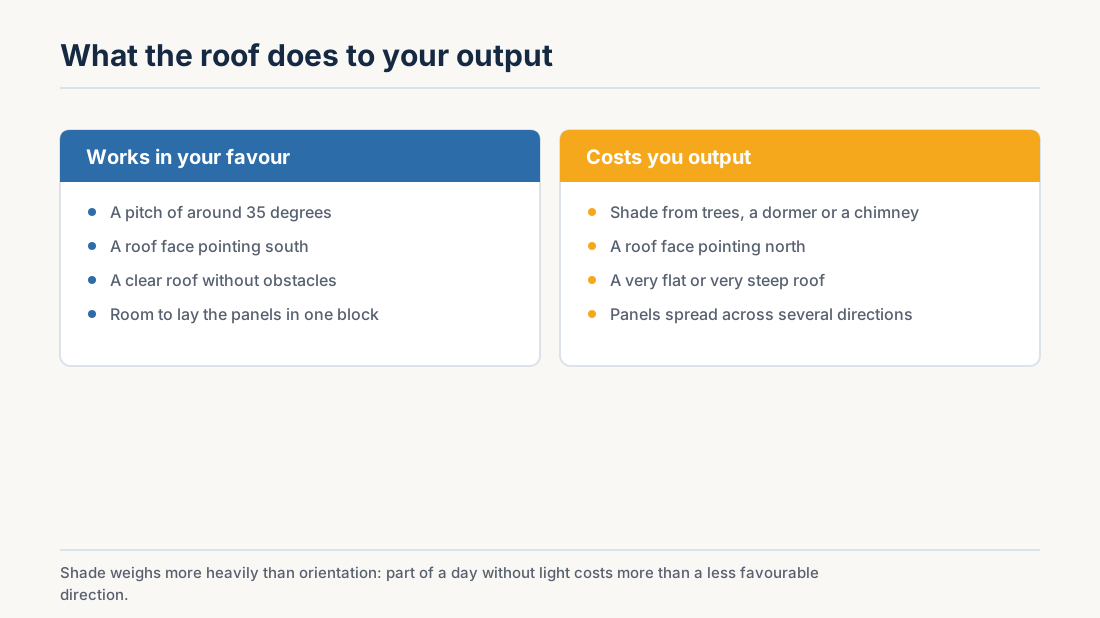
Although Q Cells panels perform well, premium models come at higher costs while entry-level options prioritize affordability. Ultimately, installation quality impacts system performance more significantly than the panel brand.
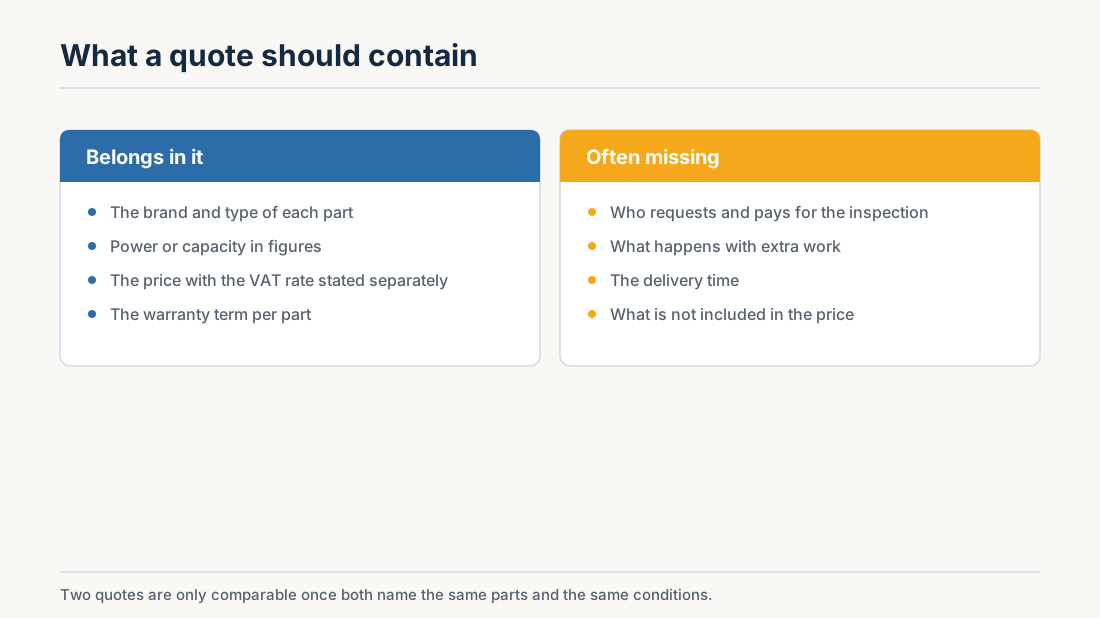
To ensure the best investment, obtain multiple solar installation quotes from professionals for accurate pricing and system design options.
Q Cells panels are a compelling choice due to their strong efficiency, dependable warranties, and competitive pricing that avoids premium costs. This combination results in consistent performance, robust technology, and long-term confidence supported by a global manufacturer.
For optimal results, focus on designing a well-planned solar system and ensuring professional installation quality rather than relying solely on the panel brand. Use Soleva to compare multiple quotes and find the ideal system tailored to your roof size, energy needs, and budget.
Frequently Asked Questions
Are Q Cells solar panels a smart long-term investment?
Q Cells panels maintain stable long-term output thanks to their low degradation rates and comprehensive warranties. Over 25 years, these panels consistently produce energy, supporting ongoing savings on electricity expenses. They suit homeowners who prioritize reliability over peak efficiency.
How does pricing differ among Q Cells panel models?
Price variations depend on panel efficiency and wattage. Premium models like the Q.TRON series are more expensive due to higher output capabilities, while models such as Q.PEAK DUO offer affordability. Larger installations will highlight price differences since more efficient panels reduce the number of panels needed.
Are Q Cells panels appropriate for roofs with limited space?
Yes, Q Cells panels with higher wattages, like 410W or 425W models, are suitable for small roofs. Their higher energy generation per square meter allows fewer panels to achieve the desired total system output.
How dependable is Hanwha Q CELLS as a solar panel manufacturer?
Hanwha Q CELLS is classified as a Tier 1 manufacturer with a global production network and strong financial backing. This reputation ensures reliable warranty support and consistent product quality across markets.
Do Q Cells solar panels need special maintenance?
Q Cells solar panels require very little maintenance. Regular cleaning and occasional system checks help maintain optimal performance. When installed properly and free from heavy shading, most systems operate effectively without extra intervention.
Indicative prices for the Belgian market, checked in August 2026 against energy-village.be, thuisbatterij.be and zen-zonne-energie.be. These are market ranges for an installed system including VAT, not a quotation: your price depends on capacity, brand and the state of your existing installation.
Read also
Ready to cut your energy bill?
Compare quotes for solar panels, home batteries and charging points.