Solar panels Belgium
solar panel monitoring app guide & features
A solar panel monitoring app connects your solar panels and inverter to your smartphone, allowing you to track energy production, detect faults, and optimize electricity use in real time. These apps integrate solar power monitor software with cloud data and inverter communication to present daily output, consumption, and grid feed-in in one convenient dashboard. By focusing on self-consumption and battery management, they can increase your energy efficiency by 20 - 30%.
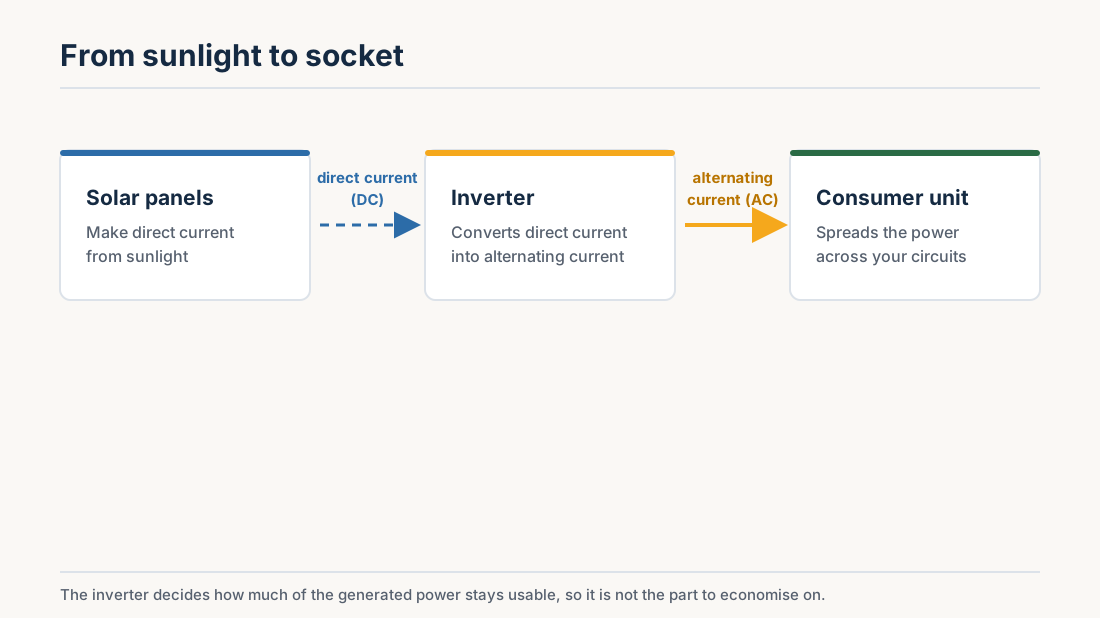
This guide explains how solar panel monitoring apps work, highlights key features, outlines expected costs, and helps you choose the best solution for your home.
What is a solar panel monitoring app and how does it work?
A solar panel monitoring app is software that collects data from your inverter and displays your system’s energy production, consumption, and status on your phone or computer. The inverter measures electricity output in kilowatt-hours and sends this data via WiFi or Ethernet to a cloud server. The app then converts this information into clear graphs and statistics, providing a real-time dashboard.
Through this dashboard, you can see the electricity your panels generate, how much energy your home consumes, and the electricity flowing to or from the grid. For a basic understanding of how your solar system operates, visit the solar panel system overview.
How does data flow from solar panels to your app?
The data flow happens in a structured way: the inverter collects performance information, sends it to the cloud via your internet connection, and the app displays it on your device. Depending on the system, updates can occur every few seconds or minutes.
What information does the app show you?
The app displays several important data points that affect your system’s performance and savings:
- Energy production measured hourly, daily, and monthly
- Your household’s consumption patterns
- Values for electricity sent to or drawn from the grid
- Battery charge and discharge status
- System alerts and fault notifications
Which features define the best solar panel monitoring app?
The best solar panel monitoring app integrates real-time tracking with smart alerts and energy optimization tools. Modern apps go beyond simple data display by enabling automation and intelligent control.
Why is real-time monitoring important?
Real-time monitoring lets you observe immediate changes in production caused by weather or shading. This helps maintain your system’s uptime between 95% and 98% by identifying issues early.
How do alerts and AI detection improve your solar system’s performance?
AI-powered alerts quickly detect underperforming panels or inverter problems. By reducing your response time by up to 70%, these features prevent long-term energy losses.
Why is battery integration a key feature?
Battery integration enables the app to manage energy storage and usage more effectively. With a solar system that includes storage, self-consumption can increase from approximately 30% to 70%, greatly reducing your reliance on the grid.
- Automatic charging during times with low tariffs
- Discharging energy during peak price periods
- Backup power management for outages
How does a solar panel monitoring app differ across system types?
Solar power monitor software performs differently depending on your inverter type and system setup. The main distinctions include:
- String inverter apps monitor panel groups with 85% - 90% accuracy
- Micro-inverter apps provide individual panel tracking with over 95% precision
- Hybrid apps combine battery optimization and energy forecasting
Which system offers the most detailed insights?
Micro-inverter setups provide the finest level of detail since each panel operates independently. Hybrid systems add predictive analytics by integrating data from both energy production and storage.
What is the price range for a solar panel monitoring app?
Basic versions of solar panel monitoring apps are often free and included with your inverter. Advanced features typically require a subscription costing roughly €0.05 - €0.10 per watt annually, which translates to €50 - €100 each year.
What factors influence the cost?
The total price depends on your system size, the features you choose, and whether the app supports battery management or advanced analytics.
Calculation example: Monitoring cost for a typical 5 kWp system
- Basic monitoring included with inverter: €0
- Advanced analytics subscription: €75
- Battery optimization module: €60
- Cloud data storage service: €40
This gives a total estimated annual cost of approximately €175 incl. VAT.
When do solar panel monitoring apps add the most value?
Solar monitoring apps provide the greatest benefits when your system includes smart meters, dynamic pricing tariffs, or batteries. These features require precise energy management to maximize savings.
How do these apps improve your return on investment?
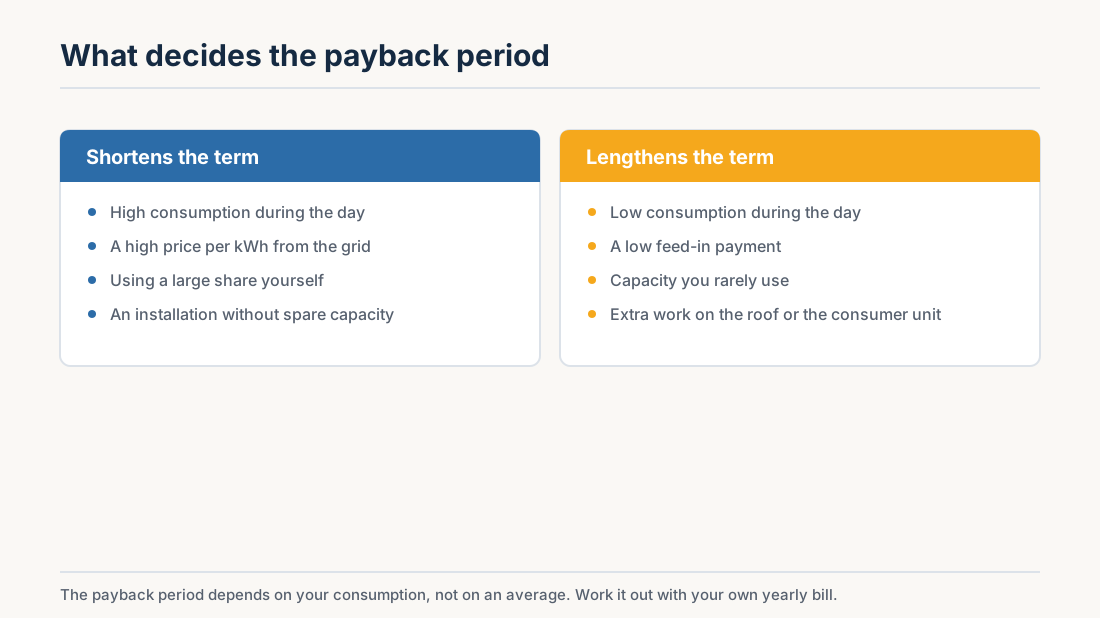
Monitoring apps help increase your self-consumption by 20% - 30%, which typically shortens payback periods from around 8 - 10 years to about 6 - 8 years.
Which households gain the most from solar monitoring?
These types of users experience the biggest advantages:
- Homes with substantial energy use during daylight hours
- Systems equipped with battery storage
- Users with dynamic energy pricing contracts
To calculate your ideal system size, see our guide on how many panels you need.
What are the advantages and drawbacks of solar monitoring apps?
Solar monitoring apps offer enhanced control and transparency for your energy system but require compatible hardware and reliable data connectivity.
Benefits include real-time insights, automated fault alerts, and energy optimization tools. However, subscription fees and dependence on a stable internet connection can be limitations.
An impressive feature is the ability to identify minor performance drops early, preventing unnoticed energy losses over several months.
When should you avoid relying solely on a solar panel monitoring app?
A free solar panel monitoring app may not be sufficient if your system lacks accurate sensors or has incomplete data. Some setups without consumption meters will show only production data, limiting the app’s usefulness.
This applies particularly to systems without battery integration or smart meters. In such cases, data visibility is partial, reducing the app’s overall benefit.
How do you select the best solar panel monitoring app for Android or iPhone?
The ideal solar panel monitoring app for Android or iPhone must be compatible with your inverter, battery, and your energy usage goals. Ensuring compatibility is the most critical factor in your selection.
Which criteria matter most when choosing an app?
- Compatibility with your inverter and battery hardware
- Speed of data refresh in real time
- Robust alert and notification features
- A clear and user-friendly interface
- Strong privacy and data control policies
What should you know about SolarEdge monitoring login and similar platforms?
Systems such as SolarEdge monitoring provide detailed inverter data, remote troubleshooting, and smart device control. Access requires installer permission and a configured user account.
If you are planning a full system upgrade, consider installing solar panels that include integrated monitoring from the start.
How do you install and use a solar power monitor app step by step?
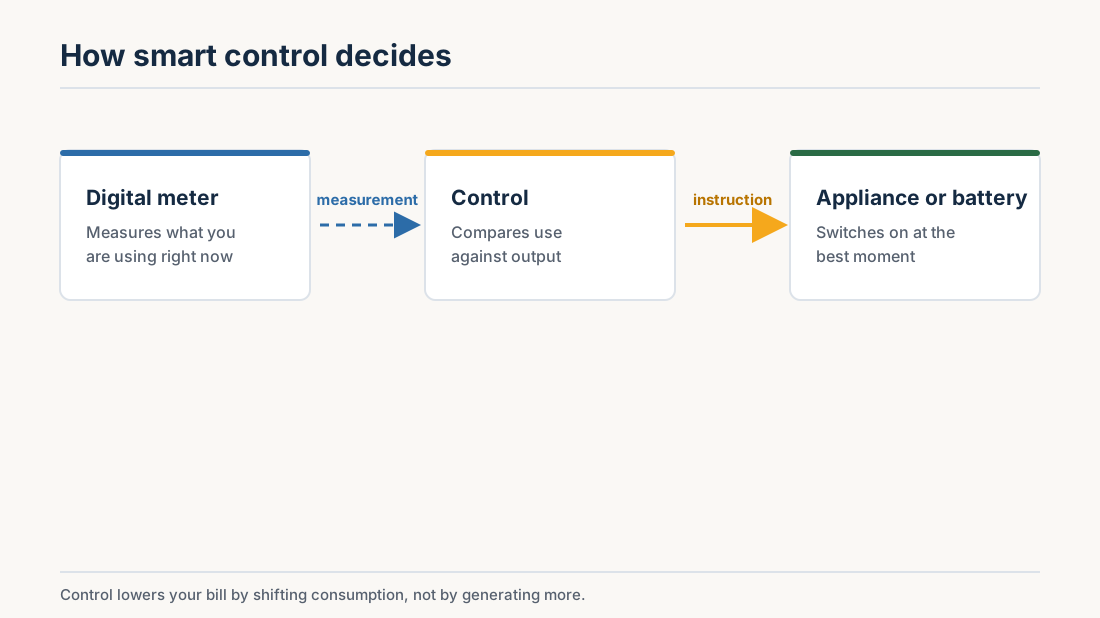
Installing a solar power monitoring app involves connecting it to your inverter and verifying that data is properly flowing.
Step-by-step setup process
- Download the app from your device’s app store.
- Create an account and log in using your email and system information.
- Connect your inverter to the app via WiFi or Ethernet.
- Enter your system details manually or scan a QR code to sync.
- Check the dashboard for real-time data and alert notifications.
This setup typically takes 10 to 20 minutes, depending on your system configuration.
Monitoring your solar energy system gives you direct control over production, consumption, and energy savings. The greatest benefits come from combining real-time data with features like battery and tariff optimization. To prevent energy losses, select an app that is compatible with your inverter and includes prompt alert functions. Start by comparing available system options and seek tailored advice from Soleva to maximize your solar installation’s performance.
Frequently Asked Questions
What apps can I use to monitor my solar panels?
You may choose manufacturer-specific apps connected directly to your inverter or independent platforms that support multiple types of systems. Manufacturer apps provide highly accurate data through direct hardware integration, while independent apps offer additional flexibility and comparison tools. The best option depends on your inverter type, battery setup, and whether you want advanced analytics or basic monitoring.
Can I monitor my solar panels easily?
Yes, monitoring your solar panels is simple with a connected app or web interface. Your inverter sends real-time data over the internet, which the app displays. Without monitoring, you miss detailed information like hourly production and fault alerts, which are valuable for system maintenance and energy efficiency.
What is the best app for tracking solar energy production?
The top apps offer real-time energy data, alert notifications, and battery system integration. Apps with individual panel-level monitoring provide the most detailed insights. Advanced systems also incorporate weather forecasts and AI analytics to improve accuracy. Your choice should align with your inverter’s compatibility and desired level of optimization.
How much does a solar panel monitoring app cost?
Solar monitoring apps range from free basic versions bundled with your inverter to paid subscriptions costing between €50 and €100 annually. Premium versions typically include advanced analytics and battery optimization. Costs vary based on your system’s size, selected features, and whether cloud storage or automation tools are required.
What does the 20% rule for solar systems mean?
The 20% rule refers to keeping a safety margin between your system capacity and inverter or grid limits. This prevents overloading and ensures stable operation. In monitoring apps, this rule helps interpret data accurately and avoids misreading peak production, supporting efficient system design and long-term reliability.
Indicative prices for the Belgian market, checked in August 2026 against energy-village.be, thuisbatterij.be and zen-zonne-energie.be. These are market ranges for an installed system including VAT, not a quotation: your price depends on capacity, brand and the state of your existing installation.
Read also
Ready to cut your energy bill?
Compare quotes for solar panels, home batteries and charging points.