Solar panels Belgium
home battery with solar panels price guide
A home battery paired with solar panels stores the electricity your panels generate during the day and allows you to use it later in the evening. This approach reduces your reliance on the electricity grid and lowers your energy bills. The cost of a home battery with solar panels mainly depends on the battery capacity and system size, with prices typically ranging between €400 and €600 per kWh installed.
As electricity prices rise and dynamic tariffs become common, storing your own energy offers increasing financial benefits.
How does a home battery with solar panels work exactly?
A home battery stores the surplus electricity generated by your solar panels during the day and releases it when your home’s electricity demand exceeds what your panels produce. This process can increase your self-consumption rate from around 30 percent to between 70 and 90 percent.
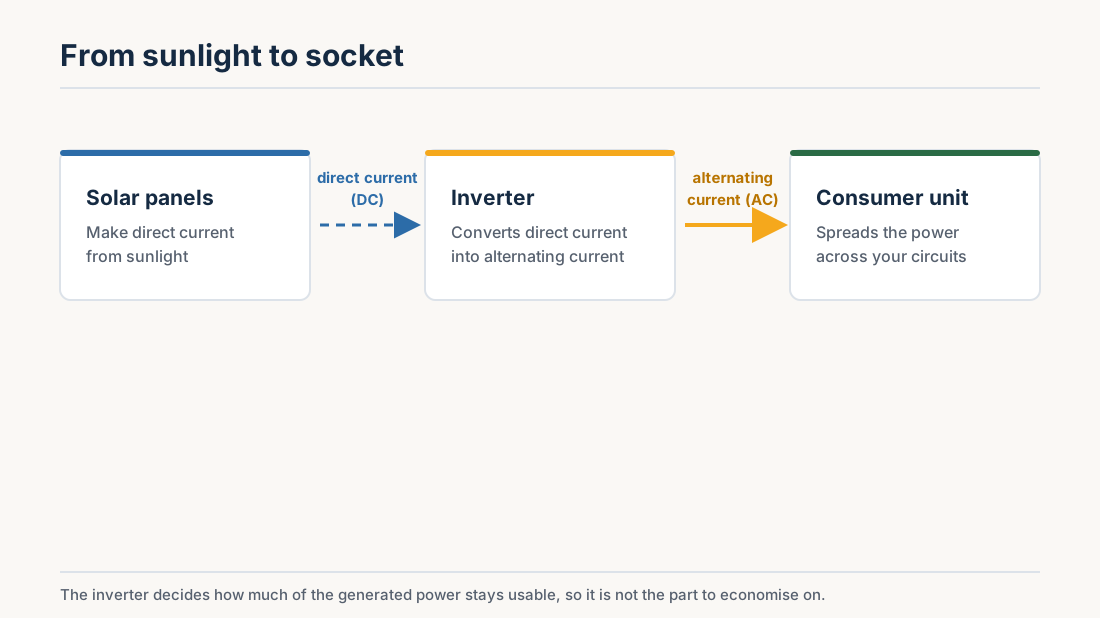
The typical system includes solar panels, an inverter, and a battery. During sunny periods, the solar panels produce direct current (DC) electricity. The inverter converts that into alternating current (AC) for home use. Any excess electricity is directed to charge the battery instead of being exported to the grid.
What happens during the day and night?
During daylight hours, your solar panels first supply the electricity your home requires. When your panels produce more than your immediate usage, the additional energy charges the battery. After sunset, the battery discharges stored energy to power your household appliances, reducing your need to draw electricity from the grid.
What is the role of a hybrid inverter?
A hybrid inverter integrates the management of both solar power production and battery storage within a single system. It optimizes battery charging and discharging based on your household consumption patterns and dynamic electricity tariffs. You can learn more about solar energy systems on the solar energy systems page.
What is the difference between on-grid and off-grid systems?
An on-grid system remains connected to the electricity network and uses the battery to reduce electricity imports from the grid. An off-grid system operates independently from the grid and relies entirely on battery storage, which requires a larger battery capacity to ensure consistent power availability.
Selecting a battery for your solar panel system depends on your energy consumption, solar production, and the degree of grid independence you want to achieve. The most significant benefits come from increasing your self-consumption of solar energy and avoiding peak electricity prices. It is important to focus on correctly sizing the battery to fit your needs rather than simply opting for the largest capacity, as oversizing tends to increase costs without offering equivalent savings. Begin by assessing your household’s consumption data and obtain multiple quotes through Soleva to compare realistic system sizes and prices.
Frequently Asked Questions
Is a home battery with solar panels worth the investment?
Yes, installing a home battery with solar panels can increase the amount of self-generated energy you use and decrease your grid electricity purchases. The financial benefits depend on your energy consumption patterns and local electricity tariffs. In areas with dynamic pricing or low compensation for excess energy fed back to the grid, storing electricity yourself can lead to greater savings than selling it.
What size battery do I need for my solar panel system?
The ideal battery size depends on your annual energy consumption and the capacity of your solar panels. A common guideline is to have between 1 and 2 kWh of battery capacity for every kWp of installed solar panel capacity. For instance, a household with a 4 kWp solar system typically uses a 4 to 6 kWh battery to achieve a balanced performance.
How long can a 10 kWh home battery power my house?
A 10 kWh battery can supply power to essential appliances for approximately 10 to 24 hours depending on your household’s electricity usage. Higher power consumption devices like heat pumps or electric vehicle chargers will reduce the runtime. For full-house backup lasting multiple days, you may need multiple batteries or strategies for managing loads.
What costs are involved in installing a home battery with solar panels?
The overall price depends on the size of your system and the components selected. Residential systems typically cost between €1.5 and €2.5 per watt installed. Battery modules usually cost between €400 and €600 per kWh, including installation and the integration of the inverter.
How long does it take for a 400W solar panel to charge a 100Ah battery?
A single 400W solar panel can charge a 100Ah battery in roughly 4 to 8 hours under ideal sunlight conditions. Charging time will vary depending on factors such as sunlight intensity, battery efficiency, and system losses. Real-world performance is affected by weather variations and inverter efficiency.
Indicative prices for the Belgian market, checked in August 2026 against energy-village.be, thuisbatterij.be and zen-zonne-energie.be. These are market ranges for an installed system including VAT, not a quotation: your price depends on capacity, brand and the state of your existing installation.
Read also
Ready to cut your energy bill?
Compare quotes for solar panels, home batteries and charging points.