Solar panels Belgium
home battery without solar panels price & advice
A home battery without solar panels stores electricity purchased from the grid, allowing you to use the stored energy during peak hours when electricity prices are higher. This system relies on dynamic tariffs, battery capacity, and intelligent charging strategies to reduce your energy costs without generating your own power. In Belgium, where electricity prices often exceed €0.32 per kWh, such setups focus on price arbitrage, backup power, and peak shaving.
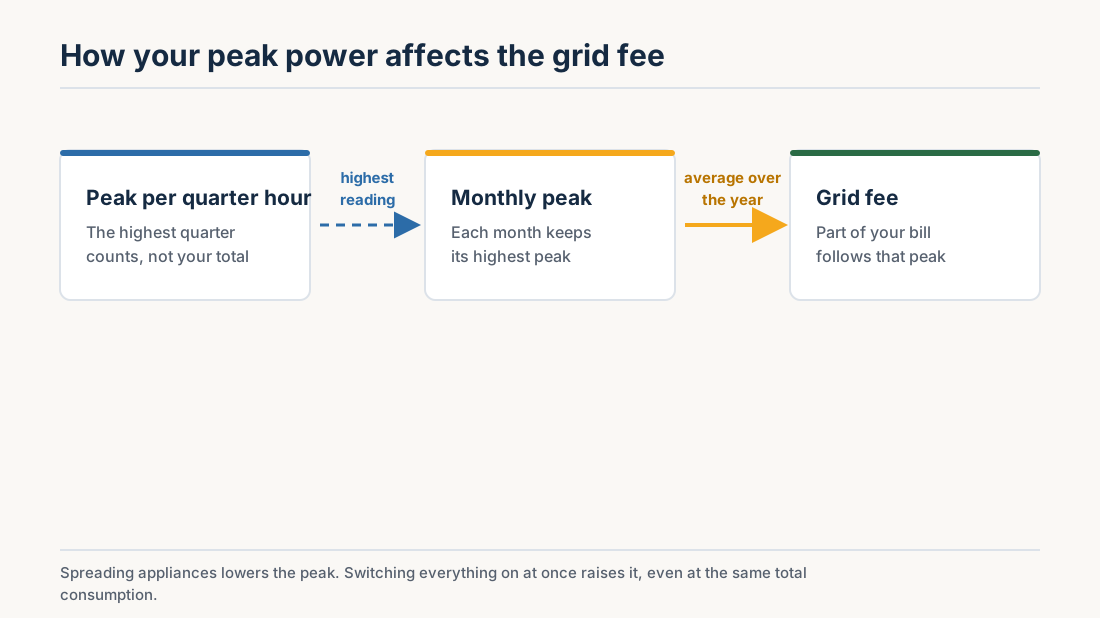
The system’s effectiveness depends on several key components, including:
- A lithium-ion battery with a round-trip efficiency of 90 to 95%
- An inverter that converts alternating current from the grid into stored energy and vice versa
- A smart meter that monitors real-time energy consumption and pricing
- An energy management system that controls charging and discharging schedules based on tariff and usage patterns
This setup connects directly to your home’s electrical panel. For a deeper understanding of how this integrates with full energy systems, visit solar energy systems overview to see how batteries typically complement solar generation.
How does grid charging work?
The home battery charges during low-price hours, usually at night, by drawing electricity from the grid through the inverter. During peak hours when electricity costs increase, the battery supplies your home with stored energy, reducing the need to purchase power at higher rates.
This method is known as price arbitrage, where you buy energy at a lower cost and use it when prices rise, optimizing your electricity spending.
What is needed for a battery-only installation?
A battery-only installation requires a compatible inverter, a digital smart meter, and approval from your Distribution Network Operator (DNO) if the system exceeds 3.68 kW. The battery is typically installed in a garage or an outdoor area and is connected to your home’s electrical panel to manage energy flows safely and effectively.
What is the cost of a home battery without solar panels?
The price of a standalone home battery system ranges from €2,500 to €7,000 incl. VAT, depending on capacity and configuration. Installation expenses add between €500 and €1,000 incl. VAT, depending on the complexity of the setup.
Common battery size options and their approximate prices include:
- 10 kWh battery: €7,000 - €10,000 incl. VAT
- 15 kWh battery: €9,000 - €13,000 incl. VAT
- 20 kWh or larger batteries: €7,000 and above incl. VAT
Example cost breakdown for a 10 kWh home battery
A typical 10 kWh home battery installation involves several cost components:
Battery unit (€3,200) + inverter (€1,000) + installation (€800) + electrical upgrades (€400) = approximately €5,400 incl. VAT.
This example illustrates a mid-range installation with full system integration.
What factors affect the installation cost?
The total installation cost depends on battery capacity, inverter type, and the complexity of the existing electrical infrastructure. Larger batteries cost more upfront but can increase your potential savings. Older homes may require electrical upgrades, which also raise the overall cost.
Is investing in a battery without solar panels worthwhile?
While standalone batteries rarely offer full financial payback before reaching end-of-life, they can still provide meaningful savings and increased energy flexibility. On average, users save around €375 annually, depending on their energy consumption patterns and tariff structures.
When does a standalone battery make financial sense?
This setup suits certain scenarios best, including:
- Homes with high electricity consumption during evening hours
- Customers on dynamic or time-of-use tariffs
- Properties with electric vehicle chargers or heat pumps that increase peak electricity use
In these situations, batteries help reduce peak grid consumption and smooth out your electricity bills.
Why is this topic popular on forums like Reddit?
Discussions about home batteries without solar panels frequently appear on Reddit, focusing on real-world savings calculations. Users often note modest daily savings that accumulate monthly, while expressing concerns about the long-term financial viability compared to upfront costs.
What are the disadvantages of batteries without solar panels?
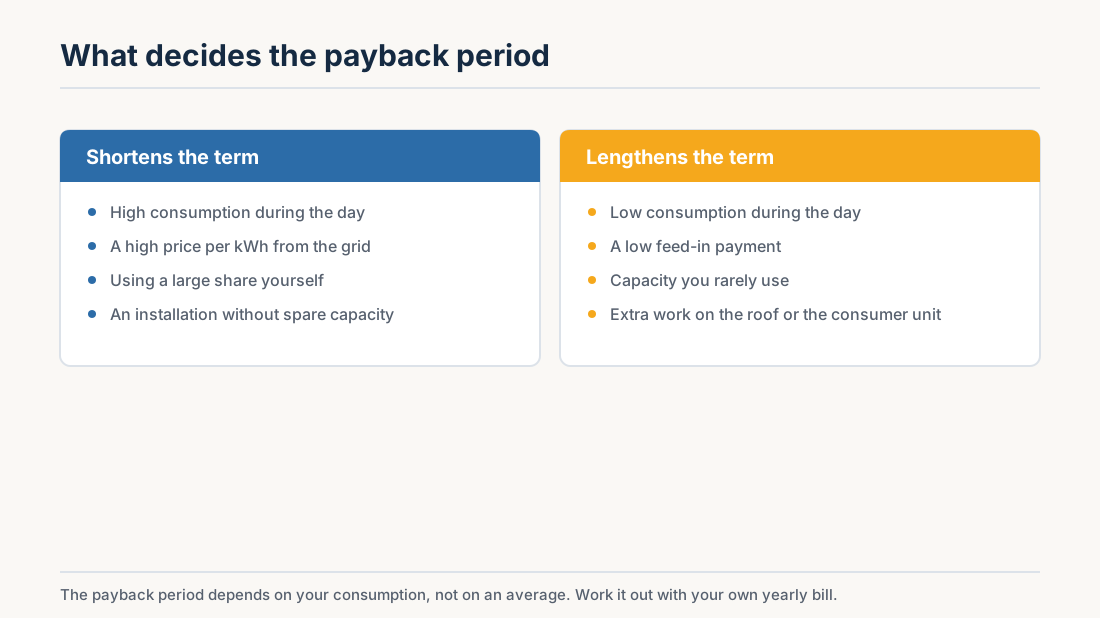
Standalone battery systems have limitations that often outweigh their benefits. Unlike solar-integrated setups, these systems do not generate any free electricity, which restricts their cost-saving potential.
Main disadvantages include:
- No opportunity to earn income from exporting electricity to the grid
- Savings depend heavily on favorable energy tariff structures
- Higher upfront investment relative to the savings they provide
- Reduced environmental benefit compared to systems paired with solar generation
Why is reaching break-even challenging?
Home batteries generally have a lifespan of 10 to 15 years. Because annual savings are often limited, recovering the full investment before replacement is difficult, especially without solar generation to offset costs further.
How do energy tariffs impact savings?
Standalone batteries rely on time-of-use or dynamic tariffs to create value. If tariff schemes change or are discontinued, the expected savings decline, introducing uncertainty into the financial benefits of such systems.
In what situations is a battery-only installation a good choice?
Battery-only installations are appropriate for households unable to install solar panels or for those seeking flexibility before investing in solar energy.
Which homes gain the most?
Ideal candidates include:
- Houses with shaded, unsuitable, or restricted roofs
- Apartment dwellers without roof ownership rights
- Users planning to install solar panels in the future
If you plan to upgrade later, combining your battery with a solar panel installation can reduce long-term costs and increase overall savings. See solar panel installation options for details on integration approaches.
How does a Tesla home battery without solar panels perform?
A Tesla home battery used without solar panels offers advanced software features and backup capabilities. However, its performance depends on optimizing tariff structures since it does not generate energy itself. This limits its financial advantages compared to solar-coupled systems.
How does a standalone battery compare to a solar battery system?
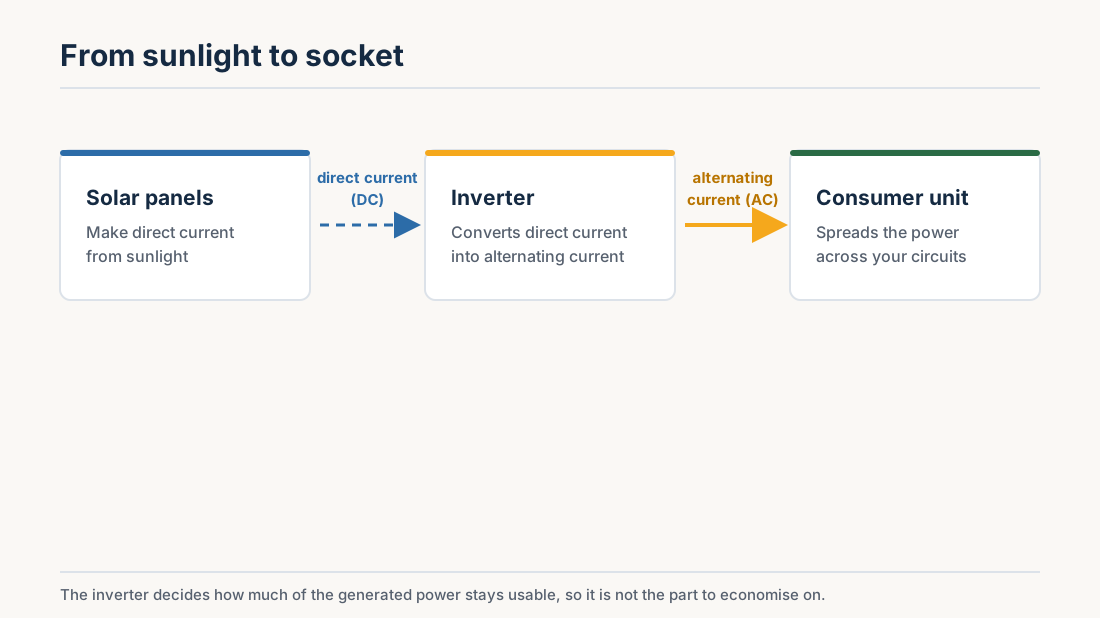
The main difference lies in the source of stored energy. Standalone batteries store electricity bought from the grid, while solar batteries store energy generated from your solar panels.
Key distinctions include:
- Standalone battery: Stores purchased electricity
- Solar battery: Stores free solar energy
- Standalone system: Lower savings potential due to electricity purchase
- Solar system: Higher return on investment with opportunities for export income
The decisive factor is that a standalone battery manages energy usage, whereas a battery paired with solar both generates and manages energy, significantly increasing long-term value.
For a detailed comparison of both configurations, visit complete solar solutions to learn how generation and storage work together effectively.
Using a standalone home battery offers you control over your energy consumption by shifting electricity use to cheaper periods and providing backup power. However, it cannot replace the benefits of generating your own electricity with solar panels. The principal advantage lies in reducing peak electricity costs and enhancing resilience during outages, while the main limitation is the absence of free energy input. If you want flexibility now and plan to add solar in the future, a battery without solar panels serves as a suitable interim solution. Otherwise, pairing generation with storage provides stronger financial returns. Through Soleva, you can compare different battery options and request multiple quotes to find the configuration that best suits your home’s needs.
Frequently Asked Questions
Can I install a home battery without solar panels?
Yes, you can install a home battery without solar panels because it stores electricity directly from the grid. This system uses a smart meter and inverter to charge during off-peak hours and discharge during peak demand. It is suitable for most homes provided your electrical setup meets safety and grid connection regulations.
What does a home battery without solar panels cost?
The cost of a home battery without solar panels typically ranges from €2,500 to €7,000 incl. VAT, depending on the battery capacity and system configuration. Installation costs vary but generally add between €500 and €1,000 incl. VAT. Larger capacity systems offer higher savings but require a bigger initial investment, impacting the payback period.
How long does a 10 kWh home battery last?
A 10 kWh home battery generally lasts between 10 and 15 years, depending on how often it cycles and the battery chemistry. Most lithium-ion batteries retain about 70% of their original capacity after 10 years. Using smart energy management can help extend the battery’s effective lifespan by reducing stress from frequent charging and discharging.
What is the best backup battery without solar panels?
The best home battery backup without solar panels depends on its capacity, software features, and backup power capabilities. Systems equipped with emergency power supply options can keep essential household circuits running during power outages. Choose batteries that offer smart tariff integration and scalable capacity to match your home’s consumption patterns effectively.
Is a DIY installation of a home battery without solar panels advisable?
No, a DIY home battery installation without solar panels is not recommended because it requires certified electrical work and compliance with grid regulations. Improper installation risks safety hazards and system failure. Hiring a professional installer ensures proper inverter setup, grid approvals, and safe integration with your home’s electrical system.
Indicative prices for the Belgian market, checked in August 2026 against energy-village.be, thuisbatterij.be and zen-zonne-energie.be. These are market ranges for an installed system including VAT, not a quotation: your price depends on capacity, brand and the state of your existing installation.
Read also
Ready to cut your energy bill?
Compare quotes for solar panels, home batteries and charging points.