Solar panels Belgium
Prosumer tariff Belgium: explained clearly
The prosumer tariff Belgium is a network fee applied to households that both produce and consume electricity, mostly using solar panels connected to the grid. This tariff depends on factors such as your meter type, inverter capacity, and regional regulations from bodies like CWaPE Belgium and the Flemish regulator. Since the shift from analogue to digital meters, including the Prosumententarief digitale meter, the calculation method has changed significantly.
What is the prosumer tariff in Belgium?
The prosumer tariff is a mandatory grid fee charged to households that generate electricity and feed some of it back into the distribution network. A prosumer refers to a user with a production installation up to 10 kVA who both consumes and injects electricity into the grid.
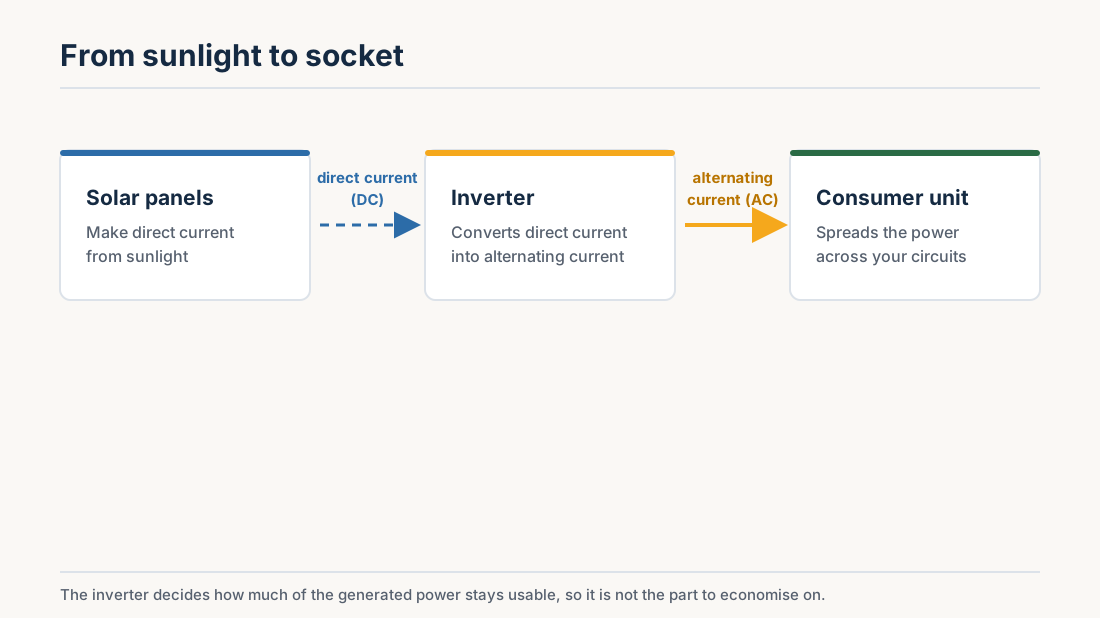
This tariff compensates grid operators for maintaining and operating the infrastructure that supports electricity flow when solar owners draw additional power from the grid despite producing their own.
Which systems are covered by this tariff?
The prosumer tariff applies to small-scale installations connected to low-voltage networks, such as solar panels and small wind turbines. Cogeneration systems (WKK) also fall under this category.
When was the prosumer tariff introduced?
The tariff system was introduced in Wallonia on 1 January 2020. It has evolved significantly after the 2021 constitutional court ruling, which accelerated the transition from analogue to digital meters.
How does the prosumer tariff differ between Flanders, Wallonia, and Brussels?
The prosumer tariff varies by region because each regulator sets its own system and pricing structure.
How is the tariff applied in Flanders?
In Flanders, the Prosumententarief for 2024 and 2025 is based on the inverter’s capacity. Typical rates range from €80 to €113 per kW annually. This system is managed by the Vlaamse Nutsregulator and the grid operator Fluvius.
What changes happen in Wallonia?
Wallonia has introduced a new incentive model regulated by CWaPE Belgium. Starting in 2026, dynamic tariffs will apply using time slots to encourage electricity use during lower grid demand periods.
The tariff options include:
- A single-rate tariff with fixed pricing
- A two-hour tariff with day and night prices
- An incentive tariff that distinguishes green, orange, and red periods
How is the prosumer tariff handled in Brussels?
Brussels follows similar principles for grid costs but does not use the historical net-metering system. Prosumers pay based on actual electricity consumption instead of a fixed fee.
Which meter types affect the prosumer tariff calculation?
The type of electricity meter has a direct impact on how the tariff is calculated and whether you pay a fixed fee.
What is a reversing meter?
A reversing (or Ferraris) meter runs backward when electricity is injected into the grid. Users with this meter pay a fixed tariff since actual consumption and injection are not separately measured.
What does a digital or dual-flow meter measure?
A digital meter separately records electricity injection and consumption, enabling a proportional tariff based on real grid usage instead of a flat rate.
Since 2021, the traditional Prosumententarief for digital meters has phased out because consumers pay for actual grid use rather than a fixed charge.
What is the A+/A- meter option?
This meter type records consumption without offsetting injection, eliminating fixed tariffs but also removing the benefits of net metering.
How do you calculate the prosumer tariff in Belgium?
The tariff calculation depends on whether your system uses a flat-rate or proportional approach.
How does the flat-rate tariff calculation work?
The flat-rate tariff is based on the inverter capacity expressed in kW. To calculate it:
- Multiply your inverter capacity in kW by the applicable regional tariff rate
- Divide the annual amount across your billing periods
For example, a 5 kW inverter with a tariff rate of €100 per kW results in an annual cost of €500.
How does the proportional tariff calculation work?
The proportional tariff is based on the actual electricity you draw from the grid, measured by smart meters. This system reflects your true consumption and reduces fees when you use more self-generated electricity.
You can use online tools like the prosumer tariff Belgium calculator or prosumententarief berekenen to estimate your tariff under both models.
What effect does the prosumer tariff have on solar panel returns?
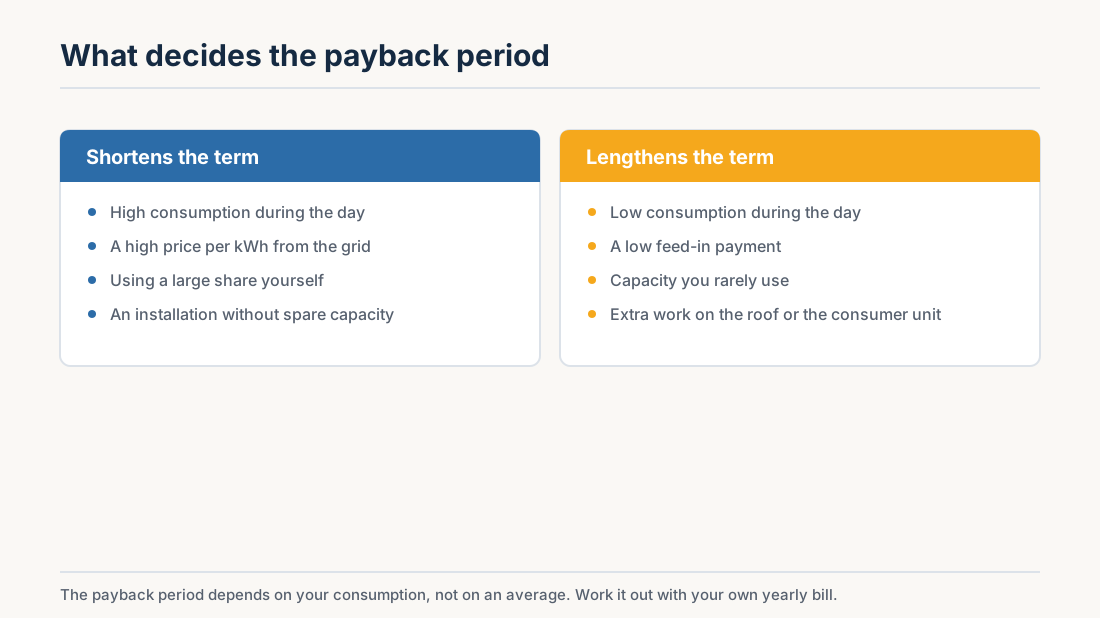
The prosumer tariff adds annual costs, either fixed or variable, which directly reduce the financial return on your solar panel investment. The impact depends heavily on how much of your energy consumption you cover with your own solar generation.
How can increasing self-consumption improve your returns?
By using your own solar electricity directly, you avoid additional grid fees and increase your savings. Optimizing your solar panel system for daytime consumption helps improve efficiency.
Combining your system with a home battery can store surplus energy and shift usage to more advantageous times.
What benefits does a home battery provide?
A battery allows you to store excess solar energy and use it during peak periods or at night, reducing your reliance on the grid. This aligns well with dynamic tariff systems and helps lower your overall grid costs.
For detailed installation advice, review a complete solar panel system overview that covers sizing and integration options.
What changes are coming to the prosumer tariff after 2026?
The prosumer tariff will evolve towards dynamic pricing and billing based on actual consumption.
How will Flanders adapt to these changes?
Flanders is transitioning away from fixed tariffs as digital meters replace analogue ones. The region will prioritize capacity-based tariffs and billing that reflects real energy use.
What is unique about Wallonia’s reform?
Wallonia plans to introduce an incentive tariff with three time-based pricing periods:
- Green period offering the lowest rates
- Orange period with moderate rates
- Red period charging the highest rates during peak demand
This system rewards consumers who shift their energy use to off-peak times and adopt smart energy management.
The prosumer tariff system in Belgium is moving from fixed charges towards consumption-based billing that reflects your actual grid usage. Your meter type greatly influences whether you pay a fixed fee or a variable tariff. To reduce your energy costs, it is important to increase your self-consumption and adjust your usage to fit tariff periods. Evaluating your solar setup and considering additions like batteries can improve your savings. You can compare options and request quotes to find the best solution that matches your energy needs.
Frequently Asked Questions
What is the price of the prosumer tariff Belgium per year?
The prosumer tariff price depends on your inverter capacity and region. In Flanders, fees typically range from €80 to €113 per kW annually. For example, a 5 kW system will usually cost between €400 and €565 each year. If you have a digital meter, you pay based on your actual grid consumption rather than a fixed fee.
Does the prosumer tariff Belgium still apply if I have a digital meter?
No, the fixed prosumer tariff disappears when you have a digital meter that measures your actual electricity consumption and injection separately. In this case, you pay for the electricity drawn from the grid rather than a flat fee. This change started after 2021 when many analogue meters were replaced by digital ones.
What changed in the prosumer tariff Belgium since 2021?
The 2021 reform shifted the system from net metering and fixed tariffs to real consumption billing following a constitutional court decision. Before 2021, most users had fixed tariffs using reversing meters. Currently, digital meters are widely used, and tariffs reflect your true grid use.
Can I avoid the prosumer tariff Belgium entirely?
You can avoid the fixed prosumer tariff by installing a digital or A+/A- meter. However, this removes benefits like net metering. To stay financially attractive, you need high self-consumption and often combine your system with a battery to optimize energy usage and minimize grid dependence.
Where can I find official prosumer tariff Belgium documents or PDFs?
Official documents are published by regulators such as CWaPE and the Flemish regulator. These include tariff formulas, eligibility rules, and updates. Such resources provide reliable and precise information about current tariffs and future changes in each region.
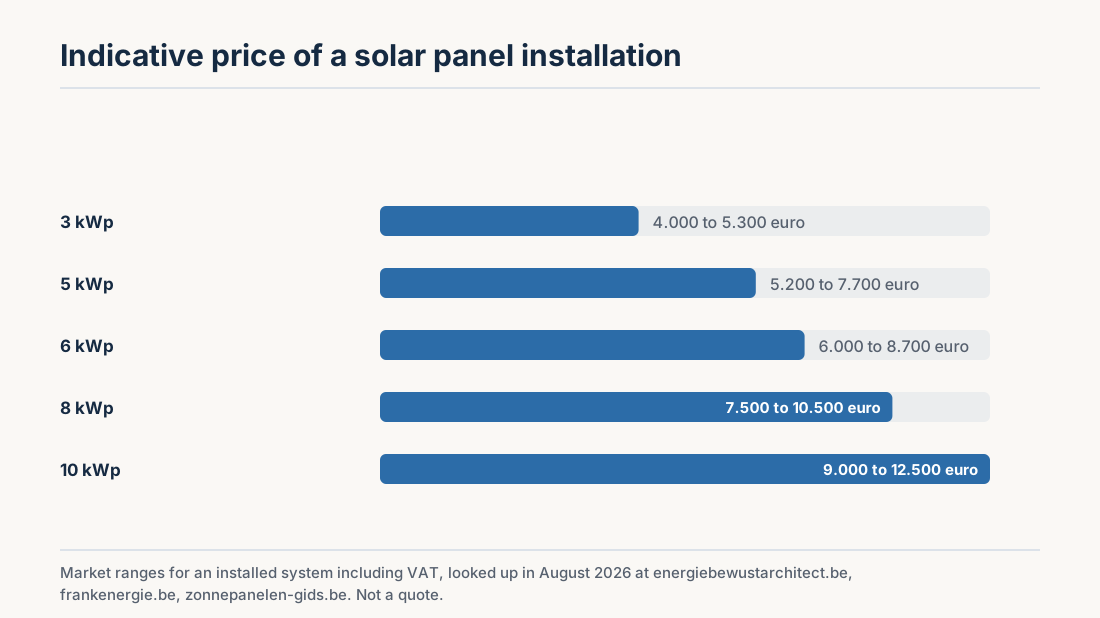
Indicative prices for the Belgian market, checked in August 2026 against energy-village.be, thuisbatterij.be and zen-zonne-energie.be. These are market ranges for an installed system including VAT, not a quotation: your price depends on capacity, brand and the state of your existing installation.
Read also
Ready to cut your energy bill?
Compare quotes for solar panels, home batteries and charging points.