Solar panels Belgium
solar panel orientation belgium guide
Choosing the correct solar panel orientation in Belgium directly affects your system’s electricity production and the speed of your investment recovery. Panels oriented south with a tilt of around 35° deliver the highest annual energy yield in Belgian conditions. East or west-facing panels can still generate substantial power depending on your daily energy consumption patterns.
This guide explains optimal directions, tilt angles, pricing considerations, and practical installation tips so you can maximize your solar output and make well-informed choices.
What is the ideal solar panel orientation in Belgium for maximizing energy production?
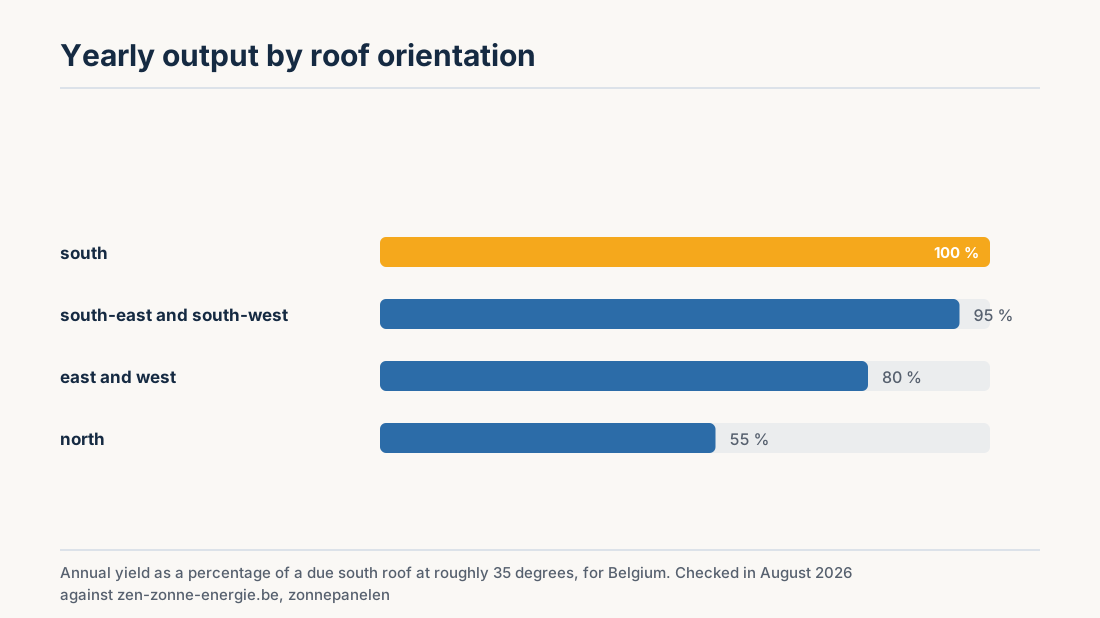
Annual yield as a percentage of a due south roof at roughly 35 degrees, for Belgium. Checked in August 2026 against zen-zonne-energie.be, zonnepanelen-gids.be and energiewest.be. For your own roof, the European Commission's PVGIS tool calculates it exactly.
The ideal solar panel orientation in Belgium is facing south with a tilt angle between 30° and 40°, as this setup ensures the highest annual electricity production. Aligning your panels this way captures sunlight consistently throughout the day and corresponds well with Belgium’s geographic latitude and solar path.
However, the best configuration also depends on your roof’s structure and your energy consumption habits. Many homes cannot achieve perfect south-facing panels, and other orientations still deliver efficient performance.
Which directions suit solar panel installation best?
Solar panels facing south produce the highest total energy. Southeast or southwest directions reduce production by only about 5%, making most rooftops in Belgium viable for solar projects. Panels facing east or west yield a lower total amount but spread electricity generation throughout the day, helping to balance consumption patterns.
- South: Optimal for highest annual production
- Southeast or southwest: Nearly as effective as south-facing
- East or west: Lower total output but better spread over daytime hours
Is a west-facing solar panel orientation preferable to south-facing?
West-facing panels usually produce slightly less total electricity overall, but they can generate up to 2% more power during peak evening hours. This evening production often coincides with typical household energy demand, reducing reliance on the grid during expensive periods. Therefore, a west orientation can be advantageous if your energy use peaks in the evening.
How significantly does panel orientation impact energy output?
Orientation plays an important role in solar energy production. Panels facing outside the southeast to southwest range might lose up to 20% efficiency compared to south-facing ones. However, thoughtful system design, including the use of optimizers or installing panels on multiple roof sides, can help reduce these efficiency losses.
How does solar panel orientation impact price and savings in Belgium?
The direct installation price does not vary based on panel orientation, but orientation strongly affects your energy savings and how soon you recoup your investment. Suboptimal orientations produce less electricity, which extends the payback period.
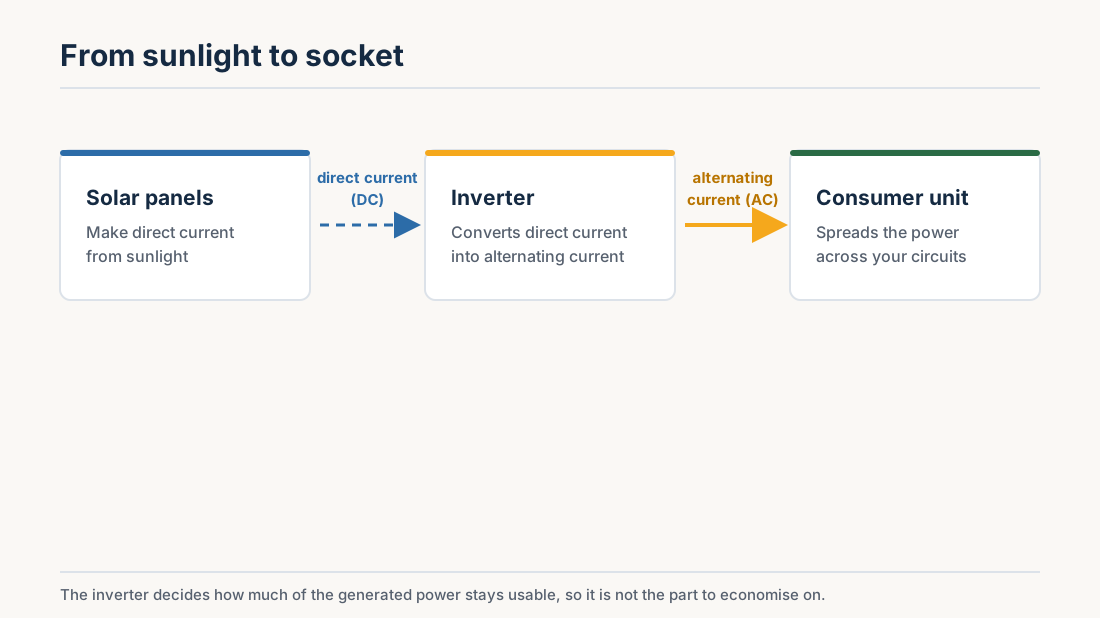
The overall system cost depends more on factors such as system capacity, inverter type, and installation complexity, similar to what you find in a complete solar panel system overview.
How does orientation affect the return on investment period?
Systems facing south achieve the quickest return due to maximum yearly production. East-west orientations provide electricity spread more evenly throughout the day, lowering the need to feed excess energy back into the grid and improving self-consumption. This balance can offset some of the decrease in total output, making financial returns competitive.
Can you provide a cost and production example for different orientations?
Here is a practical comparison demonstrating the influence of orientation on production and savings:
- A south-facing 4 kWp system produces about 3,400 kWh yearly
- A west-facing 4 kWp system produces about 3,200 kWh yearly
- This amounts to a difference of 200 kWh annually
Assuming an electricity price of €0.30 per kWh, the 200 kWh difference corresponds to €60 in yearly savings. Over the system’s lifespan, this affects total returns but does not discount the suitability of west-facing arrays.
Which solar system types are best suited for Belgian homes based on orientation?
The system type you choose should align with your roof shape, available space, and panel orientation. Urban homes, such as those in Brussels, often require adaptable solutions due to roof constraints, while rural homes generally offer more installation flexibility.
Which solar installations work best on pitched roofs?
Pitched roofs in Belgium commonly allow near-ideal panel placement. South-facing pitched roofs accommodate standard solar installations requiring minimal adjustment. Roofs with east-west slopes benefit from splitting panels evenly across both sides to balance electricity production throughout the day.
How do solar panels work on flat roofs?
Flat roofs utilize mounting systems that allow installers to adjust tilt and orientation optimally. Panels are usually set at angles between 30° and 40° facing south, or arranged east-west for greater array density. Such configurations maximize energy production per square meter.
Does solar panel technology change based on orientation?
The solar panels themselves use the same technology regardless of direction. However, system design adapts to orientation challenges. Installers may employ micro-inverters or power optimizers to manage shading issues and varied sunlight exposure effectively.
For determining the correct system size, you can refer to our solar panel sizing guidance.
Are subsidies or incentives available for solar panels in Belgium?
Belgium supports solar energy adoption through incentives such as green certificates and regional grants. These incentives do not depend on panel orientation but require compliance with specific regulations and system registration.
What technical requirements must installations meet to qualify?
Solar systems must comply with the following:
- Installation of a smart meter by Sibelga
- Certification by an accredited inspection authority
- Notification to the grid operator about the installation
Does panel orientation affect subsidy eligibility?
While orientation itself does not affect eligibility, shading and placement factors can influence approval. In Brussels, solar potential maps help assess if your roof is suitable before installation.
You can find a detailed overview of incentives and support in our available solar subsidies and support section.
What is the solar panel installation process from quotation to system setup?
The installation follows a structured sequence, with panel orientation decisions made early since they influence system design and expected energy yield.
What are the key installation steps?
- Thorough roof inspection and solar potential analysis
- Optimization of panel orientation and tilt angle
- System design finalized and quotation provided
- Physical installation and electrical connections
- Inspection for compliance and system activation
What tools determine the best panel orientation?
Installers utilize solar maps, shading assessments, and simulation software to identify the optimal angle and direction. These tools provide estimated annual energy output and help tailor installations for regions like Brussels or other areas in Belgium.
If you want personalized recommendations, you can request a free solar quote from certified professionals through Soleva.
Determining the right solar panel orientation in Belgium ultimately depends on your roof’s position relative to the sun and your daily electricity use patterns. South-facing panels yield the most electricity annually, while east or west orientations may better align with your energy usage throughout the day. Prioritize maximizing self-consumption over aiming for perfect positioning. Begin with a professional roof assessment and compare at least three offers through Soleva to secure the most effective solar solution for your home.
Frequently Asked Questions
What orientation should solar panels have in Belgium for best performance?
Solar panels in Belgium perform best when facing south with a tilt between 30° and 40°. Orientations towards southeast or southwest still deliver strong results with little energy loss. East or west-facing panels work well if your household consumes more energy during morning or evening hours, improving how much solar power you directly use.
What does the 20% rule mean regarding solar panel orientation?
The 20% rule indicates that panels oriented far from the optimal directions, such as north-facing, may produce up to 20% less electricity. System design strategies like placing panels on multiple slopes or using power optimizers can reduce these losses and help maintain good overall system efficiency.
Can you explain the 120 rule related to solar panels?
The 120 rule refers to an electrical safety requirement that limits the total current from solar panels and the grid to not exceed 120% of the electrical panel’s rated capacity. Installers consider this rule carefully during design to ensure system safety and compliance with regulations.
Does the orientation of solar panels affect installation costs in Belgium?
Panel orientation itself does not usually change installation prices noticeably. However, less ideal orientations might require additional equipment or complexity in design, which could slightly increase costs. More importantly, orientation affects energy production and thus influences your system’s financial returns over time.
Are the solar panel orientation guidelines from 2021 still applicable in Belgium?
Yes, the 2021 solar panel orientation recommendations remain relevant because geographic and solar path factors are consistent. South-facing panels continue to yield the highest energy production, and west-facing systems align well with modern evening peak usage patterns. Advances in technology improve performance but do not alter the fundamental orientation principles.
Read also
Ready to cut your energy bill?
Compare quotes for solar panels, home batteries and charging points.