Solar panels Belgium
solar panels and shade explained clearly
Shading on solar panels significantly decreases electricity production because even partial shadows on one panel can reduce the performance of the entire system, especially in series-connected configurations. The impact of shade on solar panels depends on factors such as the inverter type, panel technology, and the duration of shading on your roof.
In Belgium, where installation costs average €1.00 - €1.50 per Wp, shading directly lowers your system’s return and extends the payback period. This guide explains how shading affects solar energy systems, explores solutions to minimize losses, and shows how to calculate and reduce shading effects using practical tools from Soleva.
How Does Shade Affect Solar Panels?
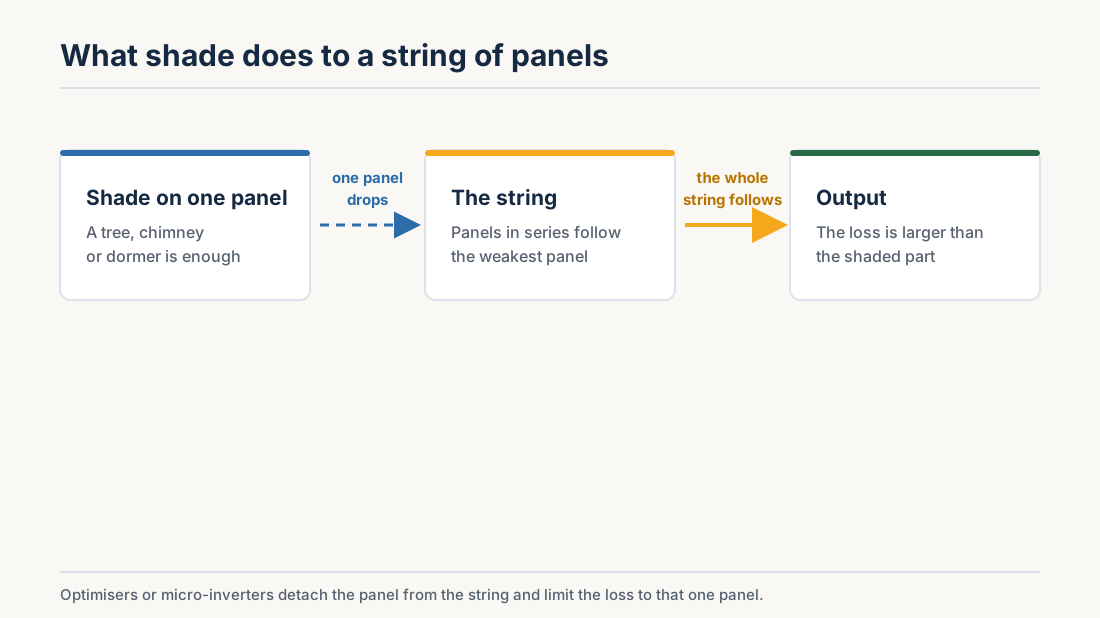
Shade reduces the electricity output of solar panels, and even small shadows can cause significant performance losses. In conventional systems, partial shading lowers output in a non-linear way, meaning a small shaded area can lead to a sharp decrease in energy production.
Most residential solar panels are connected in series. Electricity flows sequentially through each panel, so if one panel’s output drops due to shade, the entire string’s output becomes limited to that lower level.
- Trees can block direct sunlight during certain times of the day.
- Roof features like chimneys cast moving shadows as the sun moves.
- Nearby buildings in urban areas often reduce available sunlight.
- Accumulated dirt or debris create micro-shading effects.
It’s important to note that shading varies throughout the day. A panel may perform well at noon but lose efficiency during morning or evening hours. This variation often goes underestimated in solar potential assessments.
For a deeper understanding of system setup, please see how solar panels work.
Can Solar Panels Produce Electricity in Shade?
Solar panels continue producing electricity when shaded but at reduced levels. Indirect sunlight still generates power, though panel efficiency declines compared to full, direct sun.
What Happens When One Solar Panel Is Shaded?
The effect of shading on one panel depends largely on the inverter type. In string inverter systems, shading one panel lowers the output of all panels in that string. However, in systems using panel-level inverters, such as microinverters, only the shaded panel loses performance, while others continue producing normally.
How Does Shading Affect Solar Panels Connected in Series?
When solar panels are wired in series, the panel with the lowest output current limits the entire string’s current, following a bottleneck principle. Even a small shaded area on one panel can reduce total output by between 20% and 50% or more.
How Is Solar Panel Shading Analyzed?
Solar panel shading analysis estimates how shadows influence energy production over the course of a year. Installers use specialized tools to simulate sun paths and identify obstacles such as trees or buildings that may cast shadows.
The primary goal of this analysis is to predict annual energy losses and adapt the system design accordingly before installation begins.
Which Tools Are Available for Calculating Solar Panel Shading?
Solar shading calculators combine location details, roof angle, and obstacle height to estimate shading impact. These tools model the sun’s trajectory to predict shadow lengths and durations.
- Roof orientation and tilt influence how shadows fall on panels.
- Obstacle height and distance determine shadow size.
- Seasonal sun position changes affect shading length through the year.
- Daily shading duration is critical for accurate energy loss estimates.
What Is the 1-to-3 Rule for Estimating Shade?
The 1-to-3 rule estimates shadow length by multiplying the height of an object by three. For example, a 5-meter tall tree will cast a shadow approximately 15 meters long under low sun angles, helping you quickly identify shading risk zones on your roof.
How Reliable Are Shading Predictions?
Accuracy depends on the quality of input data. Professional software yields reliable yearly estimates, while manual methods provide rough guidance. It is highly recommended to get a professional shading analysis before installation, considering that factors like tree growth may cause future long-term shading.
To estimate appropriate system sizing alongside shading, refer to solar panel sizing guidance.
Which Solutions Help Reduce Solar Panel Shading Losses?
Solutions for shading challenges enhance output by enabling panels to operate independently or by optimizing voltage flow. The best option depends on the severity and frequency of shading.
How Do Microinverters Enhance Performance in Shaded Conditions?
Microinverters convert electricity at the individual panel level, allowing each panel to function independently. This approach prevents one shaded panel from reducing the performance of others, potentially increasing total output by up to 25% in shaded settings.
What Benefits Do Power Optimizers Offer?
Power optimizers optimize the voltage from each panel before feeding electricity to a central inverter. They help reduce mismatch losses between panels and strike a balance between enhanced performance and cost.
What Function Do Bypass Diodes Serve?
Bypass diodes electrically bypass shaded sections within a panel to prevent the entire panel from shutting down. Solar panels usually contain three sections, each protected by a diode. While they prevent total loss, output from shaded sections is still reduced.
Are Advanced Panels Like ShadowFlux Effective Against Shade?
Technologies such as ShadowFlux panel designs and half-cut cell panels improve shade tolerance by minimizing internal resistance and mismatch losses. These panels maintain higher output under partial shading compared to standard modules.
For installation options compatible with these technologies, review installation choices and system types.
What Is the Cost Impact of Solar Panels and Shade?
The cost related to shading depends on system size, inverter technology, and shading mitigation solutions. Standard systems without shading management have lower upfront costs but generate less energy.
Typical price ranges include:
- Standard 4 - 5 kWp system: €5,200 - €7,700 including VAT
- System with power optimizers: an additional €500 - €1,200
- System with microinverters: an additional €1,000 - €2,000
Example Calculation Including Shading Solutions
Consider a 10-panel system with partial shading:
10 panels: €4,500
Microinverters: €1,500
Installation: €1,500
Monitoring system: €200
Total: approximately €7,700 including VAT
Without shading solutions, the system might cost around €6,000 but could lose over 20% of annual production. This loss frequently extends the payback period by several years.
For detailed pricing, explore solar panel price breakdowns.
When Is Shading a Problem or Acceptable for Solar Panels?
Shading becomes problematic when it occurs during peak sunlight hours or repeatedly covers multiple panels. Short or partial shading is often acceptable if the system is designed to handle it properly.
Which Shading Conditions Are Acceptable?
- Morning or evening shadows outside peak energy hours
- Light shading caused by clouds
- Seasonal shading limited to winter months
When Does Shading Significantly Reduce Performance?
- Daily shading during midday hours
- Multiple panels shaded simultaneously
- Permanent shading caused by nearby buildings
Can Solar Panels Provide Shade as a Function?
Solar panels can be used to provide shade in structures such as carports or pergolas. These installations offer physical shade while generating electricity. Designing such systems must prevent panels from shading each other to maintain efficiency.
For professional planning and advice, visit Soleva solar guidance.
Shading often reduces solar panel output more than most homeowners expect, especially in series systems where panel performance depends on each other. To maximize energy production, consider system designs that use microinverters or power optimizers and optimize layout. If your roof faces shading from trees, chimneys, or nearby buildings, begin with a professional shading analysis. We recommend comparing at least three different system setups. You can request free quotes through Soleva to find installers who design systems that maintain high output even in partially shaded conditions.
Frequently Asked Questions
Does shading affect solar panels more in winter or summer?
Shading impacts solar panels more during winter because the sun is lower in the sky, creating longer shadows that cover a larger portion of your roof. Objects like chimneys and trees may shade several panels in the colder months, reducing seasonal energy production more significantly than many expect.
Will a solar panel still work when it is shaded?
A solar panel does generate electricity when shaded but at lower levels due to decreased sunlight intensity. The exact power output depends on how long the shading lasts, the panel’s technology, and the inverter type. Systems equipped with microinverters perform better since each panel operates independently.
What financial impact does shading have on solar systems?
Shading affects finances mainly through reduced energy output and longer payback periods. While systems without shading solutions cost less upfront, their lower production can delay your return on investment by several years, making optimized systems more cost-effective over time.
Do solar panels work effectively in cloud shadows?
Solar panels do produce electricity under cloud cover because diffuse sunlight still reaches the cells. Although output decreases compared to direct sunlight, modern panels convert indirect light efficiently. Unlike solid object shadows, clouds create uniform shading across all panels.
How does a solar panel shading calculator assist in system design?
A solar panel shading calculator estimates how shadows influence your annual energy production by analyzing roof data, sun angles, and obstacle heights. This helps you compare different system designs and select effective shading mitigation technologies before installation begins.
Indicative prices for the Belgian market, checked in August 2026 against energy-village.be, thuisbatterij.be and zen-zonne-energie.be. These are market ranges for an installed system including VAT, not a quotation: your price depends on capacity, brand and the state of your existing installation.
Read also
Ready to cut your energy bill?
Compare quotes for solar panels, home batteries and charging points.